
Uncategorized
You May Not Like Sanwo-Olu, But Stop The Lies- By SAMUEL OLATUNJI


I am shocked when people say ‘what has Babajide Sanwo-Olu done’? I can recall several landmark achievements of Governor Sanwo-Olu in the blink of an eye. The Lagos State Polytechnic and Adeniran Ogunsanya College of Education were upgraded to universities to solve the age-old dichotomy between Universities and Polytechnics. While universities all over Nigeria were on strike for eight months, no Lagos state-owned institution joined them for an hour, talk less of one day.
Governor Sanwo-Olu has vowed that no public institution in Lagos will go on strike under his watch. The governor has built over 1,000 new classrooms while renovating over 100 schools and equipping them with computers and new laboratories in line with his vision of transforming Lagos into Africa’s premier smart city.
Sanwo-Olu never abandoned his predecessors’ projects but rather completed them to consolidate on the overall Lagos city masterplan. Example is the Pen Cinema flyover in Agege. Governor Sanwo-Olu conceptualized and embarked on the Opebi-Ojota link bridge to ease traffic along that corridor. The bridge is near completion.
The Lagos Blue Line rail project designed to move millions of Lagosians from Mile 2 to Marina is now a reality, thanks to Governor Sanwo-Olu.
A transformative project, the Lekki Deep Sea port, West Africa’s largest was built, commissioned and activated under Governor Sanwo-Olu who takes pride in the expected 200,000 jobs it will create for Lagosians.
What about the gigantic Lagos Rice Mill at Ikorodu, Africa’s largest and the 4th largest rice Mill in the world, a brainchild of the hardworking governor of Lagos who envisioned producing 2.5 million bags of 50kg rice annually to meet Nigeria’s food needs and also export.
In less than four years, Governor Sanwo-Olu’s administration has built over 70 roads from scratch and rehabilitated over 700 others.
The 38 kilometer, multi billion dollar 4th Mainland bridge project has kicked off in earnest, thanks to the visionary Governor of Lagos State, Babajide Sanwo-Olu.
It’s okay if you don’t like Sanwo-Olu, but stop peddling lies that he has done nothing in office.


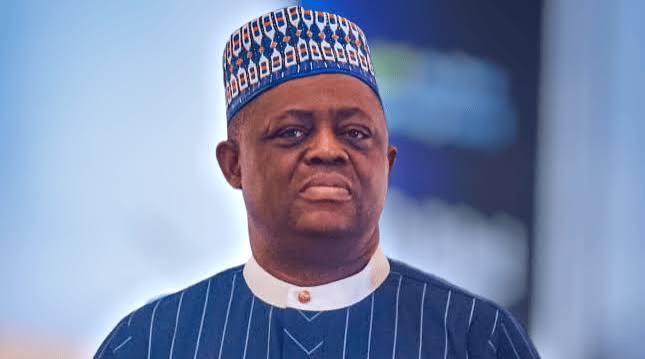
Fani-Kayode rejects Blue Silk after the Nigerian Law Society conferred its Senior Counsel designation on him at its 2026 annual conference.


Grey CEO Idorenyin Obong says intra-African trade payments should bypass the dollar, as the fintech expands direct currency conversion routes
African businesses should be able to pay suppliers across the continent without routing transactions through the United States dollar, Grey co-founder and Chief Executive Officer, Idorenyin Obong, has said, as the cross-border payments company expands its currency conversion infrastructure.
Also read: CAF Restores AFCON to Every Two Years After Reversing Four-Year Plan
Obong made the remarks on Thursday, October 29, on the sidelines of Moonshot by TechCabal 2026, a two-day technology conference held at the National Theatre in Lagos.
He said reliance on intermediary currencies, particularly the dollar, adds complexity to transactions between African countries and can worsen existing foreign exchange liquidity challenges.
According to him, Grey has developed direct currency conversion routes that allow payments between selected African currencies without requiring businesses to convert their funds into dollars first.
“Most times, if you’re trading within Africa, there’s always some form of intermediary currency,” Obong said.
“We’ve built out these currency pairs, these exotic currency pairs, such that you never have to go in between to the USD.”
The issue is significant for businesses operating across African markets, where differences in currency availability, banking arrangements and payment infrastructure can make cross-border transactions expensive or unpredictable.
For example, a Nigerian company paying a supplier in Kenya may traditionally have to convert naira into dollars before exchanging the dollars for Kenyan shillings.
Each conversion introduces another stage in the transaction, potentially increasing costs and exposing the payment to additional delays.
Grey says its direct currency routes are designed to simplify that process by connecting supported currencies more efficiently.
The company said its payment infrastructure currently enables customers in Nigeria, Kenya and Ghana to send and receive money, with liquidity arrangements supporting transactions in multiple currencies.
It also said payments can be settled in real time across several supported currencies.
However, the availability of direct routes does not mean that all African currencies can be exchanged freely or that every transaction will avoid dollar intermediation.
Currency coverage, liquidity and regulatory requirements remain important considerations in cross-border payments.
Obong identified foreign exchange liquidity and payment reliability as two of the biggest difficulties confronting businesses that trade internationally.
He said uncertainty over when suppliers will receive their money can disrupt procurement schedules and weaken commercial relationships.
Grey has therefore invested in infrastructure intended to improve the predictability of international payouts, including providing customers with estimated delivery times.
“We spent the last six years building the infrastructure to ensure that we’re delivering at the last mile at 99.99% to our customers,” Obong said.
He also disclosed that Grey had processed more than 40 million transactions and nearly $5bn in payments since the company began operations in 2020.
The company has expanded beyond individual currency exchange services into business payments and international salary management.
Its Grey Business platform, designed for startups and small businesses, has processed nearly $100m since launching in February, according to the company.
Grey previously reported that the business platform processed $61.4m in its first four months, with demand partly driven by stablecoin-based payments.
The fintech has also extended its payout services to China, allowing businesses to pay suppliers in Chinese yuan.
The expansion reflects its effort to serve companies whose international supply chains extend beyond African markets.
Grey’s development has followed changes in customer demand since its launch in 2020.
Obong said the company initially operated as a currency exchange service but discovered that many customers were primarily using the platform to receive salaries earned abroad.
“Most of our customers were using Grey to receive their foreign salary. And so we decided to build what I would call simply a salary account for these customers,” he said.
That shift led to Paycheck, a product that enables professionals earning in dollars, pounds and euros to receive and manage their salaries.
The service also integrates with Pouch, Grey’s savings feature, which allows users to set aside money for goals such as education, travel and major purchases.
The company’s expansion comes amid wider efforts to improve financial connectivity across African markets.
The African Continental Free Trade Area (AfCFTA), which seeks to create a more integrated continental market, has made trade facilitation, payment systems and currency-related barriers important parts of the conversation about intra-African commerce.
One initiative in this area is the Pan-African Payment and Settlement System (PAPSS), developed to facilitate cross-border payments in local African currencies.
The system is intended to reduce reliance on third-party currencies and make intra-African trade payments more efficient.
Grey’s direct currency routes address a related challenge through its own commercial payment infrastructure, although the company’s services and PAPSS are separate initiatives with different operating models.
Obong’s comments also came as the company faced questions about customer experiences, including difficulties accessing foreign currency accounts and obtaining support.
Grey said it provides round-the-clock digital assistance and operates a physical office, while maintaining that online support is more effective for directing customer complaints to its distributed teams.
Grey was the headline sponsor of Moonshot by TechCabal 2026, held on October 28 and 29 in Lagos.
The conference brought together technology companies, investors, entrepreneurs and other industry participants to discuss innovation, investment and business opportunities across Africa.
For Grey, the ambition is to make international payments less complicated for businesses and individuals.
Also read: CAF Restores AFCON to Every Two Years After Reversing Four-Year Plan
Its push towards direct currency conversion reflects a broader question facing African commerce: how much more efficiently could companies trade across the continent if paying a supplier did not routinely require passing through the dollar?
-
Politics3 years ago
13 Ondo Assembly Members Disown Endorsement of Aiyedatiwa
-
Politics3 years ago
APC Group, Ondo Govt, Quarrel Over Money for Endorsement
-

 Trending News6 years ago
Stop unsavoury, inciting statements – DSS warns
-

 Others5 years ago
Adron Homes Celebrates 10 Years Of Housing Excellence
-

 Humanity5 years ago
President Buhari Commiserates With Ambassador Maureen Tamuno Over The Loss Of Her Father
-

 Others7 years ago
EX- CUSTOMS BOSS, IBRAHIM MERA’S DWINDLING FAME
-

 Business3 years ago
Bigi Carbonated Soft Drinks Treats 40 Consumers to an Epic Easter Movie Hangout
-

 Business2 years ago
Wema Bank Shines at Global SME Finance Forum Conference Awards 2024 …Awarded: • SME Financier of the Year (Africa) • Platinum Award for Best Financier for Women Entrepreneurs (Africa)