Opinion
Why Nigeria Holds a Special Place in the World


Nigeria national pride shines on 65th anniversary, highlighting culture, economy, tourism, innovation, and global achievements

If senior secondary school students of Nigerian origin were asked to write an essay with the title of this article, I can say confidently that it would be interesting and highly competitive.
Also read: Nigerian Marketing Awards Introduce Respected 2025 Council
I have done several articles on the subject in the past and my central theme has always been that we do not have any other country to call our own; so, we must join hands together in the task of nation-building and make Nigeria a better place.
In a random survey last week, I asked some friends and associates of diverse professional backgrounds to tell me why they think Nigeria is a great country to provide additional context for this article.

Their responses were similar in tone and perspective, suggesting indeed that we have a lot of positive attributes that can differentiate the Nigerian brand globally in spite of those who knowingly damage the brand or deliberately de-market Nigeria.
But when we push the right narrative about Nigeria consistently, the story will change for good. I am not talking about propaganda.
How the rest of the world see us, or what they think of us, is our “public image,” and it is essentially the aggregation of our activities (what we do, whether good or bad) and how we communicate those activities.
What of the things we say about the country? A positive public image is critical in influencing public opinion and building trust.
The good news from my survey is that Nigeria is poised for greatness despite our current challenges. The respondents generally agree that the strategic importance and relevance of Nigeria in the world cannot be ignored
From my findings, we can immediately point to the following advantages: Nigeria’s population (during his address at the 80th United Nations General Assembly, vice president Kashim Shettima told the world that our population is 234 million), the size of our economy, nature’s wonders, tourism, and hospitality; technology and innovation, regional power, food and cuisine, investors and investment opportunities, rich cultural heritage and diversity, music and entertainment, vibrant cities, our resilience and strong sense of community, successful entrepreneurs and outstanding professionals.
It is important to note that how we take advantage of these existing strategic opportunities depends on how we roll our dice.
But one thing is clear: Nigeria’s story needs to be redefined by building a strong narrative, showcasing our strengths, opportunities and successes. No one, except Nigerians, can tell the story better.
Nigeria is a land of vibrant energy, boundless potential, and a story waiting to be told. From the pulsating rhythms of Afrobeats to the roaring cheers for the Super Eagles, Nigeria’s cultural nuances and economic vitality offer a compelling platform to reshape our global image.
Make no mistake about it, Nigeria is the giant of Africa and the next economic frontier of the world. By 2050, it is being projected that our population will hit 400 million, making Nigeria the third most populous country in the world after India and China.
Our leaders must begin to worry about how to harness the potential of our huge population. For example, a huge workforce with immense skills, talents and expertise can drive economic growth and development, while businesses will thrive and grow in the huge domestic market because we have the numbers.
As a founding member of the African Union (AU), Nigeria’s current push for a permanent seat on the UN Security Council (UNSC) is a measure of our regional leadership and influence in Africa, and an opportunity to strengthen our global relationships.
This is an audacious move which deserves the support of all Nigerians, except that President Bola Ahmed Tinubu is yet to appoint ambassadors and high commissioners for our foreign missions after over two years in office.
It is scandalous that Africa with 54 countries and about 1.5 billion people has no representation on the UN Security Council comprising the following five permanent members: United States, Russia, China, France and the United Kingdom.
These five members have veto power over substantive resolutions, meaning a single negative vote can block adoption of a proposal.
Nigeria can leverage its contributions to global peace and security which VP Shettima alluded to in his address. In addition, Nigeria can continue to advocate for reforms in UNSC, including increasing the number of permanent seats and improving representation for Africa.
To again underscore our global influence, Nigeria is bidding to host the 2030 Commonwealth Games in Abuja. It will be the first time an African country is hosting the Games if we win the bid.
The Games is held every four years across the world, and India is the other country bidding with us.
Call it soft diplomacy if you like, but President Tinubu says our bid to host the Games is a dream that must be realised. The 2026 Games will be hosted in Glasgow, Scotland from July 26 to August 2.
We are not just the country with the most arable land for nothing. I emphasised this point in my last article, where I recommended that Nigeria should build global food brands, one category at a time.
Our country is blessed with the largest population of black people in the world. Shouldn’t this important characteristic count for something? There’s hardly any part of the world where you will not find a Nigerian.
The dynamic business environment has seen big players investing in the Nigerian economy, creating employment and paying significant taxes.
Mind you, these billionaires and philanthropists are not local champions, as they have their tentacles spread far and wide.
They include Aliko Dangote, Mike Adenuga, Arthur Eze, Abdul Samad Rabiu, Femi Otedola, Tony Elumelu, Jim Ovia, Folorunso Alakija, Theophilus Danjuma, Cletus Ibeto, and Leo Stan Ekeh.
I am happy to also celebrate Nigerians who are distinguishing themselves in different fields all over the world.
It is a long list, but let me recognise Amina Mohammed, deputy secretary general of the United Nations; Dr. Akinwunmi Adesina, the immediate past president of the African Development Bank; Dr. Ngozi Nkonjo-Iweala, director general of the World Trade Organisation, and Benedict Oramah, president of Afreximbank.
What of our literary giants? These are impressive writers who have made significant contributions to our literary landscape.
They include Chinua Achebe, Nobel Laureate Wole Soyinka, Chimamanda Ngozi Adichie, Buchi Emecheta, Ben Okri, Flora Nwapa, Cyprian Ekwesi, Amos Tutola, Ken Saro-Wiwa and Elechi Amadi.
With over 300 ethnic groups, Nigeria is one of the ethnically diverse countries in the world. This diversity is reflected in our music, languages, food, costumes, dance, art and literature.
Nigeria’s music scene is home to global sensations such as Burna Boy, Davido, Asake, Wizkid, Tems, Rema, Ayra Starr, Tuface, Ruger, Flavour, Tiwa Savage, Tekno, Olamide, Kizz Daniel, Yemi Alade, Fireboy and Adekunle Gold. They have turned Afrobeats into a universal language, with some of them recording over one billion streams on Spotify.
Similarly, Nollywood, the world’s second largest film industry, has been collaborating with streaming giants such as Netflix and Amazon Prime to spotlight Nigerian stories and movie stars, captivating international audiences.
I doff my hat for Pete Edochie, Richard Mofe-Damijo (RMD), Kunle Afolayan, Ramsey Nouah, Tony Monjaro, Funke Akindele, Kate Henshaw, Genevive Nnaji, Omoni Oboli, Mary Njoku, and Mercy Johnson, just to name a few.
Whether it is medicine and healthcare, technology and IT, academia and education, journalism, law, science, engineering, creative economy, hospitality, banking and finance or sports, Nigerians are excelling around the world.
Nigeria’s tech space is buzzing with innovations, especially in the fintech sector, with companies like Paystack, Flutterwave and Interswitch leading from the front. With over 200 fintech companies operating in the country, the sector is driven by the need for financial inclusion.
In Rotary International, the global humanitarian service organisation founded in 1905, the only African who has been president to date was Jonathan Majiyagbe, a Nigerian. He was the 2003-2004 president of the organisation.
Another Nigerian was announced as president-elect of the organisation on August 28. He is Yinka Babalola and he will assume office as president of Rotary International on July 1, 2026.
In broadcasting, Dr. John Momoh, Chairman/CEO of Channels Media Group and Prince Nduka Obaigbena, Chairman of Arise News, are trailblazers.
They introduced innovations that have consistently improved the ratings of both TV channels, and their viewers are loving it.
I salute their courage and vision for doing things differently. With over 30 years in the business, Channels TV which has about 1.6 billion views on YouTube continues to demonstrate a commitment to long-term success.
Did you know that Nigeria is the largest producer of yam, shea butter, cassava, cowpea, sorghum, and taro in the world?
The list goes on. Nigeria is also the 3rd largest producer of sweet potato and ginger, and the 4th largest producer of palm oil, cocoa and sesame seed in the world. Please fact-check me, as I would be happy to be corrected.
Our Bonny Light crude oil is one of the most desirable crude oil grades globally, attracting marketers and commanding high prices due to its exceptional quality.
Can’t you see that we are truly blessed? The Dangote Refinery is a game-changer for Nigeria’s oil industry.
With an investment of about $20 billion, the refinery is capable of processing 650,000 barrels of crude oil per day, making it the largest single-train refinery in the world.
Nigeria ranks 9th globally in terms of proven gas reserves, and is the largest holder of gas reserves in Africa, indicating a significant resource base for our energy needs.
We are also endowed with an array of over 44 different types of solid minerals, spread across more than 500 locations.
We are also known for our resilience, creativity, hardwork and entrepreneurial spirit. Nigerians are generally warm and hospitable people, with a distinctive ability to adapt to situations, however inconvenient or difficult.
Our strong sense of community – a form of local area network to support one another – promotes family values, helping us reduce social tension and playing a pivotal role in everyday life.
I cannot end this piece without talking about our tourism assets and nature’s wonders. When I wrote that “Nigeria is the Greenest Nation in Africa” in my last article, a key component of that positioning statement is “tourism.”
Nigeria is blessed with several enchanting touristic sites, festivals and carnivals across the country.
The Benin Museum in Edo State is treasure trove of history and culture, showcasing the rich heritage of the ancient Kingdom of Benin.
Some of the top attractions at the museum include bronze artifacts, ivory carvings, textiles and fabrics, and ceremonial objects.
The Benn Moats, also known as the Great Benin Wall, is a remarkable historical structure that played a significant role in the kingdom’s defense and social organisation.
The moats were part of an extensive network of earthworks that surrounded the ancient Benin, covering over 16,000 kilometres.
Olumo Rock in Ogun State is a massive rock formation which offers stunning views and natural tunnels, while the Agbokim Waterfall in Cross River State is a breathtaking waterfall that features seven cascades surrounded by lush green vegetation.
At the Ikogosi Warm Spring in Ekiti State, the warm spring and cold spring meet at a juncture, yet maintain their distinct properties.
In Badagry in Lagos, the historic town showcases relics and artifacts from the slave trade, including the first storey building in Nigeria.
The Kano City Wall offers a glimpse into the ancient city’s rich history and cultural heritage, while the Osun Sacred Grove, a UNESCO World Heritage Site, is the home to the goddess of fertility, and features various shrines and effigies.
The Yankari Game Reserve in Bauchi State and Lekki Conservation Centre in Lagos also offer significant attractions.
For some of these sites that have deteriorated over time due to lack of care and mismanagement, the federal and state governments hosting them should come up with action plans to revive and restore them.
By now, Tinapa Resort, a visionary idea conceived when Donald Duke was the governor of Cross River State, would have been raking in billions of naira in revenue, but the dream died.
Can the resort designed to offer a mix of business and leisure, including a movie production studio and casino, be revived?
What of the Obudu Mountain Resort, also in Calabar, Cross River State? Again, this resort would have been a paradise and money spinner by now.
It is not too late to revive the resort with stunning views and temperate climate.
A major attraction for fun lovers and holiday makers in Lagos is “Detty December,” a slang for the highly festive and lively end-of-year revelry in December, which is gradually becoming a global phenomenon.
While originating in Nigeria, the concept has spread with Lagos becoming a major destination for both cultural immersion and festive celebration.
Detty December delivered significant economic impact in Lagos last year. Most bookings for accommodation at hotels, apartments and event venues for this year’s Detty December have been concluded.
Don’t be surprised if flights into Nigeria for Detty December 2.0 have been fully booked as the world is coming to Nigeria.
Apart from being the 5th largest economy in Africa, Lagos has also earned the reputation of being the “Entertainment Capital of Africa,” arising from the month-long frenzy of large-scale concerts featuring local and international artistes, private beach parties, and high-profile weddings, attracting local and Nigerian diaspora back home for celebrations that elevate the vibrancy of the city.
As we mark 65 years of nationhood, let very Nigerian say boldly, “I’m a proud Nigerian.” Wear a Nigerian lapel pin or place a Nigerian flag on your office desk or dining table at home with pride. Let us continue to humanise our experiences at every touchpoint worldwide and build a stronger Nigerian brand.
Also read: FG’s Pension-backed Loan Scheme to Empowers Nigerian Retirees
I congratulate all Nigerians on our 65th anniversary epoch. God bless Nigeria.


By Ehi Braimah
There is perhaps no clearer illustration of Nigeria’s governance failures than its inability to provide reliable electricity to millions of citizens. For decades, successive administrations have promised to fix the power sector, committed enormous resources to it and announced ambitious reforms. Yet the experience of ordinary Nigerians remains largely unchanged: erratic supply, prolonged blackouts, rising electricity bills and an almost compulsory dependence on generators.
The frustration is particularly evident in Lagos, Nigeria’s commercial nerve centre, where households and businesses struggle with unpredictable electricity supply. Ikeja Electric, one of the country’s electricity distribution companies, serves several communities across Lagos and parts of Ogun State. Even in highbrow neighbourhoods such as Ikeja GRA, where residents reasonably expect dependable public services, electricity supply has become increasingly unreliable.
If residents in relatively affluent communities are struggling to enjoy stable electricity, what hope is there for people in less privileged neighbourhoods?
Consider the routine messages customers receive from Ikeja Electric whenever power supply is interrupted:
“The current power outage is due to a system outage on the feeder supplying your vicinity. Efforts are currently underway to resolve the fault and restore the power supply as soon as possible. Kindly bear with us.”
The message may sound polite and professional, but it offers little comfort to customers who remain without electricity for hours or days.
What exactly is the fault? When will it be repaired? How long should customers continue to bear with a distribution company that collects money for electricity services but repeatedly fails to provide dependable supply?
These are legitimate questions. Customers are not asking for favours; they are demanding a service for which they pay. Ikeja Electric and other distribution companies must move beyond routine apologies and demonstrate that customer complaints translate into timely repairs and improved service delivery.
Decades of promises, little relief
Nigeria’s electricity challenge predates the privatisation of the power sector. From the days of Bola Ige as Minister of Power to successive administrations and ministers, including Babatunde Fashola and Adebayo Adelabu, the country has struggled to translate policy pronouncements into dependable electricity.
Joseph Tegbe, who assumed office as Minister of Power in June 2026, has inherited a sector weighed down by decades of structural weaknesses, poor infrastructure, financial challenges and inconsistent implementation of reforms.
The political leadership since 1999 has not demonstrated sufficient determination to resolve the electricity crisis. Nigerians are tired of excuses, policy announcements and promises that repeatedly fail to produce lasting results.
The generation, transmission and distribution trap
The familiar explanation is that electricity supply is constrained by problems across three interconnected segments: generation, transmission and distribution.
While this diagnosis is correct, repeating it without delivering lasting solutions has become an exercise in public frustration.
Nigeria has installed generation capacity considerably higher than the electricity it consistently delivers to consumers. Gas supply constraints, inadequate maintenance, ageing infrastructure, liquidity problems and the inability of the national grid to evacuate available electricity have combined to keep actual output below its potential.
Transmission infrastructure remains another major bottleneck. The Transmission Company of Nigeria (TCN) must efficiently transport electricity from generating stations to distribution networks. Weak transmission capacity, obsolete equipment, inadequate substations and repeated grid disturbances undermine the entire electricity value chain.
Distribution companies, meanwhile, contend with infrastructure deficits, overloaded transformers, inadequate feeders, commercial losses, electricity theft and poor revenue collection. These challenges are real, but they cannot become permanent excuses for poor service delivery.
The Nigerian Electricity Regulatory Commission’s (NERC) second-quarter 2026 performance report illustrates the scale of the problem. Grid-connected power plants recorded average hourly generation of 4,022.40 megawatt-hours, while average aggregate technical, commercial and collection losses across distribution companies stood at 36 per cent, against an allowed average target of 16.92 per cent.
The national metering rate was 62 per cent.
These figures underscore the need for greater efficiency in transmitting, distributing, metering, billing and collecting revenue across the electricity value chain.
Band A: Paying more without getting what was promised
The introduction of service-based electricity tariffs was presented as a major reform. The argument was straightforward: customers receiving better electricity supply would pay higher tariffs, while those receiving fewer hours would pay less.
Under the service-based arrangement, Band A customers are expected to receive a minimum of 20 hours of electricity daily, Band B 16 hours, Band C 12 hours, Band D eight hours and Band E four hours.
In principle, the arrangement is reasonable. Consumers should pay according to the quality of service delivered. However, the system becomes indefensible when customers are charged premium rates but receive substantially less electricity than promised.
For residents of Ikeja GRA and other communities supplied by Ikeja Electric, the experience can be particularly frustrating. There is something fundamentally wrong with charging customers Band A tariffs on the basis of a 20-hour supply commitment while prolonged outages become commonplace.
NERC has established regulatory mechanisms for monitoring feeder performance, downgrading feeders that fail to meet their service commitments and adjusting tariffs where supply falls below stipulated thresholds.
These provisions must not remain on paper.
A distribution company that consistently fails to meet its obligations should face regulatory consequences. Customers should not have to embark on endless correspondence, petitions, telephone calls, social media complaints or protests before receiving relief.
Electricity consumers deserve a transparent, accessible complaints and compensation mechanism that promptly identifies service failures and ensures appropriate tariff adjustments.
Solar power and the flight from the national grid
Another troubling consequence of the electricity crisis is the growing number of Nigerians abandoning the national grid wherever they can afford to do so.
Households, offices, hotels, factories and commercial establishments are investing in solar panels, inverters and battery storage systems. For those with sufficient financial resources, solar energy offers a measure of independence from unpredictable electricity supply.
Understandably, distribution companies are concerned about what they describe as loss of revenue.
But this transition raises a fundamental question: should access to reliable electricity become a privilege reserved for wealthy Nigerians?
Small businesses that cannot afford alternative energy solutions remain particularly vulnerable. Manufacturers spend heavily on diesel and gas-powered generators, increasing production costs and undermining their competitiveness. These expenses eventually find their way into the prices consumers pay for goods and services.
The irony is that Nigeria is blessed with abundant sunlight and considerable renewable energy potential, yet millions of citizens remain without dependable electricity.
Solar energy, mini-grids and other decentralised solutions should therefore be encouraged as complementary components of a diversified national electricity strategy.
The Electricity Act 2023 also provides a framework for states to participate more actively in electricity generation, transmission and distribution within their jurisdictions. This creates opportunities for state governments, private investors and communities to develop solutions suited to local circumstances.
However, decentralised electricity must complement the national grid, not become an excuse for abandoning efforts to fix it.
What must change?
First, government must establish clear, measurable performance targets across the electricity value chain. Generation companies, TCN and distribution companies should publish regular performance data that citizens can independently verify.
Nigerians need to know how much electricity is generated, how much is transmitted, how much reaches distribution networks and how much is ultimately delivered to consumers.
Second, investment in transmission and distribution infrastructure must become an urgent national priority. New generating capacity is of limited value if the grid cannot evacuate the electricity. TCN requires modern substations, transformers, transmission lines, digital monitoring systems and adequate maintenance funding.
Distribution companies must similarly invest in feeders, transformers and network upgrades to improve the quality and reliability of supply.
Third, the gas-to-power challenge must be addressed decisively. Nigeria has substantial natural gas reserves, but inadequate gas infrastructure, payment difficulties and supply constraints continue to undermine electricity generation.
Government must develop a credible gas supply framework, ensure that generating companies can meet their obligations and address outstanding payment liabilities across the sector.
Fourth, distribution companies must be held accountable for service delivery. NERC should intensify independent feeder-level monitoring, enforce the minimum supply commitments attached to each tariff band and impose appropriate sanctions for persistent violations.
Where customers pay Band A tariffs without receiving Band A service, automatic tariff adjustments and compensation should follow. Ikeja Electric must demonstrate that its customer engagement is matched by operational performance.
Fifth, Nigeria must accelerate the provision of prepaid meters. Estimated billing remains a major source of distrust between electricity companies and consumers. Customers should pay for electricity actually consumed, not arbitrary estimates.
Closing the metering gap will improve transparency, strengthen revenue collection and reduce disputes between customers and distribution companies.
Sixth, the financial sustainability of the electricity market must be resolved. Cost-reflective tariffs may be necessary to attract investment and sustain operations, but tariff increases alone cannot repair a dysfunctional system.
Government must provide transparent, targeted subsidies for vulnerable households, settle legitimate outstanding obligations and ensure that revenues collected are reinvested in improving service delivery.
Finally, electricity reform must be treated as a national economic emergency rather than another ministerial programme.
Federal and state governments, regulators, investors and operators must work within a coordinated framework with clearly defined responsibilities, measurable targets and deadlines.
A test of leadership
Minister Tegbe has an opportunity to approach the power sector differently. His professional background in economic and institutional reforms may provide useful experience, but Nigerians will judge him by results, not credentials or policy presentations.
The Tinubu administration must also recognise that electricity is not simply another item on its infrastructure agenda. It is fundamental to economic growth, industrialisation, job creation, education, healthcare and national productivity.
How can Nigeria compete as an investment destination when businesses cannot plan production around predictable electricity supply? The country cannot build a trillion-dollar economy on generator fumes.
For residents of Ikeja GRA, the immediate concern is simple: when will electricity return, and how long will it stay? For millions of other Nigerians, the question is equally urgent.
The time for explanations has passed. Nigerians have endured decades of promises, reform announcements, tariff adjustments and technical excuses. What they need is a power sector that works.
Electricity should not be a luxury, a political slogan or an expensive gamble. It is an essential public utility and a foundation of modern economic life.
The success of any Minister of Power, regulator or electricity distribution company will not be measured by the number of meetings held or policy documents released, but by the number of hours Nigerians actually enjoy electricity, the reliability of that supply and the affordability of the service.
Until that changes, Nigeria’s electricity crisis will remain one of the most enduring indictments of its governance.
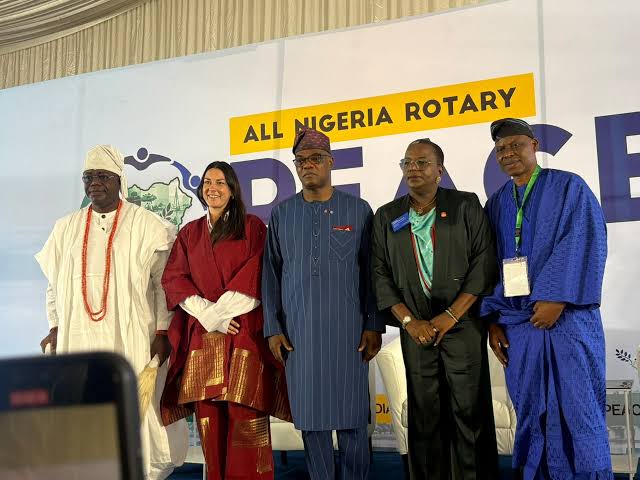
Distinguished leaders of government, members of the diplomatic community, representatives of security and law-enforcement agencies, traditional and religious leaders, distinguished guests, fellow Rotary members, ladies and gentlemen:
It is an honour to welcome you to the “All Nigeria Rotary Peace Summit.”
The question before us is how to come together, work toward a shared national future, and achieve true and lasting peace.
Nigeria has enormous potential. We have contributed to peace and stability across Africa, including through our work with the Economic Community of West African States and United Nations peacekeeping and Peace Support operations.
Our work in Liberia and other parts of Africa shows that we have the experience and ability to help prevent and manage conflict beyond our borders.
Now it is time to turn those energies inward — to bring our commitment to building peace among our neighbors and the world back home.
But we cannot impose peace. We must nurture it from the very roots of our society so it may grow into a great tree that will feed and shelter all of us under its protective embrace.
As a member of Rotary, when I consider this idea, I look to the philosophy of Positive Peace.
Peace, through this lens, is so much more than the absence of violence. To achieve true and lasting peace, we must consider the attitudes, institutions, and structures that create and sustain peaceful societies.
Here in Nigeria, meaningful peace cannot rely on our security forces and government institutions alone. It requires every level of society to come together for the betterment of all.
To grow Positive Peace from the ground up, Rotary starts from the very foundation of life, as we have done here.
In 2022, Rotary began a program called, “Together for Healthy Families in Nigeria.”
Members of Rotary here in Nigeria and as far away as Germany partnered with federal and state health ministries to make giving birth safer for both mother and child.
The program has helped expectant mothers across three states and the capital receive better and more frequent prenatal care.
Community health workers made nearly 60,000 visits to homes of expectant mothers and spoke with them and their families. We supplied 158 health facilities with contraceptives, medicine, and equipment.
We have already seen positive outcomes. Maternal deaths were reduced by 77%, and newborn deaths were reduced by 45% at supported facilities.
There is more work to do, but we are making progress. This is one way we plant the seeds of peace in Nigeria and around the world — we listen to the community, work with people so they can make their own lives better, and we stay committed to our goals.
With each child born safely to a healthy mother, we ease the burden carried by the Federal Ministry of Health and Social Welfare. We give families a greater sense of safety and security.
This is the beginning of Positive Peace. But members of Rotary do not stop once the seeds of peace are planted.
Since 2020, Nigeria has been free of the deadly grip of the wild poliovirus, which paralyzed and sometimes killed children when their lives had barely begun. And we continue to work with our friends at the World Health Organization and others to keep it that way and address the more recent outbreaks of variant poliovirus.
Rotary also builds peace directly. Members of Rotary clubs across Nigeria devote themselves to building peace every day.
And the year after Nigeria was declared wild polio-free, Rotary worked with Makerere University in Uganda to open a Peace Center, where students — called Peace Fellows — can learn how to build lasting peace both here in Nigeria and across Africa.
Over the years, more than 75 Rotary Peace Fellows have come from Nigeria. Some of our Peace Fellows are even here with us today.
I tell you this not to advertise Rotary (although we can always use new members). I tell you this because I want you to know that Rotary is already a quiet partner in peacebuilding — not only around the world — but here in our shared home.
As members of Rotary, we are not soldiers, ambassadors, or diplomats. We bring people together to find common purpose through service to others. We are here for Nigeria, and we are here to stay.
This year, I have called on every member of Rotary to Create Lasting Impact, and today, my brothers and sisters of Nigeria, I ask the same of every one of us.
I ask us to look at every level of society in Nigeria and consider how we can make all our lives better — not only today, but far into the future of this great nation. We may not speak the same language, worship the same way, or live the same way, but our nation’s future depends on all of us working together.
This summit is an opportunity to turn our shared commitment to peace into practical action — to take mere words and transform them into a bright future for us and all our children.
To my dear friends and family of Rotary here today, I challenge you to make peacebuilding in Nigeria our legacy of lasting impact.
As I have said to the Rotary world time and time again, we must consider how everything we do contributes to peace and pursue that peace purposefully and deliberately.
Rotary can help build confidence between institutions and communities, strengthen public trust, and ease the burden of everyday life that makes peacebuilding that much harder … but we must do so with purpose.
And before we can Create Lasting Impact in Nigeria, we must first have the courage to change ourselves, whether we are members of Rotary or not.
We cannot continue to do what we have always done and expect our great tree of peace to magically sprout from the ground. We must nurture our country and ourselves with all our being.
Give yourselves permission to be changed by what you see and hear at this summit.
That is how lasting impact is achieved — through people who are willing to change, institutions that are prepared to work for everyone, and communities that have the capacity to sustain progress.
And once we allow ourselves to change, we open ourselves to a new future — a future where the circumstances of someone’s birth do not determine their access to justice, opportunity, or dignity.
A future where differences are respected, where violence is rejected, and where we all come together, not as different groups in competition, but as Nigerians in harmony.
As we begin this summit, let us commit to more than resolutions and declarations. Let us commit to stability through change.
Remember that our true measure of success is not the words we share among ourselves today, but the impact of our actions that lasts generation after generation.
And if our commitment to peace is true — if our capacity for change is enough — our children, and their children after them, will enjoy the fruits of our labor under our great tree of peace — protected, safe, and free.
Thank you.
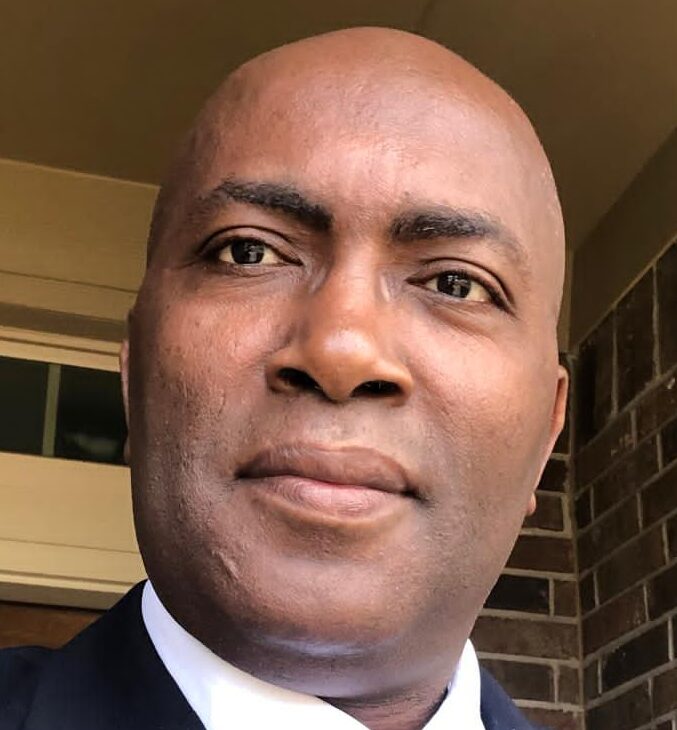
Nigeria’s democratic development depends not only on credible elections but also on responsible journalism and an informed electorate. In the view of Nosa Osaikhuiwu, sections of the Nigerian media and political commentary class have fallen short of this responsibility, particularly in their coverage and interpretation of the 2023 presidential election.
Writing from Houston, Texas, Osaikhuiwu argues that rather than critically examining the political realities behind the outcome, some media platforms amplified unsubstantiated allegations of electoral fraud by defeated candidates without sufficiently interrogating the evidence. This, he says, has contributed to public distrust and weakened confidence in critical democratic institutions, particularly the Independent National Electoral Commission (INEC) and the judiciary.
He highlights a key principle of electoral politics that he believes has been largely overlooked: when opposition forces divide their strength among competing candidates, they can strengthen the position of an incumbent under a winner-takes-all system. He cites examples from the United States, including Ross Perot’s impact in 1992 and Ralph Nader’s role in 2000.
Applying the same principle to Nigeria in 2023, Osaikhuiwu notes that Peter Obi and Atiku Abubakar contested separately against President Bola Tinubu. Although their combined votes exceeded Tinubu’s total, elections are decided by the votes secured by individual candidates under established rules, not by post-election addition of rivals’ tallies.
Looking ahead to 2027, he observes a similar opposition configuration emerging, with Atiku and Obi again pursuing separate ambitions. While acknowledging the economic hardships associated with Tinubu’s reforms and the administration’s political vulnerability, Osaikhuiwu stresses that public dissatisfaction does not automatically translate into an organised electoral movement capable of defeating an incumbent.
He criticises suggestions by some media personalities that the 2027 elections will be rigged even before they take place, describing such pronouncements as irresponsible. Journalists, he argues, must interrogate claims, examine evidence and educate the public rather than merely amplify the statements of political actors.
Osaikhuiwu maintains that while there may have been logistical shortcomings in 2023, these did not materially alter the final outcome, which was declared by INEC and upheld through the judicial process. Disagreement with a result, he says, is not in itself evidence of fraud.
He concludes that if the opposition genuinely seeks to defeat Tinubu in 2027, it must address its divisions and build a viable electoral coalition. Individual popularity, social media enthusiasm and public dissatisfaction cannot substitute for organisation, coalition-building and grassroots mobilisation.
“Journalism must educate, not mislead. Political commentary must analyze, not merely amplify. And democracy must be grounded in electoral reality, not political wishful thinking,” he writes.
-
Politics3 years ago
13 Ondo Assembly Members Disown Endorsement of Aiyedatiwa
-
Politics3 years ago
APC Group, Ondo Govt, Quarrel Over Money for Endorsement
-

 Trending News6 years ago
Stop unsavoury, inciting statements – DSS warns
-

 Others5 years ago
Adron Homes Celebrates 10 Years Of Housing Excellence
-

 Humanity5 years ago
President Buhari Commiserates With Ambassador Maureen Tamuno Over The Loss Of Her Father
-

 Others7 years ago
EX- CUSTOMS BOSS, IBRAHIM MERA’S DWINDLING FAME
-

 Business3 years ago
Bigi Carbonated Soft Drinks Treats 40 Consumers to an Epic Easter Movie Hangout
-

 Business2 years ago
Wema Bank Shines at Global SME Finance Forum Conference Awards 2024 …Awarded: • SME Financier of the Year (Africa) • Platinum Award for Best Financier for Women Entrepreneurs (Africa)