Opinion
Tinubu’s INEC pick…


Bola BOLAWOLE

Joash Amupitan nominated INEC chairman by President Tinubu, becoming the first Kogi native in the role and hailed for integrity and apolitical standing
“You don win! You don win! You don win!”
Also read: Two years after, Yusuf Maitama Tuggar repositions Nigeria globally
“What is the meaning of that? What did I win? Me that I don’t play lottery or Bet Niger or Baba Ijebu!”
“What you won is more than all those combined! Whoever has INEC has everything in the Nigeria of our dispensation”
“I still don’t understand the reason for this hysteria of yours”
“Why wouldn’t you? Were you not the one who commanded President Bola Ahmed Tinubu to choose the next INEC chairman from Yoruba land? And has he not obeyed you?“
“Oh, I see! I did not command; I only said the obvious. A Yoruba person has never been the INEC chairman. Why? What crime did the Yoruba commit to be so marginalized?“
“We are still saying the same thing. What if Mr. President had ignored your so-called sound argument to do the contrary? Would you have arrested him?”
“Not really; but he would have lost an opportunity to redress a long-standing injustice against his own people. No one can grudge him for nominating a Yoruba person as the next INEC chairman if the nomination sails through…”
“Forget about sailing through! It has sailed through already…”
“Don’t let us always talk like that! The president only nominates. It is the duty of the Senate to confirm or reject…”
“But has that ever happened?”
“That it has never happened does not mean it can never happen. There is always a first time, as they say. But whose fault is it if the senators choose to do their job one way or the other? Once the president nominates, the ball rolls to the court of the Senate. They are free to play it as they like”
“I beg to disagree! They must play it according to the rules. They are to screen – and screen they must!”
“I agree with you in that. Had they screened properly, we would have been saved the series of embarrassments that have hallmarked this Fourth Republic, beginning with Salisu Buhari, the first Speaker of the House of Representatives; then Kemi Adeosun and now the Minister of Innovation, Science and Technology, who was forced to resign last week”
“I like the innovation of the disgraced Minister of Innovation. You cannot be made the minister of innovation and be unable to innovate!”
“What do you mean?“
“Is it not an innovation that the erstwhile minister served his mandatory NYSC before graduating from the university?“
“I see! It turned out he never graduated and he never served…”
“You see what I mean? That is double innovation! He never graduated; he never served; yet he scaled through screening at the presidency, then with the security agencies and, finally, at the Senate…”
“We must salute the media that found him out…”
“Some people who had his records must have squealed on him. He must have stepped on toes…”
“That is true! There is no criminal that is not known by one person or another. There must be many of his type still hiding in various sectors of our national life…”
“Let’s leave that alone and let’s return to INEC. Controversy continues to trail Tinubu’s choice. They said he was a card-carrying APC member…”
“In fact, they said he was a member of the legal team that defended Tinubu’s 2023 election victory at the tribunal, but …”
”I was alarmed when I first heard that! Could they have been so stupid, both to nominate and to accept, until I saw that it was a case of mistaken identity”
“Mistaken what?“
“Mistaken identity! Osipitan is different from Amupitan. Otherwise, Obi and Atiku would have since hit the roof with their head”
“Yoruba people sef! They specialize in twisting words and tongues! Osi-pitan! Amu-pitan! Pitan, Pitan all over the place! What is the difference between the names?“
“Honestly, I don’t know! But ‘to Pitan’ means to tell a story. Maybe the names tell a story. Or the circumstances of birth or the time of birth…”
“I think ‘osi’ in Yoruba means poverty…”
“Yes, but the pronunciation of this particular ‘osi’ in Pitan is not the same as you pronounce poverty. It is pronounced differently…”
“I see! A name that tells stories signifies that the man’s tenure will tell stories…”
”That is, if it is not already doing so! One BAT nominates another BAT for a position as important as that of the INEC chairman“
“What do you mean? Who is BAT 1? And who is the other BAT?”
“Don’t you know that the initials of President Bola Ahmed Tinubu translates into BAT?”
“I see! But Amupitan’s do not! He is Joash Ojo Amupitan aka JOA”
“He is a BAT in another dimension. He comes from a section of the country which is neither South nor North. Or better still, which is both North and South, depending”
“I don’t understand”
“Amupitan is a Yoruba name. The man himself, ethnically-speaking, is Yoruba but his geo-political zone, North-Central, is part of the North”
”I see! He is at once a southerner as well as a northerner! That is double blessing…”
”Under Tinubu, it has apparently been double blessing for the Yoruba elements in the north-central zone. A case in point is Ojulari, the NNPC boss; now Amupitan, but it has not always been so”
“How do you mean?“
“In times past, the North merely used them to make up the numbers but marginalizes them when it comes to sharing the largesse that flows therefrom”
“Quite unfortunate! When they are needed; they are embraced and given the fake impression that they belong to the North, but after they have been used, they are dumped! Is that not what you are trying to say? “
“Exactly! Now that Tinubu is trying to redress this age-long injustice, some people are running their mouths”
’That is to be expected! Politics can be read into anything! But do you think the man will live up to expectations?”
“Whose expectations is the question! ”
“The people’s, of course!”
“Is it the people that nominated him? Or is it the people that will confirm his nomination? Abeg, leave the people out of it jare!”
“As INEC chairman, he is expected to conduct free and fair elections. He must ensure that elections conducted under his watch are credible…”
“Are you aware that INEC chairman alone cannot guarantee credible elections? Where do you place the politicians, the security agencies, and the voters themselves? What of INEC’s permanent and ad-hoc staff? And where do you place the government in power?’
“That is true! This is a classical case of what the economists call ceteris paribus, meaning all other things being equal, but can all other things ever be equal? “
“That is the issue, but I am surprised that Tinubu chose the person he nominated. I thought he would push it in our nose and nominate his son, Seyi, or the audacious Iyaloja, as the next INEC chairman!”
“God forbid!”
“God forbid wetin? If he did, will the heaven fall? The man is audacious enough to do anything! After the removal of fuel subsidy and forex exchange equalization, all in one fell swoop, I don’t think there is anything this man cannot do again”
“That’s true! Have you heard the news? Another PDP governor has defected to APC…”
“Stale news! We knew all along that Enugu would fall. The next is Bayelsa…”
“But I smell a rat! Can it be that the opposition people are emptying themselves into the ruling party so they can fight it from within and capture power through the back door?”
“Something like what Mikhail Gorbachev did in the USSR? He waltzed his way to the top echelon of the Communist party and thereafter unleashed his glasnost and perestroika bombshells that scattered the communist behemoth“
“My fear is: Will it be easy for the PDP to pull such sucker punch against Tinubu here? The man is a master strategist…”
“But when someone gets too wise and crafty, he may get ensnared in the process. Witness how IBB aka Maradona dribbled himself into a corner. He stepped aside never to step in again…”
“Between me and you, I never expected Tinubu to nominate a man as clean as Amupitan is said to be as INEC chairman. Has he learnt anything from the mistakes of Jonathan or is he repeating them?”
“You think Amupitan can jaga-jaga him as was done to Jonathan?“
“I have my fears! The Yoruba people are too finicky about integrity and doing the right thing…”
“Then, where do we place the whole argument? The Yoruba deserve the post; yet…”
“Just take note that it is one of the wonders of our world that a sitting president can open his eyes and nominate a man many are saying has integrity. IBB made the same mistake with Humphrey Nwosu…”
“Maybe Tinubu is sure of his onions! With the opposition parties in disarray and the politicians that matter emptying themselves into APC, what else is there for Tinubu to fear?”
“Politics is not that straightforward. By the way, we intimated our readers two weeks ago about the mathematical wonder of 2520…”
“Yes, that is true. The number looks like any other number but there is something strange about it. It is divisible by any number from 1 to 10…”
“How does that correlate with happenings in the polity?“
Also read: MEXC powers Africa’s crypto inclusion with zero-fee trading
“Simple: Not everything that appears normal on the surface is actually or in the final analysis normal”
“That is deep!”


Nigeria’s creative economy may already have the ingredients of a significant export industry, but its biggest challenge is not creating global demand. It is capturing more of the economic value generated by that demand.
Nigerian music, film, fashion and digital content have established audiences well beyond the country’s borders. Afrobeats alone has become a global commercial phenomenon, while Nigerian creators increasingly operate in international markets. Yet the growth of global reach raises a more consequential economic question: how much of the revenue generated by Nigerian creativity accrues to Nigerian creators, businesses and the wider economy?
That question sits at the heart of a broader opportunity for Nigeria. Unlike many exports, creative products can be developed domestically and sold repeatedly across international markets. A song, film, design, game or piece of intellectual property can generate income long after its initial production, creating opportunities for employment, foreign exchange earnings and business formation.
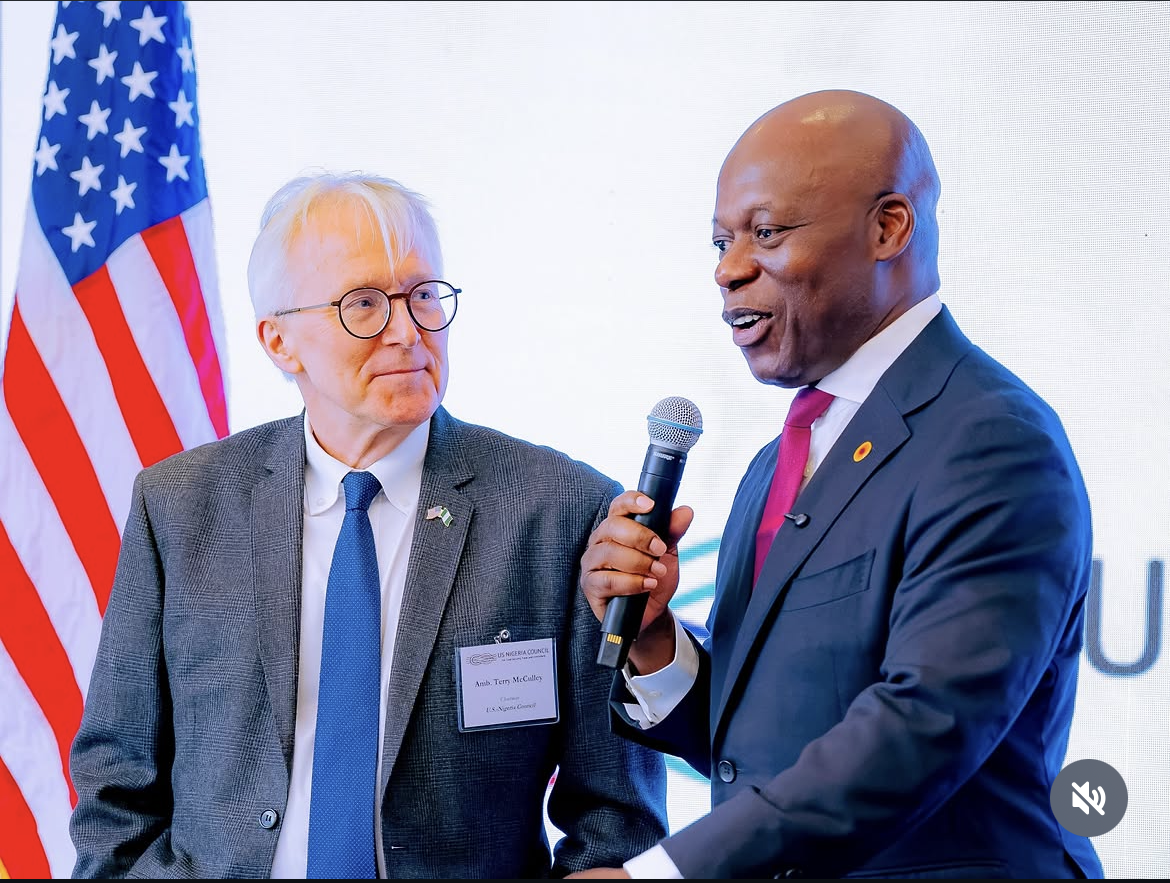
Speaking at the US-Nigeria Council breakfast during the 81st United Nations General Assembly, UNGA 81, Group Chief Executive of Oando Plc, Jubril Adewale Tinubu, argued that Nigeria should therefore rethink the economic status of its creative industries.
Nigeria’s creative economy is valued at about $6.4 billion, he noted, while the music industry generated more than $600 million in 2024. Afrobeats recorded more than 2.2 billion global Spotify streams, providing a measure of the international demand for Nigerian creative output.
The figures are significant, but the larger opportunity lies in what happens around them.
Global consumption of Nigerian creative content does not automatically translate into equivalent domestic economic value. The revenues generated by a successful creative product flow through a complex ecosystem of platforms, distributors, publishers, labels, investors, managers and rights owners. Without the financial and commercial infrastructure to ensure that Nigerian creators and companies retain a greater share of that value, rising global consumption can coexist with relatively limited domestic value capture.
This is why Tinubu’s proposition is less about entertainment policy than economic structure.
“We need to think about the creative arts differently: not just as culture and entertainment, but as an export industry,” he said.
Such a shift would require Nigeria to approach creative assets differently from traditional commodities. The country’s most valuable creative assets are often intangible, copyrights, catalogues, brands, audiences and intellectual property. Yet these assets are not always easily financed through conventional banking structures.
Developing investment models around them could allow successful artists and creative businesses to move beyond project-by-project income towards scalable enterprises. Stronger intellectual-property protection, more efficient royalty collection, international distribution networks and access to growth capital would also determine how much of the sector’s expanding global value is retained locally.
The foreign-exchange implications are particularly relevant. Nigeria’s export earnings remain heavily concentrated in commodities, especially oil. Creative exports provide another potential source of foreign revenue, while being comparatively less dependent on physical logistics.
That does not make the creative economy a substitute for traditional exports. Its importance is that it broadens the country’s export base and creates economic activity around skills, intellectual property and services.
The opportunity extends well beyond music. Nollywood, fashion, advertising, animation, gaming, publishing, photography and digital media increasingly intersect with global consumer markets. Each can generate export revenue, but each also requires commercial infrastructure to scale.
The central policy challenge, therefore, is moving from celebrating creative success to building an economy around it.
That means creating conditions under which creators can raise capital, protect their intellectual property, build companies and retain a larger share of the value their work generates internationally.
Tinubu captured the broader proposition succinctly: “Our creativity is cultural influence. It is also economic power.”
For Nigeria, the next step is converting that influence into a stronger domestic economic return.


By Bolanle BOLAWOLE,
Few days ago, a senior pastor of mine called and spoke fata-fata, as they say, about the state of our hospitals. His preambles were something else; it went something like this: Pastor Bolawole, I know you journalists are part of the problems of this country! You don’t tell our leaders the truth.
Also read: Details As Fresh 5,000 Teachers Take New Digital Tools Into Nigeria’s Classrooms
Is it because of the brown envelopes you collect from them? That is why you are in cahoots with them.” I had started wondering what was the matter before he hit the nail on the head: Someone dear to him was ill and they needed him or her (I can’t remember which one) to undergo MRI scanning but no MRI machine was available “in the whole of Ogun state”, he said.
Eventually, they had to hire a vehicle for N50,000:00 to convey the sick person to the Redeemed Christian Church of God (RCCG) medical facility at the Redemption City (formerly Redemption Camp) along the Lagos-Ibadan Expressway, Mowe, for the MRI to be done. “And they will say Redeemed (RCCG) is not doing anything!” As I made to speak, he rounded up with “I just felt I should let you know about this” and hung up.
Not a single MRI machine in the whole of Ogun state? It appears unbelievable. But come to think about it, is Redemption City, where they eventually found one, not in Ogun state? Syllogism, which I learnt in Philosophy 101, taught at the then University of Ife (now Obafemi Awolowo University), Ile-Ife, by Dr. Dipo Fashina (aka Jingo), as he then was, is instructive here. According to Google, a syllogism is a form of logical reasoning that uses deductive logic to combine two statements and arrive at a new conclusion.
A standard syllogism has three parts: The first part is the major premise, which is a general statement or rule that is assumed to be true. The second part is a minor premise, specific fact or case that relates to the major premise. The third part is the conclusion, which is the logical result that follows from the two premises.
A classic example is: All humans are mortal/Socrates is a human/Therefore, Socrates is mortal. Another example is: All mammals are warm-blooded/All dogs are mammals/Therefore, all dogs are warm-blooded.” Arising from the above, we can construct our own syllogism thus: Redemption City is in Ogun state/MRI machine was found at Redemption City/Therefore, there is an MRI machine in Ogun state! QED!
The curiosity of a journalist still pushed me to ask questions about MRI machines. What exactly are they and their use? I got the following answer: “An MRI machine is a medical imaging device that uses powerful magnets and radio waves to create highly detailed, cross-sectional pictures of the inside of the body.
Healthcare providers use MRI scans to evaluate, diagnose, and monitor a wide variety of medical conditions without using harmful radiation. It is especially effective for viewing soft tissues.
Common uses include examining the brain and spinal cord; diagnosing strokes, multiple sclerosis (MS), brain tumors, aneurysms, and spinal cord injuries.
It is also useful in detecting “tears in ligaments, tendons, and cartilage (such as in the knee or shoulder), as well as bone infections, evaluating heart damage from heart attacks, congenital heart disease, heart structure, and blood flow abnormalities. MRI machines are also used in checking organs in the chest, abdomen, and pelvis—including the liver, kidneys, pancreas, prostate, and uterus—for tumors, inflammation, or disease.
Waooh! If MRI machines are this useful; nay, indispensable, how come they are not commonplace in our hospitals? Are their costs prohibitive? I got the following response: “New clinical MRI machines typically cost between $1 million and $3 million while advanced 7T research systems can reach $7 million. Purchase Price Breakdown: New Systems: A standard 1.5T or 3T MRI scanner costs $900,000 to over $3.7 million for the hardware alone. Refurbished or Pre-Owned Systems: Used or refurbished units range from $100,000 to $700,000, depending on field strength (Tesla rating), bore size, and condition. Budget/Low-Field Open MRIs: Basic or low-field models (0.25T–0.5T) cost between $130,000 and $300,000.
Additional Ownership and Operating Expenses: The sticker price is only part of the investment; total cost of ownership involves heavy infrastructure and maintenance outlays: Installation and Site Preparation: Specialized room construction, radiofrequency (RF) shielding, cryogen venting, and structural reinforcement typically add $75,000 or more.
Maintenance and Cooling: Annual service contracts and maintenance range from $10,000 to $100,000 per year, driven heavily by liquid helium consumption used to keep superconducting magnets cold (though newer low-helium or helium-free technologies are emerging).
These are not costs that even a local government cannot afford in today’s Nigeria, especially with the quantum of money the Bola Ahmed Tinubu administration is heaping on the two tiers of government – state and local governments. But to make assurance doubly sure, as they say, I asked Google if it has any information on the availability of MRI machines in Ogun state. This is the answer I got: “Yes, an advanced MRI machine is available in Ogun state at the private specialist facility – Redeemer’s Health Village located in Redemption City, Mowe.”
It goes further to say: “Redeemer’s Health Village (RHV) houses a 1.5 Tesla MRI system featuring a wide 70 cm bore capable of accommodating plus-sized patients weighing over 300 kg. They also offer subsidized scan slots for low-income and indigent patients.” Thumbs up for RCCG, but thumbs down for Ogun state because “major public healthcare facilities in the state – such as the Olabisi Onabanjo University Teaching Hospital (OOUTH) in Sagamu and the State Hospital in Ijaiye have lacked functional on-site MRI equipment, with the State House of Assembly actively pushing for their procurement.”
It is common knowledge that our leaders at all levels devote scanty attention to the state of our hospitals, primarily because they don’t patronize them. They always fly abroad for medical treatment – and can also afford the charges in the best private hospitals available locally.
These days, we are inundated with stories of “lack of bed space” in virtually all our hospitals. The father of one of my choriters spent hours on his wife’s wrapper spread on the bare floor along the corridors of LUTH before he was attended to because there was no bed space. He died. My panel-beater’s 14-year-old girl was rejected in one government hospital after another because of lack of bed space. She died.
The unprofessional conduct of health workers is another worrisome experience that anyone unfortunate enough to approach government hospitals have had to tell ad nauseam, ad infinitum.
My treasured niece, Abosede Oluwayemi Edema, aged 54, died last June at the Federal Medical Centre, Ebute-Metta, Lagos after being left unattended from 2.00am until she fell into a coma at 4.00pm. Her blood infection, which should not have killed her if she had been adequately and promptly attended to, was left untreated till she died. Doctors’ negligence, nonchalance, unprofessional conduct, and the complicity and duplicity of her husband, sent her to an untimely grave. We can go on and on!
One story that made headline news last week was the death of one Mr. Olatunde John Kolawole, which reportedly occurred at the Lagos State Teaching Hospital (LASUTH), Ikeja. Kolawole had an accident while trying to avoid an errant tricycle rider; he promptly got to the hospital but reportedly was left unattended for many hours that eventually proved fatal.
One of the dead man’s siblings had this to say: “Your death was not just an accident… It was a failure of duty. The people sworn to protect life let you slip away. An accident didn’t kill you, but (the) negligence of LASUTH (did).”
I could feel her pain because I have been through that valley lately. It was not the cancer that my niece, Bose, bravely fought that eventually killed her; the concoctions applied on her by her husband and his family, caused the blood infection that took her to the hospital. The nonchalance of doctors at the FMC, Ebute-Metta, was the last straw that broke the camel’s back.
Issues arising from these incidents include the dearth of qualified and experienced health workers in our medical facilities. JAPA has turned our hospitals into a ghost of their former selves – and our governments appear to be doing nothing about it. They don’t patronise our hospitals anyway.
The remaining medical personnel are criminally over-worked and stretched beyond elasticity level; with many collapsing and dying on duty. Little wonder, then, that they have become somewhat nonchalant and cavalier while on duty. “Do your best and take a rest or leave the rest” now appears the mantra. In addition to shortage of hands, available facilities have not grown in tandem with population explosion, leaving gaps that cannot be filled overnight.
Factor in the widespread corruption cankerworm and you begin to see how deplorable, to say the least, the situation has become in our hospitals.
There also is the question of the free rein given to Okada and Keke riders in many South-west states.
It was the mercy of God that saved my family from mourning two years back when an Okada rider suddenly made a u-turn into the lane of my son’s power bike. All they need to hear is a shout of “okada”! Pronto, they stop! They turn! Anything! Something has got to be done about these pests.
But until citizens become more proactive and begin to hold the feet of our leaders to the fire, nothing will change. Fela said it all in his song, “Suffering and Smiling”: For as long as we keep smiling back at them, they won’t see our pains; but the moment we begin to bare our fangs, they will feel our pains – and act appropriately!
PHCH’s hideous tariff hike
I read somewhere recently that the Government said it preferred that consumers be metered than for PHCN to hike tariffs.
Either the government is not aware of what is happening in the power section or it is duplicitous and complicit. PHCH has silently been adjusting its tariff without any commensurate improvement in service delivery. I got to know this – and with empirical evidence – last week when I recharged. I usually do this on a yearly basis. PHCN surreptitiously reviews tariff upward and or upgrade end-users from a lower-paying to a higher-paying Band without notice. On September 22nd, 2025, I bought 1488.8 KWh for N50,000.00 (Fifty Thousand Naira) only.
One year after, specifically on September 16, 2026, the same N50,000.00 (Fifth Thousand Naira) could only fetch me 1015.5 KWh, a loss of 473.3 KWh! A whopping 46.61% increase within a space of one year without any commensurate improvement in services provided! Tell me, where are we going in this country?
Also read: Details As Fresh 5,000 Teachers Take New Digital Tools Into Nigeria’s Classrooms
When the government flaunts parameters and economic indices indicating that things are looking up, but citizens counter that their life isn’t improving, it is because of hidden and hideous costs such as PHCN’s that is not allowing the common man to enjoy the fruits of government’s efforts at revamping the economy. Must we fold our arms and look – and suffer in silence?
(Published in the ON THE LORD’S DAY column in the Sunday Tribune newspaper edition of Sunday, 27 September, 2026).

By Ehi Braimah,
Conversations during economic summits on Africa clearly indicate that governments alone cannot transform Africa’s economic fortunes.
Also read: Details As Fresh 5,000 Teachers Take New Digital Tools Into Nigeria’s Classrooms
While African countries bet on foreign investment, or depend on borrowing and aid, a thinking still rooted in our colonial history, something more fundamental is taking place across the continent: the capacity of young Africans to create businesses, jobs and solutions to problems around them.
This significant shift by young Africans, demonstrating their capacity to innovate and launch businesses of their own, leads us to Africapitalism, the economic philosophy associated with Nigerian entrepreneur and philanthropist Tony Elumelu.
The philosophy is simple: Africans must play a central role in creating Africa’s economic prosperity.
At its heart is the belief that Africa’s private sector can drive economic and social development by creating long-term economic value and social wealth on the continent.
The Tony Elumelu Foundation (TEF) has translated this philosophy into an ambitious entrepreneurship programme that identifies, trains, mentors and provides seed capital to young African entrepreneurs.
The idea is simple but potentially transformational: give young Africans the tools and capital to build sustainable businesses, rather than waiting for them to find employment in economies that cannot create enough jobs.
In terms of scale and impact, the numbers behind TEF’s entrepreneurship intervention are substantial.
The story of Ms. Theresa Oluwagbemi which I am about to tell is not an isolated case, but part of an entrepreneurship ecosystem.
Since the launch of its flagship Entrepreneurship Programme in 2015, TEF has empowered more than 27,000 entrepreneurs across 54 African countries, while more than 2.5 million Africans have accessed business-management training through TEFConnect. In addition, more than US$100 million in seed capital has been disbursed so far to selected entrepreneurs.
According to TEF’s latest figures, businesses supported through the programme have collectively generated more than US$4.2 billion in revenue and created more than 1.5 million direct and indirect jobs.
TEF also reports that it has lifted 2.1 million Africans above the poverty line and positively affected more than four million African households.
The programme’s reach is also demonstrated by the extraordinary demand for it. In 2026 alone, TEF received more than 265,000 applications from young Africans across the continent before selecting a cohort of 3,200 beneficiaries – up from 1,000 beneficiaries when the programme was launched 11 years ago – with 51 percent being women.
Supported by his wife, Awele, Tony Elumelu took TEF to a new level, building partnership with major development institutions, governments and global foundations to scale the programme.
These partners include the European Union, UNDP, ADB, International Committee of the Red Cross, United States African Development Foundation, Organisation of African, Caribbean and Pacific States; German Development Finance Institution (DEG), German Agency for International Cooperation (GIZ), Google, UNICEF Generation Unlimited, IKEA Foundation, the UAE Office of Development Affairs, and Khalifa Bin Zayed Al Nahyan Foundation, among others.
I have had the privilege of experiencing the Africapitalism philosophy from the other side of the table as a mentor in the Tony Elumelu Entrepreneurship Programme.
Last year, I was assigned to mentor Theresa Ouwagbemi, a young Nigerian entrepreneur whose journey provides a compelling illustration of how relatively modest catalytic capital can unlock economic activity.
Theresa studied Mass Communication at the Federal University, Oye-Ekiti, graduating with a second-class upper division, but her entrepreneurial journey began before graduation.
She started producing and selling liquid soap on a very small scale, primarily to students and lecturers in her university.
Like many young entrepreneurs, she had an idea and the determination to pursue it, but lacked the resources to take the business to the next level.
Then came TEF.
Theresa heard about the programme through a mentor who encouraged her to apply.
She knew the selection process was competitive; nevertheless, she submitted her application, including her business pitch and proposal. When the email announcing her selection arrived, it became, in her words, “one of the best days of my life.”
That moment was more than an emotional milestone – it marked the beginning of a significant transition in her entrepreneurial journey.
She received the $5,000 seed grant in January, 2026, alongside access to the programme’s masterclass and mentorship.
The combination is important. Capital without knowledge can be wasted, just as knowledge without capital can remain theoretical.
Her business, “Boom Liquid Wash”, began to acquire the capacity to serve a wider market. Before the grant, Theresa’s business was constrained by the limited equipment available to her.
She had to turn down some contracts because she lacked the production capacity required to fulfil them.
The grant changed that equation. With the money, she acquired basic equipment needed for production.
Her customer base expanded beyond students and lecturers to include restaurants, office owners, other businesses and individual consumers. This is where the broader significance of Africapitalism becomes evident.
The US$5,000 did not simply become money in Theresa’s bank account; it became productive capital. It was converted into equipment, production capacity, customers and business relationships.
It enabled 23-year-old Theresa to accept opportunities that were previously beyond her reach. That is the multiplier effect that entrepreneurship can produce.
Theresa’s story also demonstrates why entrepreneurship development cannot be reduced to simply handing young people money.
The TEF model helps entrepreneurs to develop the knowledge, resilience and connections required to survive in a difficult business environment, and Nigeria’s business environment can be difficult.
Theresa recalls an occasion when the price of chemicals used in her production increased by more than 60 per cent. For a small business, such a sudden increase in input costs can threaten profitability and customer relationships.
How do you explain to customers that your costs have suddenly risen? How do you protect your margins without losing your market? How do you keep going when the economics of your business appear to be changing overnight?
These are not theoretical questions for young African entrepreneurs; they are everyday realities.
We discussed these challenges and Theresa learned to adapt.
Her entrepreneurial experience has also exposed her to opportunities and people she might not otherwise have encountered. While she was still a student, for example, she produced souvenirs for the Dean of her department.
More importantly, entrepreneurship has sharpened her ability to identify problems and develop tailored solutions.
That is another important dimension of Africapitalism: the entrepreneur is not merely a beneficiary of economic development, but becomes an agent of economic development.
Theresa’s customers are beneficiaries because they have access to locally produced products. Her suppliers also benefit from demand, and the businesses that buy her products benefit from reliable supply. As “Boom Liquid Wash” grows, its economic footprint can grow with it. Multiply Theresa’s experience by thousands of entrepreneurs across Africa and the significance becomes much larger.
This is why the Tony Elumelu Entrepreneurship Programme is important beyond the individual entrepreneurs who receive the grants.
The real ambition is to create an ecosystem in which African entrepreneurs thrive, solve African problems, build African businesses and create economic value within African economies.
Africa has no shortage of entrepreneurial energy. What it often lacks is the capital, infrastructure, market access, knowledge and institutional support required to turn entrepreneurial ideas into sustainable businesses.
The intervention of catalytic capital can therefore be significant, but money alone does not guarantee success.
Theresa has learned some hard lessons. One is particularly memorable: never sell on credit. Her experience reflects one of the perennial challenges facing small businesses: cash flow.
A small business may have customers and make sales on paper but still struggle if customers do not pay promptly.
Her second lesson is perhaps even more important: entrepreneurship is not a smooth journey.
There will be setbacks, unexpected costs, disappointments and moments of discouragement.
My advice to Theresa and other young entrepreneurs is to look back at what they have achieved and remember what motivated them to start in the first place.
That resilience is essential to building businesses that can survive beyond the initial intervention.
Theresa is currently undertaking her National Youth Service Corps programme in Enugu, in Eastern Nigeria.
She describes her experience in Enugu as beautiful, saying she has met amazing people and visited beautiful places.
But NYSC is only another chapter in her journey; her ambition is much bigger. She wants to grow “Boom Liquid Wash” into a business that meets global standards.
She plans to gain additional exposure by interning with companies that represent the blueprint she wants for her own business. She also plans to pursue an MBA because, in her words, building a global business requires “a global mindset, experience and exposure.”
This is precisely the kind of ambition that programmes such as TEF seek to nurture.
There is an important lesson here for Africa: development should not only be measured by the amount of money injected into an economy; it should also be measured by the productive capacity that such capital creates.
The money should create a business, acquire customers, and enable increase in production.
In addition, the entrepreneur should acquire new skills; the enterprise should become capable of accepting larger contracts, while creating opportunities for others, contributing to the economic value within the community and, ultimately, within the African economy.
This is the type of value chain that makes the Africapitalism conversation particularly relevant. Tony Elumelu’s intervention is premised on the idea that the African private sector can be an engine of development.
Rather than viewing philanthropy simply as the distribution of resources, Africapitalism seeks to connect enterprise, investment, economic empowerment and social impact.
Theresa’s story illustrates this connection at the micro level. Her production capacity grew and her customer based expanded with bigger ambitions. The next challenge for her is sustainability.
The ultimate test of any entrepreneurship programme is what happens after the grant. Can businesses survive? Can they scale and create jobs? Can they attract additional capital? Can they become suppliers to larger companies? Can they expand across borders? Theresa appears determined to pursue that journey.
Her aspiration to build a global-standard business is significant because Africa needs businesses that can grow, compete, innovate, export and create wealth.
The continent’s enormous youth population makes this even more urgent. Millions of young Africans will enter the labour market in the coming years, but no government can employ everyone.
Sustainable private enterprises must therefore become an increasingly important part of the solution. This is where Africapitalism intersects with Africa’s development challenge.
The goal is not capitalism for its own sake; it is the deployment of private enterprise and capital to generate both economic and social value.
Theresa’s journey from a small student-based liquid soap business to a growing enterprise with customers beyond her immediate environment may appear modest against the scale of Africa’s economic challenges, but transformation often begins at this level – one young African entrepreneur who moves from dependency to enterprise. That is how impact multiplies.
The real promise of Africapitalism lies not simply in the success of one Tony Elumelu entrepreneur, but in the possibility that thousands of entrepreneurs can become creators of value, employers of labour, innovators and contributors to Africa’s economic transformation.
Theresa’s story is therefore bigger than “Boom Liquid Wash” – it is a story about what happens when capital meets an idea, when mentorship meets ambition, and when opportunity meets determination.
Also read: Details As Fresh 5,000 Teachers Take New Digital Tools Into Nigeria’s Classrooms
Perhaps that is one of the most powerful ways to understand Tony Elumelu’s vision for Africa: don’t just give young Africans a chance to find jobs; give them a chance to build businesses that create jobs, wealth and solutions for Africa.
That is Africapitalism in action.
-
Politics3 years ago
13 Ondo Assembly Members Disown Endorsement of Aiyedatiwa
-
Politics3 years ago
APC Group, Ondo Govt, Quarrel Over Money for Endorsement
-

 Trending News5 years ago
Stop unsavoury, inciting statements – DSS warns
-

 Others5 years ago
Adron Homes Celebrates 10 Years Of Housing Excellence
-

 Humanity5 years ago
President Buhari Commiserates With Ambassador Maureen Tamuno Over The Loss Of Her Father
-

 Others7 years ago
EX- CUSTOMS BOSS, IBRAHIM MERA’S DWINDLING FAME
-

 Business2 years ago
Bigi Carbonated Soft Drinks Treats 40 Consumers to an Epic Easter Movie Hangout
-

 Business2 years ago
Wema Bank Shines at Global SME Finance Forum Conference Awards 2024 …Awarded: • SME Financier of the Year (Africa) • Platinum Award for Best Financier for Women Entrepreneurs (Africa)