
Opinion
Shaping Intercontinental Business Between Africa and Europe


Ambassador Eniola Ajayi urges a new approach to the Dutch Africa Strategy, calling for equal partnership and African inclusion in future policy design

Keynote Address by Ambassador Dr. Eniola Ajayi at a Business Dialogue on Africa organised by the Voice News Magazine based in the Kingdom of Netherlands which took place at Eko Hotel, Victoria Island, Lagos on Friday, November 28, 2025
Also read: Baba-Ahmed confirms Peter Obi remains in Labour Party
Title: Shaping Intercontinental Business Between Africa and Europe
Theme: Debunking Notions, Reshaping Mindsets in Doing Business in Africa
Opening & Acknowledgements
Your Excellencies,
Esteemed colleagues,
Leaders of industry, government, and diplomacy, Distinguished ladies and gentlemen, Good morning.
It is an honour and privilege to stand before you today to discuss a subject that sits at the very heart of our shared future – Shaping Intercontinental Business Between Africa and Europe.
Allow me to appreciate the organisers of this dialogue, The Voice Africa News Magazine, from the Netherlands for framing such a profound theme – “Debunking Notions, Reshaping Mindsets in Doing Business in Africa.”
It is indeed time to move beyond the old narratives – those outdated perceptions of Africa as a continent defined by aid, rather than by opportunity; by potential, rather than by performance.
Africa is not waiting to be discovered. Africa is open for business – on equal terms.
Setting the Context: A Moment of Transformation
We are gathered at an auspicious moment in history. The tipping point if you like.
The tectonic plates of global trade, energy, and geopolitics are shifting.
The COVID-19 pandemic and its aftermath have redrawn global value chains and revealed the vulnerabilities in our different nations – big or small.
The war in Ukraine has reshaped energy and food security priorities.
And across Africa, a young, dynamic, and connected generation is rewriting the script of our economic destiny.
Africa today is not merely a supplier of raw materials – it is a continent of creators, innovators, intellectuals and entrepreneurs who are building the industries of tomorrow.
From Lagos to Kigali, Nairobi to Accra, African startups are redefining fintech, healthtech, agritech, and clean energy solutions that speak not only to local realities but to global challenges.
The Dutch Africa Strategy – A Case Study of Intention and Opportunity
When the Dutch Africa Strategy (2023–2032) was launched in The Hague in May 2023, I had the privilege of being among the Ambassadors representing African nations.
It was a moment of recognition – that Africa’s growth and Europe’s prosperity are deeply intertwined. Our proximity to each other makes our collaboration inevitable.
The Dutch strategy articulates noble intentions. It speaks of mutual trust, equality in partnership, and shared prosperity.
It acknowledges that Africa’s development is no longer a matter of charity, but of mutual interest – in trade, security, climate resilience, and sustainable growth.
It represents an important shift: a recognition that doing business with Africa is not about aid, but about partnership; not about dependency, but about interdependence. We need each other to thrive and survive.
A Missing Element – The African Voice
However, while the Dutch Africa Strategy was commendable in vision, it also revealed a familiar pattern.
It was a strategy for Africa, but not with Africa.
African nations were not consulted in its drafting; we were presented with the finished document – a plan about our continent, developed without our direct input.
And therein lies a paradox that we must address, if we are to reshape intercontinental business:
How can we speak of equality and mutual trust when the voices of one side are absent from the design table?
True partnership cannot be built on monologue – it must be dialogue.
Africa does not seek to be a passive recipient of strategies. We seek to be co-authors of them.
We want to sit at the table not as guests, but as equals – bringing our own priorities, insights, and aspirations to the discussion.
Debunking Notions – A New Mindset for Both Sides
Ladies and gentlemen,
If this decade is to be one of genuine transformation, we must begin by *debunking old notions* – on both sides of the partnership.
For too long, Africa has been seen primarily as a source of raw materials – a continent that extracts but does not refine; that exports value but imports finished products; that fuels global industry while its own citizens remain on the margins of prosperity.
That narrative must end. Our survival depends on this.
Africa is finally waking up to the reality that our vast natural resources – from minerals to agriculture, from oil and gas to our boundless human capital – must no longer be shipped out in raw form.
We have realized that value addition must happen on African soil, by African hands, through African innovation – in partnership, yes, but with equity and ownership.
When Africa processes its cocoa, it creates jobs. We can make chocolate bars too! It is not rocket science.
When Africa refines its lithium, it powers its own industries.
When Africa manufactures its pharmaceuticals, it safeguards its own health.
This is not protectionism – it is self-empowerment. It is self preservation. It is economic justice.
Reshaping the European Mindset
At the same time, our European partners must also evolve their perspective.
Partnership with Africa should not be viewed through the lens of risk, but of reward.
The narrative of instability and fragility must give way to one of resilience and opportunity. It should call a spade – a spade. Yes, there are issues of insecurity, what we need is help, not escalation.
The Africa of today is governed by regional economic communities that are harmonising trade rules.
The African Continental Free Trade Area (AfCFTA) is creating the largest single market in the world by number of countries – a market of 1.4 billion people with a combined GDP of over three trillion dollars.
This is not a continent to be pitied. It is a continent to be partnered with – on equal footing.
The mean age of the African population is 19.2 years (due to factors that we hope will improve over time) but the benefit is that we have a virile, versatile, educated and youthful workforce.
The business mindset must therefore shift from extractive transactions to transformative investments;
from short-term profit to long-term partnership;
from seeing Africa as a *testing ground to seeing Africa as a growth engine.
Europe and Africa – Partners in Transition
Both continents are undergoing profound transitions.
Europe is reindustrialising and greening its economy – moving towards clean energy, circular production, and digital transformation.
Africa is urbanising rapidly, digitising its economies, and investing in renewable energy and youth innovation.
Our transitions can and must be aligned.
Africa holds 60% of the world’s renewable energy potential.
Europe holds decades of industrial and technological expertise.
Together, we can build a new paradigm of co-created growth – that is green, inclusive, and mutually beneficial.
Migration – A Bridge, Not a Barrier
But there is another crucial aspect of our intercontinental relationship that requires a new mindset: migration.
Too often, migration has been portrayed as a crisis to be managed rather than a force to be harnessed. Yet, when well-governed, migration is not a problem – it is an opportunity.
We must tackle the issue of migration between Africa and Europe in a way that is mutually beneficial to both continents.
Africa’s youthful population is an asset; Europe’s aging workforce presents a challenge.
A fair, regulated, and humane framework for mobility that can serve both needs.
There should be regular pathways for legal migration – pathways that attract the people and skills needed in European countries seeking to shore up their workforce, while ensuring that migration remains dignified, orderly, and mutually enriching and not exploitative.
When talent circulates, innovation follows. When movement is managed, both continents prosper.
We must therefore move from a defensive approach to migration to a developmental approach – one that sees people as bridges, not as burdens.
A New Business Compact – Built on Trust and Equality
To shape truly intercontinental business between Africa and Europe, we must anchor our cooperation on five key principles:
1. Co-creation, not prescription
Policies affecting Africa should be designed with African stakeholders at the table.
When strategies such as the Dutch Africa Plan are revisited or implemented, they should incorporate the perspectives of African governments, private sectors, and youth voices.
Ownership begins with participation.
2. Value addition within Africa
European investors must continue to partner in setting up industries in Africa – not just to extract raw materials but to manufacture, process, and innovate locally.
The success story of Friesland Campina is a case in point. This is a great company with the right mindset.
This will create jobs, reduce poverty, and deepen regional value chains.
3. Fair trade and access to markets
Trade frameworks must reflect fairness. Non-tariff barriers and complex standards often disadvantage African producers.
The future must prioritise access, technology transfer, and mutually beneficial trade agreements under AfCFTA and EU frameworks. The CBI – Ginger initiative is a welcome collaboration between Nigeria and the EU.
(Nigerian ginger is considered among the best in the world. Its aroma, sharp taste and high oil content are unique features.
Nigeria was the world’s third-largest producer of ginger in 2018. Still, economic growth in Nigeria is spread unevenly and many people live in poverty.
The Nigerian ginger sector has the potential to add more value and diversify its markets.
In 2021, the Centre for the Promotion of Imports from developing countries (CBI) started a project to strengthen the sector’s quality services.
In the project, Nigerian small and medium-sized enterprises (SMEs) are supported to create value-added ginger products.
This is done by improving quality, helping with sustainability certification and organic or refined processing.
4. Technology and knowledge partnership
The 21st-century partnership must be based on technology transfer, research collaboration, and capacity building.
Let us replace the model of finished goods for raw materials with one of shared innovation. We cannot keep collecting peanuts for our coffee beans while paying premium dollars at Starbucks.
5. Inclusive growth and sustainability
Intercontinental business must be anchored in sustainability – environmentally, socially, and economically.
Women, youth, and small enterprises must not be left behind in this journey.
The market is large enough for everyone to get a share. The sky is big enough for all birds to fly without impeding one another.
Examples of Opportunity
The opportunities for partnership are vast:
• In energy, Africa’s abundant sunlight and Europe’s technology can together lead the world in renewable innovation.
• In agriculture, Africa’s fertile lands and Europe’s processing expertise can ensure food security on both continents. With the golden triangle approach of the Netherlands ( Government-Research Institutions-Private Sector partnership), prosperity is possible.
It is no wonder Netherlands is the second largest producer of food in the world. Netherlands has mastered how to improve the yield of their produce.
• In healthcare, Africa’s growing pharmaceutical sector and Europe’s regulatory experience can build resilient health systems.
• In digitalisation, Africa’s mobile-driven innovation and Europe’s cybersecurity frameworks can together define the next frontier of global commerce.
Reclaiming the Narrative
We must remember – narratives shape behaviour.
For too long, Africa’s story has been told by others.
It is time for Africa to tell its own story – confidently, creatively, and collaboratively.
As an African diplomat who has served in Europe, I have seen firsthand that when Africa speaks with a clear voice, the world listens.
When we negotiate with clarity and unity, the terms of engagement change.
And when we demand fairness – not as charity, but as a right – we gain respect.
We must therefore approach intercontinental business not with a sense of inferiority, but with the dignity of equal partnership. We must come to the table with a true understanding of our selfworth.
A Call to European Partners
To our European friends – including the Netherlands – I say this:
The future of global prosperity is not in rivalry, but in renewed partnership.
When the Dutch Africa Strategy speaks of mutual trust and equality, let us make it real by ensuring African inclusion in every phase of implementation.
Let us transform the strategy from a policy paper into a living framework of collaboration – where Dutch and African entrepreneurs, scientists, and innovators co-create the industries of tomorrow.
Let us build joint centres of excellence, green industrial zones, and value-chain partnerships that demonstrate the power of equality in action.
A Call to African Entrepreneurs and Governments
And to my fellow Africans – government leaders, business owners, innovators – let us rise up to this moment.
The world will not value what we do not value ourselves. If you call yourself a doormat, nobody will call you a queen.
We must create enabling environments – stable policies, secure safe spaces, transparent governance, reliable infrastructure – that attract and sustain investment.
We must develop our human capital – in science, technology, engineering, entertainment, and management – to power our own industries.
We must trade more with each other – because an integrated Africa is a stronger Africa.
The artificial division of Africa in 1884 – 1885 at the Berlin conference must give way to deliberate and intentional solidarity.
Let us remember: no one will add value to our resources unless we decide to do so ourselves. Africa must first be developed by Africans. People respect what is developed.
The Spirit of Ubuntu – Our Shared Humanity
At the heart of all these conversations lies a deeper truth:
Our destinies are intertwined.
As the African proverb says, “If you want to go fast, go alone. If you want to go far, go together.”
Africa and Europe are natural neighbours.
Africa and Europe must go far – together.
Not as donor and recipient, not as exporter and importer, but as partners in progress, equals in vision, and co-architects of a sustainable future.
Conclusion – A Future Defined by Partnership
In closing, let me return to where I began:
We are not just shaping intercontinental business – we are shaping intercontinental destiny. We are being pragmatic about our inevitable future.
The Dutch Africa Strategy 2023–2032 gives us an opportunity – not a finished product, but a framework to build upon. Maybe for a Europe – Africa strategy.
It is an invitation to redefine partnership.
To move from strategy on paper to collaboration in practice.
To replace extraction with equity, and charity with shared prosperity.
Let us move forward, therefore, with mutual respect and renewed trust –
Recognising that Africa is not a problem to be solved, but a partner to be embraced.
That Europe’s success and Africa’s progress are inseparable.
And that together, we can build a world where every resource, every innovation, and every partnership adds value – not just to economies, but to human lives.
Also read: Baba-Ahmed confirms Peter Obi remains in Labour Party
As we engage in this dialogue today, let us ensure that the next time an Africa Strategy is written – it is written not about Africa, but with Africa!
Thank you.


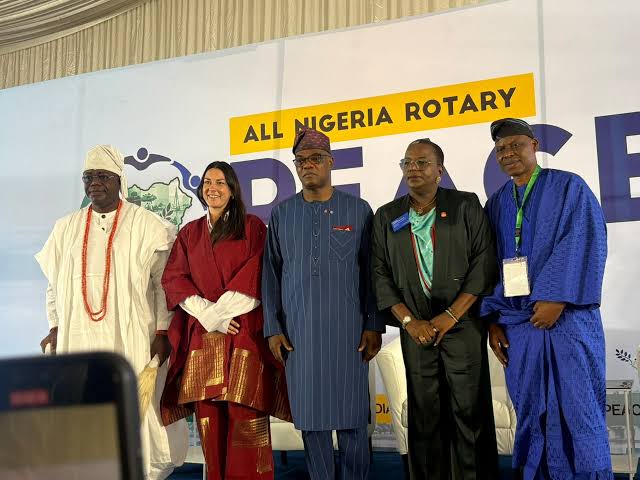
Distinguished leaders of government, members of the diplomatic community, representatives of security and law-enforcement agencies, traditional and religious leaders, distinguished guests, fellow Rotary members, ladies and gentlemen:
It is an honour to welcome you to the “All Nigeria Rotary Peace Summit.”
The question before us is how to come together, work toward a shared national future, and achieve true and lasting peace.
Nigeria has enormous potential. We have contributed to peace and stability across Africa, including through our work with the Economic Community of West African States and United Nations peacekeeping and Peace Support operations.
Our work in Liberia and other parts of Africa shows that we have the experience and ability to help prevent and manage conflict beyond our borders.
Now it is time to turn those energies inward — to bring our commitment to building peace among our neighbors and the world back home.
But we cannot impose peace. We must nurture it from the very roots of our society so it may grow into a great tree that will feed and shelter all of us under its protective embrace.
As a member of Rotary, when I consider this idea, I look to the philosophy of Positive Peace.
Peace, through this lens, is so much more than the absence of violence. To achieve true and lasting peace, we must consider the attitudes, institutions, and structures that create and sustain peaceful societies.
Here in Nigeria, meaningful peace cannot rely on our security forces and government institutions alone. It requires every level of society to come together for the betterment of all.
To grow Positive Peace from the ground up, Rotary starts from the very foundation of life, as we have done here.
In 2022, Rotary began a program called, “Together for Healthy Families in Nigeria.”
Members of Rotary here in Nigeria and as far away as Germany partnered with federal and state health ministries to make giving birth safer for both mother and child.
The program has helped expectant mothers across three states and the capital receive better and more frequent prenatal care.
Community health workers made nearly 60,000 visits to homes of expectant mothers and spoke with them and their families. We supplied 158 health facilities with contraceptives, medicine, and equipment.
We have already seen positive outcomes. Maternal deaths were reduced by 77%, and newborn deaths were reduced by 45% at supported facilities.
There is more work to do, but we are making progress. This is one way we plant the seeds of peace in Nigeria and around the world — we listen to the community, work with people so they can make their own lives better, and we stay committed to our goals.
With each child born safely to a healthy mother, we ease the burden carried by the Federal Ministry of Health and Social Welfare. We give families a greater sense of safety and security.
This is the beginning of Positive Peace. But members of Rotary do not stop once the seeds of peace are planted.
Since 2020, Nigeria has been free of the deadly grip of the wild poliovirus, which paralyzed and sometimes killed children when their lives had barely begun. And we continue to work with our friends at the World Health Organization and others to keep it that way and address the more recent outbreaks of variant poliovirus.
Rotary also builds peace directly. Members of Rotary clubs across Nigeria devote themselves to building peace every day.
And the year after Nigeria was declared wild polio-free, Rotary worked with Makerere University in Uganda to open a Peace Center, where students — called Peace Fellows — can learn how to build lasting peace both here in Nigeria and across Africa.
Over the years, more than 75 Rotary Peace Fellows have come from Nigeria. Some of our Peace Fellows are even here with us today.
I tell you this not to advertise Rotary (although we can always use new members). I tell you this because I want you to know that Rotary is already a quiet partner in peacebuilding — not only around the world — but here in our shared home.
As members of Rotary, we are not soldiers, ambassadors, or diplomats. We bring people together to find common purpose through service to others. We are here for Nigeria, and we are here to stay.
This year, I have called on every member of Rotary to Create Lasting Impact, and today, my brothers and sisters of Nigeria, I ask the same of every one of us.
I ask us to look at every level of society in Nigeria and consider how we can make all our lives better — not only today, but far into the future of this great nation. We may not speak the same language, worship the same way, or live the same way, but our nation’s future depends on all of us working together.
This summit is an opportunity to turn our shared commitment to peace into practical action — to take mere words and transform them into a bright future for us and all our children.
To my dear friends and family of Rotary here today, I challenge you to make peacebuilding in Nigeria our legacy of lasting impact.
As I have said to the Rotary world time and time again, we must consider how everything we do contributes to peace and pursue that peace purposefully and deliberately.
Rotary can help build confidence between institutions and communities, strengthen public trust, and ease the burden of everyday life that makes peacebuilding that much harder … but we must do so with purpose.
And before we can Create Lasting Impact in Nigeria, we must first have the courage to change ourselves, whether we are members of Rotary or not.
We cannot continue to do what we have always done and expect our great tree of peace to magically sprout from the ground. We must nurture our country and ourselves with all our being.
Give yourselves permission to be changed by what you see and hear at this summit.
That is how lasting impact is achieved — through people who are willing to change, institutions that are prepared to work for everyone, and communities that have the capacity to sustain progress.
And once we allow ourselves to change, we open ourselves to a new future — a future where the circumstances of someone’s birth do not determine their access to justice, opportunity, or dignity.
A future where differences are respected, where violence is rejected, and where we all come together, not as different groups in competition, but as Nigerians in harmony.
As we begin this summit, let us commit to more than resolutions and declarations. Let us commit to stability through change.
Remember that our true measure of success is not the words we share among ourselves today, but the impact of our actions that lasts generation after generation.
And if our commitment to peace is true — if our capacity for change is enough — our children, and their children after them, will enjoy the fruits of our labor under our great tree of peace — protected, safe, and free.
Thank you.
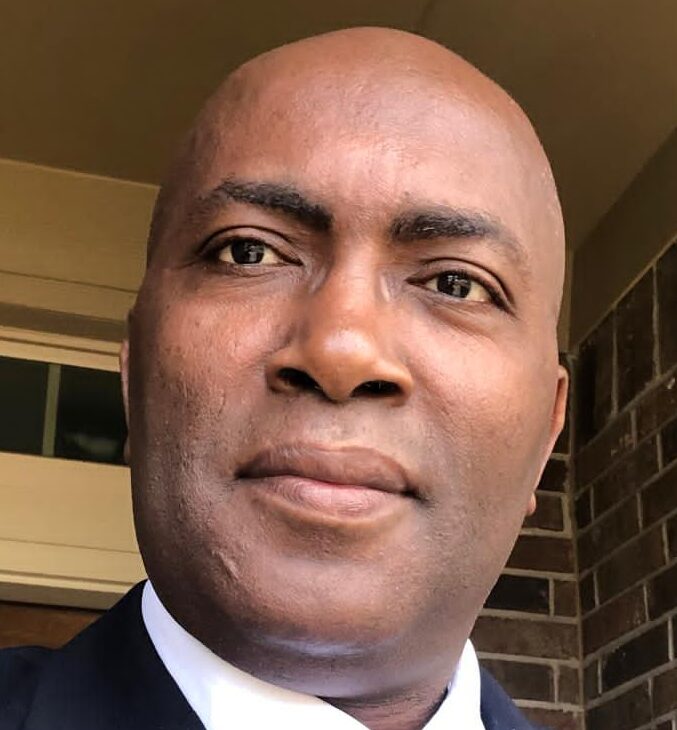
Nigeria’s democratic development depends not only on credible elections but also on responsible journalism and an informed electorate. In the view of Nosa Osaikhuiwu, sections of the Nigerian media and political commentary class have fallen short of this responsibility, particularly in their coverage and interpretation of the 2023 presidential election.
Writing from Houston, Texas, Osaikhuiwu argues that rather than critically examining the political realities behind the outcome, some media platforms amplified unsubstantiated allegations of electoral fraud by defeated candidates without sufficiently interrogating the evidence. This, he says, has contributed to public distrust and weakened confidence in critical democratic institutions, particularly the Independent National Electoral Commission (INEC) and the judiciary.
He highlights a key principle of electoral politics that he believes has been largely overlooked: when opposition forces divide their strength among competing candidates, they can strengthen the position of an incumbent under a winner-takes-all system. He cites examples from the United States, including Ross Perot’s impact in 1992 and Ralph Nader’s role in 2000.
Applying the same principle to Nigeria in 2023, Osaikhuiwu notes that Peter Obi and Atiku Abubakar contested separately against President Bola Tinubu. Although their combined votes exceeded Tinubu’s total, elections are decided by the votes secured by individual candidates under established rules, not by post-election addition of rivals’ tallies.
Looking ahead to 2027, he observes a similar opposition configuration emerging, with Atiku and Obi again pursuing separate ambitions. While acknowledging the economic hardships associated with Tinubu’s reforms and the administration’s political vulnerability, Osaikhuiwu stresses that public dissatisfaction does not automatically translate into an organised electoral movement capable of defeating an incumbent.
He criticises suggestions by some media personalities that the 2027 elections will be rigged even before they take place, describing such pronouncements as irresponsible. Journalists, he argues, must interrogate claims, examine evidence and educate the public rather than merely amplify the statements of political actors.
Osaikhuiwu maintains that while there may have been logistical shortcomings in 2023, these did not materially alter the final outcome, which was declared by INEC and upheld through the judicial process. Disagreement with a result, he says, is not in itself evidence of fraud.
He concludes that if the opposition genuinely seeks to defeat Tinubu in 2027, it must address its divisions and build a viable electoral coalition. Individual popularity, social media enthusiasm and public dissatisfaction cannot substitute for organisation, coalition-building and grassroots mobilisation.
“Journalism must educate, not mislead. Political commentary must analyze, not merely amplify. And democracy must be grounded in electoral reality, not political wishful thinking,” he writes.
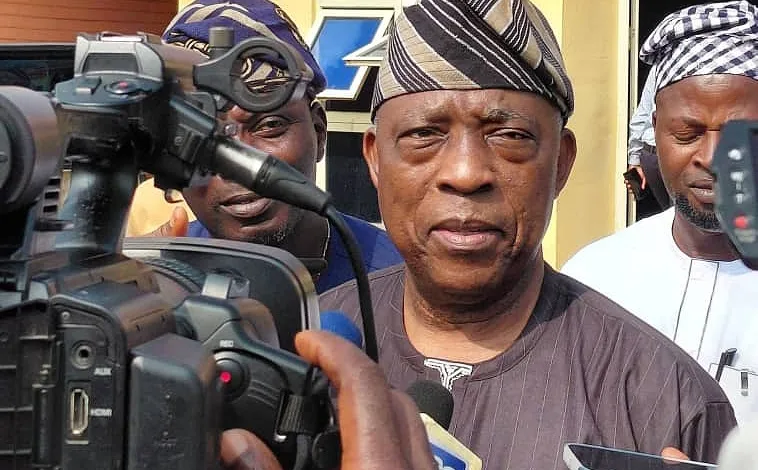
Veteran journalist and Chairman of Gaskia Media Limited, Dare Babarinsa, has called on Nigeria to sustain its informal power-rotation arrangement between the North and South, arguing that the system remains important for political stability and national unity.
Babarinsa said the presidency should return to the North in 2031 and move back to the South in 2039, maintaining that the arrangement should remain in place until Nigerians develop a more suitable alternative.
He made the position known on Monday, November 2, while delivering a public lecture at the Press Centre, Iyaganku, Ibadan, as part of activities marking the 60th anniversary of the Oyo State Council of the Nigerian Union of Journalists (NUJ).
Speaking on the theme of Nigeria’s political arrangement and the future of the media, Babarinsa acknowledged criticisms of the rotational presidency, particularly from those who believe that every qualified Nigerian should be allowed to contest for the highest political office regardless of region.
However, he argued that Nigeria’s political circumstances make power rotation a practical arrangement for maintaining stability, even if it may not always produce the most suitable candidate.
According to him, the arrangement emerged from political negotiations ahead of the return to civilian rule in 1999, following the deaths of former military Head of State, General Sani Abacha, and the presumed winner of the June 12, 1993 presidential election, Chief Moshood Abiola.
Babarinsa recalled that after Abacha’s death in 1998, General Abdulsalami Abubakar assumed leadership and introduced a transition programme aimed at ending military rule by May 29, 1999.
He said the death of Abiola, who was detained by the military government, created concerns about the political future of the Yoruba people and influenced discussions over the region that should produce Nigeria’s first civilian president after military rule.
The journalist disclosed that he was among members of the Idile Oodua resistance movement who supported the position that the South-West should produce the first president under the new democratic arrangement.
He said he was subsequently mandated by members of the group to consult the late Ooni of Ife, Oba Okunade Sijuwade, who told him that traditional rulers across the country were also holding consultations on the matter.
According to Babarinsa, the discussions contributed to the emergence of two Yoruba presidential candidates in the 1999 election: former President Olusegun Obasanjo of the Peoples Democratic Party (PDP) and Chief Olu Falae, who contested under the Alliance for Democracy and All Peoples Party coalition.
He also recalled that former Vice-President Alex Ekwueme disagreed with the arrangement, arguing that the South-East could not be bound by an agreement reached principally between political interests in the North and South-West.
Babarinsa said he agreed with Ekwueme’s interpretation that power should rotate between the North and South rather than among the six geopolitical zones.
He explained that the arrangement had continued through successive administrations, including the emergence of former President Goodluck Jonathan following the death of President Umaru Yar’Adua and the subsequent election of former President Muhammadu Buhari.
With President Bola Tinubu currently in office, Babarinsa argued that the existing arrangement should be sustained, with power returning to the North after the current administration and subsequently moving back to the South.
To support his argument, he compared Nigeria’s power-sharing arrangement with the confessional system adopted in Lebanon in 1943, under which key political offices were allocated to different religious communities to promote political balance.
He said Nigeria could learn from such arrangements, insisting that political compromises sometimes become necessary in countries with diverse ethnic, religious and regional interests.
“If we intend to keep Nigeria, then we need to make this special arrangement work until future generations are able to make a better arrangement,” he said.
Babarinsa reflects on Ibadan’s journalism legacy
Beyond the political question, Babarinsa used the lecture to examine the history of journalism in Ibadan and the contribution of the city to the development of Nigeria’s media industry.
He described Ibadan as a major centre of political and media influence, noting that its newspapers had produced some of the country’s most prominent journalists, editors and public commentators.
He recalled the establishment of the Nigerian Tribune in 1949 by Chief Obafemi Awolowo and the creation of the Sketch newspaper group in 1964 by the then Premier of the Western Region, Chief Ladoke Akintola.
He also highlighted the contributions of prominent journalists, including Felix Adenaike, Segun Osoba and Peter Ajayi, whom he described as the Three Musketeers of the Nigerian media during the Second Republic.
According to him, the trio wielded considerable influence in the industry through their leadership positions at the Tribune and Sketch newspaper groups.
Babarinsa also acknowledged the contributions of former journalists and columnists, including Alhaji Lateef Jakande, Chief Bola Ige, Chief Olabisi Onabanjo, Aare Afe Babalola and Dr Tai Solarin.
He said the history of journalism in Ibadan was closely connected to the political development of the country, recalling the debates on issues such as the International Monetary Fund loan, diarchy and rotational presidency.
The journalist urged members of the profession to preserve that tradition by ensuring that the media remained a platform for informed public debate and the promotion of ideas capable of strengthening Nigeria.
Media organisations urged to embrace digital transformation
Addressing the challenges facing the industry, Babarinsa warned that traditional media organisations must urgently adapt to the changing media environment or risk losing relevance.
He said the internet had disrupted conventional news production and distribution, creating new opportunities while also allowing unregulated online platforms to compete with established media organisations.
According to him, several traditional newspapers have established online platforms, but their digital presence has not translated into the level of revenue needed to sustain their operations.
He cited the decline of once-dominant media organisations such as the Daily Times and Sketch as examples of the changes that have reshaped the industry.
Babarinsa recalled that Sketch newspaper had a daily circulation of about 60,000 copies during the 1970s and 1980s but had since ceased publication, with its former premises converted into a shopping mall.
He also expressed concern over declining newspaper readership among young Nigerians, warning that a society with an increasingly uninformed population could struggle to appreciate and defend democracy.
The Gaskia Media chairman said media organisations must follow their audiences into the digital space and develop business models that can sustain quality journalism.
He disclosed that his organisation had also decided to strengthen its online presence through the publication of a digital magazine, beginning with an online news blog.
Journalists urged to defend democracy and uphold professional standards
Babarinsa further reminded journalists of their role in Nigeria’s democratic development, particularly during the struggle against military rule.
He said members of the Nigerian press had suffered imprisonment, exile and other forms of persecution in the fight for the restoration of democracy, with some journalists paying the ultimate price.
He maintained that journalists therefore had a responsibility to protect the democratic system and ensure that the country’s electoral processes remained credible.
With the 2027 general election approaching, he urged media professionals to play their part by providing accurate information and encouraging informed public participation.
The Independent National Electoral Commission has scheduled the presidential and National Assembly elections for January 16, 2027, while governorship and State Houses of Assembly elections are fixed for February 6, 2027.
Babarinsa said journalists must remain committed to the fundamental principles of the profession, stressing that factual accuracy should remain central to news reporting while allowing room for responsible advocacy.
He urged journalists to advocate for the national interest, rather than restrict their work to positions that may be politically convenient.
Calls for greater inclusion of young journalists and women
Looking towards the future, Babarinsa called for greater opportunities for young journalists and women in the profession, saying the industry must deliberately prepare a new generation of media leaders.
He cited the careers of prominent journalists who assumed major editorial and management positions at relatively young ages, including Peter Enahoro, Olusegun Osoba, Yemi Ogunbiyi, Yakubu Mohammed, Ray Ekpu and Adamu Ciroma.
According to him, the history of Nigerian journalism demonstrates that young professionals have consistently played important roles in driving the industry forward.
He urged established media practitioners to listen to younger colleagues, particularly members of Generation Z, and create opportunities for them to contribute to the future of the profession.
Babarinsa also called for more deliberate efforts to bring women into leadership positions, noting that the industry could no longer remain dominated by men.
He expressed optimism about the future of journalism, despite concerns over poor remuneration, declining newspaper circulation and competition from digital platforms.
The veteran journalist concluded by urging the profession to embrace change, drawing attention to the need for innovation in newspaper production, technology and audience engagement.
Quoting a principle he attributed to Professor Ladipo Adamolekun, Babarinsa said the media industry must adapt to changing realities to remain relevant.
“Adapt or Die!” he declared.
-
Politics3 years ago
13 Ondo Assembly Members Disown Endorsement of Aiyedatiwa
-
Politics3 years ago
APC Group, Ondo Govt, Quarrel Over Money for Endorsement
-

 Trending News6 years ago
Stop unsavoury, inciting statements – DSS warns
-

 Others5 years ago
Adron Homes Celebrates 10 Years Of Housing Excellence
-

 Humanity5 years ago
President Buhari Commiserates With Ambassador Maureen Tamuno Over The Loss Of Her Father
-

 Others7 years ago
EX- CUSTOMS BOSS, IBRAHIM MERA’S DWINDLING FAME
-

 Business3 years ago
Bigi Carbonated Soft Drinks Treats 40 Consumers to an Epic Easter Movie Hangout
-

 Business2 years ago
Wema Bank Shines at Global SME Finance Forum Conference Awards 2024 …Awarded: • SME Financier of the Year (Africa) • Platinum Award for Best Financier for Women Entrepreneurs (Africa)