
Economy
Otunba Gbenga Daniel and the Economics of Sporting Excellence in Ogun State


Ogun sports transformation under Gbenga Daniel turned facilities and events into youth, economic and institutional gains

When Otunba Olugbenga Daniel assumed office as Governor of Ogun State in May 2003, sports was far from a priority sector in most state budgets across Nigeria.
Also read: Gbenga Daniel Urges Ijebu State Creation for Equity
Facilities were ageing, athlete welfare was inconsistent and sporting success was largely accidental rather than planned.
By the time he left office in May 2011, Ogun State had become a reference point for how sport, when deliberately integrated into governance, could drive youth mobilisation, economic activity and institutional pride.
Popularly known as OGD, Daniel approached sports not as entertainment but as policy.
He consistently described it as a veritable tool for economic development, and his administration backed that belief with infrastructure, events and measurable outcomes that still shape Ogun State’s sporting ecosystem today.
*Infrastructure as a statement of intent*
A defining feature of Daniel’s sports agenda was the scale and geographical spread of infrastructure development.
Rather than concentrate facilities in the state capital alone, his government invested across Ogun East, Ogun Central and Ogun West, ensuring access, inclusion and statewide participation.
In Ijebu-Ode, the Gateway International Stadium emerged as the flagship project of this vision.
Built as an ultra-modern facility complete with a games village, the stadium later renamed the Mike Adenuga Jnr International Stadium became one of the most prominent sporting venues in the South West.
Daniel would later describe its construction as one of the most far-reaching decisions of his tenure, noting that it instantly elevated Ogun State’s capacity to host high-profile competitions.
Sagamu also benefited from a major dual investment.
The Gateway International Stadium in the town was developed alongside a purpose-built National Youth Service Corps camp, widely regarded as one of the best in Nigeria.
The integration of sports facilities into the camp reflected a broader philosophy that youth development, physical fitness and national service could reinforce one another.
In Ogun West, the Gateway International Stadium in Ilaro provided long overdue infrastructure for local competitions and training, opening pathways for talent development in a district that had historically lacked major sports facilities.
Abeokuta, in Ogun Central, saw strategic upgrades rather than duplication.
The M.K.O. Abiola Stadium and the Muda Lawal Stadium were modernised to world standards, while the Alake Sports Centre was constructed to support grassroots and community sports.
Collectively, these investments repositioned Ogun State as one of Nigeria’s most infrastructure-ready sporting states within a single decade.
*Hosting as economic strategy*
Daniel’s administration did not build facilities to lie dormant.
A deliberate hosting strategy ensured that these venues became engines of activity, visibility and income.
The high point came in 2009 when Ogun State hosted matches during the FIFA Under-17 World Cup, with games played at the Gateway International Stadium in Ijebu-Ode.
This placed the state on a global sporting map and validated the quality of its infrastructure in the eyes of international organisers.
At the regional level, Ogun State hosted the West African Football Union Nations Cup, reinforcing its reputation as a credible destination for elite football in West Africa.
Yet the most innovative hosting initiative was the Gateway Games, a state-level multi-sport competition conceived and executed under Daniel’s leadership.
Far from being a routine sports festival, the Gateway Games was designed as a large-scale mobilisation platform for youth empowerment and economic participation.
According to Daniel, several thousands of people converged on Ogun State during the games, creating a ripple effect across communities.
There was hardly any resident who was not engaged in one form or another. Local tailors produced clothing and bedding for athletes and health centres. Transport operators, vendors and artisans all found opportunities linked directly to the event.
In a landmark departure from established practice, Daniel’s government rendered full accounts of expenditure for the Gateway Games and declared a profit of N94 million.
This was the first time a state government in Nigeria publicly reported profits from organising a sporting event till date.
Notably, this financial outcome was achieved alongside the construction of a games village, later known as Makun Village under a succeeding administration.
*Performance backed by planning*
The impact of this approach was evident in competitive results.
During Daniel’s tenure, Ogun State consistently ranked among the top three sporting states in Nigeria, a significant leap that reflected sustained investment rather than episodic spending.
At the 16th National Sports Festival, KADA 09 in 2009, Team Ogun emerged as the best performing state in the South West and finished third overall nationwide.
The result was widely attributed to structured talent scouting, improved coaching and access to quality facilities, rather than last-minute preparation.
*Sports as youth policy and legacy*
Beyond medals and tournaments, Daniel deliberately integrated sports into broader youth and economic development strategies.
He saw organised sport as a tool for social engagement, discipline and opportunity creation, particularly for young people.
His contributions were formally recognised after his tenure.
In 2016, he was appointed National Matron of the Sports Writers Association of Nigeria, and in 2021, he was honoured as a Pillar of Sports in Ogun State.
He also consistently challenged wealthy Nigerians to invest in sports, urging them to see it as both a social responsibility and an economic opportunity.
*The economics of governance*
Perhaps the most striking context for Daniel’s achievements lies in the financial realities of his time in office.
As at the period, Ogun State’s internally generated revenue stood at about N200 million monthly, while federal allocation fluctuated between N600 million and N800 million.
In practical terms, OGD governed with roughly N1 billion monthly.
From this amount, civil servants’ salaries alone consumed between N680 million and N700 million, leaving approximately N250 million for all other responsibilities of government.
Over his eight years in office, the total allocation and internally generated revenue available to Ogun State amounted to about N330 billion.
This context has shaped contemporary reassessments of his tenure.
As Ogun State marks 50 years of creation, Daniel’s performance is increasingly described as that of a magician in government, particularly when contrasted with later administrations operating with significantly larger resources.
By comparison, the current Ogun State government under Prince Dapo Abiodun has an estimated N1.055 trillion at its disposal for the 2025 fiscal year alone with no known new sport facilities added to the existing one since the OGD’s tenure despite its over 7years in office.
Measured against the modest resources he controlled, Otunba Gbenga Daniel’s sports legacy stands as a case study in how vision, discipline and accountability can stretch limited funds into lasting institutions.
Also read: Otunba Gbenga Daniel Confirms APC Loyalty with Membership Revalidation in Sagamu
His administration demonstrated that sports, when treated as policy rather than pastime, can leave footprints far beyond the stadium.


Economy
Governor Dauda Lawal woos investors, highlights Zamfara’s economic opportunities at CEO Forum
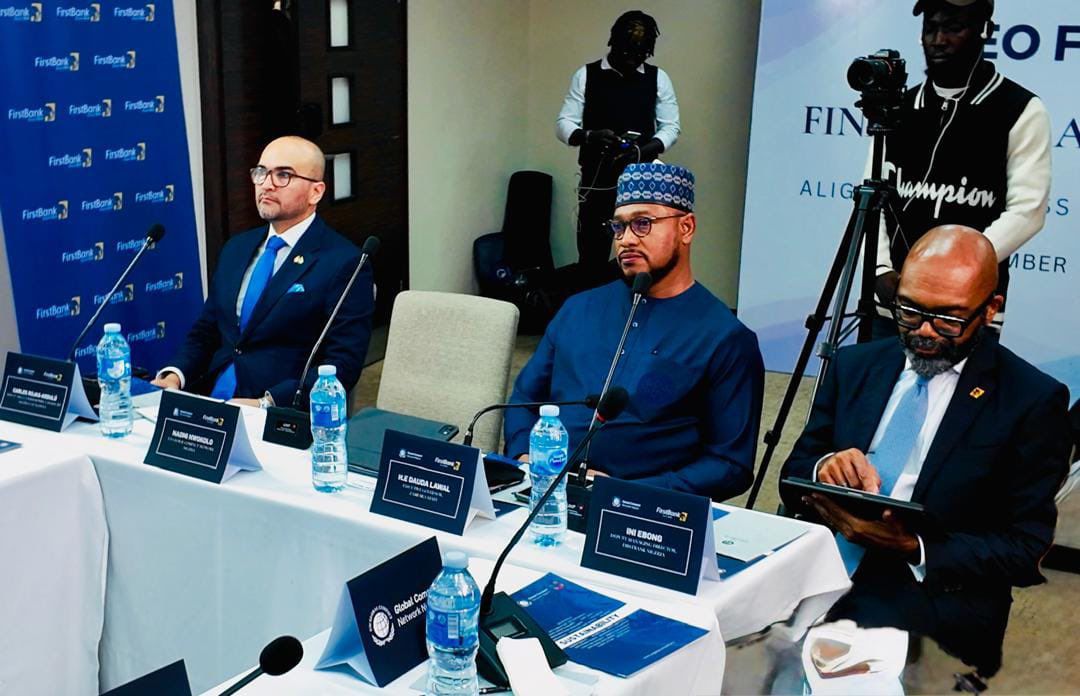
Zamfara State Governor, Dauda Lawal, has called for stronger collaboration between government, businesses and investors to unlock private capital and drive inclusive economic growth in the state.
Lawal made the call while delivering a Special Policy Address at the 2026 CEO Forum organised by the Global Compact Network Nigeria in Lagos.
The forum, held under the theme “Financing a Dignified Future: Aligning Business Action, Policy and Capital,” brought together chief executives, senior government officials, industry leaders, diplomats, trade commissioners and international development partners.
Participants were drawn from key sectors of the economy, including oil and gas, energy, manufacturing, construction and infrastructure.
The governor spoke on the growing competition among states for increasingly selective private capital and the factors that could transform an economic opportunity into an investable proposition.
He explained how his administration was working to bridge the gap between available economic opportunities and investment, with emphasis on building investor confidence while ensuring that investments deliver meaningful outcomes for the people of Zamfara.
According to him, attracting investment requires more than identifying economic opportunities, but also creating the conditions, policies and partnerships capable of giving investors confidence to commit capital.
The forum provided a platform for business leaders, government officials and investors to examine ways of aligning business strategies, public policies and capital deployment to unlock productive investment.
Discussions also focused on identifying businesses, sectors and projects with strong potential but facing difficulties in accessing financing, as well as measures to make such opportunities more attractive to investors.
The organisers also introduced the concept of the “Dignity Dividend,” examining how investment-led growth could translate into better jobs, stronger businesses, increased productivity, local value creation and broader economic participation.
Another key component of the forum was the identification of actionable commitments and partnerships that participating institutions could advance over the next six to 12 months.
Notable speakers at the event included chief executives of First Bank Group, Access Bank, Flour Mills of Nigeria Plc, Nigeria Economic Summit Group, Nigerian Exchange Group, Chellarams Plc, SecureID Group and Greenwich Merchant Bank Plc, among others.
The organisers said the session would culminate in a live showcase of the Business Value and Sustainability Platform (BVSP), described as a standing coalition of business, capital and policy actors designed to sustain the dialogue.
The platform is also expected to contribute to shaping Nigeria’s private-sector engagement during the United Nations General Assembly High-Level Week.
The governor’s participation in the forum comes as Zamfara seeks to strengthen its economic base, attract productive investment and create opportunities that can support sustainable livelihoods and wider participation in the state’s economy.


Atiku petrol subsidy plans have reignited Nigeria’s 2027 debate as the ADC candidate promises relief while the Presidency demands clarity
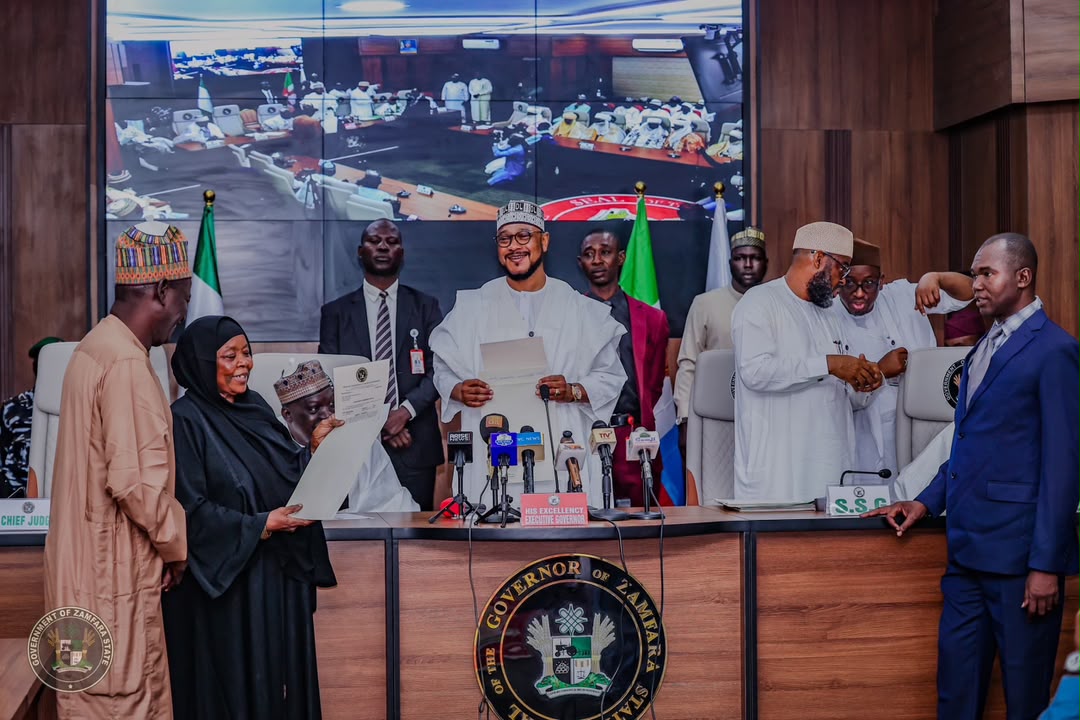
The governor distributed official vehicles to judicial officers and said about 90 per cent of court rehabilitation projects across the state had been completed
-
Politics2 years ago
13 Ondo Assembly Members Disown Endorsement of Aiyedatiwa
-
Politics2 years ago
APC Group, Ondo Govt, Quarrel Over Money for Endorsement
-

 Trending News5 years ago
Stop unsavoury, inciting statements – DSS warns
-

 Others5 years ago
Adron Homes Celebrates 10 Years Of Housing Excellence
-

 Humanity5 years ago
President Buhari Commiserates With Ambassador Maureen Tamuno Over The Loss Of Her Father
-

 Others7 years ago
EX- CUSTOMS BOSS, IBRAHIM MERA’S DWINDLING FAME
-

 Business2 years ago
Bigi Carbonated Soft Drinks Treats 40 Consumers to an Epic Easter Movie Hangout
-

 Business2 years ago
Wema Bank Shines at Global SME Finance Forum Conference Awards 2024 …Awarded: • SME Financier of the Year (Africa) • Platinum Award for Best Financier for Women Entrepreneurs (Africa)