
Economy
Yobe Governor Launches RUGA Settlement to Reduce Conflicts


Yobe RUGA settlement launched by Governor Mai Mala Buni offers housing, school, and healthcare to ease farmer-herder conflicts

Yobe State Governor, Mai Mala Buni, on Sunday officially inaugurated a Fulani Rural Grazing Area initiative Settlement in Nguru Local Government Area aimed at curbing violent clashes between farmers and herders.
Also read: Yobe Flood Victims Support Kickstarts as 102 Households Get Cash Aid
The project, established by philanthropist Balarabe Abdullahi, widely known as Balarabe DJ, features two-bedroom homes, a school, a shopping centre, a primary healthcare facility, potable water, electricity, and a mosque, providing a secure and sustainable environment for pastoralists.
Speaking at the commissioning, Governor Buni said the settlement would help curb open grazing, which frequently results in farmland destruction.
He highlighted that integrating pastoralists into the broader society would improve access to education and healthcare.
“The school, clinic, healthcare facility, and housing provided for the RUGA settlement are commendable. We appreciate his contributions on behalf of the people of Nguru, Yobe State, and Nigeria,” Buni said.
Balarabe Abdullahi explained that the initiative was designed to reduce conflicts by providing designated grazing areas for herders.
The scheme complements the National Livestock Transformation Plan, which several northern states mapped out in 2025 to address farmer-herder clashes and boost food production.
Also read: Yobe Woman Kills Husband over Food Dispute, Police Investigate
Governor Buni encouraged other public-spirited individuals to emulate Abdullahi’s efforts in promoting peace and development, describing the settlement as a model for sustainable rural growth.


By Daniel Oluwatobiloba Popoola
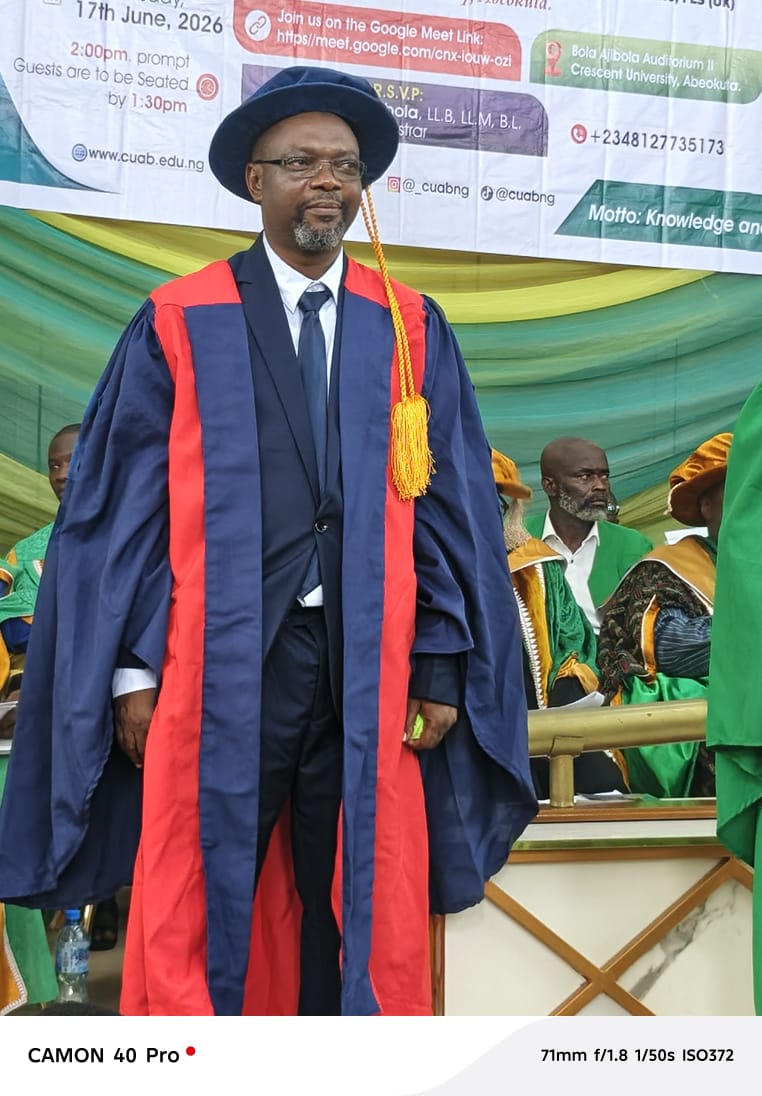
Professor Rasaki Olufemi Kareem has identified efficient management of resources, rather than their abundance, as the key to Nigeria’s economic transformation and sustainable development.
Speaking at the first ever Inaugural Lecture of the Crescent University, Abeokuta, titled, “Resource Efficiency Vs. Economic Development: Whither Nigeria”, the renowned economist argued that although Nigeria is richly endowed with oil, gas, solid minerals, fertile land and a rapidly growing population, millions of citizens still live in poverty because resources have not been effectively managed and deployed.
Professor Kareem, also the Deputy Vice Chancellor of the University, explained that while Resource Economics focuses on the efficient and sustainable use of scarce resources, Development Economics seeks to improve living standards, reduce poverty and promote economic growth.
According to him, resource efficiency enhances productivity, lowers production costs, stimulates innovation, protects the environment and lays the foundation for long-term development.
Professor Kareem also highlighted the phenomenon known as the Dutch Disease or Resource Curse, noting that countries blessed with abundant natural resources often fail to attain corresponding economic progress because of poor governance, corruption, weak institutions and excessive dependence on resource revenues.
“Nigeria’s challenge is not the absence of resources, but the inefficient management and utilisation of those resources,” he said.
The Professor maintained that sustainable development in Nigeria would depend largely on effective resource management, strong institutions, sound governance, investment in infrastructure, technology and human capital, consistent development policies and active community participation.
Drawing from decades of research in fisheries, agriculture, economic growth, poverty, governance, food security and climate change, Professor Kareem demonstrated that efficient resource use has a direct impact on productivity, economic growth and citizens’ welfare.
He stressed that transparency and responsibility remain indispensable to sustainable development.
“Sustainable economic development can only be achieved when resources are utilised efficiently, transparently and responsibly,” he stated.
The scholar added that resource efficiency is critical to poverty reduction, food security, job creation and the attainment of the Sustainable Development Goals.
As part of measures to reposition the economy, he recommended diversification beyond oil, stronger institutions, improved governance and a more robust anti-corruption framework.
He also advocated increased investment in agriculture and food security, greater support for research, innovation and technology, adoption of sustainable resource management practices and enhanced public awareness on the importance of resource efficiency.
Professor Kareem summed up his message with a call for a paradigm shift in the country’s development strategy.
“Nigeria’s future prosperity depends not on the abundance of its resources, but on how effectively and efficiently those resources are managed for the benefit of all citizens,” he declared.
He urged policymakers and stakeholders to embrace resource efficiency as a pathway to inclusive growth, poverty reduction, food security and sustainable national development.

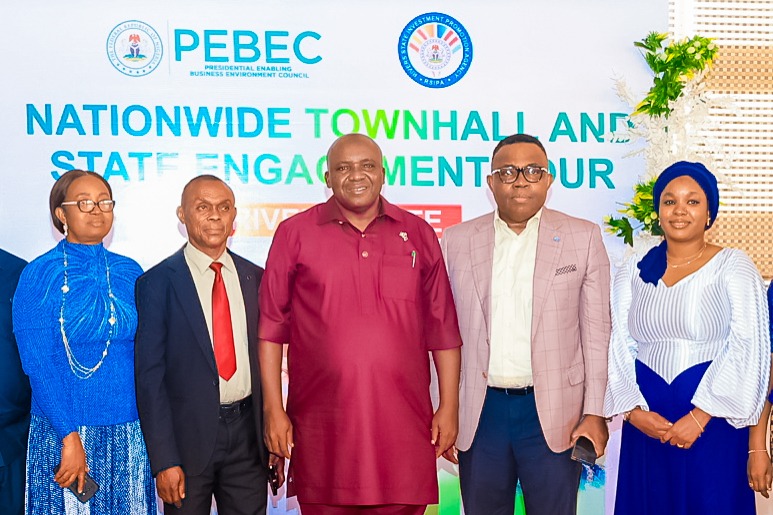
Fubara reaffirms commitment to business-friendly reforms as Rivers State seeks to attract investment, create jobs and boost economic growth

Kano Drainage Crackdown as government halts construction and seals buildings over illegal structures blocking waterways and causing flood risk
-
Politics2 years ago
13 Ondo Assembly Members Disown Endorsement of Aiyedatiwa
-
Politics2 years ago
APC Group, Ondo Govt, Quarrel Over Money for Endorsement
-

 Trending News5 years ago
Stop unsavoury, inciting statements – DSS warns
-

 Others4 years ago
Adron Homes Celebrates 10 Years Of Housing Excellence
-

 Humanity4 years ago
President Buhari Commiserates With Ambassador Maureen Tamuno Over The Loss Of Her Father
-

 Others7 years ago
EX- CUSTOMS BOSS, IBRAHIM MERA’S DWINDLING FAME
-

 Business2 years ago
Bigi Carbonated Soft Drinks Treats 40 Consumers to an Epic Easter Movie Hangout
-

 Business2 years ago
Wema Bank Shines at Global SME Finance Forum Conference Awards 2024 …Awarded: • SME Financier of the Year (Africa) • Platinum Award for Best Financier for Women Entrepreneurs (Africa)