
Business
Nigeria Business Formalisation Shows Modest Recovery


Nigeria Business Formalisation rises to 46% in 2025, reflecting slow but steady adoption of registration among entrepreneurs

Nigeria Business Formalisation recorded a modest rebound in 2025, with 46 percent of entrepreneurs reporting formally registered enterprises, up from 42 percent in 2024, according to the 2025 State of Entrepreneurship Survey by FATE Foundation.
Also read: ILARA-MOKIN HOST BUSINESS NETWORK GOLF TOURNAMENT
Despite the improvement, 54 percent of businesses remain unregistered, highlighting persistent informality in the country’s entrepreneurial ecosystem.
Analysis of survey data shows a five-year pattern of fluctuation, with unregistered businesses accounting for 44 percent in 2021, rising to 58 percent in 2024 before easing slightly in 2025.
Analysts attribute the incremental recovery to growing confidence in regulatory processes, aided in part by digital registration platforms introduced by the Corporate Affairs Commission (CAC).
However, structural challenges continue to impede formalisation, particularly for nano and micro enterprises.
Constraints include limited access to information, mistrust of public institutions, and perceptions that registration costs outweigh benefits.
Among registered businesses, CAC remains the dominant body, with more than two-thirds of enterprises reporting affiliation.
The survey indicates gradual diversification, with registrations under the Small and Medium Enterprises Development Agency of Nigeria (SMEDAN) rising from 19.1 percent in 2024 to 24.7 percent in 2025.
Registration with formal trade associations also increased to 7.5 percent from 6 percent, while cooperative societies and local trade associations are gaining traction among smaller businesses seeking semi-formal recognition.
Business age remains a key factor in formalisation.
Firms less than one year old continue to show the highest informality, although the share of unregistered new businesses declined from 82 percent in 2024 to 68.2 percent in 2025.
Enterprises under five years old operated 63 percent informally, a marginal improvement from 64 percent the previous year, suggesting growing awareness among early-stage entrepreneurs.
Adenike Adeyemi, Executive Director at FATE Foundation, noted: “Overall, the survey shows incremental gains in formalisation across both new and established businesses. Yet, persistently high informality among younger firms highlights enduring structural barriers including procedural costs, weak incentives, and the limited perceived value of formal registration.”
Also read: Sanwo-Olu Seeks World Bank Support After Lagos Tops Business Ranking
The survey highlights ongoing challenges for policymakers seeking to strengthen business registration, with implications for taxation, regulatory oversight, and access to finance for small and growing enterprises.


Business
Can African Engineers Compete obally? ChipMango Is Creating Opportunities in the semiconductor Industry


The semiconductor industry requires highly specialised engineering knowledge.
For African engineers, gaining access to professional tools, industry experience and international opportunities can open
important doors.
ChipMango is working at the intersection of talent development and commercial engineering, creating pathways for African expertise to contribute to a global industry.
The growth of businesses like ChipMango also highlights the importance of investment in Africa’s innovation ecosystem. Through Boost Africa, a joint initiative of the EIB and African Development Bank, supported by the European Union, the European Investment Bank helps mobilise financing through venture capital funds for innovative African businesses. Watch the video to hear the story behind ChipMango.
Watch the video:
Business
From Classroom to Industry: How ChipMango Is Preparing African Engineers for the Semiconductor Market
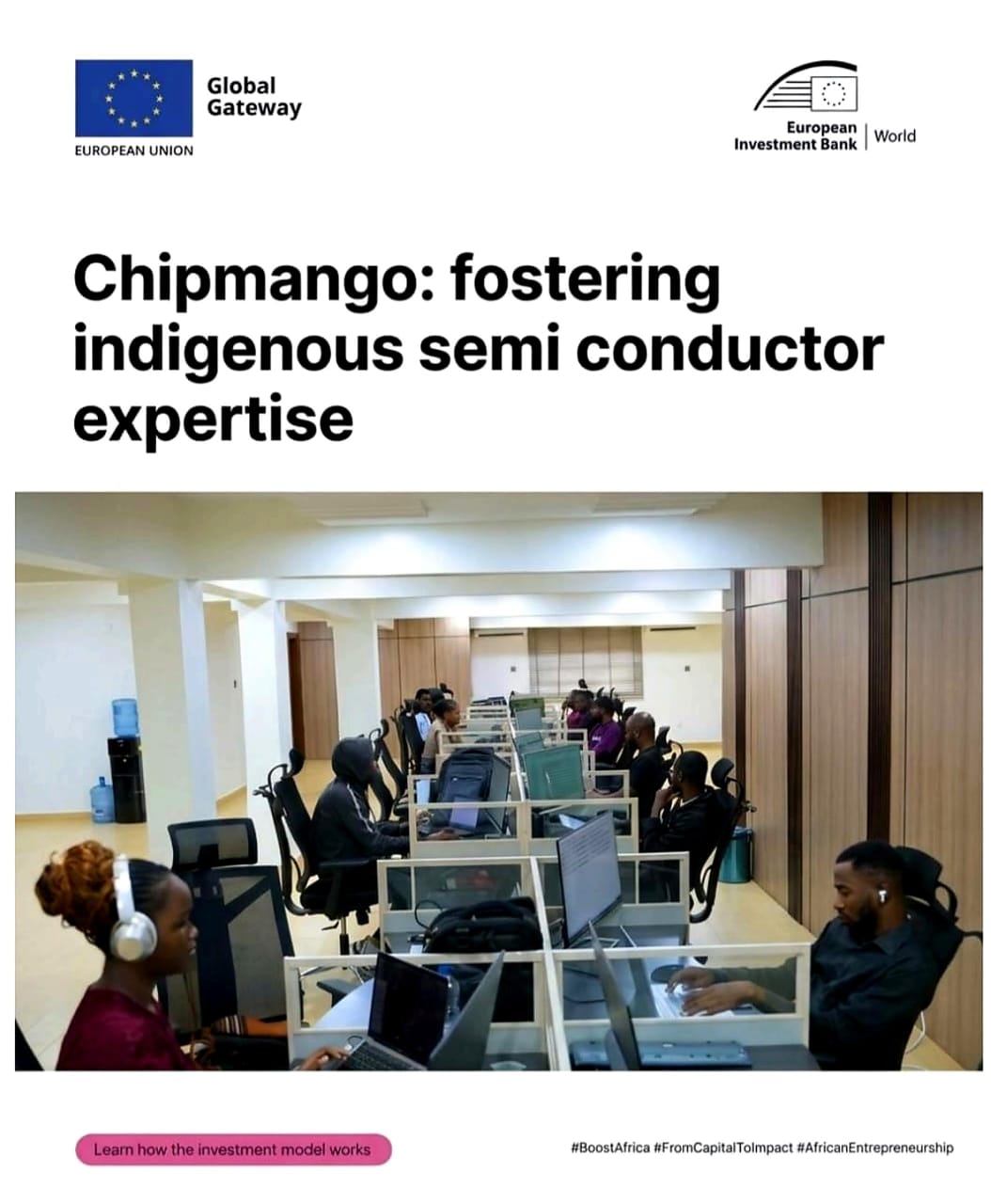
Studying engineering is one thing. Having the opportunity to apply that knowledge to real industry projects is another.
ChipMango connects industry-aligned learning with practical semiconductor design and verification work, giving
engineers a pathway to develop skills relevant to commercial projects.
Its work illustrates why investment in African innovation must also consider the talent, technical expertise and infrastructure required to build competitive businesses.
Through Boost Africa, the European Investment Bank (EIB) supports African entrepreneurship by investing through venture capital funds, helping innovative businesses access the capital and support they need to develop and grow.
Watch the video to learn more about ChipMango’s approach.
Watch the video:


Jensen Huang resigns as NVIDIA CEO after 33 years, with CFO Colette Kress appointed interim chief as the board searches for a successor
-
Politics3 years ago
13 Ondo Assembly Members Disown Endorsement of Aiyedatiwa
-
Politics3 years ago
APC Group, Ondo Govt, Quarrel Over Money for Endorsement
-

 Trending News6 years ago
Stop unsavoury, inciting statements – DSS warns
-

 Others5 years ago
Adron Homes Celebrates 10 Years Of Housing Excellence
-

 Humanity5 years ago
President Buhari Commiserates With Ambassador Maureen Tamuno Over The Loss Of Her Father
-

 Others7 years ago
EX- CUSTOMS BOSS, IBRAHIM MERA’S DWINDLING FAME
-

 Business3 years ago
Bigi Carbonated Soft Drinks Treats 40 Consumers to an Epic Easter Movie Hangout
-

 Business2 years ago
Wema Bank Shines at Global SME Finance Forum Conference Awards 2024 …Awarded: • SME Financier of the Year (Africa) • Platinum Award for Best Financier for Women Entrepreneurs (Africa)