
Oil and Gas
Dangote Refinery Exports 456,000 Tonnes of Fuel to Africa

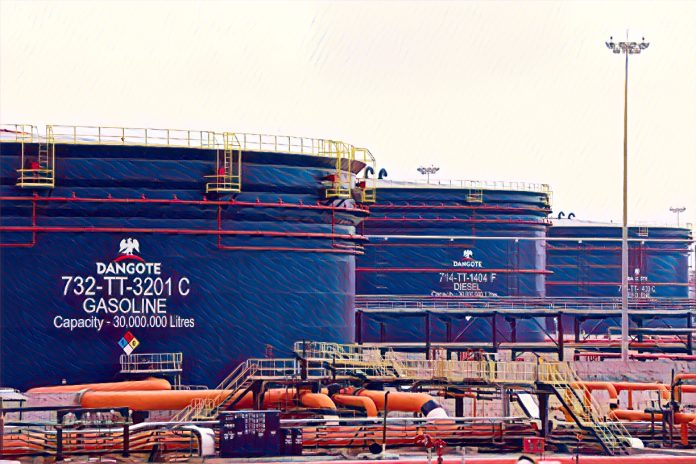
Dangote Petroleum Refinery exports 456,000 tonnes of petrol to African countries, marking Nigeria’s shift from fuel importer to exporter
Dangote Petroleum Refinery has successfully exported 456,000 tonnes of fuel to several African countries through 12 shipments.
Also read: EPL Launches Urgent Probe After Discriminatory Abuse Shock

The exports, primarily petrol (PMS), reached countries including Côte d’Ivoire, Cameroon, Tanzania, Ghana, and Togo. International traders purchased the fuel and managed delivery logistics from Nigeria.
This achievement follows the refinery reaching its full production capacity of 650,000 barrels per day in February, signalling Nigeria’s growing ability to meet domestic demand and supply other African markets.
Experts note that the refinery can now satisfy Nigeria’s fuel requirements while exporting surplus, marking a major shift from fuel importer to exporter.
The facility also produces Euro 5 standard fuel, offering higher quality than what many African countries have previously used.
Rising demand for fuel comes as some African nations face supply disruptions due to conflicts in the Middle East.
Governments across the continent are seeking reliable local sources to improve energy security.
Currently, about 75% of the refinery’s output is reserved for Nigeria, with the remaining 25% exported.
Reports indicate that South Africa is in discussions with Nigeria for a one-year fuel supply agreement.
Previously, many African countries relied heavily on fuel imports from the Middle East.
With the Dangote Refinery now operational at full capacity, Africa has a new local supply hub, which could reduce dependence on imports, lower transportation costs, and stabilize fuel prices across the region.
Also read: EPL Launches Urgent Probe After Discriminatory Abuse Shock
The refinery’s success marks a significant milestone in Nigeria’s energy sector, demonstrating its potential to transform fuel supply and boost Africa’s energy security.



Malabu Oil and Gas dispute escalates as the company demands correction and apology over alleged inaccuracies in The Africa Report OPL 245 story

Malabu Oil OPL 245 Suit as the firm challenges FG over conversion of OPL 245 to OML 245 and seeks ₦1 trillion in damages
-
Politics3 years ago
13 Ondo Assembly Members Disown Endorsement of Aiyedatiwa
-
Politics3 years ago
APC Group, Ondo Govt, Quarrel Over Money for Endorsement
-

 Trending News5 years ago
Stop unsavoury, inciting statements – DSS warns
-

 Others5 years ago
Adron Homes Celebrates 10 Years Of Housing Excellence
-

 Humanity5 years ago
President Buhari Commiserates With Ambassador Maureen Tamuno Over The Loss Of Her Father
-

 Others7 years ago
EX- CUSTOMS BOSS, IBRAHIM MERA’S DWINDLING FAME
-

 Business2 years ago
Bigi Carbonated Soft Drinks Treats 40 Consumers to an Epic Easter Movie Hangout
-

 Business2 years ago
Wema Bank Shines at Global SME Finance Forum Conference Awards 2024 …Awarded: • SME Financier of the Year (Africa) • Platinum Award for Best Financier for Women Entrepreneurs (Africa)