
State development
Why Governor Dauda Lawal Should Continue Rebuilding The Future Of Zamfara Through Investment in Education

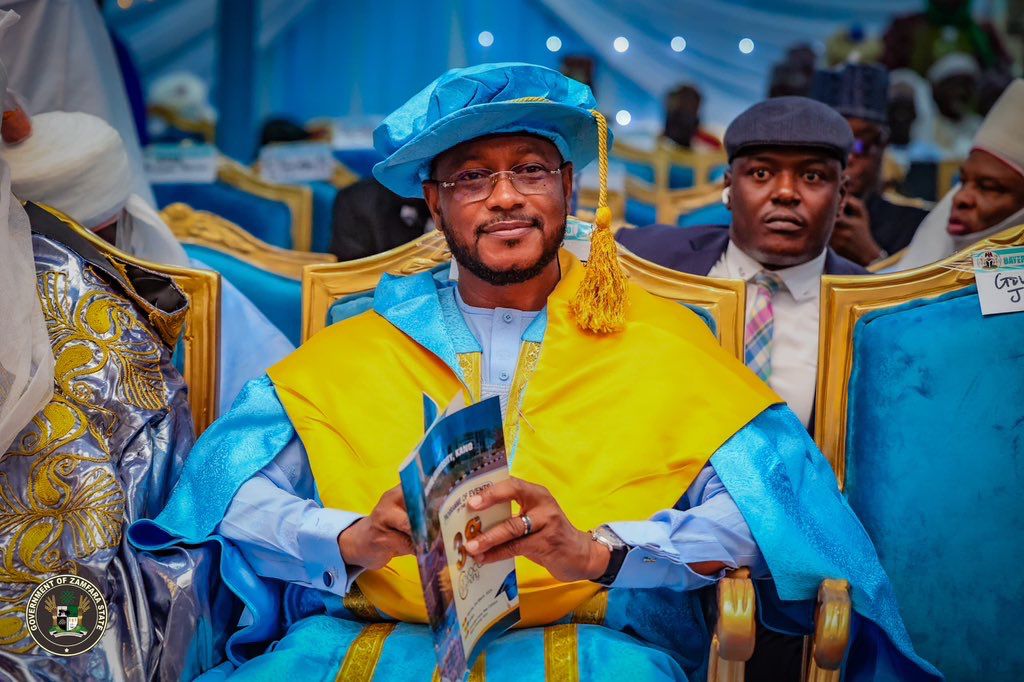
By: Bashorun Oladapo Sofowora

For those who know Zamfara State before Governor Dauda Lawal became Governor will appreciate the current situation in the state. The state, which used to be in the rubble, has been reconstructed into a powerhouse within its geographical location and has become an envy of others. All thanks to the visionary rescue mission 1.0 spearheaded by Governor Dauda Lawal, PhD, in 2023, when he was elected Governor of the agrarian and mineral-rich state.
Just three years ago, education in Zamfara State was in a Comatose state. It was nonexistent. No functional primary and secondary schools conducive to learning. The narrative was one of despair: schools as ghost towns, examination halls locked by creditors, and a generation of children seemingly abandoned by systemic neglect. But for Governor Dauda Lawal, a leader who views governance not as a relay race but as a rescue mission, the story has changed with just three years in charge of the affairs of the state.
When he assumed office, the education sector wasn’t just ailing; clinically, it was on life support. Massive debts had piled up, teachers had vanished into thin air and the number of out-of-school children was skyrocketing on a daily basis. However, two years into the “Lawal era,” the sound of silence in Zamfara’s classrooms has been replaced by the sound of flipping of new textbooks and the scratching of pens on examination answer sheets.
One of the cruellest legacies Governor Lawal inherited was the hostage crisis of student futures. Students could not write exams, classes were dilapidated and qualified teachers. Past administrations had failed to remit examination fees to the West African Examinations Council (WAEC) and the National Examinations Council (NECO). Consequently, thousands of bright Zamfaran students saw their results withheld not because they failed, but because the state failed them. Some had to travel to neighbouring towns like Sokoto, Katsina and Kano to enrol for exams risking their lives.
In a dramatic move that sent shockwaves through the opposition, Governor Lawal reached into the state’s coffers and cleared the backlog of a staggering: ₦1.4 billion to WAEC covering debts from 2018 to 2022, and a combined payment of over ₦1.34 billion to NECO covering debts from 2014 to 2021. The immediate effect was the release of all previously withheld results, allowing students to finally apply for higher education. Furthermore, the state fully funded the 2024 WAEC examinations, ensuring that no child was barred from sitting for their finals due to a lack of funds.
Governor Lawal after his swearing in, declared a State of Emergency on Education in November 2023, this meant that governance moved from the air-conditioned offices in Gusau to the muddy fields of rural schools across the state. He rolled his sleeves and got to work almost immediately fixing the rot he met. Available data from the Zamfara State Government reveals that the state has embarked on the construction and renovation of over 500 schools across all 14 Local Government Areas. This is not a cosmetic paint job, the administration is investing in modern, safe, and dignified learning environments:
Classroom Revolution: Through the UBEC-ZSUBEB Matching Grant and AGILE projects, contracts worth over ₦5.9 billion have been awarded to build schools meeting global standards.
Furniture Supply: The administration has distributed over 12,000 two-seater desks for students and over 1,000 chairs for teachers, ending the era where pupils sat on bare floors to learn.
Recruitment of more teachers and supply of more textbooks: Infrastructure without manpower is a shell. When Governor Lawal looked at the teacher-to-pupil ratio in the state, he saw a crisis. In a decisive move to reverse the brain drain, he approved the massive recruitment of 2,000 qualified teachers.
The recruitment is strategic, the first batch of 500 focuses on critical science subjects (English, Mathematics, Chemistry, Physics), preparing Zamfaran youth for the 21st-century economy. The government is also finalising a 120-day Rapid Intervention Action Plan to audit payrolls, map schools, and secure school environments from illegal encroachment.
For the 2025 fiscal year, Governor Lawal presented a “Rescue Budget 2.0” of N545 billion. The largest single allocation, N79.6 billion, representing 14% of the entire budget, went to Education. For 2026, the proposed budget allocates an additional N65 billion to sustain this momentum. However, a journey to the Renaissance is not complete. It is at this critical inflexion point that the people of Zamfara face a defining choice. Before Governor Lawal, Zamfara was a state where students were barred from exams due to unpaid debts. Today, those chains are broken completely. But the enemy of progress is not just failure; it is interruption. The gains made in education are still fragile and need continuous consolidation. The newly recruited teachers need continuous training and the 500 renovated schools need constant security and maintenance. The unified Education Sector Bill, designed to create a seamless system from early childhood to tertiary level, is still awaiting full legislative maturity.
To stop the “Rescue Mission 2.0” now would be to hand the baton back to those who drove the system into educational bankruptcy. The same political forces that allowed the debt to accumulate to over N2 billion are already regrouping eyeing 2027. They promise something different, but their records speak of withheld results and abandoned classrooms. Governor Dauda Lawal is not merely constructing classrooms; he is dismantling the architecture of ignorance that held Zamfara backwards for decades. He has proven that with political will, the “Education Governor” can turn around a sector that was declared dead.
To secure this legacy, to ensure that children never again sit on bare floors and to guarantee that WAEC and NECO never again hold Zamfaran results hostage, the mission must continue for a secured future. The vote for continuity is a vote for the future. By re-electing Governor Dauda Lawal, Zamfara will not just be learning to read and write, but also to win in all ramifications and also put the state on a winning streak.


His Excellency, the Executive Governor of Zamfara State, Dr. Dauda Lawal, has officially approved the sum of N3.2 billion for the complete renovation, accreditation, and commencementof academic activities at the Zamfara State School of Nursing and Health Sciences, located in Zurmi Local Government Area. This was confirmed in an official statement released marking a major intervention in the state’s ailing healthcare education sector, which has suffered years of neglect and infrastructural decay.
According to government sources, the funds will be channeled into three critical areas: the overhauling of lecture halls, administrative blocks, student hostels, and practical demonstration labs to meet modern standards; the settlement of regulatory fees and implementation of curriculum upgrades required by the Nursing and Midwifery Council of Nigeria (NMCN); and enabling the school to admit its first batch of students in over five years, with a focus on midwifery, community health and general nursing. Speaking on the development, the state Commissioner for Health described the approval as a new chapter in healthcare manpower development, noting that the Zurmi school has remained non-functional for nearly a decade due to poor infrastructure and loss of accreditation.
Governor Dauda Lawal is not just renovating a school but rebuilding the backbone of primary healthcare delivery in Zamfara, adding that without trained nurses and community health workers, the state’s hospitals cannot function and that this N3.2 billion investment will change the narrative.
Residents of Zurmi and prospective students have greeted the news with excitement, with many having lost hope of ever seeing the institution reopen. Governor Dauda Lawal, who has made health sector revitalization a cornerstone of his administration, was quoted as saying that his government remains committed to accessible, quality education and healthcare across all 14 local government areas of the state, adding that no Zurmi child should travel hundreds of kilometers just to become a nurse. The state government has issued a directive to the Ministry of Health and the Ministry of Education to ensure the project is completed within nine months, with accreditation visits scheduled to begin before the end of the current fiscal year.
State development
How Governor Dauda Lawal Enhanced Agriculture and Food Security in Zamfara State in Under 3 Years
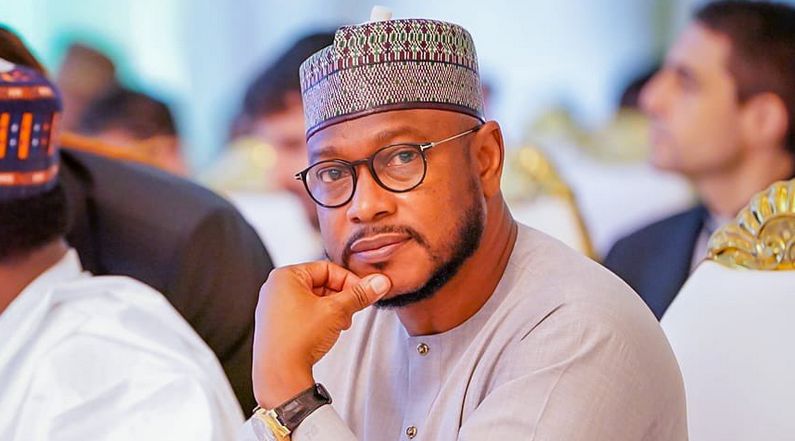
By Oladapo Sofowora
For a state like Zamfara with the moniker; ‘Farming is our Pride’ is a case of a toothless bulldog who can only bark without attacking. Adjudged as the state with the most rich and arable land for agricultural works but failed to meet its full potential. The reason is not far-fetched but it’s an issue of leadership without foresight, genuineness and the can-do spirit. For years, Farmers had abandoned their fields, storage facilities were rotting and fertiliser was a luxury. This made families across the fourteen local government areas skip meals not because of banditry alone, but because food production had flatlined to the surface.
In 2023, the messiah, known for taking challenges head-on, came into the picture: Governor Dauda Lawal took the state from a struggling agrarian state back to its true potential. These changes were done without magic but required the seriousness from a government that is ready to bring about rescue to the ailing agriculture and food security value chain in Zamfara.
Today, the story is different, perhaps not perfect but measurably, verifiably different. Here is the direct account of how agriculture and food security improved under Governor Dauda Lawal within just three years and why the improvement needs to continue for another four years not through promises but through documented interventions that any farmer, trader, or housewife in Gusau, Funtua, or Talata Mafara can readily confirm.
For the very first time, fertilizer and improved seeds were hoarded by political middlemen who sold them at triple the market price or kept them for their own cronies this scam was finally stopped as farmers finally got inputs and they got them fairly. Governor Lawal broke that system entirely by creating a biometric farmer registration system that eliminated ghost names and party loyalists masquerading as farmers. Through this system, the state distributed 190,000 bags of subsidized fertilizer at a 50 percent subsidy directly to small holder farmers across all fourteen LGAs between 2023 and 2025. He also distributed 120,000 bags of maize and sorghum seeds and over two million rice seedlings free of charge to registered farmers.
The result was immediate and measurable. According to the Zamfara State Ministry of Agriculture, the number of farmers who planted at least one hectare of crops increased from approximately 180,000 in 2022 to over 350,000 in 2024. Fertilizer access rate among rural farmers rose from 22 percent to 67 percent. More farmers planting means more food on tables, more off-takers and funds readily available, more emerging markets are opening up and staple food availability like; maize, sorghum, millet, rice were increased by an estimated 40 percent across the state within two planting cycles.
Post-harvest losses dropped significantly, as food that used to rot now reaches hungry mouths. Before Lawal, Zamfara lost nearly 40 percent of its harvest to spoilage, rot, and pest infestation because there were no functional storage facilities across the state. Many farmers have had to watch their tomatoes, peppers, and grains decay while their families went hungry. In a bid to cushion this effect, the governor revived the Gusau Grain Storage Complex and the Funtua Agricultural Hub by installing modern silos with a combined capacity of 25,000 metric tons.
He also distributed 10,000 hermetic grain bags, airtight storage bags to rural women farmers who previously had no way to preserve their harvest beyond a few weeks. Post-harvest losses dropped from an estimated 38 percent in 2022 to 22 percent in 2024 this were verifiable statistics according to the Zamfara Agricultural Development Project.
With these changes, it is clear that; 16 percent more of every harvest actually reaches the market or the family kitchen. Less food waste means more food circulating in the local economy and farmers can now store their grains for months and sell when prices are fair, rather than being forced to sell immediately at rock-bottom prices to avoid spoilage.
Before Governor Dauda Lawal, Zamfara used to be a one-season farming state once the rains stopped in October, food production also nosedive. Families then endured five months of scarcity, sky-high prices and reliance on imported food from neighbouring states. Governor Lawal changed that permanently by rehabilitating five earth dams like; Bakolori, Zauro, Wawan Rafi, Dansadau and Kwalkwalawa, installing solar-powered irrigation pumps to ensure year-round water access. He also distributed 5,000 treadle pumps to smallholder farmers in Shinkafi, Kaura Namoda, and Talata Mafara LGAs.
Dry-season cultivated land increased from roughly 2,000 hectares in 2022 to over 10,000 hectares in 2024. Farmers are now producing onions, tomatoes, peppers, and wheat during the traditional lean months of November to March. The impact on food security has been dramatic as staple food prices which historically spiked by 50 to 70 percent between February and April, increased by only 22 percent during the same period in 2025, the smallest lean-season inflation in a decade. Families are eating better during the hardest months of the year because Lawal refused to accept that Zamfara should be hungry for half the calendar.
Herder-farmer clashes and livestock diseases had decimated Zamfara’s animal protein supply, with thousands of cattle dying from preventable illnesses and violent confrontations pushing herders off traditional routes. Governor Lawal launched the largest livestock vaccination campaign in the state’s history, inoculating 2.2 million cattle against CBPP and 1.5 million goats and sheep against PPR all free of charge. He also established three modern grazing reserves equipped with veterinary clinics and water points, moving herders away from open grazing that provoked conflicts with crop farmers.
Livestock mortality rates dropped from approximately 15 percent annually to 6 percent in 2024. Milk production increased by an estimated 30 percent and meat availability rose by 20 percent across major markets. More milk and meat means better nutrition, especially for children. Protein deficiency cases reported by Zamfara’s primary health centers dropped by 18 percent between 2023 and 2024. That is not a statistic. That is thousands of children getting stronger because Governor Lawal decided that animal health is human health.
Mechanization farming needed to replaced hoes, aching backs and tiny plots. In other to ensure more productivity of farmers across the state by reducing their burden amdnhelping them cover a large portion of their land during planting, Governor Lawal acquired 100 tractors, 300 power tillers and 50 combine harvesters by also establishing a tractor-hire scheme where farmers pay per hectare cultivated rather than bearing the crushing cost of ownership. He also opened a N2 billion Agricultural Credit Fund, providing loans to over 12,000 farmers at 5 percent interest with a six-month moratorium terms no commercial bank in Nigeria would ever offer. Land under cultivation expanded from 320,000 hectares in 2022 to approximately 480,000 hectares in 2024. Mechanization rates climbed from 8 percent to 22 percent.
Each tractor cultivated an average of 500 hectares per season, replacing the labor of over 200 farmworkers. More land under cultivation directly translates to more food supply, and the state’s estimated total food production in metric tons increased by 35 percent between 2022 and 2024 according to ZADP harvest surveys.
The ultimate test of any governor’s food security policy is whether families can afford to eat at least three square meals. Governor Lawal passed this test by creating the Zamfara Food Security Stabilization Committee, opened five bulking centers where farmers aggregate produce for bulk sale to major processors and waived all local government taxes on agricultural produce movement for eighteen consecutive months. No roadblocks, no levies, no settlement fees for trucks carrying farm produce.
In major Zamfara markets, the price of a 100-kilogram bag of maize in September 2024 was N38,000, compared to N52,000 in neighboring Katsina and N55,000 in Sokoto. Beans were N65,000 in Zamfara versus N85,000 in Kaduna. Sorghum prices were N35,000 in Zamfara versus N48,000 in Kano. An average household in Gusau spends approximately 28 percent less on staple grains than a comparable household in Katsina or Kano. That difference is money that stays in pockets for healthcare, education, and other needs. In a state where poverty rates were among the highest in the nation, that 28 percent saving is the difference between a child staying in school or being sent to the streets.
Despite Governor Dauda Lawal’s inheritance of an agricultural sector in intensive care, with just two years later, the vital signs have improved across every major metric. Farmers accessing subsidized inputs rose from 22 percent to 67 percent. Post-harvest losses dropped from 38 percent to 22 percent. Dry-season cultivated land expanded by 400 percent. Land under total cultivation increased by 50 percent. Mechanization rates more than doubled, as livestock mortality rate was cut by more than half.
The lean-season food price spike, which historically punished families with 50 to 70 percent inflation was contained to just 22 percent. Has he solved all of Zamfara’s food problems? No. Despite security, roads to some farming communities are still poor, more irrigation infrastructure still needed, the direction is unmistakable. Governor Dauda Lawal took a manifesto promise in 2022 and turned it into a measurable reality which everyone can see today. Food is more available and affordable.
For the first time in years, Zamfara’s farmers are looking ahead, not just surviving but producing. To consolidate on all these gains and also make it more solidified, Governor Dauda Lawal’s re-election is a collective efforts which all sundry must come together to make a reality by speaking in one voice on the pools and ensuring that farmers continue enjoying the dividend of democracy to ensure stability in Agricultural and food security value chain in the state and Nigeria at large.
State development
Governor Dauda Lawal Approves ₦3.759 Billion For Gusau Water Supply Rehabilitation

The Zamfara State Government, under the leadership of His Excellency, Governor Dauda Lawal, has approved the sum of ₦3,759,931,812.50 for the immediate rehabilitation of the Gusau Water Supply Scheme (Phase I). This forms part of the administration’s sustained efforts to address water scarcity and improve access to clean and safe water in the state capital.
The approval was granted during a meeting of the State Executive Council following the submission of a memorandum by the Ministry of Works and Infrastructure, which sought urgent intervention on the deteriorating water supply system in the Gusau metropolis.
The project is aimed at restoring efficient water production and distribution across the city, ensuring reliable service delivery to residents, and strengthening public health and sanitation standards.
The State Government further reaffirmed that funding for the project has been duly captured in the 2026 Appropriation Law, reflecting its commitment to prioritizing critical infrastructure and improving the quality of life of citizens.
Upon completion, the Zamfara State Water Corporation will oversee the operation and maintenance of the rehabilitated facilities to ensure sustainability and long-term service delivery.
This initiative underscores the commitment of the administration of Governor Dauda Lawal to addressing key developmental challenges and fulfilling its promise to provide essential services to the people of Zamfara State.
The government calls on residents to support ongoing efforts and cooperate with relevant authorities to ensure the successful execution of the project.
-
Politics2 years ago
13 Ondo Assembly Members Disown Endorsement of Aiyedatiwa
-
Politics2 years ago
APC Group, Ondo Govt, Quarrel Over Money for Endorsement
-

 Trending News5 years ago
Stop unsavoury, inciting statements – DSS warns
-

 Others4 years ago
Adron Homes Celebrates 10 Years Of Housing Excellence
-

 Humanity4 years ago
President Buhari Commiserates With Ambassador Maureen Tamuno Over The Loss Of Her Father
-

 Others7 years ago
EX- CUSTOMS BOSS, IBRAHIM MERA’S DWINDLING FAME
-

 Business2 years ago
Bigi Carbonated Soft Drinks Treats 40 Consumers to an Epic Easter Movie Hangout
-

 Business2 years ago
Wema Bank Shines at Global SME Finance Forum Conference Awards 2024 …Awarded: • SME Financier of the Year (Africa) • Platinum Award for Best Financier for Women Entrepreneurs (Africa)