
News
JOINT STATEMENT BY NGE & SERAP ON WORLD PRESS FREEDOM DAY


SERAP NGE press freedom call urges Tinubu government to protect journalists and address insecurity ahead of World Press Freedom Day

As the international community marks World Press Freedom Day tomorrow, Socio-Economic Rights and Accountability Project (SERAP) and Nigeria Guild of Editors (NGE) are calling on the government of President Bola Tinubu.
Also read: SERAP files suit against Wike, state governors over fuel subsidy mismanagement
Nigeria’s state governors and the Minister of the Federal Capital Territory to ensure press freedom, protection of journalists and urgently bring an end to the escalating insecurity and widespread human rights violations across several parts of northern Nigeria, including in Benue State, Plateau State, Borno State, Sokoto State, and Kwara State.
We note that protecting journalists and safeguarding information integrity are central drivers of peace, security, and democratic stability.
Any credible peace, recovery, or security strategy must integrate information integrity and support for free, independent, and pluralistic media alongside humanitarian, institutional, and economic responses.
The erosion of independent journalism and civic information ecosystems directly contributes to governance breakdown.
When journalism is weakened through intimidation, repression, or impunity for attacks against media professionals, corruption thrives, accountability declines, and misinformation expands.
In such environments, information violence often precedes physical violence, further deepening insecurity and undermining public trust in state institutions.
Strengthening media freedom, protecting journalists, and ensuring access to reliable information are essential components of any sustainable response to insecurity in Nigeria.
These measures are critical not only for documenting violations but also for preventing them, ensuring accountability, and supporting early warning mechanisms in conflict-affected communities.
We reiterate that efforts to address insecurity and human rights violations in Nigeria must include concrete commitments to protect journalists, strengthen media institutions, and safeguard the free flow of credible information as an indispensable foundation for accountability, peace, and democratic resilience.
We note that that the UNESCO theme for the 2026 World Press Freedom Day Conference, entitled “Shaping a Future of Peace”, underscores the centrality of a free, independent, and viable media ecosystem to peace, security, and sustainable development.
The Conference highlights that protecting journalists and safeguarding information integrity are not peripheral concerns, but core drivers of peace and security.
We are seriously concerned about the scale and persistence of killings, abductions, sexual violence, forced displacement, and destruction of property and the deepening governance and accountability crisis.
We are concerned that thousands of people have been unlawfully killed and millions displaced in several parts of northern Nigeria, alongside ongoing patterns of attacks on rural communities, abductions, and grave abuses against women and children.
These trends reflect systemic failures to prevent foreseeable harm, protect communities, identify and prosecute the perpetrators and their sponsors, and ensure access to justice and effective remedies to victims.
These grave human rights violations and failures constitute serious breaches of Nigeria’s obligations under the Nigerian Constitution 1999 [as amended], the African Charter on Human and Peoples’ Rights, and the International Covenant on Civil and Political Rights to which Nigeria is a state party.
The humanitarian consequences remain severe: communities destroyed, livelihoods lost, and victims left without effective remedies.
The persistence of impunity continues to erode public trust and weaken democratic governance.
Nigerian authorities at all levels have binding constitutional and international human rights obligations to end the growing insecurity across the country and the impunity of perpetrators, which continue to fuel grave human rights violations and abuses.
The Bola Tinubu administration, state governors and the Minister of the Federal Capital Territory have binding duties to exercise due diligence in investigating the grave human rights violations and abuses in the context of the insecurity and to remedy the violations and abuses by bringing to justice the perpetrators and their sponsors and ensuring justice for the victims and their families.
We note that Section 22 of the Nigerian Constitution imposes a clear obligation on the media to hold the government accountable to the people, while Section 39 guarantees the right to freedom of expression.
These constitutional protections, together with Nigeria’s obligations under international human rights law, require the State not only to refrain from interference but also to actively protect journalists and ensure a safe environment for reporting on insecurity and human rights violations.
Addressing insecurity in Nigeria requires more than reactive responses. It demands a sustained commitment to accountability, transparency, and human rights.
Embedding these principles into governance and security frameworks is essential to breaking the cycle of violence and restoring public confidence in democratic institutions.
We therefore call on the Federal Government and state authorities to:
1. Guarantee freedom of the press and freedom of expression, as provided in the the 1999 Constitution (as amended)
2. Protect civic space and journalists as well as promote victim-centred, ethical media reporting
3. Take immediate and systemic actions, including by strengthening preventive, intelligence-led, and community-based security measures in high-risk areas.
4. Publicly acknowledge that widespread killings, abductions, and destruction of property constitute violations of the rights to life, dignity, security, and property, and cannot be justified under any circumstances.
5. Ensure prompt, thorough, independent, impartial, transparent and effective investigations into all reported grave human rights violations and abuses.
6. Identify and prosecute perpetrators and their sponsors including those who may have aided, enabled, or failed to prevent the violations despite prior knowledge of risks and dismantle networks responsible for attacks.
7. Ensure access to justice and effective remedies to victims and their families, including adequate monetary compensation, restitution, rehabilitation, and guarantees of non-repetition, and psychosocial support.
8. Improve transparency around security operations and accountability processes.
9. Fully implement constitutional and international human rights obligations.
10. Develop and implement a robust legal and institutional framework to prevent future violations, including early-warning systems and protection for at-risk communities.
11. Create a public registry or reporting system documenting incidents, responses, and accountability measures to strengthen oversight and citizen trust.
12. Direct all relevant agencies to respect, protect, promote, and fulfil human rights in line with Nigeria’s domestic and international legal commitments.
We further urge the Tinubu administration, Nigeria’s state governors and the Minister of the Federal Capital Territory to extend formal invitations to relevant mandate holders of the United Nations Human Rights Council—particularly Special Rapporteurs with relevant mandates—and to the African Commission on Human and Peoples’ Rights Special Rapporteurs, to undertake fact-finding visits to Nigeria.
Such visits should focus on documenting the scale and patterns of insecurity across the country, particularly in several parts of northern Nigeria, and the resulting grave human rights violations and abuses, including killings, abductions, sexual violence, torture, and enforced disappearances.
The findings of these independent mechanisms should inform concrete recommendations on accountability, justice, and remedies for victims, as well as structural reforms to prevent further violations.
We also urge the National Assembly to exercise its constitutional oversight responsibilities under Sections 88 and 89 of the Nigerian Constitution by convening an urgent public hearing on insecurity and the growing pattern of attacks on journalists and media freedom in Nigeria.
Such a hearing should examine the role of security agencies, regulatory bodies, and other state actors in grave human rights violations and failing to protect journalists and other citizens reporting on insecurity, with a view to strengthening accountability and justice and legislative safeguards.
We also call on the international community to reinforce pressure on Nigerian authorities at both federal and state levels to take urgent and concrete steps to end the escalating insecurity and entrenched impunity driving widespread human rights violations across the country.
We further urge the international community to encourage and put pressure on the Nigerian authorities to prioritise the protection of people including journalists in conflict-affected and high-risk areas, and to ensure that civic space is safeguarded so that journalists, human rights defenders, and media organisations can report freely and safely on insecurity and human rights violations without fear of harassment or reprisals.
Also read: SERAP demands inquiry into missing N500bn from NNPCL
We urge the international community to continue engaging Nigerian authorities to ensure full implementation of their constitutional and international human rights obligations, including commitments to respect, protect, promote, and fulfil fundamental rights, and to adopt sustainable, rights-based responses to insecurity that prioritise justice, accountability, and the protection of victims over impunity and repression.



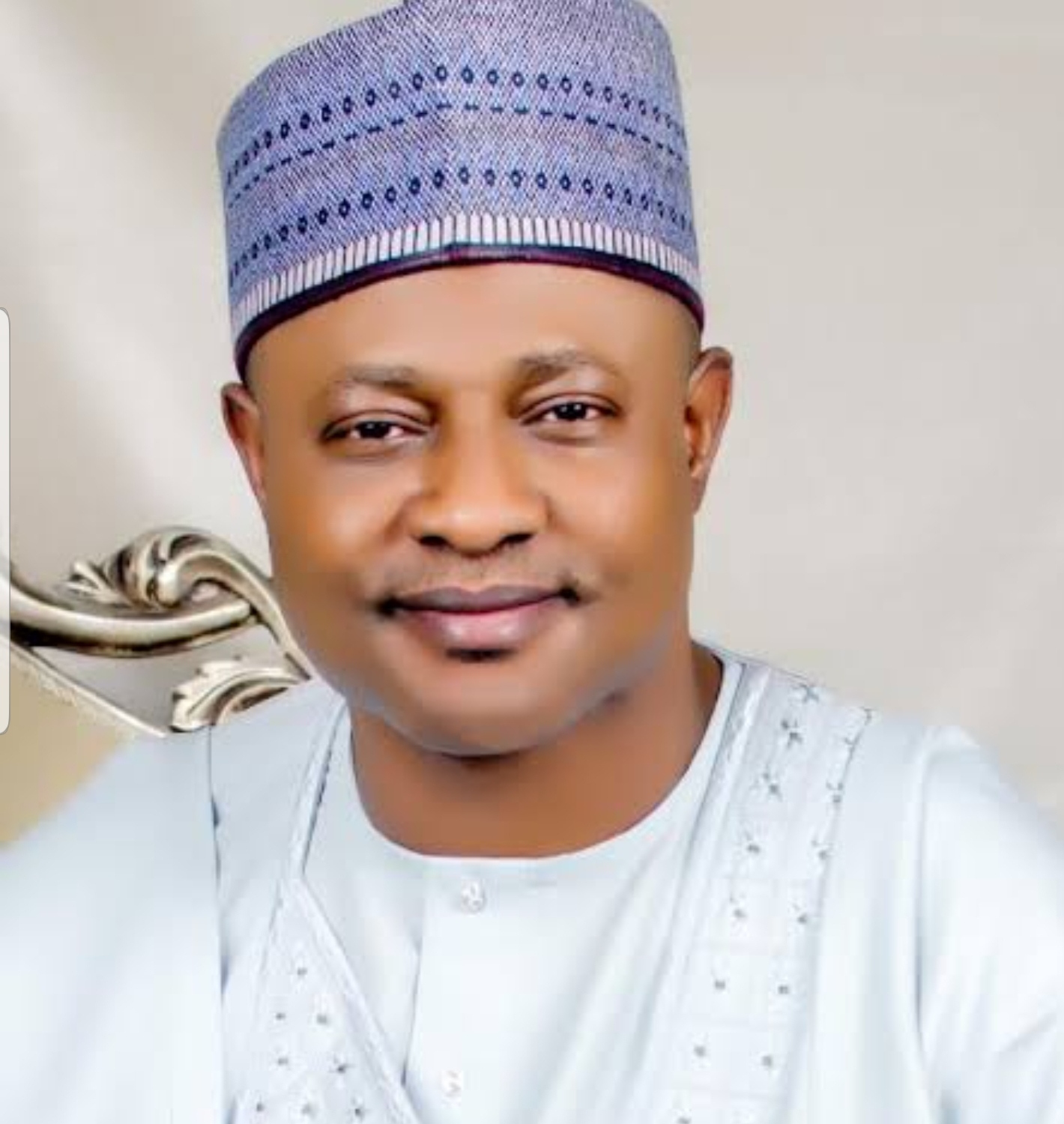
Uba Sani denies rift with Nasir El-Rufai, reaffirming his respect for the former Kaduna governor amid detention and political tensions
Kaduna State Governor Uba Sani on Tuesday, 27 October 2026, told Trust TV’s Daily Politics programme that he had never spoken ill of his predecessor, Nasir Ahmad El-Rufai, as questions over their relationship continued to attract attention in Kaduna State and Nigeria’s political circles.
Also read: FG Approves ₦70,000 Monthly Transport Allowance for Workers
The governor’s remarks came as El-Rufai remained in the custody of the Independent Corrupt Practices and Other Related Offences Commission (ICPC), following his detention in February and amid ongoing court proceedings over allegations of financial misconduct.
Sani insisted that his respect for the former governor remained intact, while distancing himself from a supporter’s reported call for El-Rufai to remain detained until after the next election.
“Honestly speaking, I have no problem with him (El-Rufai). If you listen to me carefully, I have never spoken anything bad about him, and I will never speak anything bad about him,” Sani said during the interview.
The governor also rejected any suggestion that a statement made by a political supporter represented his own position.
“The person that made that statement was speaking for himself. He was not speaking for me,” he said.
Sani declined to disclose details of any private efforts he might have made regarding El-Rufai’s situation, explaining that respect did not always require public declarations. He maintained that his approach to the former governor had been consistent since he assumed office in May 2023.
“As a matter of respect, many things I’ve done to show my respect for him, my regard for him, I don’t think I should come out and say it,” Sani said.
The comments offer a measured response to a relationship that has become a recurring subject of political debate since the two men, once close allies, began to drift apart.
El-Rufai governed Kaduna State from 2015 to 2023 and supported Sani’s bid to succeed him. Before becoming governor, Sani served as a senator representing Kaduna Central and held advisory roles during El-Rufai’s political career.
Their alliance was therefore rooted in years of shared political work, making subsequent disagreements particularly significant for the state’s political landscape.
Tensions became more visible after Sani took office, particularly over the financial legacy of the previous administration.
In 2024, the Kaduna State House of Assembly initiated a probe into allegations involving the former administration’s finances, while Sani’s government raised concerns about the state’s debt and liabilities.
El-Rufai and his associates subsequently criticised aspects of the new administration, deepening public speculation about the relationship between the two camps.
El-Rufai publicly questioned the closeness of the relationship in August 2025, saying that Sani had never been his friend, even as he acknowledged the political history between them. The remarks added to perceptions of a widening divide between the former governor and his successor.
Sani’s latest comments, however, focused on his stated preference for respect and consultation rather than public exchanges.
He cited his continued engagement with former Kaduna governors, including Ahmed Makarfi, whom he said he consulted on road construction projects.
The governor referred specifically to the road linking Soba and Zaria, explaining that discussions with Makarfi had helped inform his approach to the project.
Sani also said he had consulted former Vice-President Namadi Sambo on a project design, including the design of the Government House.
“When you are sitting as a governor, you don’t have a monopoly of wisdom. The way to succeed is to be humble and listen to people who advise you,” he said.
The remarks provided a glimpse into how Sani says he approaches governance, presenting consultation with former officeholders as a source of practical guidance rather than a sign of political weakness.
They also shifted attention towards the responsibilities of public office at a time when political disagreements have frequently overshadowed policy discussions in Kaduna.
El-Rufai’s legal situation remains a separate but closely watched dimension of the controversy. On 13 October 2026, Channels Television reported that the former governor appeared before the Kaduna State High Court for the continuation of his trial over alleged financial misconduct.
The appearance followed a Court of Appeal decision dismissing his challenge to the refusal of bail. The allegations remain subject to judicial determination, and El-Rufai has denied wrongdoing.
The legal proceedings have intensified public debate about the relationship between political accountability and the rights of individuals facing criminal allegations.
They have also provided a backdrop for competing political claims about responsibility for El-Rufai’s predicament, including accusations from opposition figures that Sani bears responsibility.
Such claims remain allegations and should not be treated as established facts.
Sani did not directly address the merits of the legal proceedings during the reported interview. Instead, he emphasised that he had not publicly disowned his previous statements about El-Rufai and insisted that his position had remained consistent.
For Kaduna residents, the distinction between personal relationships and the business of government remains important.
The state continues to face development needs that require sustained attention, while disagreements among its political leaders can influence public confidence and the wider political climate ahead of the 2027 elections.
Sani’s latest intervention may help clarify his public position, but it does not resolve the underlying questions surrounding his relationship with El-Rufai.
Whether the two men can move beyond their differences remains uncertain.
Also read: FG Approves ₦70,000 Monthly Transport Allowance for Workers
For now, the governor has made his message clear: he says he has never spoken ill of his predecessor and does not intend to do so, even as the political and legal circumstances surrounding El-Rufai continue to evolve.
-
Politics3 years ago
13 Ondo Assembly Members Disown Endorsement of Aiyedatiwa
-
Politics3 years ago
APC Group, Ondo Govt, Quarrel Over Money for Endorsement
-

 Trending News5 years ago
Stop unsavoury, inciting statements – DSS warns
-

 Others5 years ago
Adron Homes Celebrates 10 Years Of Housing Excellence
-

 Humanity5 years ago
President Buhari Commiserates With Ambassador Maureen Tamuno Over The Loss Of Her Father
-

 Others7 years ago
EX- CUSTOMS BOSS, IBRAHIM MERA’S DWINDLING FAME
-

 Business3 years ago
Bigi Carbonated Soft Drinks Treats 40 Consumers to an Epic Easter Movie Hangout
-

 Business2 years ago
Wema Bank Shines at Global SME Finance Forum Conference Awards 2024 …Awarded: • SME Financier of the Year (Africa) • Platinum Award for Best Financier for Women Entrepreneurs (Africa)