
Opinion
Celebrating Tunji Bello at 65…

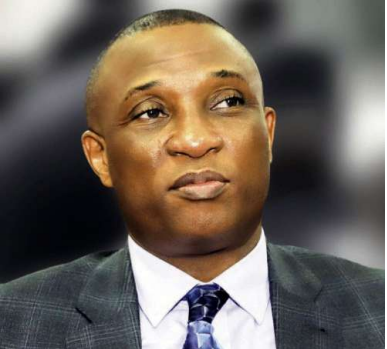
By Bola BOLAWOLE,

What do you do when someone takes the wind off your sail? Two options readily come to mind: Either you try to force your way and swim against the tide – which is suicidal – or you ride the storm, like the eagle does. Isaiah 40:31 says: “But they that wait upon the Lord shall renew their strength; they shall mount up with wings as eagles; they shall run, and not be weary; and they shall walk, and not faint.” The eagle does not struggle or fight the storm; it simply rides it – leisurely, effortless ride.
Also read: Zamfara Governor, Dauda Lawal Shakes Up Cabinet, Moves Budget Commissioner to Education
That way, the eagle soars and conquers, and the eagle has its way; achieving its goal without struggle. When someone else helps you to get the job practically done, learn a lesson from the eagle!
On Monday morning while meditating on topics to comment about, I stumbled on Lasisi Olagunju’s “Tunji Bello at 65.” Lasisi is a must-read for me every week or whenever he writes and whatever he writes on.
We both write for the TRIBUNE titles and we get on very well as professional colleagues and brothers, including other TRIBUNE writers like Festus, Suyi, Adewole, among others. But last weekend was hectic for me and I had not read any of my favourite columnists, including Lasisi. The topic, Tunji Bello, also fascinated me.
Olatunji Bello has a good heart – and I mean, a good heart. If you ask our professional colleagues to rate Tunji, he will score 100 percent – or close to it! I was at the University of Ibadan (for my NYSC, followed by my M. Sc. degree programme in the Political Science department of the same university (1982-1984) when Tunji campaigned for the post of vice-president of the Students Union – and he won.
As a member of the Socialist Collectives at U.I at the time, we took active interest in the students gunning for elective officers. We were Dr. Gboyega (where is he now?), Femi Falana (now SAN), Prof. Niyi Osundare, myself, among others.
As Tunji campaigned for votes, he also had his eyes on other things. It was here that he sighted Ibiyemi in one of the female halls, and the pretty lady later became his wife.
Handsome man won the hand of a beautiful lady! I was there in 1989 when they both tied the nuptial knot. Ibiyemi, the current vice-chancellor of the Lagos State University (LASU), has part of her roots in Owo, where I also hail from.
Lasisi is one of this generation’s most cerebral and delectable writers. So I am so happy to soar on his wings today! Einstein says, “If I have seen farther than others, it is by standing upon the shoulders of giants.” It is my pleasure, then, to stand on the shoulders of this literary giant today! Blunt and severe on many occasions, let’s see what Lasisi has to say about Tunji:
“I call myself a dove. That is why I choose my friends carefully. Yet, for reasons I have never understood, many of those I deliberately choose turn out to be delightful rascals. One of them is an Edo man named Louis Odion. We met in Kano in 2002 and have remained family ever since.
“One day, I asked Louis, “Tell me about OPEC.”
“That is KGB-classified information,” he replied with a laugh. Then, like every good conspirator, he broke the code of silence.
“OPEC,” he said, “was the Organisation of Petroleum (Lifting) Correspondents. The crude we traded was Stout beer. It was our opium against the tyranny of Sani Abacha.”
He explained that in those Concord years, confronting a murderous military dictatorship without regular salaries required more than courage; it required fellowship.
Tunji Bello, whom everyone simply called TB, was OPEC President. Kayode Komolafe was Vice-President. Louis served as Secretary-General. Their “summits”, he said, were dictated by “operational necessity.”
Whenever the Abacha regime committed an outrage, an “extraordinary summit” was promptly convened. Membership cut across the CONCORD stable, with visiting comrades from The GUARDIAN, VANGUARD and PUNCH. Consumption was measured in barrels—bottles of Stout. Fines for late stories or sloppy copy were also paid in barrels, while Secretary-General Louis enforced compliance by collecting the “dead-cold crude” from CONCORD’s famous “bush canteen.”
“TB gave a good account of himself as OPEC President,” Louis concluded. “He still does.”
Louis is a gifted storyteller. One day he told me he was trained as a secretary. I immediately corrected him: “You mean a typist.” He laughed.
That secretary-turned-journalist trajectory, incidentally, he shares with another mutual friend, Festus Adedayo.
But Louis’s story is more than a career change; it is the story of a destiny transformed by a destiny helper.
He tells it best:
“In late 1992, my internship at CONCORD was ending. I was only 18 and uncertain about my future. Part of me wanted to JAPA. Another part wanted to return to Federal Polytechnic for Higher National Diploma in Secretarial Administration. Tunji Bello, already an editor, had taken interest in my writing. He urged me to go to university instead and study for a degree. But where would I get the funds for a degree? Tunji Bello then persuaded CONCORD management to bend its rules and employ me as Political Correspondent because, as he argued, I had exceptional writing talent. At the time, a university degree was the minimum qualification for the editorial cadre.
“Tunji Bello made it possible for a 19-year-old to become Political Correspondent. Even after CONCORD ran into hard times following Chief MKO Abiola’s incarceration in June 1994, he continued to support my education at UNILAG, morally and financially.” The rest is history.
Whenever I think of Louis Odion, I think of Tunji Bello. Louis is one of his many creations.
Across the newsroom and every public institution where Bello has served, there are countless stories of men and women who carry similar testimonies.
Destiny helpers are among God’s quietest angels; they leave their fingerprints on lives rather than on monuments.
That young intern, Louis, eventually became Deputy editor of Saturday, Sunday and Daily THISDAY, editor of the Sunday SUN, Managing Director of NATIONAL LIFE, Commissioner in Edo State and today serves as Executive Commissioner (Operations) of the Federal Competition and Consumer Protection Commission.
And when Louis says simply, “Oga,” everyone knows who he means.
When Tunji Bello turned 60, President Bola Tinubu described him as “an exceptional human being.” It was an accurate description. Tinubu also called him “friend, comrade and partner” and “the most accomplished and durable public servant in Lagos State of his generation.” Time has not diminished that verdict. Bello has been an editor, commissioner, Secretary to the State Government and now Executive Vice-Chairman and Chief Executive Officer of the Federal Competition and Consumer Protection Commission.
Through each role, one quality has remained constant: he builds institutions by first building people.
I knew him only in journalism. We never worked in the same newsroom. Yet, like countless others, I call him ‘Oga Bello.’ Not just because in rank he is the boss, but because he embodies what every good oga should be: generous with opportunities, respectful of colleagues and quietly investing in the success of others.
Shakespeare once lamented that “Men’s evil manners live in brass; their virtues we write in water.” Tunji Bello’s life offers a happy subversion of that verse. His virtues were not written in water. They were written in people. And people remember.
This week Wednesday, July 1st, he climbs the sixty-fifth rung of life with the measured grace of an ọmọlúàbí. On behalf of all who have benefited from his friendship and friendliness, his discipline and leadership, I wish him many happy returns.
Five years from now, when he reaches the seventieth rung, we shall summon the Eyo masquerade in celebration of a man whose greatest achievements are not merely the offices held, but the lives lifted.
Congratulations, Oga Bello.”
I endorse all that Lasisi said about Tunji: Team-player, destiny-helper, easy-going humanist, compassionate friend, among others. Lasisi calls him “Oga”; I call Tunji “Ore” – and a true, reliable, and dependable friend he is!
Tunji and I, along with many of our colleagues, were in the trenches during the June 12 struggle. He was one of the Generals that commanded the CONCORD sector while myself and others held forte at the PUNCH sector.
Interestingly, both of us (with Louis Odion, the story-teller mentioned here by Lasisi), together with many of our other colleagues, were knighted as Heroes of Democracy in President Bola Ahmed Tinubu’s Democracy Day 2026 broadcast.
Ore, congratulations on your birthday which falls due today!
JUSTICE (PROF.) ALABA OMOLAYE-AJILEYE PRESENTS BOOKS, LAUNCHES FOUNDATION
Tomorrow, Thursday, 2nd July, 2026, all roads will lead to the Conference Centre of the National Open University (NOUN), Jabi, FCT, Abuja, as retired judge of the Kogi State High Court and Visiting Professor of Law at NOUN, Hon. Justice (Prof.) Alaba Omolaye-Ajileye, presents two books as well as launches a Foundation for indigent students.
An authority and leading light in the new field of electronic evidence, Omolaye-Ajileye’s new books are “Electronic Evidence, Second Edition” and “A Compendium of Cases on Electronic Evidence, Volume 11, 2020 – 2025.”
Also read: Zamfara Governor, Dauda Lawal Shakes Up Cabinet, Moves Budget Commissioner to Education
Justice Omolaye-Ajileye is also the Chief Executive Officer of Forensic Electronic and Digital Law Consultancy (FEDLAC).



By Nosa Osaikhuiwu,
Nigeria’s teeming population should be viewed not as a burden but as an enormous economic asset that can and must be harnessed for national economic transformation and sustainable development.
Also read: South African Businesses Struggle as Foreign Workers and Traders Leave
With a population already exceeding 200 million and projected to approach 300 million by the end of the century, Nigeria cannot afford to continue responding only to the challenges of today. We must begin implementing policies that anticipate the economic, social and employment challenges of tomorrow.
One of Nigeria’s most urgent challenges is unemployment, particularly among young people. This problem affects both graduates and the much larger segment of our population without formal education or marketable technical skills. The fundamental question, therefore, is not simply how government can create jobs, but how government can create the economic conditions under which millions of sustainable jobs can be created by the private sector.
Recognizing the Necessary Economic Reforms
Before addressing job creation, it is important to acknowledge some of the major economic reforms undertaken by the current administration.
While these policies have been unpopular in some quarters and have imposed significant hardship on households and businesses, the removal of fuel subsidies and the move toward greater alignment of foreign-exchange rates were, in my view, necessary steps toward restoring some degree of economic stability.
The manner and timing of implementation can certainly be debated. However, it is difficult to dispute that maintaining a system in which government could no longer sustainably finance fuel subsidies, while simultaneously maintaining significant distortions in the foreign-exchange market, was becoming increasingly untenable.
The immediate consequences have been severe for millions of Nigerians. Nevertheless, if these reforms are properly managed and followed by policies that stimulate production, investment and employment, Nigeria can ultimately emerge stronger.
However, some of the noise in some political quarters about reversing the fuel subsidy removal is not only disingenuous, it is playing to the gallery of public sentiments which betrays a lack of seriousness on their part.
The next phase, therefore, must be about growth, production and job creation. Manufacturing Is Essential: But Manufacturing Alone Is Not Enough
I strongly agree with the position repeatedly expressed by Nigerian industrialist Aliko Dangote that manufacturing is critical to job creation in Nigeria.
Manufacturing creates direct employment in factories, but its impact extends far beyond the factory floor. It creates demand for raw materials, transportation, logistics, warehousing, engineering, maintenance, packaging, distribution, financial services and countless other activities.
However, I would take this argument one step further, because a sustainable manufacturing industry requires demand.
A factory can produce thousands of beds, furniture sets, refrigerators, or other locally manufactured products, but production cannot continue indefinitely if consumers lack the purchasing power to buy those products. This is where government policy must become more sophisticated.
Rather than government attempting to employ everyone directly, it should create an economic environment in which production generates employment and employment generates purchasing power, which in turn creates demand for more production. That is the economic cycle Nigeria must deliberately build.
Creating a National Credit Economy
One of the most powerful instruments available to us is a properly regulated consumer and business credit system. In advanced economies, access to responsible credit has played an important role in improving living standards and expanding economic activity.
Consumers do not necessarily have to possess the full amount of money required to purchase a house, vehicle, furniture or other durable goods before making the purchase.
Properly structured credit allows them to acquire those goods today and pay over time. That creates immediate demand for manufactured products.
The manufacturer receives payment. The factory continues producing. Workers retain their jobs. Suppliers receive orders. Transporters move products.
Financial institutions earn interest. Government receives taxes. Employees spend their income elsewhere in the economy. One transaction can therefore generate an economic chain far larger than the original purchase.
The Following Steps Are Essential
- Establish a Unified National Database
Nigeria needs a comprehensive national database integrating biometric information and a unique National Identification Number for every citizen and legally resident person. A reliable identity infrastructure is fundamental to modern financial services, taxation, credit assessment, social programs and economic planning.
- Reform the Credit Bureau System
Credit bureau legislation should be strengthened and modernized, allowing banks and regulated financial institutions to play a greater role in developing a robust credit-information ecosystem, subject to strong government regulatory oversight. Every Nigerian who participates in the formal financial system should gradually develop a verifiable credit history. Good financial behavior should have benefits. Persistent default should have consequences.
- Accelerate the Transition to a Cashless Economy
Nigeria should establish a realistic but ambitious transition toward a predominantly cashless economy within 36 months. This should not be about punishing Nigerians who use cash. It should be about creating a transparent, traceable and efficient financial system that reduces the size of the informal cash economy and makes it easier to assess income, spending, creditworthiness and tax obligations.
- Gradually Restrict Excessive Cash Transactions
Government should consider progressively restricting large cash withdrawals and transactions, with appropriate exemptions for legitimate businesses and special circumstances. Such a policy must, however, be carefully designed so that it does not inadvertently harm small businesses or citizens who remain outside the formal banking system. The objective should be financial inclusion and transparency, not financial exclusion.
- Expand Consumer and Manufacturer Financing
Legislation and regulation should facilitate financing arrangements through which manufacturers can sell locally produced goods to consumers on credit while financial institutions assume and manage the repayment risk. Imagine a Nigerian family being able to purchase locally manufactured furniture, beds, household appliances or other durable goods and pay over 12, 24 or 36 months.
The manufacturer gets paid.
The consumer gets the product.
The bank earns legitimate interest.
The factory continues producing.
Workers remain employed.
And the economy expands.
This is the kind of demand-induced economic growth Nigeria should pursue.
But Credit Requires Culture Change
There is, however, a major obstacle to implementing such a system in Nigeria. Credit cannot function effectively without trust, integrity and a culture of repayment.
This brings us directly to what I have identified in my previous writings as the QUAD – four interconnected cultural problems that continue to undermine Nigeria’s development:
- Unethical behavior
- Greed
- Lack of integrity
- Permissiveness—the “Oga Abeg” culture
Too many Nigerians have historically viewed loans and government-supported credit schemes as free money that should not necessarily be repaid. That mindset must change.
If a person obtains a bank loan to purchase locally manufactured furniture, a vehicle, equipment or other goods, repayment is not optional. It is a contractual obligation. Failure to repay should affect the individual’s ability to access future financial services.
A properly integrated financial architecture should ensure that a poor credit record follows a borrower across regulated financial institutions and digital financial platforms, subject to due process and appropriate consumer protections.
Banks, fintech companies and regulated payment platforms should be able to participate in a credible national credit-information ecosystem.
But this cannot be achieved through regulation alone. Nigeria needs a massive national public-awareness campaign on the meaning of credit, contractual obligations and financial responsibility. This is another example of why economic transformation without culture change will remain incomplete.
Rethinking Youth Employment
We cannot continue producing millions of graduates who are jobless while simultaneously importing technicians and skilled workers and leaving young Nigerians without practical skills or employment opportunities.
The recent initiative by the Federal Government of Nigeria under the Tinubu/Shettima Administration to reform the National Youth Service Corps (NYSC) is commendable.
However, the reform of the NYSC will be incomplete if it does not transition NYSC into a National Skills and Apprenticeship Program that will help train and equip our young men and women with skills that will help them earn a living as entrepreneurs or be gainfully employed.
Nigeria must also rethink the purpose of education. I would advocate an optional SECOND year of National Service dedicated specifically to skills acquisition and apprenticeship.
Young Nigerians could receive structured training in areas such as:
- Automobile technology and diagnostics
- Electrical installation and maintenance
- Construction management
- Fashion and design
- Collision repair and auto bodywork
- Agriculture and poultry operations
- Welding and fabrication
- Firefighting and emergency services
- Computer hardware and maintenance
- Software development
- App development
- Coding and programming
- Artificial intelligence
- Renewable energy technology
- Plumbing
- Refrigeration and air-conditioning
- Industrial maintenance
The program should be developed in partnership with private-sector employers, manufacturers, technical institutions and professional bodies.
At the end of the program, participants should receive a nationally recognized industry certification demonstrating basic professional competence.
This would transform NYSC from merely a national service program into a major national workforce-development and apprenticeship system.
The Automobile Sector Alone Offers Enormous Opportunities
Consider the automobile sector. Nigeria has millions of vehicles on the road, yet many mechanics operate without formal training. At the same time, modern vehicles are increasingly computerized and technologically sophisticated.
The mechanic of tomorrow will need to understand electronics, diagnostics, computer systems, sensors and software, not merely engines and mechanical components.
A national automotive apprenticeship program could therefore create hundreds of thousands of skilled technicians over time while reducing dependence on foreign expertise.
The same principle applies to virtually every technical occupation. Nigeria does not have a shortage of work. Nigeria has a shortage of properly organized opportunities to convert work into productive employment and enterprise.
Ethanol: Turning Agriculture into Energy and Employment
Another opportunity lies in the development of an ethanol-blended fuel program. Nigeria should seriously consider adopting a national ethanol-blending policy, potentially beginning with a 10 percent blend and progressively evaluating higher blends based on technical and economic feasibility. Such a policy could stimulate demand for cassava, maize and other suitable feedstocks.
That demand would create opportunities for farmers, agricultural aggregators, and brokers, processing companies, logistics operators, transporters, equipment suppliers and storage facilities.
The economic impact would therefore extend far beyond the ethanol plant itself. Rather than importing every unit of energy we consume, Nigeria could create a domestic agricultural-energy value chain.
With the right policies, this could generate substantial employment over time. The precise number of jobs should, of course, be determined through detailed feasibility studies, but the principle is compelling: energy policy can simultaneously become agricultural policy, industrial policy and employment policy.
Security and Employment
Nigeria’s security crisis also requires a fundamentally different approach. We need to build a much stronger human-intelligence capability at the community level.
A large national network of trained intelligence personnel could provide communities, security agencies and government with timely information about criminal activity, kidnapping networks, banditry and terrorism.
Such a program would need to be carefully structured, professionally trained, legally regulated and integrated with existing security agencies. It must not become an uncontrolled vigilante system.
The objective should be to create a professional intelligence architecture in which ordinary citizens can become an additional source of reliable information for national security.
Security itself can therefore become an area of structured employment while simultaneously strengthening the country’s ability to prevent crime.
Government Should Stop Trying to Be the Entrepreneur
Another important component of Nigeria’s economic transformation should be a gradual reduction in government’s ownership and management of commercial enterprises.
Government’s principal responsibility should be to provide:
- Clear regulations
- Infrastructure
- Security
- Efficient taxation
- Reliable identity systems
- Access to finance
- Fair competition
- Effective institutions
The private sector should increasingly be allowed to serve as the primary engine of production, innovation and employment. Government does not have to own every factory in order to create jobs. It needs to create the enabling environment in which thousands of factories can be profitably established and operated by Nigerians and investors.
Thus, I recommend that the Tinubu/Shettima Administration completely privatize the NNPCL refineries and if there no takers decommission them as they have become a source waste, fraud and abuse.
Affordable Housing as an Economic Engine
Housing provides another powerful example of demand-induced growth. Nigeria should develop long-term mortgage financing, initially targeting public servants such as police officers and members of the armed forces, with mortgage payments deducted directly from salaries.
A properly structured 10 to 15-year mortgage scheme could allow workers to acquire homes while creating demand across an enormous range of industries.
A single housing project requires:
- Cement
- Steel
- Doors and windows
- Electrical equipment
- Plumbing materials
- Tiles
- Furniture
- Roofing materials
- Engineering services
- Architects
- Surveyors
- Lawyers
- Transporters
- Laborers
- Security services
Housing finance therefore does much more than provide shelter. It creates an economic ecosystem. Once properly established and proven, such schemes could be expanded to the wider population, with government providing the regulatory framework while private financial institutions and developers provide the capital and expertise.
The Bigger Picture
Nigeria’s unemployment problem cannot be solved by government simply announcing another recruitment exercise. Nor can it be solved by distributing temporary cash transfers indefinitely.
We need to create an economic system in which people have the skills to work, businesses have the capacity to produce, consumers have the purchasing power to buy, financial institutions can responsibly provide credit, and borrowers understand that credit must be repaid.
That requires simultaneous reforms in education, finance, manufacturing, agriculture, energy, housing, security and culture.
Most importantly, it requires a change in mindset. We must move away from the belief that government is responsible for providing everything and toward a system in which government creates the conditions for citizens and businesses to become productive economic participants.
Nigeria’s population should not frighten us, but should inspire us. Two hundred million Nigerians represent two hundred million potential consumers, workers, entrepreneurs, farmers, engineers, technicians, inventors and business owners.
If properly educated, properly organized and connected to functioning markets and financial systems, this population can become one of Nigeria’s greatest economic advantages.
But population alone is not an asset. A productive population is an asset. And productivity requires skills, integrity, and access to capital, infrastructure, security and demand.
That is why Nigeria’s next economic strategy should not focus exclusively on increasing production. We must also deliberately create the purchasing power that sustains production.
The objective should be simple:
Produce more.
Buy more.
Employ more.
Earn more.
Invest more.
Produce even more.
That is the cycle of demand-induced economic growth that Nigeria must build. And ultimately, none of these reforms will be sustainable without the cultural transformation that underpins them.
Economic transformation requires culture change. Without ethics, integrity, responsibility and a rejection of the “Oga Abeg” mentality, even the best economic policies will continue to produce disappointing results.
Also read: South African Businesses Struggle as Foreign Workers and Traders Leave
Nigeria therefore needs not merely a new economic policy.
Nigeria needs a new economic culture.

By Seun Oloketuyi,
Former Kogi State Governor Alhaji Yahaya Bello believes one of the biggest lessons from his political experience is that money alone does not win elections. For him, where that money is directed can make all the difference.
Also read: Gbenga Daniel Urges Stronger Security at Freedom Online 7th Annual Lecture
Bello shares this perspective in Seun Oloketuyi’s forthcoming book, How to Win an Election in Nigeria, where he reflects on the political strategy behind his electoral successes in Kogi State.
According to him, campaigns should focus less on handing money directly to voters and more on building a strong political structure capable of mobilising support at the grassroots. “Fund your structure, not the voter’s pocket,” Bello said.
He argued that last-minute cash distribution should not be mistaken for a winning strategy, stressing that genuine political strength is built long before election day.
For Bello, the people and networks supporting a candidate are more important than simply having money to spend when voting is around the corner.
His experience in Kogi, he said, showed the importance of having a well-organised structure that could translate political support into actual votes.
Bello’s reflections offer a different perspective on the role of money in Nigerian elections, particularly the difference between spending to build political strength and spending simply to influence voters at the last minute.
Also read: Gbenga Daniel Urges Stronger Security at Freedom Online 7th Annual Lecture
More of his thoughts on electoral strategy, grassroots politics and the lessons from his years in Kogi politics are featured in Seun Oloketuyi’s How to Win an Election in Nigeria, scheduled for release on September 6.
Opinion
The Zamfara Masterminds: Loyalty, Structure and the Unstoppable Engine of the 2027 APC Campaign
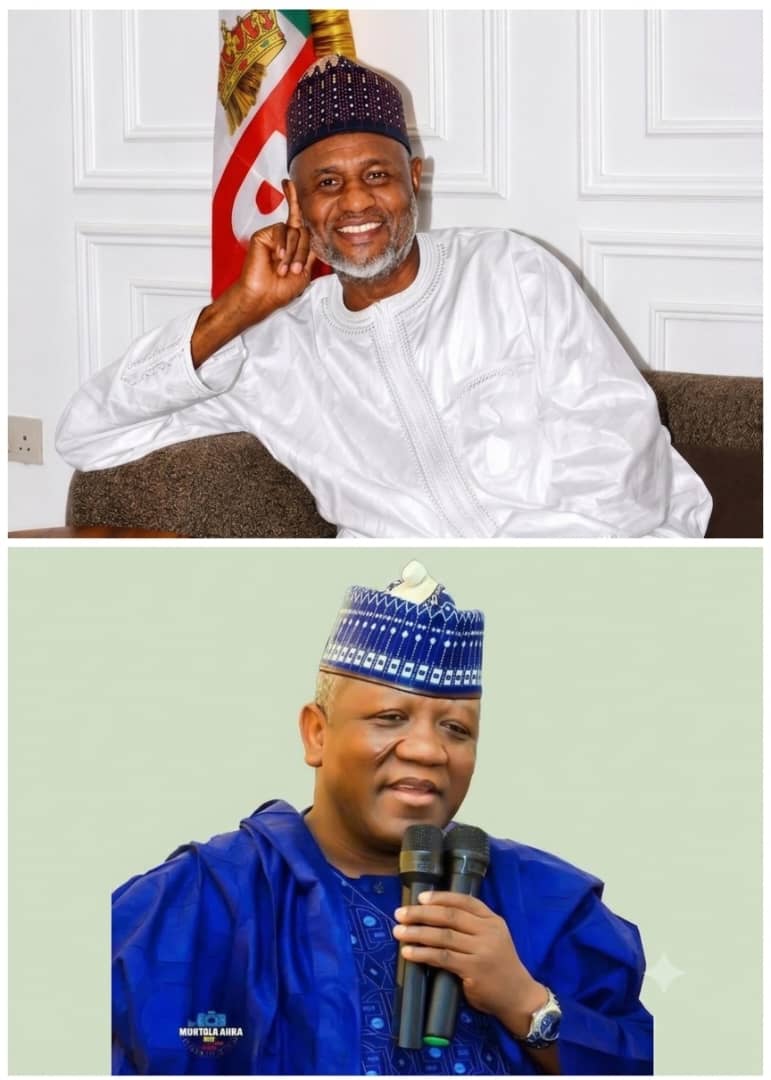
By Adeola Agoro,
When in 2011 Abdulaziz Yari became the governorship candidate for the All Nigeria Peoples Party (ANPP) in Zamfara State just after one term of Alhaji Mahmud Aliyu Shinkafi, many political observers were not surprised.
Also read: Governor Dauda Lawal woos investors, highlights Zamfara’s economic opportunities at CEO Forum
Although Mahmud Shinkafi, former deputy governor to His Excellency Senator Ahmed Sani Yerima was one of the few deputy governors to ever be solidly supported by their former bosses to succeed them in 2007, political realignments and party shifts altered the dynamic relationship after a short while in office.
So it was no surprise when Abdulaziz Yari, a deeply loyal protégé and key political strategist of Yerima got the party ticket and won the Zamfara governorship election in April 2011.
Over the years, both Yerima and Yari have worked together to make the state a formidable political stronghold and a reference point for administrative continuity.
Unlike most states carved out of older states, which often grapple with initial structural hurdles, Zamfara State, since its creation from the old Sokoto State in October 1996 and its democratic consolidation under Senator Yerima’s pioneer executive tenure starting in 1999, has continued to stand tall and maintain a distinct, independent presence on the political map of Nigeria.
The Political Strengths of Yerima and Yari
Senator Ahmed Sani Yerima (The Godfather & Stakeholder Mobilizer): A consummate strategist and the undisputed patriarch of grassroots mobilization in Northern Nigeria, Yerima’s ability to build bridges across political, traditional and religious institutions gives him an extraordinary capacity to unite diverse interest groups and command deep-rooted loyalty at ground zero.
Senator Abdulaziz Yari (The Master Tactical Administrator & DG): A seasoned political organizer who served as ANPP State Chairman, House of Representatives member, two-term Governor of Zamfara State (2011–2019) and Chairman of the Nigeria Governors’ Forum (NGF), Yari brings fierce operational discipline, tactical executive coordination and national consensus-building skills to the table.
That both men who are undisputed political gladiators are now positioned at the core of the 2027 APC Presidential Campaign Council, with His Excellency Senator Abdulaziz Yari serving as Director-General and His Excellency Senator Ahmed Sani Yerima serving as Stakeholder Mobilizer, is a masterstroke in political planning, strategic alignment and electoral organization.
To understand the political weight behind the All Progressives Congress (APC) Presidential Campaign Council, one must look at the unique narrative of Zamfara State – a political domain built on deep-rooted loyalty, strategic leadership and administrative continuity.
When the political landscape was redrawn during Nigeria’s return to democracy in 1999, Zamfara stood ready to chart its own course.
Under the executive leadership of His Excellency, Senator Ahmed Sani Yerima, the state established a distinct identity, proving that it could stand tall, independent and politically formidable on the national stage.
The Unbroken Bond
Long before stepping into executive leadership, Abdulaziz Yari had built a reputation as an exceptionally loyal party administrator and key strategist.
Throughout these roles, Yari viewed Yerima not just as a leader, but as a political mentor.
Unlike many political dynamics across the country where mentor-protégé relationships fray over time, the bond between Yerima and Yari has remained unbroken.
Their connection is built on deep-rooted mutual respect: Yari has consistently maintained absolute loyalty to his mentor, while Yerima has always respected Yari’s sharp administrative mind and organizational capacity.
A Strategic Masterstroke for 2027
Today, the inclusion of these two formidable leaders at the core of the APC Presidential Campaign Council brings that exact same spirit of loyalty, structure and strategic brilliance to the national stage.
With His Excellency, Senator Abdulaziz Yari bringing his tactical discipline, administrative efficiency and nationwide consensus-building skills to the campaign as Director-General and His Excellency, Senator Ahmed Sani Yerima deploying his legendary grassroots influence and bridge-building capabilities as Stakeholder Mobilizer, President Bola Ahmed Tinubu’s re-election campaign possesses an unbeatable leadership engine.
While Yari coordinates the national operational machinery as Campaign DG, Yerima engages high-level stakeholders, political blocs, traditional institutions and grassroots groups across all 36 states.
Their combined track record, vast national networks and deep popularity bring an unbeatable structural shield to the presidential campaign, guaranteeing a sweeping, decisive victory for the APC.
Also read: Governor Dauda Lawal woos investors, highlights Zamfara’s economic opportunities at CEO Forum
Their story stands as living proof that when loyalty, strength, administrative genius and mutual respect come together, political success naturally follows.
-
Politics2 years ago
13 Ondo Assembly Members Disown Endorsement of Aiyedatiwa
-
Politics2 years ago
APC Group, Ondo Govt, Quarrel Over Money for Endorsement
-

 Trending News5 years ago
Stop unsavoury, inciting statements – DSS warns
-

 Others5 years ago
Adron Homes Celebrates 10 Years Of Housing Excellence
-

 Humanity5 years ago
President Buhari Commiserates With Ambassador Maureen Tamuno Over The Loss Of Her Father
-

 Others7 years ago
EX- CUSTOMS BOSS, IBRAHIM MERA’S DWINDLING FAME
-

 Business2 years ago
Bigi Carbonated Soft Drinks Treats 40 Consumers to an Epic Easter Movie Hangout
-

 Business2 years ago
Wema Bank Shines at Global SME Finance Forum Conference Awards 2024 …Awarded: • SME Financier of the Year (Africa) • Platinum Award for Best Financier for Women Entrepreneurs (Africa)