
Opinion
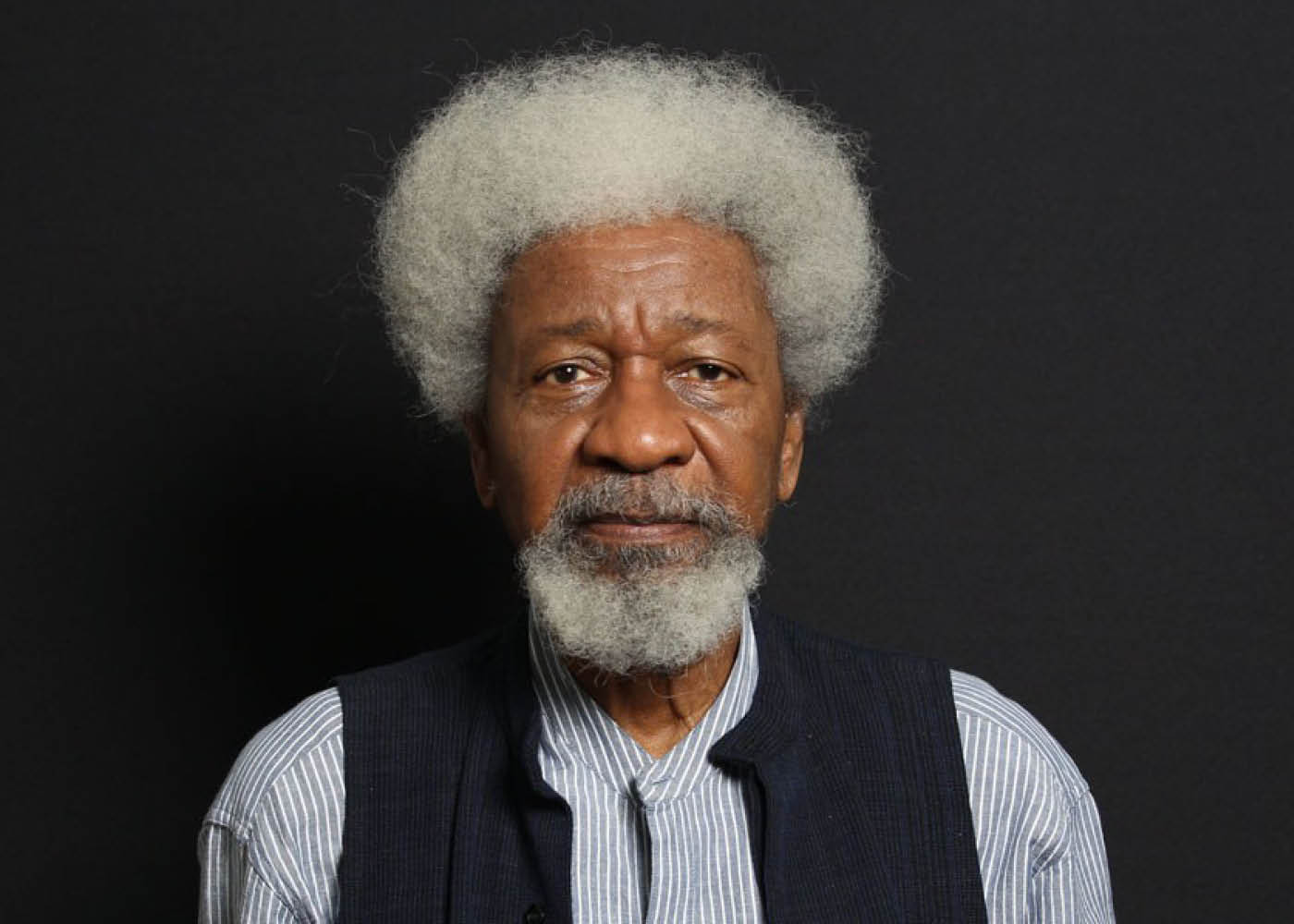
When Port Harcourt hosted Wole Soyinka

By Dr. Sam Akpe,

The hall wore a robe of expectations as minutes ticked towards the hour. The city was wrapped in the mood of impending festivity. Something was in the air. Road safety personnel and armed policemen were on duty—directing traffic and maintaining orderliness along Woji Road.
Also read: Team Nigeria’s Historic Commonwealth Games Campaign: How DG Olopade executed hitch free competition
A walk into the event hall felt like an excursion into a carnival. From the urbane music equipment emitting jazzy tunes, to the symmetrically-arranged seats, the arty wall decorations, and the storybook backdrop, poetry was on display.
Outside, directly opposite the car park, a massive poster announcing the event in the making—the Annual Wole Soyinka Lecture with a life-size portrait of the literary legend—exhibited what was about to unfold.
The imposing poster also indicated two other persons—the technocrat extraordinaire, Chief Ndutimi Alaibe, as chairman of the day, while the former Aviation and Aerospace Development Minister, Chief Osita Chidoka—was the guest speaker.
Indeed, almost the entire Port Harcourt—a city of political frenzy, soaked in oily wealth but surrounded by shantytowns—was in colourful feel of expectancy, as it awaited the arrival of Akinwande Oluwole Babatunde Soyinka, Africa’s first Nobel Laureate in Literature.
Then almost surreptitiously, the literary idol walked into the hall unannounced. Except for his traditional white hair, the big smile, and the hawk-like penetrating eyes, the hall almost missed his entry. Eventually, everyone rose in honour of the reverential figure—the father of modern political literature.
The 92-years old, with a deep voice, was in the city not just to attend a lecture in his honour, but to participate in a highbrow yearly ritual of the National Association of Seadogs, also called Pyrates Confraternity—a body of intellectual militants founded by him several decades ago.
It turned out to be quite an explosive event. Chairman of the summit, Chief Ndutimi Alaibe, known simply as ‘Timi, paid extensive tributes Wole Soyinka before setting the tone for the lecture that triggered off wide-ranging discussions.
‘Timi told the audience that Nigeria is immeasurably better today because of people like Soyinka who, throughout his remarkable journey, has consistently chosen the harder path—the path of conscience, courage, and truth—when silence could have been safer, easier, and far more rewarding to him.
Labelling the scholarly sage as a man with generosity of spirit and loyalty to friends, he applauded Soyinka’s readiness to encourage worthy causes, and the extraordinary willingness to show up whenever principle, rather than prominence was needed.
He declared, “Today, we honour you not merely with words, but with our presence and our shared commitment to engage the very questions your life has posed to our nation for more than six decades—questions of justice, accountability, freedom, and the moral courage required to build a truly democratic society.”
Besides, the lecture, the event was also a celebration of those described as the National Association of Seadogs Martyrs—a group comprising members of the confraternity arrested on February 17, 1997, imprisoned and tortured by the military in Rivers State on accusation of undue radicalism.
Their ordeal, which lasted 72 days, stated Dr Joseph Oteri, the confraternity leader, was an unplanned journey into the darkest hell of the late General Sani Abacha’s regime, “for daring to believe that Nigeria deserved better than the boot of a dictator,” until they were freed by a court of law.
‘Timi noted that the arrest and prosecution of the Pyrates was basically “for refusing to be silent in the face of oppression” describing the victims as “enduring symbols of resilience and civil courage in the struggle for the restoration of democracy and the rule of law.”
He said the anniversary of the event reminded everyone that democracy not freely bestowed; but was won through the sacrifices of countless Nigerians –many celebrated, many unsung—who endured intimidation, persecution and personal loss in defence of freedom, justice and accountable governance.
Going down memory lane, he mentioned other martyrs of democracy to include “Dele Giwa, whose fearless journalism challenged military authoritarianism until it claimed his life, Ken Saro-Wiwa and the Ogoni Nine, whose martyrdom awakened the world’s conscience to environmental justice and human rights, Kudirat Abiola, whose courage sustained the struggle to reclaim a stolen democratic mandate.
“We remember Chief Alfred Rewane, whose unwavering commitment to democracy cost him his life. And we remember Chief Bola Ige, Nigeria’s former Attorney-General and Minister of Justice, whose assassination remains, to our enduring national shame, unresolved.”
Then he added: “Whether through imprisonment or assassination, torture or intimidation, these men and women bore heavy personal burdens so that future generations might live under the rule of law rather than the rule of fear.
“Their stories remind us that civil courage is not an abstract ideal. It is rather the willingness to stand for what is right, even when the consequences are severe and deadly.
“As we honour their memories today, may we also recommit ourselves to completing the work for which they sacrificed so much—building a Nigeria founded on justice, accountability, constitutional governance and respect for the dignity of every citizen.”
The hall sat in silence, except for intermittent applauses and fulfilled smiles from Soyinka as ‘Timi recalled rare moments of encounter with the erudite professor several years ago—a part of four decades of relationship that has profoundly shaped his understanding of what Soyinka means to Nigeria.
He mentioned an instance of close interaction in 2006 when, under the auspices of the Commission of Nobel Laureates, Soyinka was part of an international mission that visited the Niger Delta to promote peaceful dialogue and undertake a fact-finding exercise in the region—including a visit to the Niger Delta Development Commission, where ‘Timi served.
He recalled that after listening to their presentation, Soyinka remarked that the NDDC had taken on an enormous burden on behalf of a beleaguered region and deserved to be remembered as one of the positive initiatives of the Obasanjo administration, adding with characteristic generosity, “I will remember to commend him when next I see him.”
Two years later, ‘Timi’s late wife, Alaere, extended an invitation to the revered literary czar who was then in the United States, immersed in an exceptionally demanding schedule, to visit ‘Timi’s village of Igbainwari in Opokuma, Bayelsa State, to inaugurate the Wole Soyinka Library—an initiative of Alaere’s organisation, Family Reorientation, Education and Empowerment (FREE).
He revealed that what made that visit even more remarkable was that Soyinka “did not merely fly in to perform a ceremonial duty and depart. He chose to spend the night in our modest country home in that remote riverine community.
“For a man of such global stature—a Nobel Laureate whose voice commanded respect across continents—it was an extraordinary act of humility. Let me add that he also tried Izon local brew.
“By his presence, he honoured not only our family but also an entire community that had long felt disregarded, affirming that no place is too small, and no people too insignificant, to deserve dignity, learning, and hope.
“He spoke with genuine admiration of my late wife’s vision, courage, and steadfast determination, recognising in her work a powerful testament to what conviction and selfless service can accomplish. He said ‘I am not often impressed with people, but she has succeeded in impressing me with her drive, her vision and her total commitment.’”
‘Timi noted that Soyinka created more impact during that visit when he spoke to the youth of the Niger Delta whose militancy at that time had emerged as one of the defining challenges confronting the Niger Delta.
Soyinka offered a wise counsel urging them to choose dialogue over violence and a future built on peace, not conflict.
With characteristic moral clarity, he challenged them to embrace “intellectual militancy in pursuit of the region’s development—a powerful call to exchange the force of weapons for the power of ideas, knowledge, and constructive engagement.”
By his confession, ‘Timi’s reminiscences were not merely out of nostalgia, but because they spoke directly to the event of the day, or as he put it, long before “reclaiming the state” became a familiar phrase, Soyinka was already living it’s meaning.
Or how would you describe a man of Soyinka’s standing journeying to a remote community which many considered too insignificant to matter, just to inaugurate a library and spend a night among strangers without ceremony or pretence, in an environment of budding militancy—with violence on parade.
Soyinka’s act simply affirmed that the true measure of leadership is not the distance one travels, but the willingness to stand with people wherever they are. ‘Timi described this as principled leadership and accountability exercised with wisdom and humility.
On the of the theme: “Reclaiming the Nigerian State through Accountability, Justice and Civil Courage” the former managing director of NDDC said it speaks directly to the realities of the Nigeria—a country we inhabit and the nation we aspire to build.
His words: “Nigeria is blessed with extraordinary human talent, abundant natural resources and remarkable resilience. Yet we continue to fall short of our collective potential. Our national challenge has never been a lack of diagnosis; it has been a failure to act consistently on what we already know.”
It was his view that too often, the institutions designed to hold power accountable have been weakened, thus making justice, for many Nigerians, a privilege rather than their inalienable right.
Restating the virtues of the confraternity, he said: “This gathering cannot, in good conscience, speak of reclaiming the Nigerian state without confronting one of the cardinal evils that the National Association of Seadogs was founded to repudiate.”
That evil, called tribalism, has birthed partisanship, clannishness, ethnic chauvinism and statism, while the enduring values of nationalism, absolute honesty, absolute selflessness, and love for all have been neglected, said ‘Timi.
He asserted that, tribalism has become less an individual prejudice than a systemic condition, coursing through Nigeria’s national bloodstream and eating away at the very fabric of our society.
He noted that reclaiming the Nigerian state must therefore begin with reclaiming ourselves—by ensuring that the principles we so proudly profess are applied consistently, without fear or favour, irrespective of tribe, political affiliation, or the identity of those who wield power.
Ultimately, he said, “accountability is sustained not by laws alone but by the courage of men and women who insist that those laws apply equally to the powerful and the powerless.”
His position was that reclaiming the Nigerian state would not be achieved by a single dramatic event, but through the steady accumulation of principled choices by citizens who refuse to be indifferent, institutions that remain faithful to their mandates, and leaders who choose integrity over expediency and courage over convenience.
Falling back on his modest experience in public service, ‘Timi said the journey has reinforced one enduring lesson in him, that sustainable development cannot exist without accountability, and that where institutions are weak, hope gives way to cynicism; where accountability is upheld, even limited resources can produce lasting impact.
Also read: Team Nigeria’s Historic Commonwealth Games Campaign: How DG Olopade executed hitch free competition
He urged participants to see beyond the event of the day as they aim to rebuild Nigeria, knowing that “nations are not reclaimed by rhetoric alone,” rather, they are reclaimed “when conscience triumphs over convenience, when institutions are stronger than individuals, and when citizens summon the courage to do what is right, even when it is difficult.”


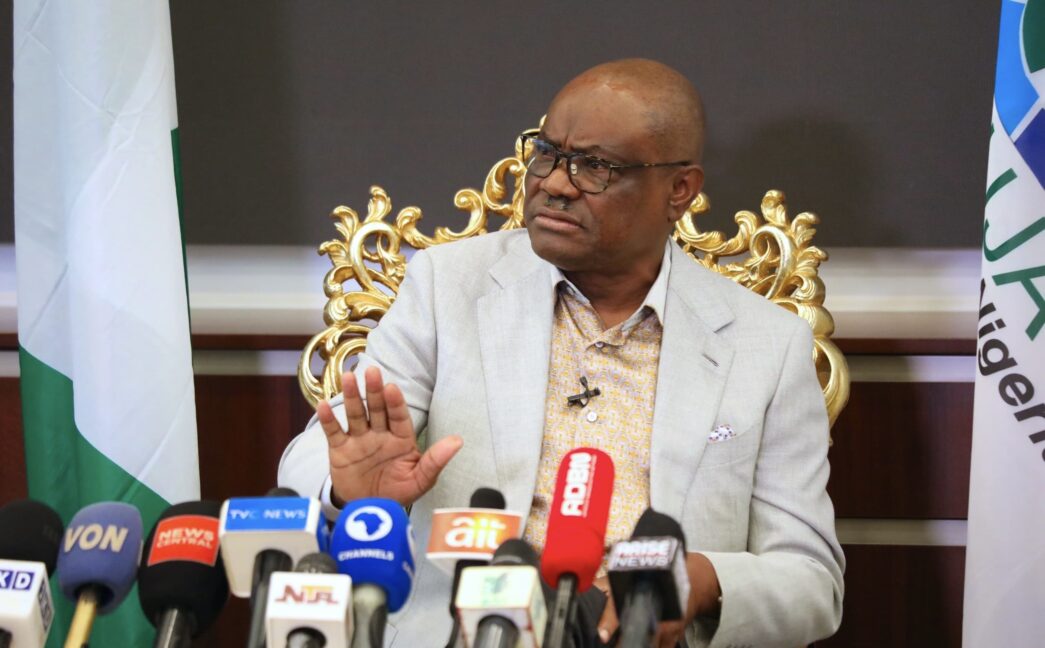
As Nigeria moves closer to the 2027 general election, one political figure continues to redefine the boundaries of party loyalty and political influence: Nyesom Wike. From leading the G5 governors’ revolt within the Peoples Democratic Party (PDP) to championing a proposed Rainbow Coalition in support of President Bola Tinubu, Wike’s politics has consistently revolved around one objective—remaining influential regardless of party lines.
His latest disagreement with governors elected on the platform of the All Progressives Congress (APC) is therefore more than an ordinary political quarrel. It reflects a deeper contest over who controls the political machinery surrounding the president and how loyalty should be organised ahead of a presidential election.
The APC Governors’ Forum recently rejected any political arrangement capable of creating parallel campaign structures outside the party. The governors insisted that support for President Tinubu should flow through the APC and its candidates at every level.
Wike responded by dismissing claims that he sought an alliance with the governors. According to him, the proposed Rainbow Coalition is not an alternative political party but a broader network of politicians from different platforms united behind Tinubu’s re-election.
That distinction lies at the heart of the controversy. Wike argues that a politician can remain a member of one party while supporting another party’s presidential candidate without abandoning participation in governorship, National Assembly or state assembly elections through his own platform.
For the APC governors, however, presidential and legislative elections are inseparable. Their concern is that mobilising support for Tinubu outside the formal APC structure could weaken the party’s candidates in other contests.
To understand the Rainbow Coalition, it is necessary to revisit the events of 2022.
Wike emerged as one of five PDP governors who formed the G5, also known as the Integrity Group, after former Vice President Atiku Abubakar secured the PDP presidential ticket. The governors demanded internal reforms, including the resignation of then National Chairman Iyorchia Ayu, and eventually withheld support from Atiku’s campaign.
The G5 demonstrated that party membership did not automatically determine presidential loyalty. Its members remained PDP governors while adopting different positions during the presidential election.
The Rainbow Coalition appears to extend that philosophy beyond the PDP. Rather than resisting a party from within, Wike is attempting to build a cross-party political network around an incumbent president while allowing participants to retain their separate political identities.
The disagreement is less about Tinubu and more about political structure.
State governors possess institutional authority through their control of party organisations and government machinery within their states. Wike, by contrast, relies on personal political networks developed over decades in Rivers State and reinforced by his current position as Minister of the Federal Capital Territory.
His argument is provocative: political influence does not necessarily belong to whoever controls party structures, but to whoever can mobilise voters.
That proposition challenges the traditional hierarchy of party politics. If a minister can independently organise electoral support for a president outside the APC, the governors inevitably lose part of their leverage.
No state illustrates Wike’s influence better than Rivers.
His prolonged political conflict with Governor Siminalayi Fubara eventually escalated into a constitutional crisis that prompted President Tinubu’s declaration of a state of emergency in Rivers in March 2025.
Whether viewed as political intervention or constitutional necessity, the episode demonstrated the extraordinary significance of Wike’s political structure within Rivers.
Now, by publicly declaring his intention to deliver both Rivers State and the FCT for Tinubu in 2027, Wike has reopened questions about who truly commands the electoral machinery in those territories—the APC or his own political network.
President Tinubu occupies a delicate position.
On one hand, Wike offers access to political constituencies beyond the APC. On the other, the APC governors remain indispensable because they control the governing party’s formal structures across the states.
The president therefore has every incentive to prevent the disagreement from becoming a permanent rupture. Rather than choosing between Wike and the governors, his challenge may be finding a way to make both politically useful without allowing competing structures to undermine one another.
The Rainbow Coalition also raises broader questions about the nature of Nigerian democracy.
Can a politician remain in the PDP while openly campaigning for an APC president? Constitutionally, the answer is largely political rather than legal. Elections for president, governor and legislature are separate contests, and voters are free to split their ballots among different parties.
The difficulty lies in party discipline. To APC leaders, supporting Tinubu should naturally include supporting APC candidates across the ballot. To Wike, presidential loyalty is a personal political choice that does not require abandoning his party’s legislative ambitions.
The journey from G5 to Rainbow Coalition reflects an evolution rather than a contradiction.
The G5 was an internal resistance movement designed to reshape the PDP’s presidential direction. The Rainbow Coalition seeks to mobilise support beyond party boundaries while preserving the independence of participating politicians.
Whether the coalition becomes a durable political force will depend on organisation, personalities, candidate selection and the willingness of the APC leadership to accommodate an influential ally operating outside its formal campaign structure.
For now, the disagreement has revealed a fundamental question that could define the 2027 election: Does political loyalty belong primarily to the party, the presidential candidate, or the individual politician?
The answer may ultimately determine not only Wike’s political future, but also the evolving architecture of power around President Tinubu as Nigeria heads into another defining electoral cycle.

By Victor Ojelabi
The Rotary Club of Ikoyi Metro, led by President Rotarian Emeka Nwosu, will begin a four-day vision and hearing screening for Primary One pupils across 10 public primary schools in Lagos Island, Lagos State, on Tuesday, September 22, 2026, under a Rotary International Global Grant project chaired by Rotarian Oladimeji Olatunji-Audu for the club.
Also read: From Lagos to Germany: How Rotary Youth Exchange Transformed Arnold Faranpojo
The Rotary Ikoyi Metro screening, which runs until Friday, September 25, will commence at 9 a.m. daily, with Holy Cross Cathedral Primary School, Campus, serving as the venue.
The Lagos State Universal Basic Education Board has formally approved the exercise for pupils in the 10 selected schools within the Lagos Island Local Government Education Authority.
In its September 9 approval, LASUBEB described the intervention as a “noble gesture” complementing the Lagos State Government’s efforts to improve basic education.
The participating schools are Holy Cross Cathedral Primary School, Ade Oshodi Primary School, Anglican Girls Primary School, Christ Cathedral Primary School, and Ebute Elefun Primary School.
Others include Edward Blyden Memorial School, St. David Primary School, St. Mary Convent School, St. Peter Primary School and Tinubu Methodist Primary School.
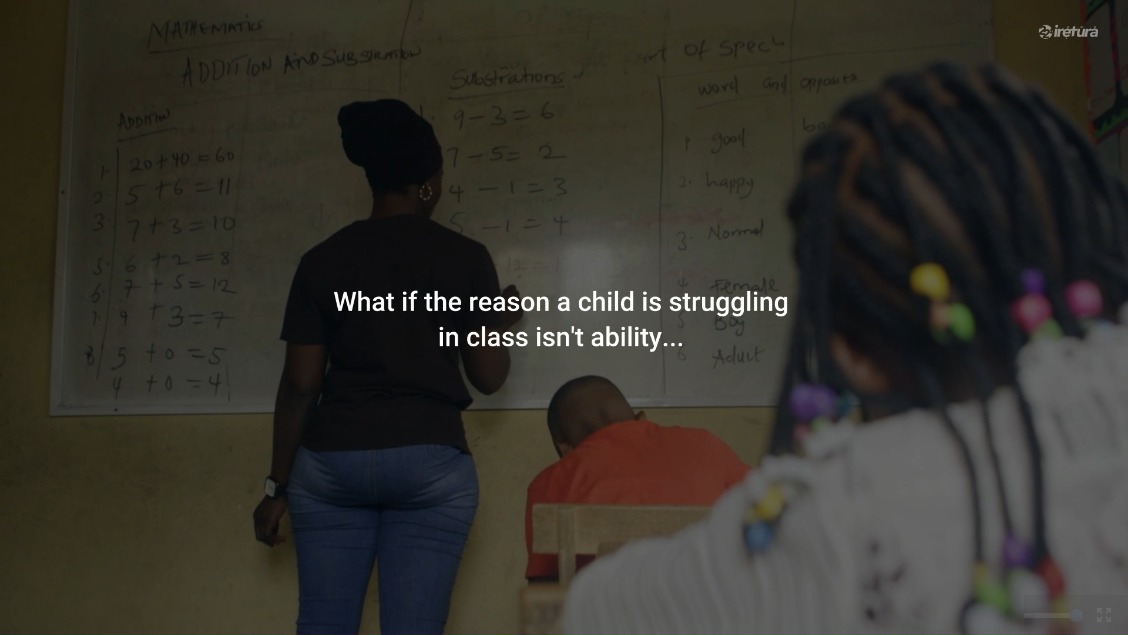
Nwosu said the intervention was built around a simple concern: children experiencing difficulties in the classroom should not be written off before possible health-related causes are investigated.
“Sometimes, what looks like a learning problem may simply be a child struggling to see the board clearly or hear what the teacher is saying. Through this project, we want to identify those challenges early and give affected children the opportunity to learn and thrive alongside their peers,” Nwosu said.
The project is being implemented in partnership with other Rotary clubs through the Rotary International Global Grant mechanism, combining resources and expertise to address preventable vision and hearing difficulties among schoolchildren.
The cub’s project chairman said the initiative was designed to go beyond simply identifying pupils with difficulties.
“Screening is only meaningful when it leads to action. Our objective is to identify children who require attention early enough and ensure that those who need further intervention are appropriately supported. A child’s ability to see and hear properly can make a remarkable difference to the child’s confidence and performance in school,” Olatunji-Audu said.
The Lagos Island exercise follows an earlier phase of the wider Global Grant project launched in July 2026, when hundreds of pupils from public primary schools in the Ikoyi-Obalende area underwent vision and hearing screening.
The broader intervention has brought together Rotary clubs and partners in Nigeria and overseas.
The World Health Organization has also identified vision and hearing as important to children’s development and education, noting that unaddressed sensory impairments can have significant consequences for school-age children.
Also read: From Lagos to Germany: How Rotary Youth Exchange Transformed Arnold Faranpojo
For Ikoyi Metro, the four-day intervention therefore carries a powerful message beyond the medical screenings: before concluding that a young pupil is struggling to learn, it may be necessary to establish whether that child can clearly see the lesson and hear the teacher.
By Victor Ojelabi,
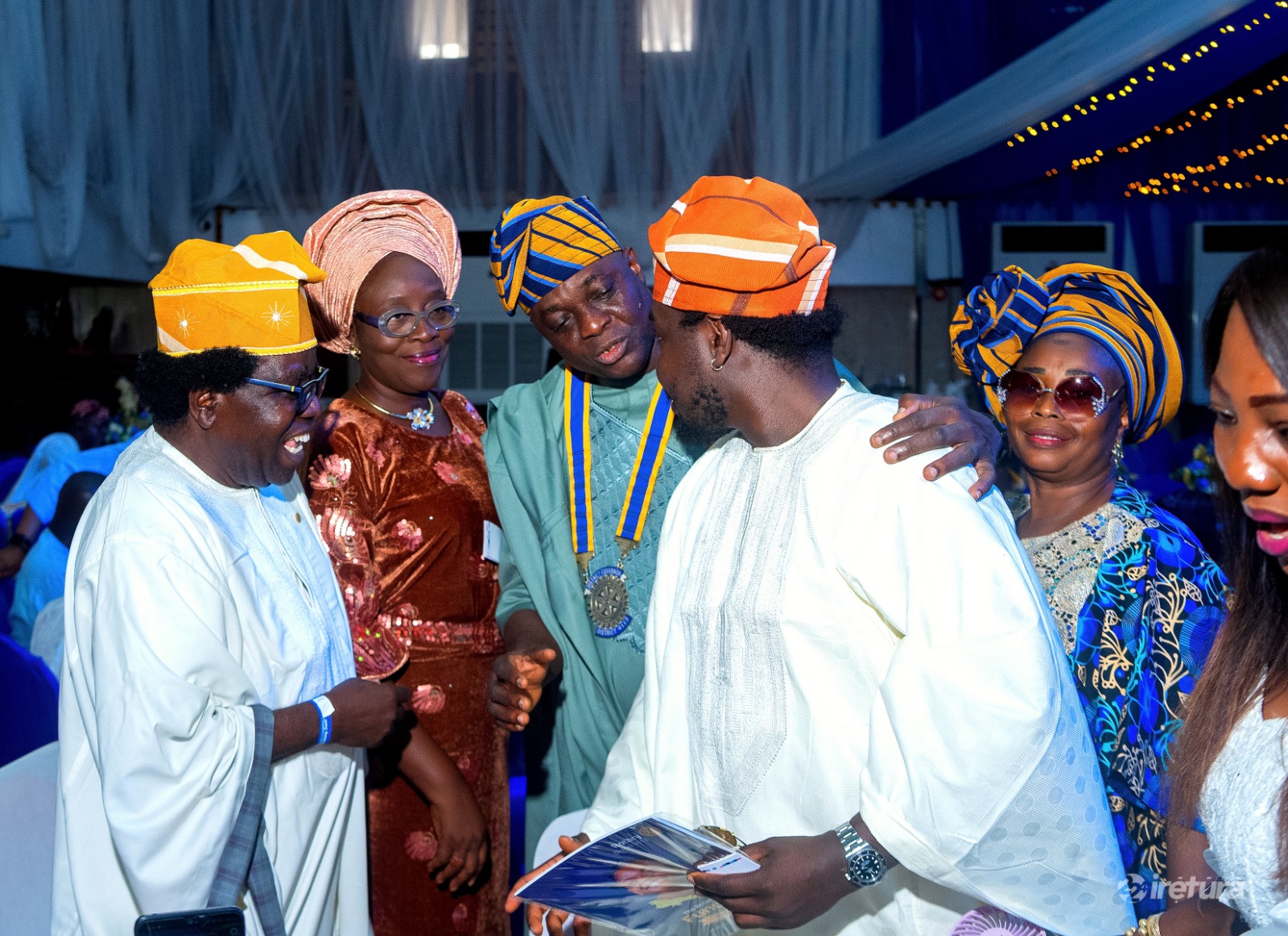
The Rotary Foundation has recognised the polio eradication efforts of Rotary International District 9112 under Immediate Past District Governor Lanre Adedoyin, following the District’s transfer of District Designated Funds to the PolioPlus Fund during the 2025 to 2026 Rotary year, a contribution acknowledged recently, as part of the global funding effort to protect children from the disease.
Also read: Rotary Club Ikeja Trains 60 Interactors in Leadership
The recognition brings a fitting international dimension to a Rotary year in which Adedoyin, a lawyer and member of the Rotary Club of Surulere South, repeatedly placed polio eradication among District 9112’s major humanitarian priorities across Lagos and Ogun states.
In a message addressed to District 9112, The Rotary Foundation thanked the District for committing its District Designated Funds to the campaign, saying the collective support from Rotary districts helped the organisation reach its fundraising target and secure matching funds that translate into US$150 million for polio eradication.
“Your support helped Rotary reach our goal and secure the matching funds that translate into US$150 million toward eradicating polio,” the Foundation said.
The money has consequences far beyond the balance sheet.
According to the Foundation, polio funding supports frontline workers taking vaccines into remote communities, environmental surveillance capable of detecting the virus in wastewater and programmes designed to interrupt transmission in affected areas.

IPDG Lanre Adedoyin with wife at a Rotary event recently
The Foundation said the continuing effort was particularly important in Afghanistan and Pakistan, the only two countries where wild poliovirus remains endemic.
That assessment is consistent with Rotary International’s latest account of the global campaign.
Rotary says its partnership with the Gates Foundation generates up to US$150 million annually for polio eradication, with Rotary raising US$50 million and the Foundation providing a two-to-one match.
The money supports vaccine procurement, social mobilisation, outbreak response, surveillance and other operational requirements.
Rotary’s involvement stretches back decades. Its first polio vaccination project began in the Philippines in 1979, and the organisation became a founding partner of the Global Polio Eradication Initiative in 1988. Since then, global polio cases have fallen by 99.9 per cent.
For Nigeria, the story carries particular resonance.
The country recorded its last case of wild poliovirus in Borno State in August 2016.
Four years later, the World Health Organisation African Region was formally certified free of wild poliovirus, leaving Afghanistan and Pakistan as the remaining countries with endemic transmission.
That historic achievement, however, did not mean the end of the polio challenge in Nigeria.
Circulating vaccine-derived poliovirus can still emerge in communities with low immunisation coverage, making vaccination and surveillance essential even in countries that have eliminated wild poliovirus.
It was against that backdrop that the IPDG’s polio drive developed during the 2025 to 2026 Rotary year.
Adedoyin, who became the second District Governor of District 9112 following the division of the former District 9110, had signalled early in his tenure that healthcare would remain a central part of the District’s service programme.
His installation in Lagos in July 2025 marked the beginning of a year that subsequently combined fundraising with grassroots advocacy and support for health workers.
By September 2025, the District had held a PolioPlus seminar at which Adedoyin warned against complacency simply because wild poliovirus had disappeared from Nigeria. District records show that the campaign remained prominent in its programme in the months that followed.
In October, Districts 9111 and 9112 took the End Polio Now message beyond conventional conference halls with a joint train journey from Lagos to Abeokuta.
Led by Adedoyin and then District 9111 Governor Henry Akinyele, alongside Nigeria National PolioPlus Committee Chairman Joshua Hassan and other Rotary leaders, the initiative turned the train journey into a public awareness campaign for polio eradication.
District 9112 also took the message to communities in Ogun State, including a roughly 10-kilometre Keep Polio @ Zero awareness walk in Sagamu aimed particularly at encouraging parents and guardians to ensure that children receive their vaccinations.
In Lagos, the campaign moved from advocacy to practical support.
District 9112 donated 100 pairs of rain boots and 200 raincoats to the Lagos State Primary Health Care Board in October 2025 to assist health personnel working on polio eradication during the rainy season. The intervention was valued at about ₦1.6 million.
Adedoyin made the District’s position clear at the presentation.
“Our commitment to ending polio is absolute,” Adedoyin said. “We will continue working with the Lagos State Government and our partners until polio is completely wiped out.”
Another significant moment came towards the end of his tenure.
In June 2026, District 9112 announced that it had raised US$13,000 through the World’s Greatest Meal initiative for The Rotary Foundation’s PolioPlus Fund.
The contribution was described by World’s Greatest Meal Committee Chairman Tokunbo Opanubi as one of the highest recorded by the District through the initiative.
The US$13,000 contribution is separate from the District Designated Funds now acknowledged by The Rotary Foundation.
Together, however, the initiatives illustrate the different channels through which District 9112 supported the global eradication campaign during Adedoyin’s tenure.
District Designated Funds form part of The Rotary Foundation’s funding system and allow Rotary districts to direct portions of available Foundation resources towards eligible programmes.
PolioPlus is one of the avenues through which districts can deploy such resources in support of Rotary’s eradication objective.
The Foundation’s latest acknowledgement therefore adds another layer to District 9112’s polio record for the 2025 to 2026 year.
It also demonstrates the multiplier effect behind Rotary’s funding model.
A contribution originating from clubs and districts can ultimately support a much larger global pool used for vaccines, surveillance, community mobilisation and the difficult task of reaching children in areas affected by conflict, insecurity or geographical isolation.
The stakes remain considerable.
Polio is a potentially fatal infectious disease that primarily affects young children and can invade the nervous system, causing irreversible paralysis.
Although its global footprint has been reduced dramatically, Rotary cautions that eradication requires sustained vaccination and surveillance until transmission has been stopped everywhere.
The Foundation’s message to District 9112 captured that unfinished mission.
It thanked the District for supporting the PolioPlus Fund and helping move the world closer to the point where “no child is threatened by this disease ever again”.
For Adedoyin, who handed over the governorship of District 9112 at the end of the 2025 to 2026 Rotary year, the recognition offers a powerful postscript to a year in which the District’s contribution was measured not only in fundraising figures, but also in public advocacy, community mobilisation and support for those working closest to vulnerable children.
Also read: Rotary Club Ikeja Trains 60 Interactors in Leadership
And for District 9112, the acknowledgement connects a local Rotary story from Lagos and Ogun states to a much larger global ambition: ensuring that the final cases of polio become part of history rather than the beginning of another outbreak.
-
Politics3 years ago
13 Ondo Assembly Members Disown Endorsement of Aiyedatiwa
-
Politics3 years ago
APC Group, Ondo Govt, Quarrel Over Money for Endorsement
-

 Trending News5 years ago
Stop unsavoury, inciting statements – DSS warns
-

 Others5 years ago
Adron Homes Celebrates 10 Years Of Housing Excellence
-

 Humanity5 years ago
President Buhari Commiserates With Ambassador Maureen Tamuno Over The Loss Of Her Father
-

 Others7 years ago
EX- CUSTOMS BOSS, IBRAHIM MERA’S DWINDLING FAME
-

 Business2 years ago
Bigi Carbonated Soft Drinks Treats 40 Consumers to an Epic Easter Movie Hangout
-

 Business2 years ago
Wema Bank Shines at Global SME Finance Forum Conference Awards 2024 …Awarded: • SME Financier of the Year (Africa) • Platinum Award for Best Financier for Women Entrepreneurs (Africa)