
Opinion
The Zamfara Masterminds: Loyalty, Structure and the Unstoppable Engine of the 2027 APC Campaign

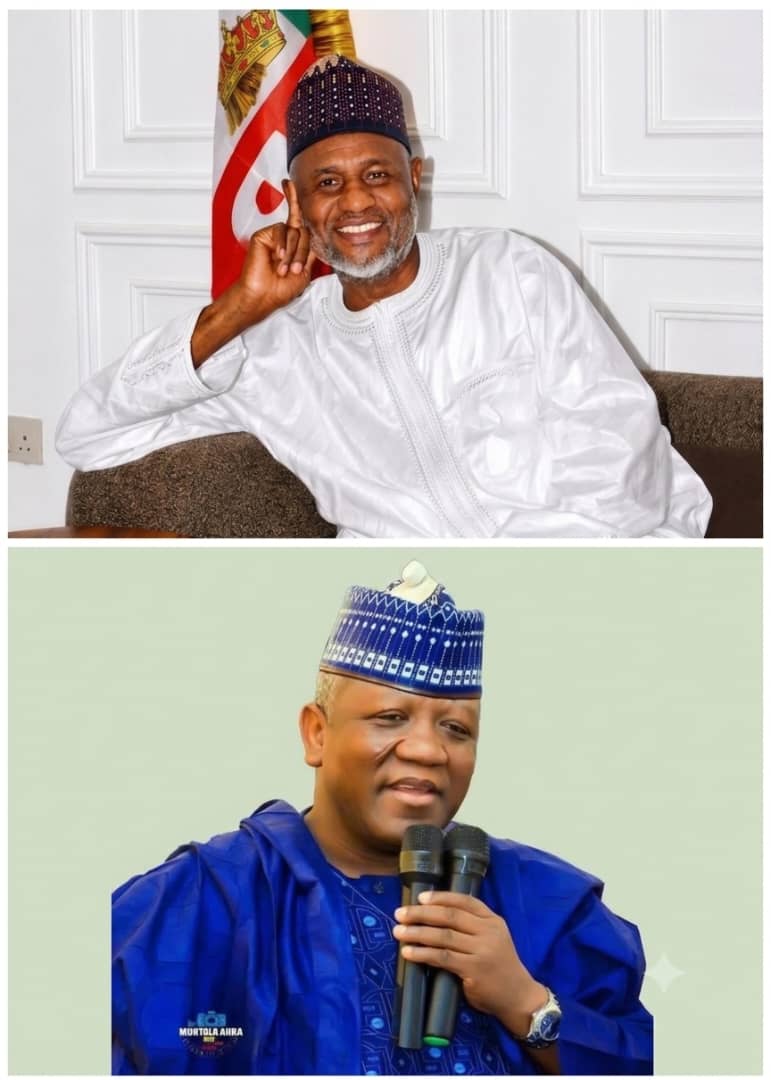

By Adeola Agoro,
When in 2011 Abdulaziz Yari became the governorship candidate for the All Nigeria Peoples Party (ANPP) in Zamfara State just after one term of Alhaji Mahmud Aliyu Shinkafi, many political observers were not surprised.
Also read: Governor Dauda Lawal woos investors, highlights Zamfara’s economic opportunities at CEO Forum
Although Mahmud Shinkafi, former deputy governor to His Excellency Senator Ahmed Sani Yerima was one of the few deputy governors to ever be solidly supported by their former bosses to succeed them in 2007, political realignments and party shifts altered the dynamic relationship after a short while in office.
So it was no surprise when Abdulaziz Yari, a deeply loyal protégé and key political strategist of Yerima got the party ticket and won the Zamfara governorship election in April 2011.
Over the years, both Yerima and Yari have worked together to make the state a formidable political stronghold and a reference point for administrative continuity.
Unlike most states carved out of older states, which often grapple with initial structural hurdles, Zamfara State, since its creation from the old Sokoto State in October 1996 and its democratic consolidation under Senator Yerima’s pioneer executive tenure starting in 1999, has continued to stand tall and maintain a distinct, independent presence on the political map of Nigeria.
The Political Strengths of Yerima and Yari
Senator Ahmed Sani Yerima (The Godfather & Stakeholder Mobilizer): A consummate strategist and the undisputed patriarch of grassroots mobilization in Northern Nigeria, Yerima’s ability to build bridges across political, traditional and religious institutions gives him an extraordinary capacity to unite diverse interest groups and command deep-rooted loyalty at ground zero.
Senator Abdulaziz Yari (The Master Tactical Administrator & DG): A seasoned political organizer who served as ANPP State Chairman, House of Representatives member, two-term Governor of Zamfara State (2011–2019) and Chairman of the Nigeria Governors’ Forum (NGF), Yari brings fierce operational discipline, tactical executive coordination and national consensus-building skills to the table.
That both men who are undisputed political gladiators are now positioned at the core of the 2027 APC Presidential Campaign Council, with His Excellency Senator Abdulaziz Yari serving as Director-General and His Excellency Senator Ahmed Sani Yerima serving as Stakeholder Mobilizer, is a masterstroke in political planning, strategic alignment and electoral organization.
To understand the political weight behind the All Progressives Congress (APC) Presidential Campaign Council, one must look at the unique narrative of Zamfara State – a political domain built on deep-rooted loyalty, strategic leadership and administrative continuity.
When the political landscape was redrawn during Nigeria’s return to democracy in 1999, Zamfara stood ready to chart its own course.
Under the executive leadership of His Excellency, Senator Ahmed Sani Yerima, the state established a distinct identity, proving that it could stand tall, independent and politically formidable on the national stage.
The Unbroken Bond
Long before stepping into executive leadership, Abdulaziz Yari had built a reputation as an exceptionally loyal party administrator and key strategist.
Throughout these roles, Yari viewed Yerima not just as a leader, but as a political mentor.
Unlike many political dynamics across the country where mentor-protégé relationships fray over time, the bond between Yerima and Yari has remained unbroken.
Their connection is built on deep-rooted mutual respect: Yari has consistently maintained absolute loyalty to his mentor, while Yerima has always respected Yari’s sharp administrative mind and organizational capacity.
A Strategic Masterstroke for 2027
Today, the inclusion of these two formidable leaders at the core of the APC Presidential Campaign Council brings that exact same spirit of loyalty, structure and strategic brilliance to the national stage.
With His Excellency, Senator Abdulaziz Yari bringing his tactical discipline, administrative efficiency and nationwide consensus-building skills to the campaign as Director-General and His Excellency, Senator Ahmed Sani Yerima deploying his legendary grassroots influence and bridge-building capabilities as Stakeholder Mobilizer, President Bola Ahmed Tinubu’s re-election campaign possesses an unbeatable leadership engine.
While Yari coordinates the national operational machinery as Campaign DG, Yerima engages high-level stakeholders, political blocs, traditional institutions and grassroots groups across all 36 states.
Their combined track record, vast national networks and deep popularity bring an unbeatable structural shield to the presidential campaign, guaranteeing a sweeping, decisive victory for the APC.
Also read: Governor Dauda Lawal woos investors, highlights Zamfara’s economic opportunities at CEO Forum
Their story stands as living proof that when loyalty, strength, administrative genius and mutual respect come together, political success naturally follows.


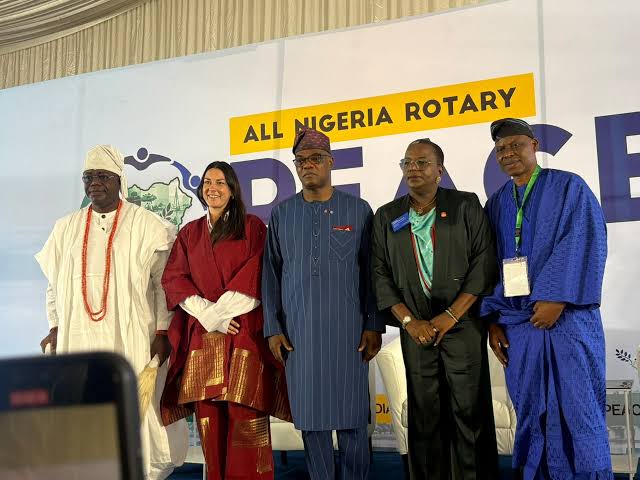
Distinguished leaders of government, members of the diplomatic community, representatives of security and law-enforcement agencies, traditional and religious leaders, distinguished guests, fellow Rotary members, ladies and gentlemen:
It is an honour to welcome you to the “All Nigeria Rotary Peace Summit.”
The question before us is how to come together, work toward a shared national future, and achieve true and lasting peace.
Nigeria has enormous potential. We have contributed to peace and stability across Africa, including through our work with the Economic Community of West African States and United Nations peacekeeping and Peace Support operations.
Our work in Liberia and other parts of Africa shows that we have the experience and ability to help prevent and manage conflict beyond our borders.
Now it is time to turn those energies inward — to bring our commitment to building peace among our neighbors and the world back home.
But we cannot impose peace. We must nurture it from the very roots of our society so it may grow into a great tree that will feed and shelter all of us under its protective embrace.
As a member of Rotary, when I consider this idea, I look to the philosophy of Positive Peace.
Peace, through this lens, is so much more than the absence of violence. To achieve true and lasting peace, we must consider the attitudes, institutions, and structures that create and sustain peaceful societies.
Here in Nigeria, meaningful peace cannot rely on our security forces and government institutions alone. It requires every level of society to come together for the betterment of all.
To grow Positive Peace from the ground up, Rotary starts from the very foundation of life, as we have done here.
In 2022, Rotary began a program called, “Together for Healthy Families in Nigeria.”
Members of Rotary here in Nigeria and as far away as Germany partnered with federal and state health ministries to make giving birth safer for both mother and child.
The program has helped expectant mothers across three states and the capital receive better and more frequent prenatal care.
Community health workers made nearly 60,000 visits to homes of expectant mothers and spoke with them and their families. We supplied 158 health facilities with contraceptives, medicine, and equipment.
We have already seen positive outcomes. Maternal deaths were reduced by 77%, and newborn deaths were reduced by 45% at supported facilities.
There is more work to do, but we are making progress. This is one way we plant the seeds of peace in Nigeria and around the world — we listen to the community, work with people so they can make their own lives better, and we stay committed to our goals.
With each child born safely to a healthy mother, we ease the burden carried by the Federal Ministry of Health and Social Welfare. We give families a greater sense of safety and security.
This is the beginning of Positive Peace. But members of Rotary do not stop once the seeds of peace are planted.
Since 2020, Nigeria has been free of the deadly grip of the wild poliovirus, which paralyzed and sometimes killed children when their lives had barely begun. And we continue to work with our friends at the World Health Organization and others to keep it that way and address the more recent outbreaks of variant poliovirus.
Rotary also builds peace directly. Members of Rotary clubs across Nigeria devote themselves to building peace every day.
And the year after Nigeria was declared wild polio-free, Rotary worked with Makerere University in Uganda to open a Peace Center, where students — called Peace Fellows — can learn how to build lasting peace both here in Nigeria and across Africa.
Over the years, more than 75 Rotary Peace Fellows have come from Nigeria. Some of our Peace Fellows are even here with us today.
I tell you this not to advertise Rotary (although we can always use new members). I tell you this because I want you to know that Rotary is already a quiet partner in peacebuilding — not only around the world — but here in our shared home.
As members of Rotary, we are not soldiers, ambassadors, or diplomats. We bring people together to find common purpose through service to others. We are here for Nigeria, and we are here to stay.
This year, I have called on every member of Rotary to Create Lasting Impact, and today, my brothers and sisters of Nigeria, I ask the same of every one of us.
I ask us to look at every level of society in Nigeria and consider how we can make all our lives better — not only today, but far into the future of this great nation. We may not speak the same language, worship the same way, or live the same way, but our nation’s future depends on all of us working together.
This summit is an opportunity to turn our shared commitment to peace into practical action — to take mere words and transform them into a bright future for us and all our children.
To my dear friends and family of Rotary here today, I challenge you to make peacebuilding in Nigeria our legacy of lasting impact.
As I have said to the Rotary world time and time again, we must consider how everything we do contributes to peace and pursue that peace purposefully and deliberately.
Rotary can help build confidence between institutions and communities, strengthen public trust, and ease the burden of everyday life that makes peacebuilding that much harder … but we must do so with purpose.
And before we can Create Lasting Impact in Nigeria, we must first have the courage to change ourselves, whether we are members of Rotary or not.
We cannot continue to do what we have always done and expect our great tree of peace to magically sprout from the ground. We must nurture our country and ourselves with all our being.
Give yourselves permission to be changed by what you see and hear at this summit.
That is how lasting impact is achieved — through people who are willing to change, institutions that are prepared to work for everyone, and communities that have the capacity to sustain progress.
And once we allow ourselves to change, we open ourselves to a new future — a future where the circumstances of someone’s birth do not determine their access to justice, opportunity, or dignity.
A future where differences are respected, where violence is rejected, and where we all come together, not as different groups in competition, but as Nigerians in harmony.
As we begin this summit, let us commit to more than resolutions and declarations. Let us commit to stability through change.
Remember that our true measure of success is not the words we share among ourselves today, but the impact of our actions that lasts generation after generation.
And if our commitment to peace is true — if our capacity for change is enough — our children, and their children after them, will enjoy the fruits of our labor under our great tree of peace — protected, safe, and free.
Thank you.
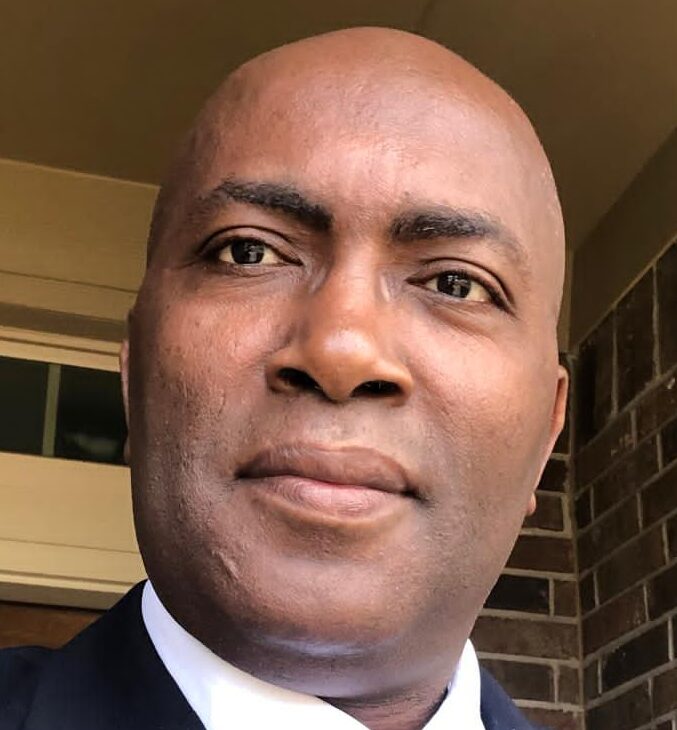
Nigeria’s democratic development depends not only on credible elections but also on responsible journalism and an informed electorate. In the view of Nosa Osaikhuiwu, sections of the Nigerian media and political commentary class have fallen short of this responsibility, particularly in their coverage and interpretation of the 2023 presidential election.
Writing from Houston, Texas, Osaikhuiwu argues that rather than critically examining the political realities behind the outcome, some media platforms amplified unsubstantiated allegations of electoral fraud by defeated candidates without sufficiently interrogating the evidence. This, he says, has contributed to public distrust and weakened confidence in critical democratic institutions, particularly the Independent National Electoral Commission (INEC) and the judiciary.
He highlights a key principle of electoral politics that he believes has been largely overlooked: when opposition forces divide their strength among competing candidates, they can strengthen the position of an incumbent under a winner-takes-all system. He cites examples from the United States, including Ross Perot’s impact in 1992 and Ralph Nader’s role in 2000.
Applying the same principle to Nigeria in 2023, Osaikhuiwu notes that Peter Obi and Atiku Abubakar contested separately against President Bola Tinubu. Although their combined votes exceeded Tinubu’s total, elections are decided by the votes secured by individual candidates under established rules, not by post-election addition of rivals’ tallies.
Looking ahead to 2027, he observes a similar opposition configuration emerging, with Atiku and Obi again pursuing separate ambitions. While acknowledging the economic hardships associated with Tinubu’s reforms and the administration’s political vulnerability, Osaikhuiwu stresses that public dissatisfaction does not automatically translate into an organised electoral movement capable of defeating an incumbent.
He criticises suggestions by some media personalities that the 2027 elections will be rigged even before they take place, describing such pronouncements as irresponsible. Journalists, he argues, must interrogate claims, examine evidence and educate the public rather than merely amplify the statements of political actors.
Osaikhuiwu maintains that while there may have been logistical shortcomings in 2023, these did not materially alter the final outcome, which was declared by INEC and upheld through the judicial process. Disagreement with a result, he says, is not in itself evidence of fraud.
He concludes that if the opposition genuinely seeks to defeat Tinubu in 2027, it must address its divisions and build a viable electoral coalition. Individual popularity, social media enthusiasm and public dissatisfaction cannot substitute for organisation, coalition-building and grassroots mobilisation.
“Journalism must educate, not mislead. Political commentary must analyze, not merely amplify. And democracy must be grounded in electoral reality, not political wishful thinking,” he writes.
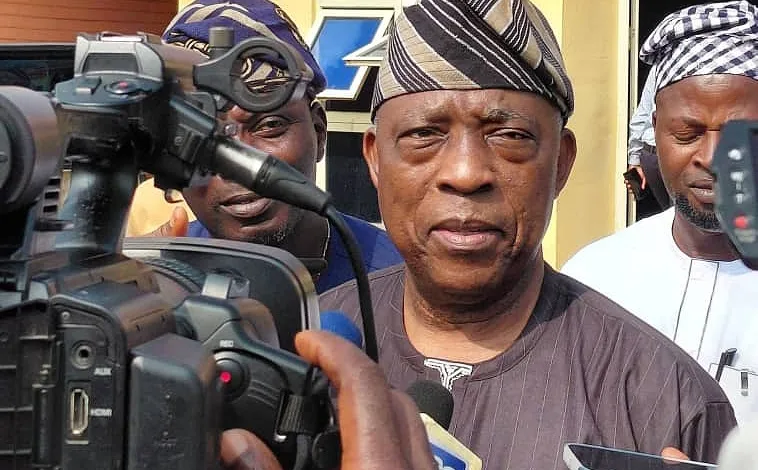
Veteran journalist and Chairman of Gaskia Media Limited, Dare Babarinsa, has called on Nigeria to sustain its informal power-rotation arrangement between the North and South, arguing that the system remains important for political stability and national unity.
Babarinsa said the presidency should return to the North in 2031 and move back to the South in 2039, maintaining that the arrangement should remain in place until Nigerians develop a more suitable alternative.
He made the position known on Monday, November 2, while delivering a public lecture at the Press Centre, Iyaganku, Ibadan, as part of activities marking the 60th anniversary of the Oyo State Council of the Nigerian Union of Journalists (NUJ).
Speaking on the theme of Nigeria’s political arrangement and the future of the media, Babarinsa acknowledged criticisms of the rotational presidency, particularly from those who believe that every qualified Nigerian should be allowed to contest for the highest political office regardless of region.
However, he argued that Nigeria’s political circumstances make power rotation a practical arrangement for maintaining stability, even if it may not always produce the most suitable candidate.
According to him, the arrangement emerged from political negotiations ahead of the return to civilian rule in 1999, following the deaths of former military Head of State, General Sani Abacha, and the presumed winner of the June 12, 1993 presidential election, Chief Moshood Abiola.
Babarinsa recalled that after Abacha’s death in 1998, General Abdulsalami Abubakar assumed leadership and introduced a transition programme aimed at ending military rule by May 29, 1999.
He said the death of Abiola, who was detained by the military government, created concerns about the political future of the Yoruba people and influenced discussions over the region that should produce Nigeria’s first civilian president after military rule.
The journalist disclosed that he was among members of the Idile Oodua resistance movement who supported the position that the South-West should produce the first president under the new democratic arrangement.
He said he was subsequently mandated by members of the group to consult the late Ooni of Ife, Oba Okunade Sijuwade, who told him that traditional rulers across the country were also holding consultations on the matter.
According to Babarinsa, the discussions contributed to the emergence of two Yoruba presidential candidates in the 1999 election: former President Olusegun Obasanjo of the Peoples Democratic Party (PDP) and Chief Olu Falae, who contested under the Alliance for Democracy and All Peoples Party coalition.
He also recalled that former Vice-President Alex Ekwueme disagreed with the arrangement, arguing that the South-East could not be bound by an agreement reached principally between political interests in the North and South-West.
Babarinsa said he agreed with Ekwueme’s interpretation that power should rotate between the North and South rather than among the six geopolitical zones.
He explained that the arrangement had continued through successive administrations, including the emergence of former President Goodluck Jonathan following the death of President Umaru Yar’Adua and the subsequent election of former President Muhammadu Buhari.
With President Bola Tinubu currently in office, Babarinsa argued that the existing arrangement should be sustained, with power returning to the North after the current administration and subsequently moving back to the South.
To support his argument, he compared Nigeria’s power-sharing arrangement with the confessional system adopted in Lebanon in 1943, under which key political offices were allocated to different religious communities to promote political balance.
He said Nigeria could learn from such arrangements, insisting that political compromises sometimes become necessary in countries with diverse ethnic, religious and regional interests.
“If we intend to keep Nigeria, then we need to make this special arrangement work until future generations are able to make a better arrangement,” he said.
Babarinsa reflects on Ibadan’s journalism legacy
Beyond the political question, Babarinsa used the lecture to examine the history of journalism in Ibadan and the contribution of the city to the development of Nigeria’s media industry.
He described Ibadan as a major centre of political and media influence, noting that its newspapers had produced some of the country’s most prominent journalists, editors and public commentators.
He recalled the establishment of the Nigerian Tribune in 1949 by Chief Obafemi Awolowo and the creation of the Sketch newspaper group in 1964 by the then Premier of the Western Region, Chief Ladoke Akintola.
He also highlighted the contributions of prominent journalists, including Felix Adenaike, Segun Osoba and Peter Ajayi, whom he described as the Three Musketeers of the Nigerian media during the Second Republic.
According to him, the trio wielded considerable influence in the industry through their leadership positions at the Tribune and Sketch newspaper groups.
Babarinsa also acknowledged the contributions of former journalists and columnists, including Alhaji Lateef Jakande, Chief Bola Ige, Chief Olabisi Onabanjo, Aare Afe Babalola and Dr Tai Solarin.
He said the history of journalism in Ibadan was closely connected to the political development of the country, recalling the debates on issues such as the International Monetary Fund loan, diarchy and rotational presidency.
The journalist urged members of the profession to preserve that tradition by ensuring that the media remained a platform for informed public debate and the promotion of ideas capable of strengthening Nigeria.
Media organisations urged to embrace digital transformation
Addressing the challenges facing the industry, Babarinsa warned that traditional media organisations must urgently adapt to the changing media environment or risk losing relevance.
He said the internet had disrupted conventional news production and distribution, creating new opportunities while also allowing unregulated online platforms to compete with established media organisations.
According to him, several traditional newspapers have established online platforms, but their digital presence has not translated into the level of revenue needed to sustain their operations.
He cited the decline of once-dominant media organisations such as the Daily Times and Sketch as examples of the changes that have reshaped the industry.
Babarinsa recalled that Sketch newspaper had a daily circulation of about 60,000 copies during the 1970s and 1980s but had since ceased publication, with its former premises converted into a shopping mall.
He also expressed concern over declining newspaper readership among young Nigerians, warning that a society with an increasingly uninformed population could struggle to appreciate and defend democracy.
The Gaskia Media chairman said media organisations must follow their audiences into the digital space and develop business models that can sustain quality journalism.
He disclosed that his organisation had also decided to strengthen its online presence through the publication of a digital magazine, beginning with an online news blog.
Journalists urged to defend democracy and uphold professional standards
Babarinsa further reminded journalists of their role in Nigeria’s democratic development, particularly during the struggle against military rule.
He said members of the Nigerian press had suffered imprisonment, exile and other forms of persecution in the fight for the restoration of democracy, with some journalists paying the ultimate price.
He maintained that journalists therefore had a responsibility to protect the democratic system and ensure that the country’s electoral processes remained credible.
With the 2027 general election approaching, he urged media professionals to play their part by providing accurate information and encouraging informed public participation.
The Independent National Electoral Commission has scheduled the presidential and National Assembly elections for January 16, 2027, while governorship and State Houses of Assembly elections are fixed for February 6, 2027.
Babarinsa said journalists must remain committed to the fundamental principles of the profession, stressing that factual accuracy should remain central to news reporting while allowing room for responsible advocacy.
He urged journalists to advocate for the national interest, rather than restrict their work to positions that may be politically convenient.
Calls for greater inclusion of young journalists and women
Looking towards the future, Babarinsa called for greater opportunities for young journalists and women in the profession, saying the industry must deliberately prepare a new generation of media leaders.
He cited the careers of prominent journalists who assumed major editorial and management positions at relatively young ages, including Peter Enahoro, Olusegun Osoba, Yemi Ogunbiyi, Yakubu Mohammed, Ray Ekpu and Adamu Ciroma.
According to him, the history of Nigerian journalism demonstrates that young professionals have consistently played important roles in driving the industry forward.
He urged established media practitioners to listen to younger colleagues, particularly members of Generation Z, and create opportunities for them to contribute to the future of the profession.
Babarinsa also called for more deliberate efforts to bring women into leadership positions, noting that the industry could no longer remain dominated by men.
He expressed optimism about the future of journalism, despite concerns over poor remuneration, declining newspaper circulation and competition from digital platforms.
The veteran journalist concluded by urging the profession to embrace change, drawing attention to the need for innovation in newspaper production, technology and audience engagement.
Quoting a principle he attributed to Professor Ladipo Adamolekun, Babarinsa said the media industry must adapt to changing realities to remain relevant.
“Adapt or Die!” he declared.
-
Politics3 years ago
13 Ondo Assembly Members Disown Endorsement of Aiyedatiwa
-
Politics3 years ago
APC Group, Ondo Govt, Quarrel Over Money for Endorsement
-

 Trending News6 years ago
Stop unsavoury, inciting statements – DSS warns
-

 Others5 years ago
Adron Homes Celebrates 10 Years Of Housing Excellence
-

 Humanity5 years ago
President Buhari Commiserates With Ambassador Maureen Tamuno Over The Loss Of Her Father
-

 Others7 years ago
EX- CUSTOMS BOSS, IBRAHIM MERA’S DWINDLING FAME
-

 Business3 years ago
Bigi Carbonated Soft Drinks Treats 40 Consumers to an Epic Easter Movie Hangout
-

 Business2 years ago
Wema Bank Shines at Global SME Finance Forum Conference Awards 2024 …Awarded: • SME Financier of the Year (Africa) • Platinum Award for Best Financier for Women Entrepreneurs (Africa)