
News
2027: Momodu Tells Makinde Presidency Needs Vision, Not Strength


Dele Momodu replies Seyi Makinde, saying Nigeria needs a president with vision, experience and tolerance ahead of the 2027 election

A chieftain of the African Democratic Congress, Dele Momodu, has said Nigeria needs a president with clear vision, experience and the ability to manage people and resources, rather than one whose main qualification is physical strength.
Also read: 2027: 21 Adamawa LG Chairmen, 226 Councillors Dump PDP for APC
Momodu made the remarks on Thursday during an interview on Channels Television’s Politics Today, while reacting to comments by Oyo State Governor Seyi Makinde about the need for an energetic presidential candidate ahead of the 2027 general election.
“The job of a president is not to be a high jumper or long jumper. It is to think; it is to have clear vision; it is to have experience; it is to have exposure and be tolerant. Leadership is about managing people and resources,” he said.
The ADC chieftain argued that the presidency requires sound judgement and the capacity to lead a diverse population, rather than the ability to engage in strenuous physical activities.
According to Momodu, Nigeria does not need a president who can merely run around, but one who can think critically, manage people effectively and oversee the country’s resources.
Makinde had recently stressed the importance of youth and stamina in a presidential candidate, suggesting that the country needs an energetic leader capable of handling the demands of the office.
However, Momodu maintained that age and physical energy alone do not determine a leader’s effectiveness. He highlighted tolerance, exposure, experience and leadership capacity as more important qualities for anyone seeking the nation’s highest office.
He also said the ADC was positioning itself as a credible alternative to both the ruling All Progressives Congress, APC, and the Peoples Democratic Party, PDP, ahead of the 2027 presidential election.
Also read: 2027: 21 Adamawa LG Chairmen, 226 Councillors Dump PDP for APC
The exchange adds to the growing debate over the qualities Nigerians should prioritise when choosing their next president, with questions of age, experience, energy and vision likely to remain central to political discussions ahead of the polls.




Francis Olusegun graduates as UNILORIN’s best student with a perfect 5.00 CGPA, crediting consistency, self-belief and support from others
University of Ilorin Mathematics graduate Francis Olusegun has emerged as the institution’s best graduating student for the 2025/2026 academic session, earning a perfect 5.00 Cumulative Grade Point Average (CGPA).
Also read: Deadly Nigeria Floods Kill 245, Displace 214,997
In an interview published by the Union of Campus Journalists, University of Ilorin, Olusegun attributed his achievement to self-belief, consistency and adaptability.
He said his first-year results convinced him that graduating with a perfect score was possible.
“I began to imagine graduating with a 5.00 CGPA after seeing my 100-level results. That was when the thought came to me that we could actually break the record,” he said.
Olusegun said becoming the overall best graduating student had been a personal ambition long before he set his sights on a perfect CGPA.
“I had set that goal for myself and believed that if I worked hard, I could achieve it,” he added.
Olusegun said he remained flexible with his study routine rather than follow a rigid timetable.
He revised lessons on the day they were taught, researched difficult concepts and used available tools to improve his understanding.
“Maintaining a perfect CGPA is not easy, but the first thing is that I had already won in my mind,” he said.
He also monitored his test scores closely because continuous assessment contributes to final grades.
He aimed to score above 70 per cent, giving himself a margin ahead of examinations.
His interest in Mathematics, which began in primary school, helped sustain his commitment to the subject.
“I have always enjoyed solving mathematical problems,” he said. “There is a connection between me and Mathematics, and that made it easy for me to choose it.”
The achievement comes as UNILORIN holds its 41st convocation ceremony for the 2025/2026 academic session.
Vice-Chancellor Professor Wahab Egbewole, SAN, said 16,152 graduands would receive degrees and other qualifications, including 365 students who earned first-class honours.
The ceremony was scheduled for October 21 to 23.
Olusegun acknowledged that social media sometimes distracted him, prompting him to step away from it when he needed to concentrate.
He said he also limited activities that did not align with his long-term ambitions.
One of his most difficult experiences came in his first year, when his phone became faulty and could not be repaired before his first-semester examinations.
A friend lent him another phone, allowing him to continue reading and practising.
Financial difficulties also affected his university experience.
Olusegun said he asked for help when he could not afford necessities, including food, rather than allow his circumstances to prevent him from pursuing his goals.
He said his parents were not educated and did not constantly push him academically, so much of his motivation came from within.
“My parents are not educated, so I cannot say that somebody was constantly pushing me academically. I pushed myself because I knew what I wanted to achieve,” he said.
He credited his parents, church members, friends and former students of his department with providing financial assistance, encouragement and academic guidance throughout his studies.
Olusegun described his perfect CGPA as a personal milestone and a starting point for further academic work.
He said he had consistently been the best graduating student from primary school through university and was the first person in his immediate family to earn a first-class degree.
He is considering pursuing a master’s degree or proceeding directly to a PhD, with research as his main priority.
“My next step is to further my education, either by pursuing a master’s degree or going directly for a PhD. I am interested in research, so that is the direction I want to explore,” he said.
His interests include mathematical biology and the use of mathematical models to understand and forecast infectious diseases.
He hopes such models can help public health agencies analyse disease patterns and allocate resources more effectively.
Also read: Deadly Nigeria Floods Kill 245, Displace 214,997
Olusegun also wants to explore how Mathematics and artificial intelligence can be combined to address public health and epidemiological challenges.
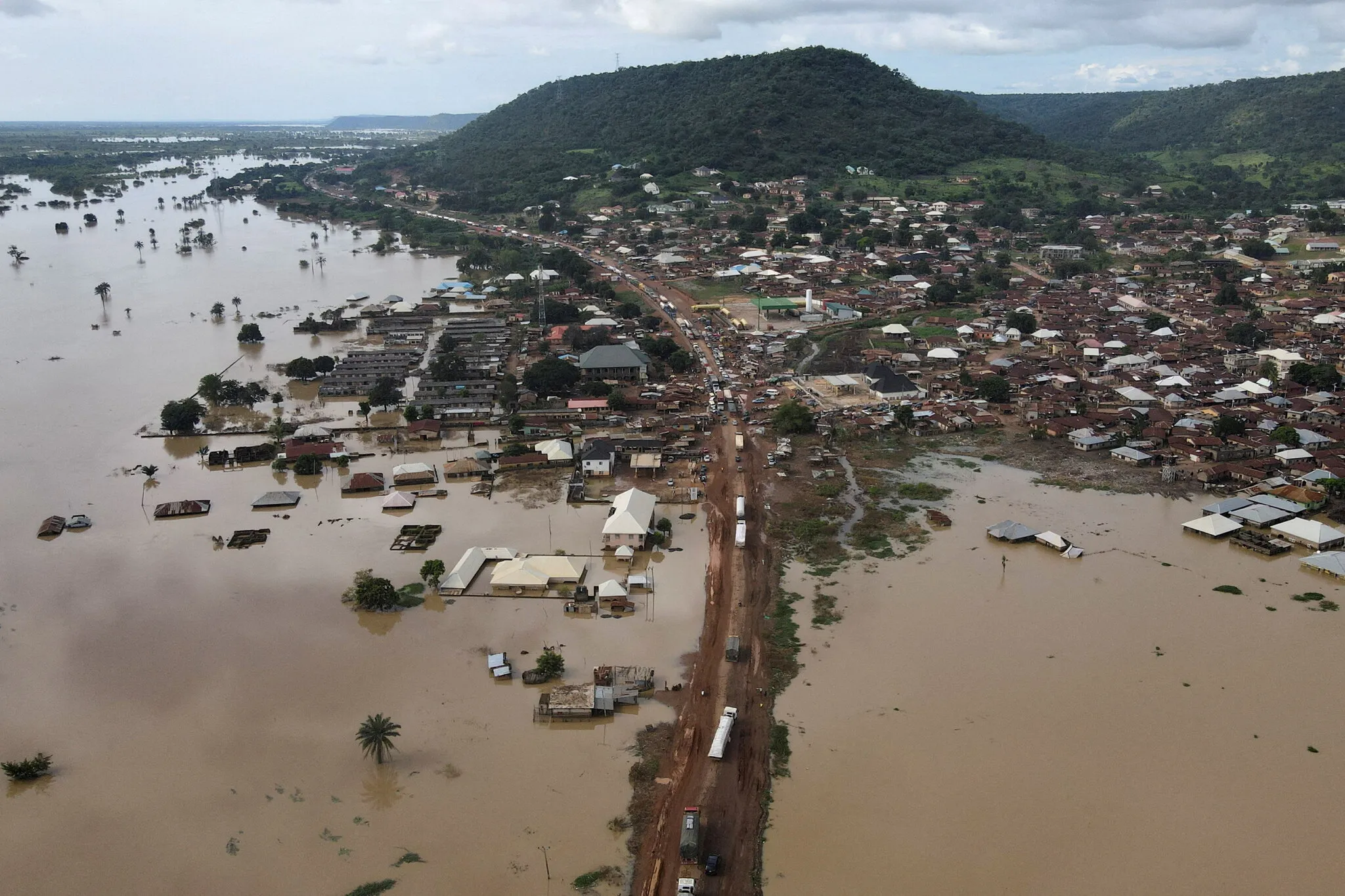
Nigeria floods have killed 245 people and displaced 214,997, according to NEMA, prompting fresh calls for stronger emergency response and disaster preparedness
Nigeria’s National Emergency Management Agency (NEMA) has reported that flooding killed 245 people and displaced 214,997 others across the country as of 20 October 2026, with 673,350 people affected in 134 local government areas across 28 states.
Also read: Court Sentences Three to Death Over Abduction of Catholic Priests
Director-General Zubaida Umar disclosed the figures at the National Emergency Coordination Forum in Abuja on Thursday, 22 October, as officials called for stronger disaster response coordination and improved preparedness for emerging climate risks.
The figures highlight the human cost of the country’s continuing flood emergency, with hundreds of thousands of people affected by damage to homes, livelihoods and essential infrastructure.
For displaced families, the immediate challenges include finding safe shelter, securing food and clean water, maintaining access to healthcare and protecting children and other vulnerable household members.
According to a statement released by NEMA on Friday, Umar presented the figures through the agency’s flood monitoring dashboard.
The director-general, who was represented at the forum by the Director of Planning, Research and Forecasting, Godwin Topikor, said the scale of the disaster required a review of existing interventions and a more coordinated approach among government agencies and humanitarian organisations.
The meeting brought together representatives of ministries, departments and agencies, security institutions, humanitarian organisations and development partners to assess the evolving situation and identify gaps in preparedness and response.
NEMA said stronger collaboration would be essential to ensure that emergency assistance reaches affected communities promptly and that available resources are directed towards the most urgent needs.
The agency also warned that flooding could deepen existing public health challenges, particularly in communities where displacement, poor sanitation and limited access to essential services leave residents more exposed to disease.
Umar emphasised the importance of “heightened surveillance, timely information sharing and coordinated preparedness against emerging public health threats”.
The warning reflects the risks that often follow major flooding.
Contaminated water supplies, damaged sanitation systems and overcrowded temporary shelters can increase the likelihood of disease outbreaks, including cholera.
Disrupted access to healthcare can also make it harder for residents to obtain treatment and preventive services.
For children, older people, pregnant women and persons with disabilities, displacement can create additional difficulties, particularly where evacuation arrangements, shelter facilities and emergency supplies are not sufficiently accessible.
The forum therefore reviewed preparedness across several essential sectors, including health, food security, education, nutrition, water, sanitation and hygiene, emergency shelter, logistics and protection.
The latest figures also renew attention on the warnings issued before the current flood season.
The Nigeria Hydrological Services Agency’s 2026 Annual Flood Outlook identified 14,118 communities in 266 local government areas across 33 states and the Federal Capital Territory as being at high risk of flooding.
A further 15,597 communities in 405 local government areas across 35 states were classified as being at moderate risk.
Those forecasts were intended to help authorities prioritise preventive measures, identify exposed populations and improve readiness before flooding intensified.
The scale of the reported impact now places greater emphasis on translating risk assessments into practical action, including timely evacuation, drainage maintenance, public warnings and the protection of essential infrastructure.
The NEMA forum also addressed the anticipated effects of the 2026/2027 El Niño phenomenon, a climate pattern associated with changes in rainfall and temperature across different regions of the world.
The World Meteorological Organization reported in September that El Niño had become established and was expected to strengthen further into early 2027, potentially influencing rainfall patterns and increasing the risk of extreme weather in some regions.
Its effects vary geographically, however, and the climate pattern should not be treated as a direct explanation for Nigeria’s current flood losses without specific evidence.
Umar urged relevant institutions to harmonise climate forecasts, assess potential risks and convert early warnings into practical anticipatory measures to protect lives, livelihoods and critical infrastructure.
The agency’s position reflects a growing emphasis on disaster management that begins before an emergency reaches its peak.
Timely warnings, coordinated evacuations, the pre-positioning of relief supplies and clear communication with vulnerable communities can help reduce losses when severe weather threatens.
The Deputy Director of Planning, Research and Forecasting at NEMA, Tony Ephraim, also stressed the importance of cooperation among participating institutions.
He encouraged stakeholders to identify operational weaknesses, improve information sharing and develop recommendations that could strengthen the country’s overall disaster response.
For Nigeria, the challenge extends beyond the immediate provision of emergency relief.
Repeated flooding can damage roads, homes, farms and public facilities, disrupt schooling and trade, and place additional financial pressure on households already struggling with rising living costs.
Displaced families may also need longer-term assistance to rebuild homes, recover livelihoods and return safely to their communities.
Without effective recovery planning, the effects of a flood emergency can continue long after the water recedes.
NEMA called on participating institutions to deepen operational collaboration, avoid duplication of efforts and prioritise vulnerable populations.
The agency said effective disaster management must combine early warning, preparedness, risk reduction, timely intervention and sustainable recovery.
The latest figures provide a stark measure of the emergency facing affected communities.
With 245 deaths recorded and more than 214,000 people displaced, the immediate priority remains protecting lives, meeting humanitarian needs and reducing further exposure to danger.
The broader test for authorities will be whether lessons from the current flooding lead to stronger prevention and response systems.
Better coordination between emergency managers, weather and hydrological agencies, state governments and humanitarian partners will be crucial to ensuring that warnings lead to action and that vulnerable communities receive assistance before risks escalate.
Also read: Court Sentences Three to Death Over Abduction of Catholic Priests
As Nigeria prepares for further climate-related uncertainties, the agency’s appeal is clear: disaster preparedness must move beyond planning meetings and forecasts to deliver timely, practical protection for the people most at risk.
-
Politics3 years ago
13 Ondo Assembly Members Disown Endorsement of Aiyedatiwa
-
Politics3 years ago
APC Group, Ondo Govt, Quarrel Over Money for Endorsement
-

 Trending News5 years ago
Stop unsavoury, inciting statements – DSS warns
-

 Others5 years ago
Adron Homes Celebrates 10 Years Of Housing Excellence
-

 Humanity5 years ago
President Buhari Commiserates With Ambassador Maureen Tamuno Over The Loss Of Her Father
-

 Others7 years ago
EX- CUSTOMS BOSS, IBRAHIM MERA’S DWINDLING FAME
-

 Business2 years ago
Bigi Carbonated Soft Drinks Treats 40 Consumers to an Epic Easter Movie Hangout
-

 Business2 years ago
Wema Bank Shines at Global SME Finance Forum Conference Awards 2024 …Awarded: • SME Financier of the Year (Africa) • Platinum Award for Best Financier for Women Entrepreneurs (Africa)