
News
Omatseye’s Book Reopens Nigeria’s Political History

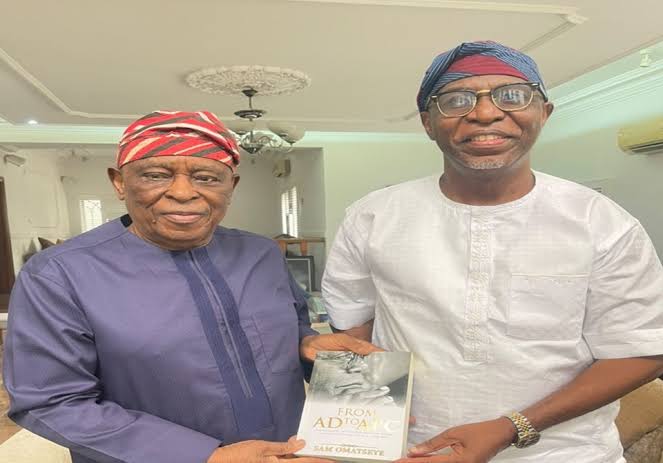
Louis Odion reviews Omatseye’s From AD to APC, highlighting revelations about Nigeria’s political history, Tinubu’s strategies and areas needing correction

A new book by journalist and columnist Sam Omatseye has been praised for revisiting significant events in Nigeria’s political history, with media professional Louis Odion saying the publication provides fresh perspectives on the struggles, alliances and controversies that shaped the country’s democracy.
Also read: Veteran Nollywood Actor Pete Edochie Dies at 79
In a review titled The Rags of History: Omatseye’s Needle and the Knitting of the Fabric of Truth, Odion describes From AD to APC: The Evolution of Nigerian Political Parties and the Exploits of One Man (1998-2015) as a major work that goes beyond the history of political parties to examine developments dating back to the military era and extending into the present political dispensation.
Odion argues that several questions surrounding Nigeria’s political journey remain unresolved in the public mind, allowing speculation and conflicting accounts to influence how historical events are understood.

Among the issues he identifies are the activities of the National Democratic Coalition (NADECO) during the Abacha regime, the circumstances surrounding the political career of Bola Ige, former President Olusegun Obasanjo’s alleged Third Term ambition and the emergence of APC as a major opposition platform.
He also highlights the longstanding question of how Professor Yemi Osinbajo became Buhari’s running mate in the 2014 presidential election.
According to Odion, Omatseye uses interviews with political actors and extensive research to examine these events, bringing together accounts that might otherwise have remained scattered across different memoirs and personal recollections.
One of the episodes highlighted in the review concerns the experiences of former Chief of Army Staff, General Alani Akinrinade, during the struggle against military rule.
Odion recounts Akinrinade’s description of the routes used by pro-democracy activists to leave and re-enter Nigeria while facing persecution under Abacha.
He also recalls an alleged attempt to lure Akinrinade and Professor Bolaji Akinyemi to Togo, where they feared they could be abducted and handed over to the Nigerian military government.
The review further draws attention to the story of Radio Kudirat, the London-based pirate radio station that broadcast during the Abacha years.
Odion says the book addresses questions about how the station’s equipment was smuggled into Nigeria and how its operations continued despite the activities of security agents.
He describes the publication as a 633-page volume containing 28 chapters, with a scope that extends beyond the transition from Alliance for Democracy to the APC.
Odion particularly praises Omatseye’s decision to use full-length interviews, saying the technique allows readers to hear directly from individuals who occupied opposing positions in Nigeria’s political landscape.
He cites the inclusion of former PDP chieftain Bode George and former Osun State Governor Bisi Akande as examples of the book’s range of perspectives.
A significant portion of the review focuses on the political calculations attributed to President Bola Tinubu, particularly his efforts to secure an alternative platform ahead of the 2007 general elections.
Odion recounts how Tinubu allegedly prepared for the possibility that the Alliance for Democracy structure could be controlled by Obasanjo’s allies.
According to the account, five political parties were secretly registered as alternative platforms, with their certificates kept by Tinubu’s then chief of staff, Babatunde Fashola.
The strategy, as described in the review, eventually paved the way for the emergence of the Action Congress, which became a platform for several politicians who later governed different states.
Odion lists Fashola, Ibikunle Amosun, Abiola Ajimobi, Kayode Fayemi, Rauf Aregbesola and Adams Oshiomhole among those whose political careers were connected to the platform’s emergence.
The book also revisits the succession process after the death of former military ruler Sani Abacha.
Odion says Omatseye cites General Ajiborisha, who served as Chief of Staff to Abdulsalami Abubakar, as identifying Bola Ige as Abubakar’s preferred successor following the death of Chief MKO Abiola in military custody.
Another controversial episode examined is Obasanjo’s alleged attempt to secure a third presidential term. Odion points to testimony attributed to Bode George, who reportedly challenged Obasanjo’s continued denial of the ambition.
The review also revisits the circumstances surrounding the resignation of former PDP National Chairman Audu Ogbeh. Odion says George’s account disputes the popular story that Obasanjo waited for a meal of pounded yam before obtaining Ogbeh’s resignation letter, explaining that the former president had left before the food was ready.
On the formation of the APC, Odion highlights the testimony of former Nasarawa State Governor Tanko Al-Makura, who reportedly acknowledged Tinubu’s important role in the coalition that brought Buhari to power in 2015.
The selection of Osinbajo as Buhari’s running mate also receives attention. Odion says Omatseye presents accounts from political insiders that give Tinubu considerable credit for Osinbajo’s emergence as the vice-presidential candidate.
Despite his positive assessment, Odion identifies some shortcomings in the book and recommends further proofreading before another edition is printed.
He points to an error on page six, where the book reportedly gives 1982 as the year of Abiola’s victory at the Social Democratic Party primary in Jos, instead of 1993.
He also disputes the reference to South Korea as the country from which Tinubu sought to import rice during the NADECO struggle, insisting that the country was Thailand.
Odion further challenges the book’s suggestion that former military ruler Ibrahim Babangida stopped pursuing the presidency around 2002 or 2003.
He recalls attending an exclusive media briefing organised by Babangida’s associates in 2010 as part of preparations for his anticipated declaration for the PDP presidential primary.
He also references the Northern Political Leaders Forum’s consensus process in November 2010, when Atiku Abubakar emerged ahead of Babangida, Aliyu Gusau and Bukola Saraki as the group’s preferred candidate.
Nevertheless, Odion maintains that the book is an important resource for understanding Nigeria’s political development.
Also read: Veteran Nollywood Actor Pete Edochie Dies at 79
He concludes that its account of the country’s struggles, political calculations and democratic transition makes it a worthwhile read for Nigerians and anyone interested in the nation’s history.




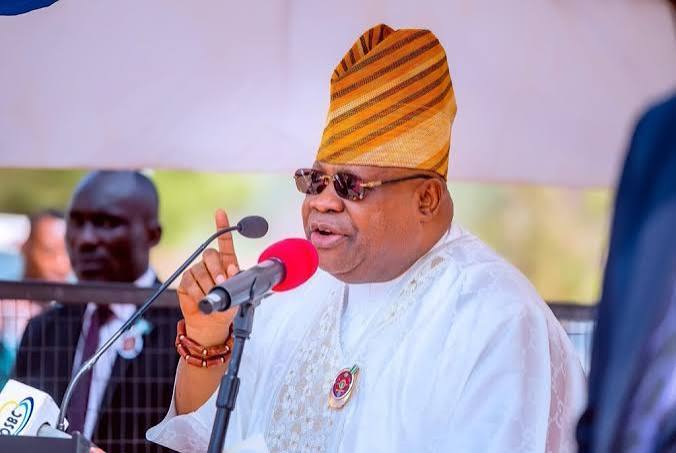
Osun declares November 27 a public holiday for Governor Ademola Adeleke’s second-term inauguration, directing schools and public offices to close

NSCDC arrests two suspects over N117,000 streetlight cable vandalism in Jigawa, while two alleged accomplices remain at large
-
Politics3 years ago
13 Ondo Assembly Members Disown Endorsement of Aiyedatiwa
-
Politics3 years ago
APC Group, Ondo Govt, Quarrel Over Money for Endorsement
-

 Trending News6 years ago
Stop unsavoury, inciting statements – DSS warns
-

 Others5 years ago
Adron Homes Celebrates 10 Years Of Housing Excellence
-

 Humanity5 years ago
President Buhari Commiserates With Ambassador Maureen Tamuno Over The Loss Of Her Father
-

 Others7 years ago
EX- CUSTOMS BOSS, IBRAHIM MERA’S DWINDLING FAME
-

 Business3 years ago
Bigi Carbonated Soft Drinks Treats 40 Consumers to an Epic Easter Movie Hangout
-

 Business2 years ago
Wema Bank Shines at Global SME Finance Forum Conference Awards 2024 …Awarded: • SME Financier of the Year (Africa) • Platinum Award for Best Financier for Women Entrepreneurs (Africa)