
Uncategorized
A Fitting Honour to An Achiever: Oil and Gas Top Player, Jubril Adewale Tinubu, Bags CON


Jubril Adewale Tinubu, Group Chief Executive Officer, Oando Plc., a Pan-African multinational energy corporation, is set to receive the medal of national award of Commander of the Order of Niger, CON, the high-flying oil and gas player and world class business would on Tuesday, October 11 be honoured among eminent and top Nigerian personalities by President Muhammadu Buhari.
The story of Wale Tinubu, Group Chief Executive, Oando Plc., a sub-Saharan African indigenous integrated energy group, would make a compelling read, any time and any day. Indeed, if anyone could undertake to produce his biopic too, such a person can be assured that he or she would make return on his or her investment. Such is the interesting and inspiring lifestyle of this young man who today is a big player in the oil and gas sector.
At the outset of his business, he faced a lot of daunting challenges. But his uncommon daring spirit and survival instinct made him overcome the teething challenges. Popularly called the King of African Oil, the Lagos State- born oil magnate started out with a small oil firm, Ocean and Oil Services, but with resilience and focus, he has been able to grow the business.
His emergence as a world-acclaimed businessman did not come as a surprise to those who knew him early in life. “As a highly intelligent man, Wale Tinubu began to exhibit a high level of skills and attitude very early in life,” a source said, adding, “When he dabbled into business many years ago, his clear vision was to lead the company as a leading indigenous exploration and production player on the African continent, and today he has achieved that dream.”

His early life also portrayed him as a potentially great person in life. And, like most young men of his generation, his dream was to become one of the greatest businessmen in the world. Luckily, providence has granted him his heart’s desire.
That he has grown head and shoulders above several of his competitors in the industry is no longer in doubt, and today, he is one of the few Nigerians that rub shoulders with other top executives around the world, making him a glittering star in the global business firmament.
In the beginning, he had teamed up with Omamofe Boyo and Onajite Okoloko in 1994 to set up Ocean and Oil Services Limited to supply diesel and Low Pour Fuel Oil (LPFO) to various industries, shipping firms and exploration companies in Nigeria.
Interestingly, more than two decades after they sowed in pains, the investment has grown, before their eyes, to become a multinational conglomerate worth millions of dollars spread across five West African countries. At the outset, they bought their first vessel, MT Carolina, in the mid-90s to supply diesel to off-shore companies from the Port-Harcourt Refinery.

Within seven years, the fleet had grown to seven ships; and by 2000, when the government wanted to sell its controlling stake in the defunct Unipetrol Plc, a downstream oil marketing company, they bid for it. Then, many, including the former Managing Director of the old Unipetrol Plc., Mallam Yusuf Ali, had written them off. But they all got the shocker of their lives from the emerging dinosaurs in the Nigerian oil business. Ocean and Oil Services successfully paid for the shares and took over the company, with the help of its foreign technical partners, Compania Espanola De Petroleos (CEPSA), the second largest oil group in Spain.
Also, three years after, when Agip Petroli International BV of Italy decided to divest from the downstream sector, they bought over the foreign company’s shares and added Agip Nigeria, the company’s local subsidiary, to their portfolio. The newly acquired companies were merged and renamed Oando Limited. By 2005, Oando Plc had secured across border listing on the Johannesburg stock of exchange (JSE) in South Africa.
Subsequently, some other acquisitions were made in rapid succession, including a local gas pipeline company, Gaslink Nigeria Limited, which came with a 57km natural gas distribution pipeline in Lagos as well as an exclusive gas distribution franchise. That gas pipeline has been extended to cover100 kilometres and more than 2,300 domestic industrial customers have been added to its grid.
Oando also recorded a feat in 2007 when it built the first 12.5MW IPP Power plant for Lagos State government, which has saved the state government over 3.5 million USD in energy bills. But that paled into insignificance in 2013 when it executed its most ambitious acquisition till date, with the taking over of ConocoPhillips shares and assets in the Brass LNG Project valued at over $550 million USD.

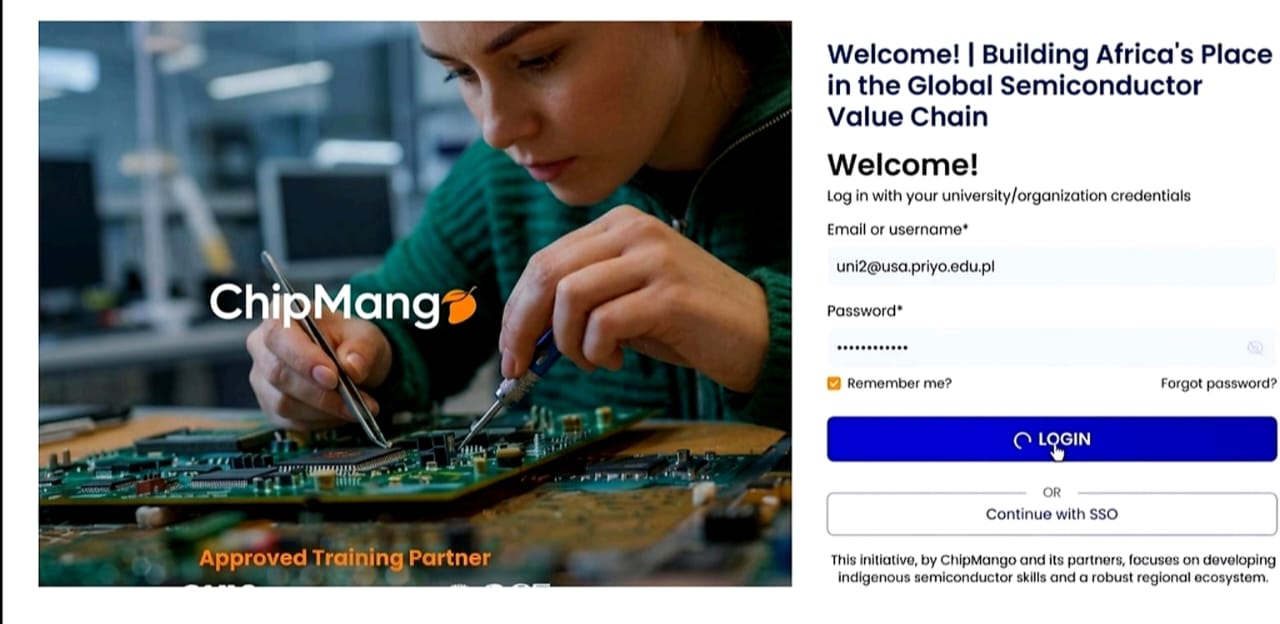
The global semiconductor industry involves several stages, from chip design and verification to manufacturing and
packaging. Africa has an opportunity to strengthen its participation in different parts of this value chain.
ChipMango is focusing on engineering talent, chip design, verification and emerging hardware technologies. Its work reflects the potential of African businesses to participate in specialised global industries. Through its Boost Africa initiative, the European Investment Bank (EIB), together with the African Development Bank and with EU support,
helps strengthen the venture capital ecosystem that finances innovative African companies.
Discover how ChipMango is contributing to the development of semiconductor capabilities in Africa.
Watch the video:


Fani-Kayode rejects Blue Silk after the Nigerian Law Society conferred its Senior Counsel designation on him at its 2026 annual conference.


Grey CEO Idorenyin Obong says intra-African trade payments should bypass the dollar, as the fintech expands direct currency conversion routes
African businesses should be able to pay suppliers across the continent without routing transactions through the United States dollar, Grey co-founder and Chief Executive Officer, Idorenyin Obong, has said, as the cross-border payments company expands its currency conversion infrastructure.
Also read: CAF Restores AFCON to Every Two Years After Reversing Four-Year Plan
Obong made the remarks on Thursday, October 29, on the sidelines of Moonshot by TechCabal 2026, a two-day technology conference held at the National Theatre in Lagos.
He said reliance on intermediary currencies, particularly the dollar, adds complexity to transactions between African countries and can worsen existing foreign exchange liquidity challenges.
According to him, Grey has developed direct currency conversion routes that allow payments between selected African currencies without requiring businesses to convert their funds into dollars first.
“Most times, if you’re trading within Africa, there’s always some form of intermediary currency,” Obong said.
“We’ve built out these currency pairs, these exotic currency pairs, such that you never have to go in between to the USD.”
The issue is significant for businesses operating across African markets, where differences in currency availability, banking arrangements and payment infrastructure can make cross-border transactions expensive or unpredictable.
For example, a Nigerian company paying a supplier in Kenya may traditionally have to convert naira into dollars before exchanging the dollars for Kenyan shillings.
Each conversion introduces another stage in the transaction, potentially increasing costs and exposing the payment to additional delays.
Grey says its direct currency routes are designed to simplify that process by connecting supported currencies more efficiently.
The company said its payment infrastructure currently enables customers in Nigeria, Kenya and Ghana to send and receive money, with liquidity arrangements supporting transactions in multiple currencies.
It also said payments can be settled in real time across several supported currencies.
However, the availability of direct routes does not mean that all African currencies can be exchanged freely or that every transaction will avoid dollar intermediation.
Currency coverage, liquidity and regulatory requirements remain important considerations in cross-border payments.
Obong identified foreign exchange liquidity and payment reliability as two of the biggest difficulties confronting businesses that trade internationally.
He said uncertainty over when suppliers will receive their money can disrupt procurement schedules and weaken commercial relationships.
Grey has therefore invested in infrastructure intended to improve the predictability of international payouts, including providing customers with estimated delivery times.
“We spent the last six years building the infrastructure to ensure that we’re delivering at the last mile at 99.99% to our customers,” Obong said.
He also disclosed that Grey had processed more than 40 million transactions and nearly $5bn in payments since the company began operations in 2020.
The company has expanded beyond individual currency exchange services into business payments and international salary management.
Its Grey Business platform, designed for startups and small businesses, has processed nearly $100m since launching in February, according to the company.
Grey previously reported that the business platform processed $61.4m in its first four months, with demand partly driven by stablecoin-based payments.
The fintech has also extended its payout services to China, allowing businesses to pay suppliers in Chinese yuan.
The expansion reflects its effort to serve companies whose international supply chains extend beyond African markets.
Grey’s development has followed changes in customer demand since its launch in 2020.
Obong said the company initially operated as a currency exchange service but discovered that many customers were primarily using the platform to receive salaries earned abroad.
“Most of our customers were using Grey to receive their foreign salary. And so we decided to build what I would call simply a salary account for these customers,” he said.
That shift led to Paycheck, a product that enables professionals earning in dollars, pounds and euros to receive and manage their salaries.
The service also integrates with Pouch, Grey’s savings feature, which allows users to set aside money for goals such as education, travel and major purchases.
The company’s expansion comes amid wider efforts to improve financial connectivity across African markets.
The African Continental Free Trade Area (AfCFTA), which seeks to create a more integrated continental market, has made trade facilitation, payment systems and currency-related barriers important parts of the conversation about intra-African commerce.
One initiative in this area is the Pan-African Payment and Settlement System (PAPSS), developed to facilitate cross-border payments in local African currencies.
The system is intended to reduce reliance on third-party currencies and make intra-African trade payments more efficient.
Grey’s direct currency routes address a related challenge through its own commercial payment infrastructure, although the company’s services and PAPSS are separate initiatives with different operating models.
Obong’s comments also came as the company faced questions about customer experiences, including difficulties accessing foreign currency accounts and obtaining support.
Grey said it provides round-the-clock digital assistance and operates a physical office, while maintaining that online support is more effective for directing customer complaints to its distributed teams.
Grey was the headline sponsor of Moonshot by TechCabal 2026, held on October 28 and 29 in Lagos.
The conference brought together technology companies, investors, entrepreneurs and other industry participants to discuss innovation, investment and business opportunities across Africa.
For Grey, the ambition is to make international payments less complicated for businesses and individuals.
Also read: CAF Restores AFCON to Every Two Years After Reversing Four-Year Plan
Its push towards direct currency conversion reflects a broader question facing African commerce: how much more efficiently could companies trade across the continent if paying a supplier did not routinely require passing through the dollar?
-
Politics3 years ago
13 Ondo Assembly Members Disown Endorsement of Aiyedatiwa
-
Politics3 years ago
APC Group, Ondo Govt, Quarrel Over Money for Endorsement
-

 Trending News6 years ago
Stop unsavoury, inciting statements – DSS warns
-

 Others5 years ago
Adron Homes Celebrates 10 Years Of Housing Excellence
-

 Humanity5 years ago
President Buhari Commiserates With Ambassador Maureen Tamuno Over The Loss Of Her Father
-

 Others7 years ago
EX- CUSTOMS BOSS, IBRAHIM MERA’S DWINDLING FAME
-

 Business3 years ago
Bigi Carbonated Soft Drinks Treats 40 Consumers to an Epic Easter Movie Hangout
-

 Business2 years ago
Wema Bank Shines at Global SME Finance Forum Conference Awards 2024 …Awarded: • SME Financier of the Year (Africa) • Platinum Award for Best Financier for Women Entrepreneurs (Africa)