
Politics
In Defence of Justice Forum, Tinubu’s Strongest Political Ally- Adeola Al-Amin

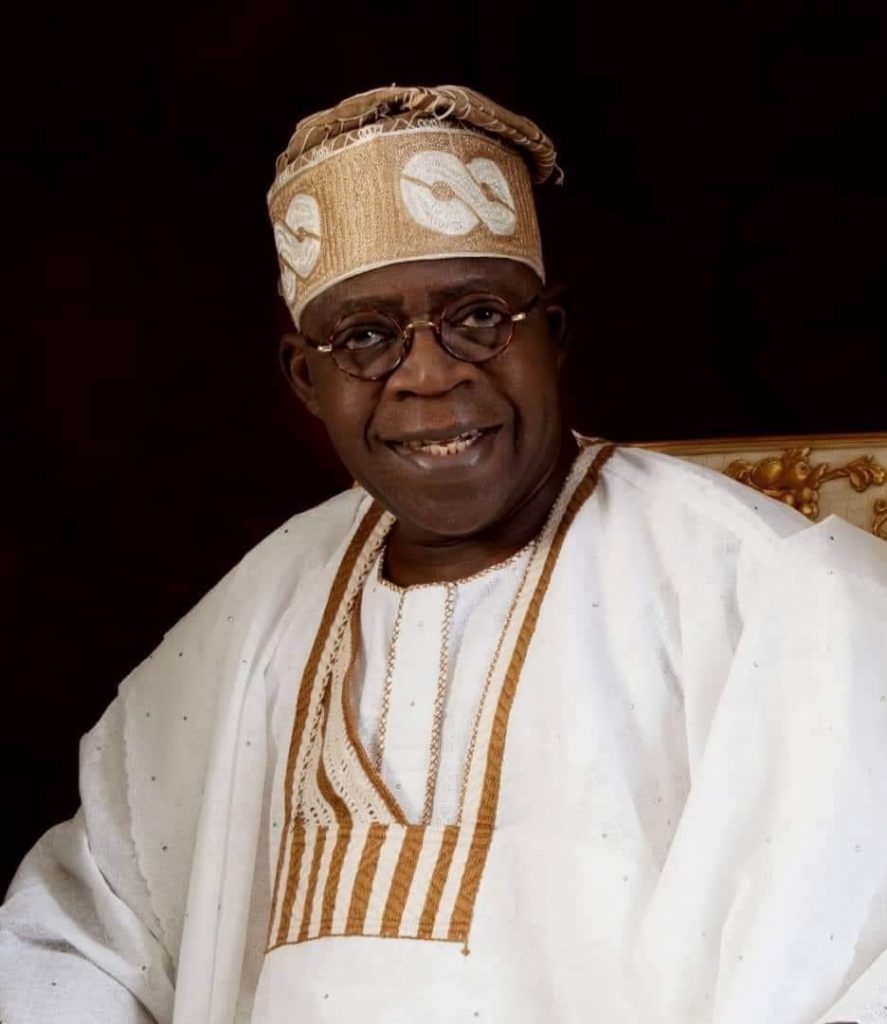

I have to come to bury Caesar not to praise him, the evil that men do, live after them
– Marcus Brutus in Williams Shakespeare’s Julius Ceaser
The above quote from one of the most popular of Williams Shakespeare’s works forms the basis of my writing this article.
For me, I owe it a point of duty to put the record straight at all, particularly for the new generation popularly called the GenZ generation who may have been swayed by the lies and misrepresentation of facts by ignorant people posing as public analysts on the Lagos political landscape.
In recent time, the major source of discussion in Lagos politics was the removal of Mudashiru Obasa as the Speaker of the Lagos State House of Assembly.
I’m neither a politician nor a member of the Assembly, I am just a public analyst, who possess deep knowledge of the political activities and its players particularly since the current political dispensation birthed in 1998.
Accusing fingers were pointed at perceived orchestrators of the removal but what came to me as very awkward and unbelievable was the allegation that some politicians are planning to take over Lagos from President Bola Ahmed Tinubu with the members and leaders of the referred Justice Forum at the receiving end of abuse, vilification and outright lies.
For the sake of this particular article, I have come to put the record straight, not to praise leaders and elders Justice Forum.
The need to put the record straight is essential, particularly with a particular social media content Creator going on video to lie and present fallacies as facts.
With my knowledge of Lagos politics, it would be very difficult and unfortunate to make Justice Forum, its leaders and members scapegoat for what happened in the House of Assembly.
For emphasis sake, the members have insisted that what happened was their internal affair which not a few agreed with them that they have the right to conduct the affair of the Assembly in accordance with the rules.
For the avoidance of doubt, this writer personally believes and agrees with many that Justice Forum is a honest organisation peopled by leaders who have been tested, trusted and have always delivered on their assignments with dignity, honesty and transparency.
It remains the biggest and most influential political group within the All Progressives Congress (APC). Let us be clear, Justice Forum gave birth to all other groups due to the growth of our great party. As such, it will be a fallacy to conclude that Justice Forum will and can seek any discord within APC. It will not happen.
Over the years, the group, its leaders, elders and members have been guided by the motto of the group, Truth Shall Always Prevail, and my interactions with others have proven that they have not waivered from this path of truth and honesty.
It is important to note that when lies continue to spread like wildfire, they are sometimes taken as truth, hence the need to put set the record straight and put a lie to the wicked rumours being spread about the organisation.
Justice Forum has always been and will remain a solid rock of support for President Bola Ahmed Tinubu, GCFR, that is sacrosanct in motto and belief.
Thus, the ridiculous statements by some paid agents that the leadership of JF is seeking to betray and reduce the influence of President Tinubu in Lagos is a wicked lie from the pit of the most brutal part of hell.
The lie which started gaining ground through the vituperation of a hired social media charlatan against leaders of the groip therefore, calls for urgent reaction and need to clear the smear campaign.
To put the record straight and for the umpteenth time, neither leaders nor members of Justice Forum were involved in the removal of Rt. Honourable Obasa.
The Lawmakers treated the issue as an internal one among themselves, hence, linking the removal to the Justice Forum is absolute nonsense and a terrible fallacy.
The content Creator and his ilks have raised many unsubstantiated allegations against the Justice Forum and their leaders including outright lies in their presentations.
It is absurd and unheard of to accuse JF leaders of betraying Tinubu or accuse them of working against the President. A deeper investigation into their background revealed a bunch of people, ignorant of past events and history of political movements in Lagos and Nigeria.
It is pertinent to state here that President Tinubu is a founding member of Justice Forum which was formed in protest against the decision of Chief Dapo Sarumi to take up appointment with the Interim National Government (ING).
The group, aligned with other pro-democracy groups particularly, Afenifere and NADECO, to fight for the actualisation of June 12 mandate of the late Chief MKO Abiola and it is on record that no leader of the group participated in the transition programme of the military administration of late General Sani Abacha.
When General AbdulSalami Abubakar heralded new transition programme, Justice Forum, aligned with the decision of the NADECO and Afenifere to participate in the programme which culminated in its being one of the major foundation groups of the Alliance for Democracy (AD).
When President Tinubu returned to Nigeria in 1998, he found a natural habitat in Justice Forum and renewed his long-term membership of the group and relationship with the leaders. It is the Justice Forum that provided the platform for him to launch his governorship aspiration in 1998.
In actual fact, Justice Forum was the first group to publicly endorse the aspiration of President Tinubu. His adoption was announced at a meeting in the house of Late Oba Mufutau Hamzat in Yaya Abatan area of Ogba, and it was him and the late Chief Mumuni Adio Badmus who raised his hand on that day along with some other leaders.
It should be noted that during the imbroglio that greeted the Lagos AD gubernatorial primaries in 1998 which pitted President Tinubu against the late Funsho Williams, the Justice Forum members and their leaders stood solidly behind the President, they were never shaky in their support, they mobilised their members to not only participate in the primaries but also to vote massively for President Tinubu.
It should be noted firmly here that then, some leaders who are now pushing the negative narrative out not only supported the late Funsho Williams, they voted for him and tried all they could to truncate Tinubu’s victory during the primaries.
Many still remember the roles one of them played when he was a Minister by trying to undermine and truncate the administration of Bola Ahmed Tinubu as Governor of Lagos State. Another was the Chairman of the Network Alliance, Funsho William’s political group while another simply rebuffed all entreaties made by then AD Governorship aspirant, Bola Ahmed Tinubu, to join his group.
Over the years, President Tinubu has always enjoyed the support and encouragement of the leaders and elders of Justice Forum.
When he was leaving office in 2007, there was a succession crisis but the Justice Forum leaders stood solidly behind the President. They aligned with his choice of candidate. Tola Kasali was first presented as his preferred candidate, the leaders queued behind him, when the baton change to Babatunde Raji Fashola, SAN, the leaders naturally switched their support for him.
When Fashola was living office and another succession crisis reared its head, and President Tinubu settled for Akinwunmi Ambode, the Justice Forum leaders queued up behind Ambode even though one of the sons of their leader was contesting for the same position. As the Chairman of the Lagos APC then and staunch member of JF, Chief Henry Oladele Ajomale never used his position to favour Kadir Obafemi Hamzat, son of the leader of his group.
The same process played out during the selection of Babajide Olusola Sanwo-Olu, the choice of their leader, President Tinubu.
When Tinubu decided to run for the Presidency of the country, the leaders of Justice Forum, not only supported him, they were on the road with him throughout the length and breadth of the country during his consultation tour.
Since he became President of Nigeria, Justice Forum leaders have not slacked. They have remain resolute in their support for him and keeping him abreast of events going on in Lagos.
Justice Forum will continue to uphold truth, advocate for peace and tranquility among Nigerians and will not relent in their support for President Bola Ahmed Tinubu, GCFR.
The naysayers and the social media charlatan actually ranted against the president then. We know that money buy people’s conscience not people at Justice Forum. These sets of people should find other jobs to do rather than spreading rumours and lies to cause disaffection between the President and his people. Posterity will be unkind to those whose only action is to cause discord in the society.
Once again, I want to re-emphasise that I came to set the record straight but not to praise Justice Forum.
Adeola Al-Amin is a public affairs analyst and is based in Lagos



-
Politics3 years ago
13 Ondo Assembly Members Disown Endorsement of Aiyedatiwa
-
Politics3 years ago
APC Group, Ondo Govt, Quarrel Over Money for Endorsement
-

 Trending News5 years ago
Stop unsavoury, inciting statements – DSS warns
-

 Others5 years ago
Adron Homes Celebrates 10 Years Of Housing Excellence
-

 Humanity5 years ago
President Buhari Commiserates With Ambassador Maureen Tamuno Over The Loss Of Her Father
-

 Others7 years ago
EX- CUSTOMS BOSS, IBRAHIM MERA’S DWINDLING FAME
-

 Business2 years ago
Bigi Carbonated Soft Drinks Treats 40 Consumers to an Epic Easter Movie Hangout
-

 Business2 years ago
Wema Bank Shines at Global SME Finance Forum Conference Awards 2024 …Awarded: • SME Financier of the Year (Africa) • Platinum Award for Best Financier for Women Entrepreneurs (Africa)