
Uncategorized
A Fitting Honour to An Achiever: Oil and Gas Top Player, Jubril Adewale Tinubu, Bags CON


Jubril Adewale Tinubu, Group Chief Executive Officer, Oando Plc., a Pan-African multinational energy corporation, is set to receive the medal of national award of Commander of the Order of Niger, CON, the high-flying oil and gas player and world class business would on Tuesday, October 11 be honoured among eminent and top Nigerian personalities by President Muhammadu Buhari.
The story of Wale Tinubu, Group Chief Executive, Oando Plc., a sub-Saharan African indigenous integrated energy group, would make a compelling read, any time and any day. Indeed, if anyone could undertake to produce his biopic too, such a person can be assured that he or she would make return on his or her investment. Such is the interesting and inspiring lifestyle of this young man who today is a big player in the oil and gas sector.
At the outset of his business, he faced a lot of daunting challenges. But his uncommon daring spirit and survival instinct made him overcome the teething challenges. Popularly called the King of African Oil, the Lagos State- born oil magnate started out with a small oil firm, Ocean and Oil Services, but with resilience and focus, he has been able to grow the business.
His emergence as a world-acclaimed businessman did not come as a surprise to those who knew him early in life. “As a highly intelligent man, Wale Tinubu began to exhibit a high level of skills and attitude very early in life,” a source said, adding, “When he dabbled into business many years ago, his clear vision was to lead the company as a leading indigenous exploration and production player on the African continent, and today he has achieved that dream.”

His early life also portrayed him as a potentially great person in life. And, like most young men of his generation, his dream was to become one of the greatest businessmen in the world. Luckily, providence has granted him his heart’s desire.
That he has grown head and shoulders above several of his competitors in the industry is no longer in doubt, and today, he is one of the few Nigerians that rub shoulders with other top executives around the world, making him a glittering star in the global business firmament.
In the beginning, he had teamed up with Omamofe Boyo and Onajite Okoloko in 1994 to set up Ocean and Oil Services Limited to supply diesel and Low Pour Fuel Oil (LPFO) to various industries, shipping firms and exploration companies in Nigeria.
Interestingly, more than two decades after they sowed in pains, the investment has grown, before their eyes, to become a multinational conglomerate worth millions of dollars spread across five West African countries. At the outset, they bought their first vessel, MT Carolina, in the mid-90s to supply diesel to off-shore companies from the Port-Harcourt Refinery.

Within seven years, the fleet had grown to seven ships; and by 2000, when the government wanted to sell its controlling stake in the defunct Unipetrol Plc, a downstream oil marketing company, they bid for it. Then, many, including the former Managing Director of the old Unipetrol Plc., Mallam Yusuf Ali, had written them off. But they all got the shocker of their lives from the emerging dinosaurs in the Nigerian oil business. Ocean and Oil Services successfully paid for the shares and took over the company, with the help of its foreign technical partners, Compania Espanola De Petroleos (CEPSA), the second largest oil group in Spain.
Also, three years after, when Agip Petroli International BV of Italy decided to divest from the downstream sector, they bought over the foreign company’s shares and added Agip Nigeria, the company’s local subsidiary, to their portfolio. The newly acquired companies were merged and renamed Oando Limited. By 2005, Oando Plc had secured across border listing on the Johannesburg stock of exchange (JSE) in South Africa.
Subsequently, some other acquisitions were made in rapid succession, including a local gas pipeline company, Gaslink Nigeria Limited, which came with a 57km natural gas distribution pipeline in Lagos as well as an exclusive gas distribution franchise. That gas pipeline has been extended to cover100 kilometres and more than 2,300 domestic industrial customers have been added to its grid.
Oando also recorded a feat in 2007 when it built the first 12.5MW IPP Power plant for Lagos State government, which has saved the state government over 3.5 million USD in energy bills. But that paled into insignificance in 2013 when it executed its most ambitious acquisition till date, with the taking over of ConocoPhillips shares and assets in the Brass LNG Project valued at over $550 million USD.

Uncategorized
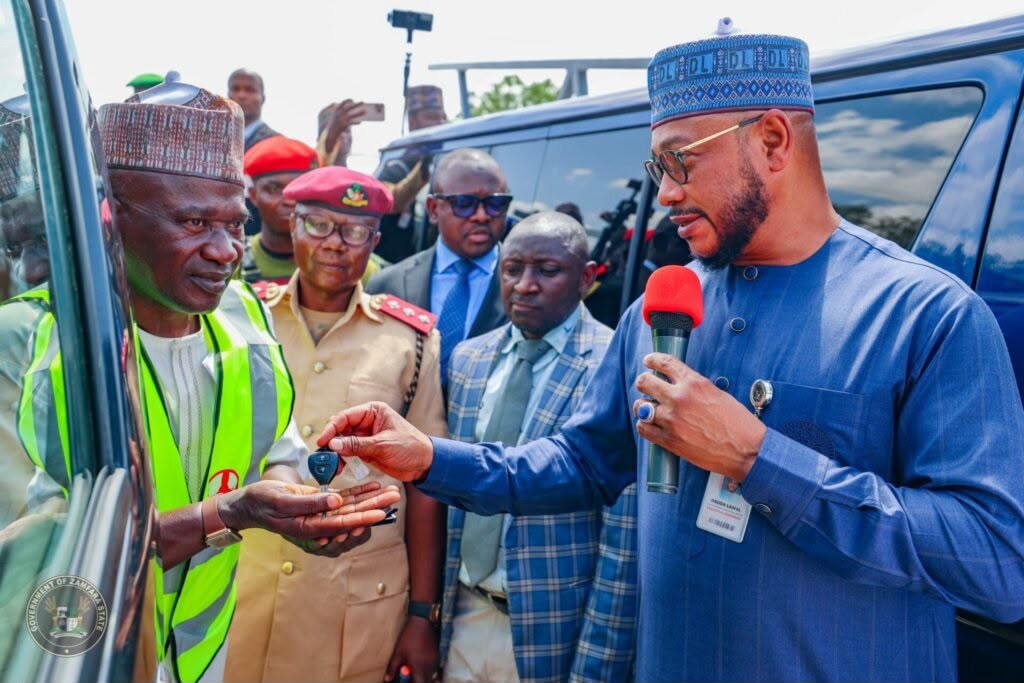
Governor Dauda Lawal Distributes 50 Subsidised Buses, Commissions Fire Trucks for Swift Emergency Response

By Adebayo Adeoye
All is clearly not well within the ranks of the All Progressives Congress in Bauchi State. What should have been a defining moment for party unity and strategic positioning ahead of the 2027 elections has instead deepened mistrust, widened internal divisions and exposed dangerous cracks within the party. For an opposition party still struggling to regain political momentum in one of Nigeria’s most competitive states, the timing could hardly be worse. Rather than serving as a launchpad for renewed ambition, the governorship primary has become a stark reflection of the APC’s internal dysfunction — one that could shape its political fortunes long before voters head to the polls.
The so called Last Friday’s governorship primary, which produced former Governor Mohammed Abubakar as candidate, was expected to rally party faithful around a credible challenger for 2027. Instead, it has triggered widespread controversy and bitter reactions across the party. What ought to have strengthened internal cohesion has, in many quarters, been condemned as deeply flawed, opaque and lacking the transparency required to inspire confidence among party members. Allegations of backroom deals, imposed outcomes and the sidelining of longstanding stakeholders have rapidly evolved from whispers into open accusations the party leadership can no longer ignore. The resulting credibility crisis is not merely reputational; it strikes at the institutional foundations necessary for any serious electoral campaign.
For many observers and loyal party members, the exercise represented more than a routine internal contest. It was a test of the APC’s democratic credentials and its readiness to reposition itself after years of electoral setbacks in Bauchi. The party had a rare opportunity to demonstrate discipline, inclusiveness and a genuine commitment to internal democracy. It had the chance to show voters that it had learned from past mistakes and was prepared to offer a coherent alternative to the ruling Peoples Democratic Party. Instead, the primary has left many supporters frustrated, alienated and uncertain about the party’s direction. What should have united the APC has instead pushed it closer to fragmentation.
Concerns continue to grow over what critics describe as the complete absence of participatory democracy in favour of a forced consensus process. These concerns were reinforced by comments attributed to the endorsed candidate, Mohammed Abubakar, and by the controversial declaration of results announced by retired AIG John Abang, which many party stakeholders insist reflected a predetermined outcome rather than a credible electoral exercise.
The grievances extend far beyond the immediate contestants and their campaign teams. Ward officials, delegates and grassroots mobilisers — the very backbone of electoral politics in Nigeria — feel sidelined and betrayed after investing time, loyalty and resources into a process they believe disregarded their voices. These are the individuals who organise communities, mobilise voters and translate party messaging into electoral support. When such actors lose faith in the process, the consequences are rarely passive. In closely contested political environments like Bauchi, disillusionment at the grassroots can prove decisive.
The broader political context makes the crisis even more consequential. Bauchi has long been a battleground state where power has alternated between the APC and the PDP. Governor Bala Mohammed has significantly consolidated the PDP’s political networks and influence across the state. Against that backdrop, the APC’s most realistic path to electoral competitiveness in 2027 depended on presenting a united front, a credible candidate and a compelling alternative vision. The governorship primary was therefore not just an internal exercise; it was a strategic moment capable of defining the party’s electoral future. Instead, it has handed the ruling party an early political advantage.
More troubling still is the growing fear that unresolved grievances could trigger defections, weaken party cohesion and embolden rival political forces ahead of 2027. Nigerian political history repeatedly shows that opposition parties rarely succeed when consumed by internal divisions and leadership disputes. In many cases, electoral defeats stem less from the popularity of opponents than from unresolved internal crises allowed to fester unchecked. Bauchi itself has witnessed this pattern before, and the APC now risks repeating it.
Indeed, the party faces one of its most consequential internal tests in recent years. Influential figures across the state are reportedly disenchanted with both the outcome of the primary and the manner in which it was conducted. Quiet consultations outside official party structures have already begun — often an early sign of possible realignments. In several local governments, ward executives are said to be demoralised and uncertain about committing themselves to a process they no longer trust. If left unresolved, the fallout could cripple grassroots mobilisation, weaken fundraising efforts and push influential stakeholders toward strategic defections, political abstention or alternative alliances.
For a party serious about reclaiming political relevance in Bauchi, unity cannot remain a slogan recited at press conferences while the conditions necessary for unity are undermined in practice. Reconciliation, dialogue and genuine inclusion must now become urgent priorities. That requires more than symbolic appeals for calm. It demands credible engagement with aggrieved aspirants, delegates and grassroots structures. It requires transparent mechanisms for addressing grievances and accountability for actions that have left the party more divided than before the primary.
The 2027 election is approaching quickly, and time is not on the APC’s side. The window for reconciliation and political recovery remains open, but not indefinitely. The party must now make a clear choice: unity with all its difficult compromises, or division with all its predictable consequences.

His Excellency, the Executive Governor of Zamfara State, Dr. Dauda Lawal, has officially approved the sum of N3.2 billion for the complete renovation, accreditation, and commencementof academic activities at the Zamfara State School of Nursing and Health Sciences, located in Zurmi Local Government Area. This was confirmed in an official statement released marking a major intervention in the state’s ailing healthcare education sector, which has suffered years of neglect and infrastructural decay.
According to government sources, the funds will be channeled into three critical areas: the overhauling of lecture halls, administrative blocks, student hostels, and practical demonstration labs to meet modern standards; the settlement of regulatory fees and implementation of curriculum upgrades required by the Nursing and Midwifery Council of Nigeria (NMCN); and enabling the school to admit its first batch of students in over five years, with a focus on midwifery, community health and general nursing. Speaking on the development, the state Commissioner for Health described the approval as a new chapter in healthcare manpower development, noting that the Zurmi school has remained non-functional for nearly a decade due to poor infrastructure and loss of accreditation.
Governor Dauda Lawal is not just renovating a school but rebuilding the backbone of primary healthcare delivery in Zamfara, adding that without trained nurses and community health workers, the state’s hospitals cannot function and that this N3.2 billion investment will change the narrative.
Residents of Zurmi and prospective students have greeted the news with excitement, with many having lost hope of ever seeing the institution reopen. Governor Dauda Lawal, who has made health sector revitalization a cornerstone of his administration, was quoted as saying that his government remains committed to accessible, quality education and healthcare across all 14 local government areas of the state, adding that no Zurmi child should travel hundreds of kilometers just to become a nurse. The state government has issued a directive to the Ministry of Health and the Ministry of Education to ensure the project is completed within nine months, with accreditation visits scheduled to begin before the end of the current fiscal year.
-
Politics2 years ago
13 Ondo Assembly Members Disown Endorsement of Aiyedatiwa
-
Politics2 years ago
APC Group, Ondo Govt, Quarrel Over Money for Endorsement
-

 Trending News5 years ago
Stop unsavoury, inciting statements – DSS warns
-

 Others5 years ago
Adron Homes Celebrates 10 Years Of Housing Excellence
-

 Humanity5 years ago
President Buhari Commiserates With Ambassador Maureen Tamuno Over The Loss Of Her Father
-

 Others7 years ago
EX- CUSTOMS BOSS, IBRAHIM MERA’S DWINDLING FAME
-

 Business2 years ago
Bigi Carbonated Soft Drinks Treats 40 Consumers to an Epic Easter Movie Hangout
-

 Business2 years ago
Wema Bank Shines at Global SME Finance Forum Conference Awards 2024 …Awarded: • SME Financier of the Year (Africa) • Platinum Award for Best Financier for Women Entrepreneurs (Africa)