
Brands
ARCON Warns OYSAA Against Illegal Advertising Vetting


ARCON declares OYSAA’s pre-exposure advertising directive unlawful, warning it exceeds the state agency’s constitutional powers

The Advertising Regulatory Council of Nigeria (ARCON) has issued a strong warning to the Oyo State Signage and Advertising Agency (OYSAA), declaring its directive for pre-exposure vetting of certain advertisements unlawful.
Also read: Nigeria’s Debt, Salaries Exceed Revenue Amid Capital Cuts
ARCON’s Director General, Dr Olalekan Fadolapo, in a press statement on Thursday, criticised the November 3, 2025, OYSAA letter, which required advertisers and agencies in the out-of-home segment to submit betting- and gaming-related advertisements for mandatory vetting before deployment in Oyo State.
“The directive is unlawful and ultra vires the powers of a state advertising and/or signage regulatory agency,” ARCON said, stressing that advertising regulation in Nigeria is constitutionally domiciled at the federal level.
The council cited Items 49 and 62 of the Second Schedule of the 1999 Constitution, noting that advertising is recognised as a professional occupation and a component of trade and commerce under the Exclusive Legislative List, placing legislative authority solely with the National Assembly.
ARCON emphasised that the enabling law establishing OYSAA cannot override constitutional boundaries, insisting that state agencies have no jurisdiction to vet, approve, or reject advertising content prior to exposure.
“Advertising in Nigeria is established as a professional occupation and trade, and it is the singular responsibility of the National Assembly to enact laws in this regard,” the statement read.
“It is not within a State Advertising and/or Signage Agency’s jurisdiction to request for, receive or approve any advertisement for exposure.”
The council warned that allowing OYSAA’s directive to stand could have serious consequences for the advertising industry, potentially undermining stability, slowing commercial activity, and creating bottlenecks for advertisers operating within Nigeria.
“This action will not only set the industry back but also create a bad precedent,” ARCON added.
Also read: Nigeria’s Debt, Salaries Exceed Revenue Amid Capital Cuts
The regulator issued the statement to clarify misconceptions arising from OYSAA’s directive and to reassure industry stakeholders and the public of the legal framework governing advertising in Nigeria.




Brands
Adron Group Eyes Agricultural Expansion as It Engages Niger Foods Breeding and Feedlot Center
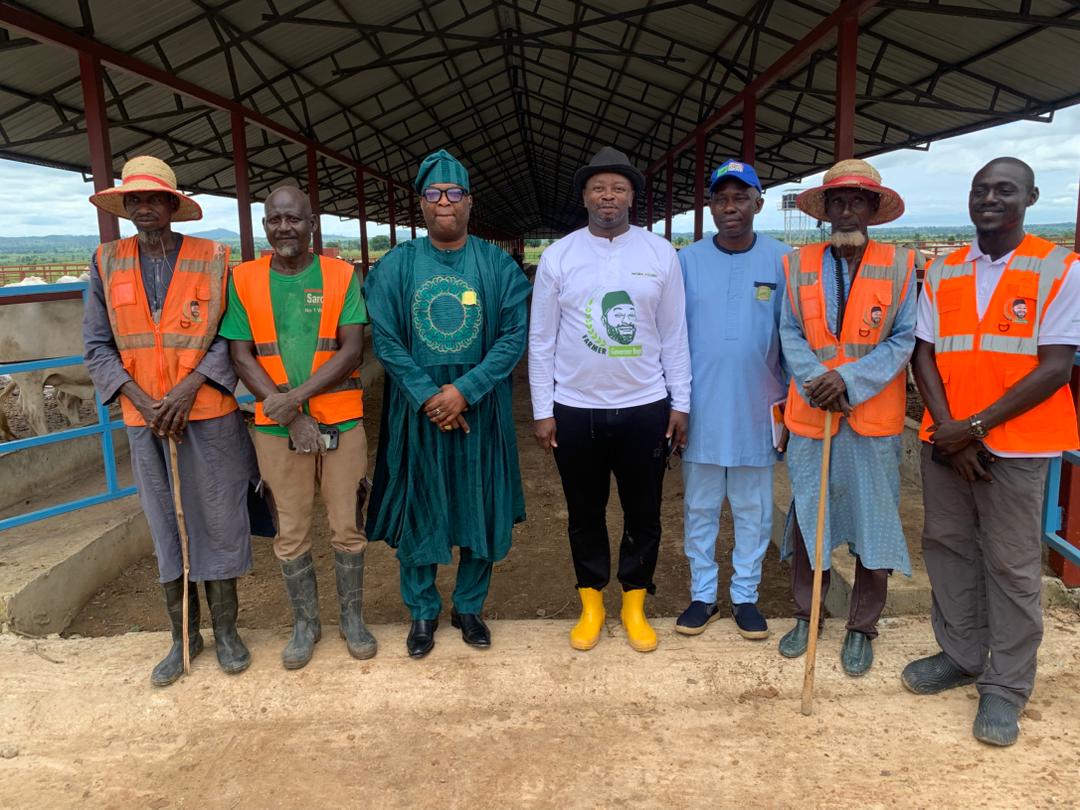
In a significant move towards transforming Nigeria’s agricultural landscape and expanding opportunities within the nation’s agribusiness value chain, the Chairman/GCEO of Adron Group, Sir Aare Adetola Emmanuelking, paid a strategic visit to the Niger Foods Breeding and Feedlot Center to explore a landmark agricultural partnership.
Also read: Adron Group Spotlights Affordable Property at ESG Expo
The high-level engagement between Adron Group and the Niger Foods Breeding and Feedlot Center focused on unlocking vast opportunities in the livestock industry and exploring the establishment of specialised Adron Farm Estates across Niger State, with the Center positioned to play a strategic facilitation role in the proposed collaboration.
Adron Homes and Properties, widely recognised as one of Nigeria’s foremost real estate development companies, has built a strong reputation for delivering secure, affordable and premium housing developments across the country.
Through this proposed initiative, the Group is set to extend its proven expertise in structured estate development into the agricultural sector.
The proposed Adron Farm Estates are envisioned as purpose-built agricultural communities, providing structured, secure and infrastructure-driven land layouts designed to support commercial farming, livestock production and agro-processing.
During a tour of the Niger Foods Breeding and Feedlot Center, discussions between the leadership of Adron Group and the Center highlighted the critical role of modern infrastructure and structured development in addressing the challenges of Nigeria’s fragmented agricultural market system.
The proposed collaboration seeks to combine Adron Group’s extensive experience in land development and infrastructure with the agricultural expertise, livestock production capacity and market development experience of the Niger Foods Breeding and Feedlot Center, with the objective of creating a new and sustainable model for agricultural development.
Beyond enhancing food production and unlocking new opportunities in livestock and agribusiness, the initiative is expected to stimulate rural development, create employment opportunities, attract investment and strengthen the agricultural value chain across Niger State.
The collaboration between Adron Group and the Niger Foods Breeding and Feedlot Center also holds the potential to position Niger State as a major hub for integrated agricultural and real estate development, while demonstrating how strategic partnerships between the real estate and agricultural sectors can unlock new possibilities for economic growth and national development.
Also read: Adron Group Spotlights Affordable Property at ESG Expo
As discussions between both organisations progress, the proposed partnership represents another bold step by Adron Group towards exploring innovative development models that respond to emerging opportunities, create sustainable communities and contribute meaningfully to Nigeria’s economic transformation.


-
Politics3 years ago
13 Ondo Assembly Members Disown Endorsement of Aiyedatiwa
-
Politics3 years ago
APC Group, Ondo Govt, Quarrel Over Money for Endorsement
-

 Trending News5 years ago
Stop unsavoury, inciting statements – DSS warns
-

 Others5 years ago
Adron Homes Celebrates 10 Years Of Housing Excellence
-

 Humanity5 years ago
President Buhari Commiserates With Ambassador Maureen Tamuno Over The Loss Of Her Father
-

 Others7 years ago
EX- CUSTOMS BOSS, IBRAHIM MERA’S DWINDLING FAME
-

 Business2 years ago
Bigi Carbonated Soft Drinks Treats 40 Consumers to an Epic Easter Movie Hangout
-

 Business2 years ago
Wema Bank Shines at Global SME Finance Forum Conference Awards 2024 …Awarded: • SME Financier of the Year (Africa) • Platinum Award for Best Financier for Women Entrepreneurs (Africa)