
Politics
Bauchi APC in Crisis: How a Governorship Primary Became a Political Powder Keg

By Adebayo Adeoye

All is clearly not well within the ranks of the All Progressives Congress in Bauchi State. What should have been a defining moment for party unity and strategic positioning ahead of the 2027 elections has instead deepened mistrust, widened internal divisions and exposed dangerous cracks within the party. For an opposition party still struggling to regain political momentum in one of Nigeria’s most competitive states, the timing could hardly be worse. Rather than serving as a launchpad for renewed ambition, the governorship primary has become a stark reflection of the APC’s internal dysfunction — one that could shape its political fortunes long before voters head to the polls.
The so called Last Friday’s governorship primary, which produced former Governor Mohammed Abubakar as candidate, was expected to rally party faithful around a credible challenger for 2027. Instead, it has triggered widespread controversy and bitter reactions across the party. What ought to have strengthened internal cohesion has, in many quarters, been condemned as deeply flawed, opaque and lacking the transparency required to inspire confidence among party members. Allegations of backroom deals, imposed outcomes and the sidelining of longstanding stakeholders have rapidly evolved from whispers into open accusations the party leadership can no longer ignore. The resulting credibility crisis is not merely reputational; it strikes at the institutional foundations necessary for any serious electoral campaign.
For many observers and loyal party members, the exercise represented more than a routine internal contest. It was a test of the APC’s democratic credentials and its readiness to reposition itself after years of electoral setbacks in Bauchi. The party had a rare opportunity to demonstrate discipline, inclusiveness and a genuine commitment to internal democracy. It had the chance to show voters that it had learned from past mistakes and was prepared to offer a coherent alternative to the ruling Peoples Democratic Party. Instead, the primary has left many supporters frustrated, alienated and uncertain about the party’s direction. What should have united the APC has instead pushed it closer to fragmentation.

Concerns continue to grow over what critics describe as the complete absence of participatory democracy in favour of a forced consensus process. These concerns were reinforced by comments attributed to the endorsed candidate, Mohammed Abubakar, and by the controversial declaration of results announced by retired AIG John Abang, which many party stakeholders insist reflected a predetermined outcome rather than a credible electoral exercise.
The grievances extend far beyond the immediate contestants and their campaign teams. Ward officials, delegates and grassroots mobilisers — the very backbone of electoral politics in Nigeria — feel sidelined and betrayed after investing time, loyalty and resources into a process they believe disregarded their voices. These are the individuals who organise communities, mobilise voters and translate party messaging into electoral support. When such actors lose faith in the process, the consequences are rarely passive. In closely contested political environments like Bauchi, disillusionment at the grassroots can prove decisive.
The broader political context makes the crisis even more consequential. Bauchi has long been a battleground state where power has alternated between the APC and the PDP. Governor Bala Mohammed has significantly consolidated the PDP’s political networks and influence across the state. Against that backdrop, the APC’s most realistic path to electoral competitiveness in 2027 depended on presenting a united front, a credible candidate and a compelling alternative vision. The governorship primary was therefore not just an internal exercise; it was a strategic moment capable of defining the party’s electoral future. Instead, it has handed the ruling party an early political advantage.
More troubling still is the growing fear that unresolved grievances could trigger defections, weaken party cohesion and embolden rival political forces ahead of 2027. Nigerian political history repeatedly shows that opposition parties rarely succeed when consumed by internal divisions and leadership disputes. In many cases, electoral defeats stem less from the popularity of opponents than from unresolved internal crises allowed to fester unchecked. Bauchi itself has witnessed this pattern before, and the APC now risks repeating it.
Indeed, the party faces one of its most consequential internal tests in recent years. Influential figures across the state are reportedly disenchanted with both the outcome of the primary and the manner in which it was conducted. Quiet consultations outside official party structures have already begun — often an early sign of possible realignments. In several local governments, ward executives are said to be demoralised and uncertain about committing themselves to a process they no longer trust. If left unresolved, the fallout could cripple grassroots mobilisation, weaken fundraising efforts and push influential stakeholders toward strategic defections, political abstention or alternative alliances.
For a party serious about reclaiming political relevance in Bauchi, unity cannot remain a slogan recited at press conferences while the conditions necessary for unity are undermined in practice. Reconciliation, dialogue and genuine inclusion must now become urgent priorities. That requires more than symbolic appeals for calm. It demands credible engagement with aggrieved aspirants, delegates and grassroots structures. It requires transparent mechanisms for addressing grievances and accountability for actions that have left the party more divided than before the primary.
The 2027 election is approaching quickly, and time is not on the APC’s side. The window for reconciliation and political recovery remains open, but not indefinitely. The party must now make a clear choice: unity with all its difficult compromises, or division with all its predictable consequences.


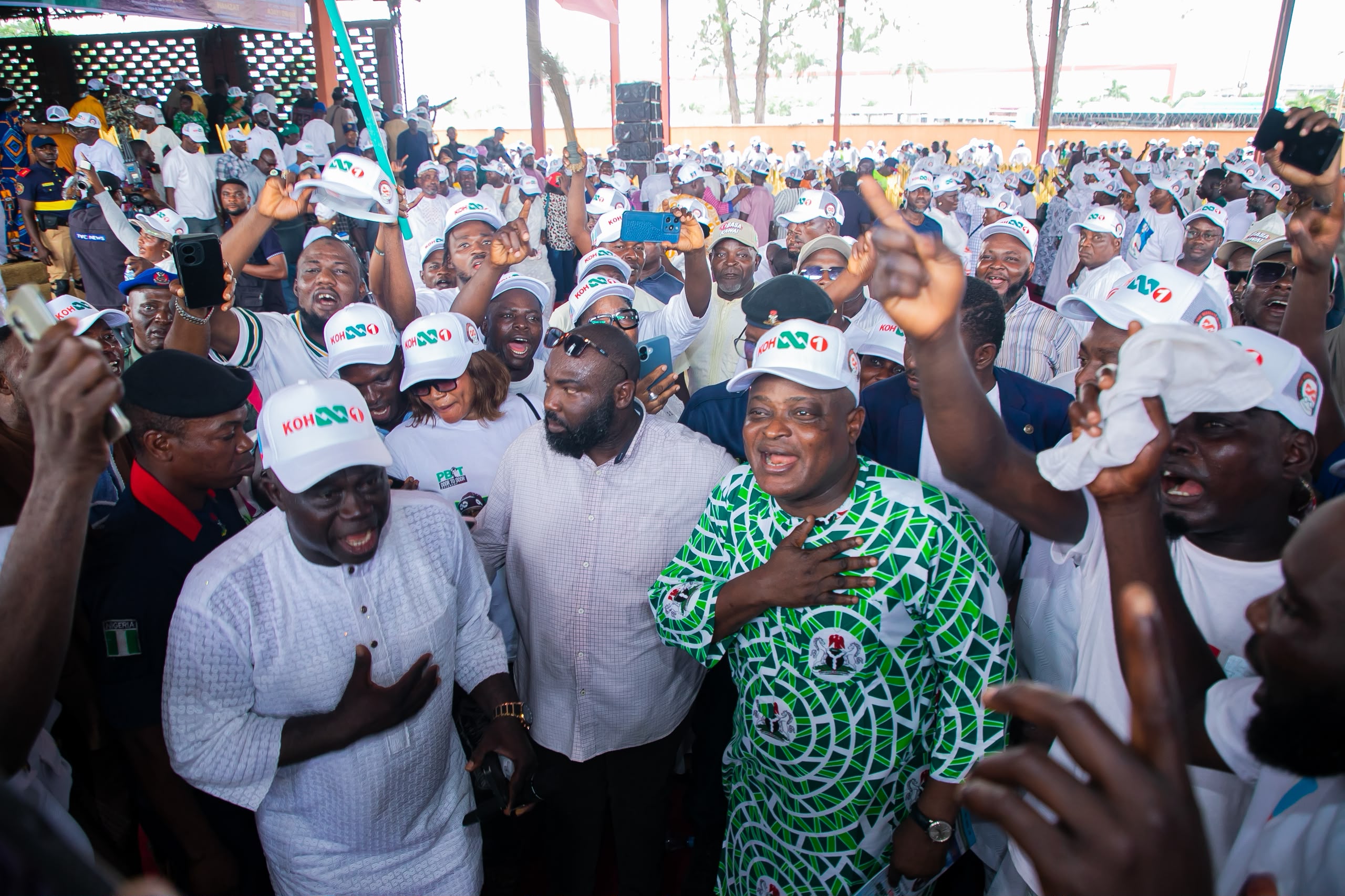
Speaker of the Lagos State House of Assembly, Rt. Hon. Mudashiru Obasa, has called on Nigerians to fully mobilise behind President Bola Ahmed Tinubu and Dr Obafemi Hamzat as The Mandate Movement (TMM) formally launched its solidarity campaign for the PBAT-KOH ticket in the 2027 general elections.
Speaking at the Blue Roof, LTV 8, Agidingbi, Ikeja, where stakeholders, members, and well-wishers gathered under the theme “Let’s Rally Round Our President and Our Governor for Continuity – Together for a Greater Nigeria,” Obasa said that all hands must be on deck to ensure success at the polls.
He framed the 2027 contest as a defining moment for the progressive movement and charged members and the wider citizenry to treat voter mobilisation as a civic duty.
“We must go into the elections as a united front. The gains we have recorded under President Bola Ahmed Tinubu and the solid foundation laid in Lagos under the progressive family must not be allowed to slip,” he said.
Speaker Obasa, the Agege Federal Constituency candidate of the All Progressives Congress (APC) in the national assembly election, stressed that disciplined grassroots organisation and a united front for the PBAT-KOH project remain the surest route to a greater Nigeria, urging every supporter present to carry the message of continuity into their communities.
He, however, highlighted mobilisation as the real work before an election. Thus, he said, “Do not wait for election day. Start today. Speak to your families, your markets, your mosques, your churches and your offices. Let every eligible voter in your circle know that the future of a greater Nigeria rests on continuity under President Bola Ahmed Tinubu and Dr Obafemi Hamzat.
“I implore every one of us to go all out. Mobilise your neighbours, your wards, your communities and come out on election days. The continuity of PBAT and KOH is the continuity of development and prosperity for our people. Let us rally round them without reservation. The Mandate Movement is ready. Are you?”
The enthusiastic crowd of party members, stakeholders, loyalists, and well-wishers chorused a resounding ‘Yes.’
The Mandate Movement, a grassroots, stakeholder-driven organisation dedicated to the progressive ideals of continuity, good governance, and national development, used the launch to position itself as a structured platform for sustained support for President Tinubu and Dr Hamzat.

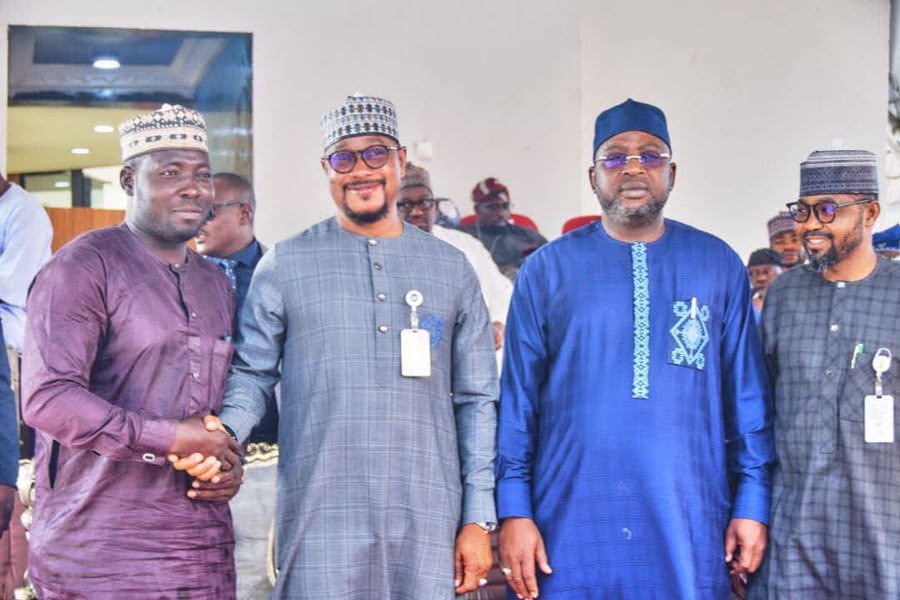
Tsafe stakeholders have praised Zamfara Governor Dauda Lawal for road construction, infrastructure projects and his commitment to community welfare
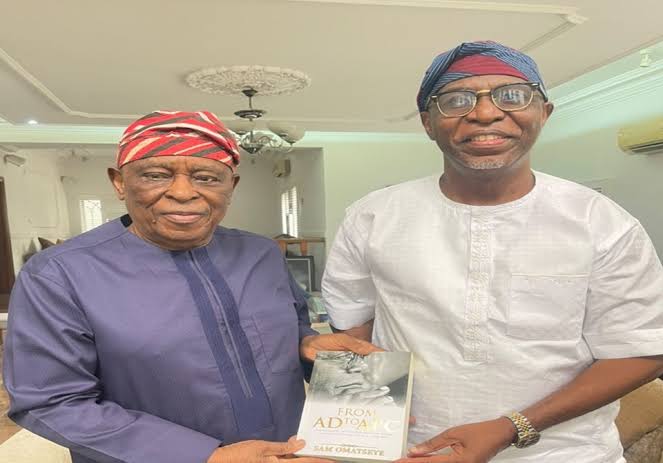
Louis Odion reviews Omatseye’s From AD to APC, highlighting revelations about Nigeria’s political history, Tinubu’s strategies and areas needing correction
-
Politics3 years ago
13 Ondo Assembly Members Disown Endorsement of Aiyedatiwa
-
Politics3 years ago
APC Group, Ondo Govt, Quarrel Over Money for Endorsement
-

 Trending News6 years ago
Stop unsavoury, inciting statements – DSS warns
-

 Others5 years ago
Adron Homes Celebrates 10 Years Of Housing Excellence
-

 Humanity5 years ago
President Buhari Commiserates With Ambassador Maureen Tamuno Over The Loss Of Her Father
-

 Others7 years ago
EX- CUSTOMS BOSS, IBRAHIM MERA’S DWINDLING FAME
-

 Business3 years ago
Bigi Carbonated Soft Drinks Treats 40 Consumers to an Epic Easter Movie Hangout
-

 Business2 years ago
Wema Bank Shines at Global SME Finance Forum Conference Awards 2024 …Awarded: • SME Financier of the Year (Africa) • Platinum Award for Best Financier for Women Entrepreneurs (Africa)