
Opinion
USA versus Iran: Two of a kind, six and half a dozen?


By Bola Bolawole

Bola Bolawole examines the US–Iran conflict, arguing that global power politics often override morality and international law
Leo Tolstoy, Russian writer and thinker (1828 -1910) and author of “A Confession”, was famously quoted as saying that “Wrong does not cease to be wrong because the majority share in it.” In like manner, wrong does not cease to be wrong because the strong says it is not; neither does right cease to be right because the weak lacks the capacity to enforce it!
The debate between politics and morality which I first came across in my Philosophy and Political Theory classes in the university is as old as humanity itself.
Are they two parallel lines that never meet? Is there any truth in the saying that politics is a dirty game and those who cannot stand the heat should not venture near the fire-place? But as some thinkers have also posited, is there a place for morality in politics; nay, in all human endeavours? Should good morals, as some have described it, be the underpinning of all human endeavours?
Also read: PDP Urges Members to Prioritise Party Ahead of 2027
In his advice to the prince, Niccolo Machiavelli, the Italian defender of political machinations, posits that the end justifies the means. In other words, once you achieve your goal or end, how you do so – fair or foul – becomes justified! But should morality define this end or goal in the first place?
Carl von Clausewitz, the Prussian military strategist, describes war as politics continued by other means. That is to say, when diplomacy or peaceful means fails, nations or men resort to war to achieve the same goals that peaceful means had failed to deliver. Hard power is military prowess while soft power refers to diplomacy, influence and economic capacity.
Power relations and national interest being the pivots on which relations between nations revolve in the international political system, it has been said that the strong will always have their way while the weak will suffer their fate.
Hence, weak nations struggle to become strong (e.g. Iran’s determination to join the elite nuclear-nation club) or form alliances with the strong (e.g. NATO, BRICS) to protect their interests. Conversely, strong nations enforce their will, riding roughshod over international law and morality.
“Power corrupts, absolute power corrupts absolutely”, posits Lord Acton. Nothing demonstrates this better than our unipolar world where the United States of America imposes its will while the best anyone else can do is simply whimper!
“Make America Great Again” – MAGA – is the rallying cry of US President Donald Trump. The one way he seeks to achieve this is on the back of other countries and peoples. And what does it matter! The mantra is, “My country, right or wrong!”, as the United States Navy Officer, Stephen Decatur, once posited!
The consequence, however, is the realignment of forces, which threatens to re-shape the international political system more profoundly than any that we have witnessed since the end of the Thirty Years’ War in Europe and the resultant Treaty of Westphalia of 1648.
Nations, as posited by former British Prime Minister Lord Palmerson, have no permanent friends or enemies but permanent interests. When old or long-standing allies act inimically against those interests, what next?
The United States will be well advised to consult its 1776 Declaration of Independence! Whenever anyone – friend or foe – acts destructively of another’s core interests, it is “To your tents, O Israel”!
In a speech on March 8, 1983, the then US President Ronald Reagan referred to the Soviet Union as an “evil empire.” That empire collapsed in 1991, leaving only its rump, Russia. In his 2002 State of the Union address, US President George W. Bush also described Iran, Iraq and North Korea as the “axis of evil.” Today, however, the shoe, many will say, appears to be on the other foot! We shall soon come to that!
Strong nations usually conceal their real reasons for maltreating weaker nations. My hunch is because, whether or not this is admitted openly, they understand that there is a place for morals in behaviour, even on the international scene.
Now, compare the reasons given by President Trump for the rendition of the Venezuelan President Nicolas Maduro (for drug trafficking) and the bombardment of Iran (to destroy its nuclear weapons programme) with those given by a prominent member of Trump’s Republican Party:
“Senator Lindsey Graham has described the ongoing conflict in the Middle East as ‘a good investment.’
“The US will control almost a third of the world’s oil and reap record profits if it succeeds in toppling the Iranian government, hawkish Republican Senator Lindsey Graham (has) told Fox News… Graham made his comments as global oil prices surged past $100 per barrel, a rise that President Donald Trump dismissed as ‘a very small price to pay’ for the US-Israeli war against Iran, which was launched on February 28.
“Graham described the cost of the attacks on Iran as the ‘best money ever spent’, and argued that the war was meant to prevent the country from developing nuclear weapons – something Iran has long denied, insisting that its nuclear program is peaceful.
“‘When this regime goes down, we’re going to have a new Middle East, we are going to make a ton of money. Nobody will threaten the Strait of Hormuz again’, Graham said. He added that the US would install a ‘friendly’ government in Tehran.
“’Venezuela and Iran have 31% of the world’s oil reserves. We’re going to have a partnership with 31% of the known reserves. This is China’s nightmare. This is a good investment’, Graham said.”
So, war becomes a legitimate weapon that serves the United States’ economic interests. Loss of life becomes collateral damage. Dislocation of the world’s economy and misery brought upon the innocent worldwide becomes “a very small price to pay!”
But whether they act immorally and illegally or not, nations still try to justify their actions; hence, the United States’ seat of power, the White House, has reportedly released a long list of atrocities committed by Iran as sponsors of terrorism and Islamic fundamentalism all over the world.
It is hard to defend Iran. Its Shia Islamic fundamentalism tilts towards violent Islamic propagation all over the world. Apart from its eternal foe, Israel, moderate Islamic states are also repulsive to Iran’s Shittes. But in the die-hard commitment to the propagation of Islam, Iran is not alone.
All Islamic states vote a percentage of their resources to propagate Islam all over the world. And most times, radical, violent means are not exempted.
On the other hand, the internet also has, perhaps, a longer list of depositions, assassinations and attempted assassinations of world leaders and notable figures by the United States. Examples: Mohammad Mosaddegh, Iran (1953), Jacob Arbenz, Guatemala (1954), Salvador Allende, Chile (1973), Saddam Hussein, Iraq (2003), Manuel Noriega, Panama (1989); not forgetting Patrice Lumumba, the Congo, (1961), Ngo Dinh Diem, Vietnam (1963), Rafael Trujillo, the Dominican Republic (1961). Not to also forget Grenada (1983), Afghanistan (2001), Prime Minister Maurice Bishop (2006).
The list is endless! What of Osama bin Laden (2011), Muammar Gaddafi (2011) and the hundreds of assassination attempts targeted at the Cuban leader, Fidel Castro!
So, this can as well be a case of the pot calling the kettle black. The United States of America, the Jewish State of Israel, and radical Islamic nations and groups all over the world are the troublers of our peace.
The nuclear-power nations that are insistent on Iran not acquiring nuclear weapons want to keep it perpetually subjugated.
A nuclear-armed Iran will change the power equation in the Middle East. Iran that is insistent on acquiring the nukes wants to liberate itself, stand on equal footing with Israel and stop being the whipping boy in its never-ending conflicts with Israel and the West.
Iran has paid a huge price in its resolve to stand up to Israel and the United States. Will it say “Enough is now enough” and back down? Conversely, will it forge ahead until victory is achieved or the Iranian nation is completely annihilated? Time will tell!
FEEDBACK
On FCCPC and air travel for the poor
Electricity, water, good roads, etc. are not for the poor! What is for the poor in this country? We are gullible, covetous, and have been brainwashed! Poverty remains the major cause of all this nonsense! Our traditional religion remains the best! The Chinese, Japanese, Indians, Brazilians are excelling in the world because they have refused to be brainwashed by the Roman Catholics and Arabs! – Prince Samuel Ade-Akanbi.
Air travel was for the poor in the past. Without rich parents but armed with the Ondo State bursary award under the Adekunle Ajasin government in Ondo state, I first traveled by plane to Kano.
Also read: Iran Allows Women to Ride Motorcycles After Years
I was in the second year of a three-year Mass Communication degree program at the University of Lagos. That was in 1981. I was 22 years old.
Upon graduation, and in the course of fulfilling my NYSC, I again took a Nigerian Airways flight to Enugu. In those days, you did not need to be rich to enjoy traveling by air.
While phones were for the rich then, air travel was not beyond the reach of the poor. I think the narrative between phones and air travel has flipped in Nigeria.
Telephone is now for the poor while air travel is strictly the preserve of the rich! – Dr. Wole Agunbiade.
* Former editor of PUNCH newspapers, Chairman of its Editorial Board and Deputy Editor-in-chief, BOLAWOLE was also the Managing Director/Editor-in-chief of The Westerner news magazine.
He writes the ON THE LORD’S DAY column in the Sunday Tribune and TREASURES column in New Telegraph newspaper on Wednesdays. He is also a public affairs analyst on radio and television.


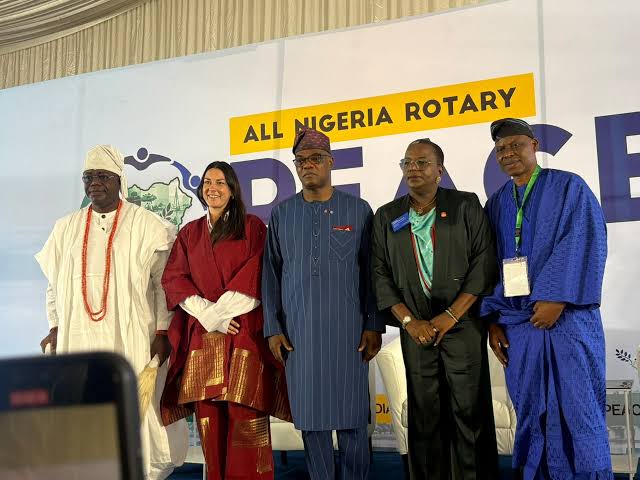
Distinguished leaders of government, members of the diplomatic community, representatives of security and law-enforcement agencies, traditional and religious leaders, distinguished guests, fellow Rotary members, ladies and gentlemen:
It is an honour to welcome you to the “All Nigeria Rotary Peace Summit.”
The question before us is how to come together, work toward a shared national future, and achieve true and lasting peace.
Nigeria has enormous potential. We have contributed to peace and stability across Africa, including through our work with the Economic Community of West African States and United Nations peacekeeping and Peace Support operations.
Our work in Liberia and other parts of Africa shows that we have the experience and ability to help prevent and manage conflict beyond our borders.
Now it is time to turn those energies inward — to bring our commitment to building peace among our neighbors and the world back home.
But we cannot impose peace. We must nurture it from the very roots of our society so it may grow into a great tree that will feed and shelter all of us under its protective embrace.
As a member of Rotary, when I consider this idea, I look to the philosophy of Positive Peace.
Peace, through this lens, is so much more than the absence of violence. To achieve true and lasting peace, we must consider the attitudes, institutions, and structures that create and sustain peaceful societies.
Here in Nigeria, meaningful peace cannot rely on our security forces and government institutions alone. It requires every level of society to come together for the betterment of all.
To grow Positive Peace from the ground up, Rotary starts from the very foundation of life, as we have done here.
In 2022, Rotary began a program called, “Together for Healthy Families in Nigeria.”
Members of Rotary here in Nigeria and as far away as Germany partnered with federal and state health ministries to make giving birth safer for both mother and child.
The program has helped expectant mothers across three states and the capital receive better and more frequent prenatal care.
Community health workers made nearly 60,000 visits to homes of expectant mothers and spoke with them and their families. We supplied 158 health facilities with contraceptives, medicine, and equipment.
We have already seen positive outcomes. Maternal deaths were reduced by 77%, and newborn deaths were reduced by 45% at supported facilities.
There is more work to do, but we are making progress. This is one way we plant the seeds of peace in Nigeria and around the world — we listen to the community, work with people so they can make their own lives better, and we stay committed to our goals.
With each child born safely to a healthy mother, we ease the burden carried by the Federal Ministry of Health and Social Welfare. We give families a greater sense of safety and security.
This is the beginning of Positive Peace. But members of Rotary do not stop once the seeds of peace are planted.
Since 2020, Nigeria has been free of the deadly grip of the wild poliovirus, which paralyzed and sometimes killed children when their lives had barely begun. And we continue to work with our friends at the World Health Organization and others to keep it that way and address the more recent outbreaks of variant poliovirus.
Rotary also builds peace directly. Members of Rotary clubs across Nigeria devote themselves to building peace every day.
And the year after Nigeria was declared wild polio-free, Rotary worked with Makerere University in Uganda to open a Peace Center, where students — called Peace Fellows — can learn how to build lasting peace both here in Nigeria and across Africa.
Over the years, more than 75 Rotary Peace Fellows have come from Nigeria. Some of our Peace Fellows are even here with us today.
I tell you this not to advertise Rotary (although we can always use new members). I tell you this because I want you to know that Rotary is already a quiet partner in peacebuilding — not only around the world — but here in our shared home.
As members of Rotary, we are not soldiers, ambassadors, or diplomats. We bring people together to find common purpose through service to others. We are here for Nigeria, and we are here to stay.
This year, I have called on every member of Rotary to Create Lasting Impact, and today, my brothers and sisters of Nigeria, I ask the same of every one of us.
I ask us to look at every level of society in Nigeria and consider how we can make all our lives better — not only today, but far into the future of this great nation. We may not speak the same language, worship the same way, or live the same way, but our nation’s future depends on all of us working together.
This summit is an opportunity to turn our shared commitment to peace into practical action — to take mere words and transform them into a bright future for us and all our children.
To my dear friends and family of Rotary here today, I challenge you to make peacebuilding in Nigeria our legacy of lasting impact.
As I have said to the Rotary world time and time again, we must consider how everything we do contributes to peace and pursue that peace purposefully and deliberately.
Rotary can help build confidence between institutions and communities, strengthen public trust, and ease the burden of everyday life that makes peacebuilding that much harder … but we must do so with purpose.
And before we can Create Lasting Impact in Nigeria, we must first have the courage to change ourselves, whether we are members of Rotary or not.
We cannot continue to do what we have always done and expect our great tree of peace to magically sprout from the ground. We must nurture our country and ourselves with all our being.
Give yourselves permission to be changed by what you see and hear at this summit.
That is how lasting impact is achieved — through people who are willing to change, institutions that are prepared to work for everyone, and communities that have the capacity to sustain progress.
And once we allow ourselves to change, we open ourselves to a new future — a future where the circumstances of someone’s birth do not determine their access to justice, opportunity, or dignity.
A future where differences are respected, where violence is rejected, and where we all come together, not as different groups in competition, but as Nigerians in harmony.
As we begin this summit, let us commit to more than resolutions and declarations. Let us commit to stability through change.
Remember that our true measure of success is not the words we share among ourselves today, but the impact of our actions that lasts generation after generation.
And if our commitment to peace is true — if our capacity for change is enough — our children, and their children after them, will enjoy the fruits of our labor under our great tree of peace — protected, safe, and free.
Thank you.
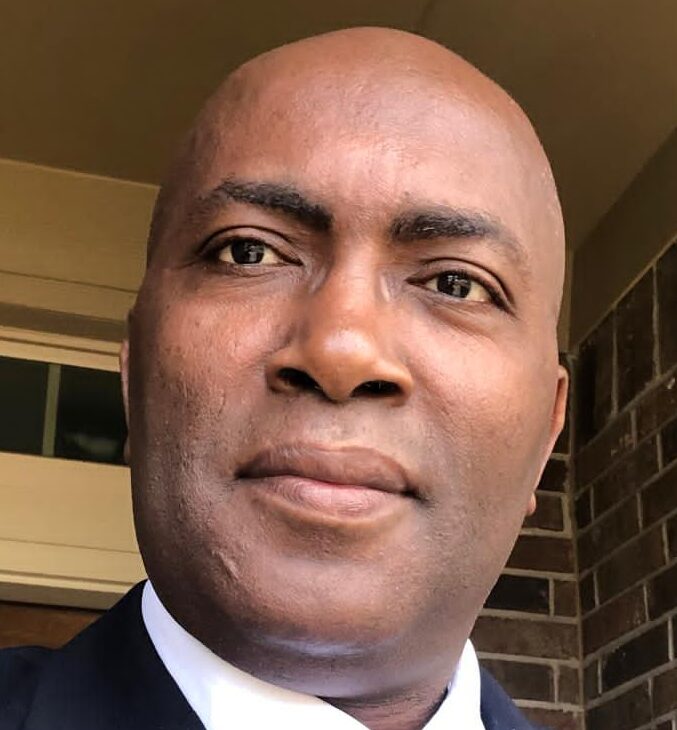
Nigeria’s democratic development depends not only on credible elections but also on responsible journalism and an informed electorate. In the view of Nosa Osaikhuiwu, sections of the Nigerian media and political commentary class have fallen short of this responsibility, particularly in their coverage and interpretation of the 2023 presidential election.
Writing from Houston, Texas, Osaikhuiwu argues that rather than critically examining the political realities behind the outcome, some media platforms amplified unsubstantiated allegations of electoral fraud by defeated candidates without sufficiently interrogating the evidence. This, he says, has contributed to public distrust and weakened confidence in critical democratic institutions, particularly the Independent National Electoral Commission (INEC) and the judiciary.
He highlights a key principle of electoral politics that he believes has been largely overlooked: when opposition forces divide their strength among competing candidates, they can strengthen the position of an incumbent under a winner-takes-all system. He cites examples from the United States, including Ross Perot’s impact in 1992 and Ralph Nader’s role in 2000.
Applying the same principle to Nigeria in 2023, Osaikhuiwu notes that Peter Obi and Atiku Abubakar contested separately against President Bola Tinubu. Although their combined votes exceeded Tinubu’s total, elections are decided by the votes secured by individual candidates under established rules, not by post-election addition of rivals’ tallies.
Looking ahead to 2027, he observes a similar opposition configuration emerging, with Atiku and Obi again pursuing separate ambitions. While acknowledging the economic hardships associated with Tinubu’s reforms and the administration’s political vulnerability, Osaikhuiwu stresses that public dissatisfaction does not automatically translate into an organised electoral movement capable of defeating an incumbent.
He criticises suggestions by some media personalities that the 2027 elections will be rigged even before they take place, describing such pronouncements as irresponsible. Journalists, he argues, must interrogate claims, examine evidence and educate the public rather than merely amplify the statements of political actors.
Osaikhuiwu maintains that while there may have been logistical shortcomings in 2023, these did not materially alter the final outcome, which was declared by INEC and upheld through the judicial process. Disagreement with a result, he says, is not in itself evidence of fraud.
He concludes that if the opposition genuinely seeks to defeat Tinubu in 2027, it must address its divisions and build a viable electoral coalition. Individual popularity, social media enthusiasm and public dissatisfaction cannot substitute for organisation, coalition-building and grassroots mobilisation.
“Journalism must educate, not mislead. Political commentary must analyze, not merely amplify. And democracy must be grounded in electoral reality, not political wishful thinking,” he writes.
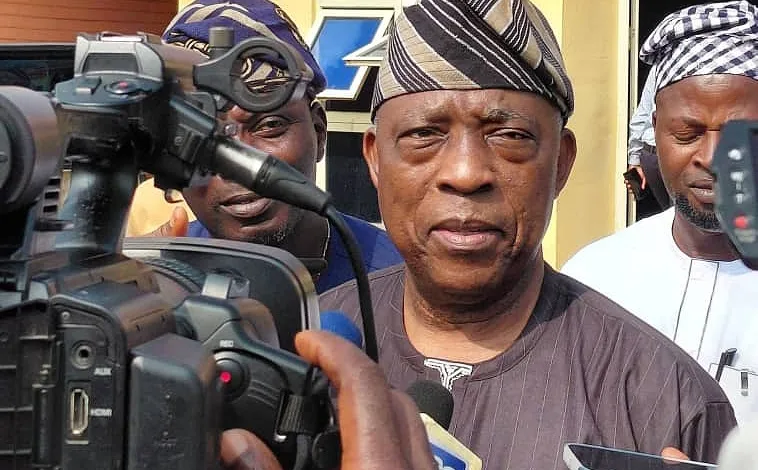
Veteran journalist and Chairman of Gaskia Media Limited, Dare Babarinsa, has called on Nigeria to sustain its informal power-rotation arrangement between the North and South, arguing that the system remains important for political stability and national unity.
Babarinsa said the presidency should return to the North in 2031 and move back to the South in 2039, maintaining that the arrangement should remain in place until Nigerians develop a more suitable alternative.
He made the position known on Monday, November 2, while delivering a public lecture at the Press Centre, Iyaganku, Ibadan, as part of activities marking the 60th anniversary of the Oyo State Council of the Nigerian Union of Journalists (NUJ).
Speaking on the theme of Nigeria’s political arrangement and the future of the media, Babarinsa acknowledged criticisms of the rotational presidency, particularly from those who believe that every qualified Nigerian should be allowed to contest for the highest political office regardless of region.
However, he argued that Nigeria’s political circumstances make power rotation a practical arrangement for maintaining stability, even if it may not always produce the most suitable candidate.
According to him, the arrangement emerged from political negotiations ahead of the return to civilian rule in 1999, following the deaths of former military Head of State, General Sani Abacha, and the presumed winner of the June 12, 1993 presidential election, Chief Moshood Abiola.
Babarinsa recalled that after Abacha’s death in 1998, General Abdulsalami Abubakar assumed leadership and introduced a transition programme aimed at ending military rule by May 29, 1999.
He said the death of Abiola, who was detained by the military government, created concerns about the political future of the Yoruba people and influenced discussions over the region that should produce Nigeria’s first civilian president after military rule.
The journalist disclosed that he was among members of the Idile Oodua resistance movement who supported the position that the South-West should produce the first president under the new democratic arrangement.
He said he was subsequently mandated by members of the group to consult the late Ooni of Ife, Oba Okunade Sijuwade, who told him that traditional rulers across the country were also holding consultations on the matter.
According to Babarinsa, the discussions contributed to the emergence of two Yoruba presidential candidates in the 1999 election: former President Olusegun Obasanjo of the Peoples Democratic Party (PDP) and Chief Olu Falae, who contested under the Alliance for Democracy and All Peoples Party coalition.
He also recalled that former Vice-President Alex Ekwueme disagreed with the arrangement, arguing that the South-East could not be bound by an agreement reached principally between political interests in the North and South-West.
Babarinsa said he agreed with Ekwueme’s interpretation that power should rotate between the North and South rather than among the six geopolitical zones.
He explained that the arrangement had continued through successive administrations, including the emergence of former President Goodluck Jonathan following the death of President Umaru Yar’Adua and the subsequent election of former President Muhammadu Buhari.
With President Bola Tinubu currently in office, Babarinsa argued that the existing arrangement should be sustained, with power returning to the North after the current administration and subsequently moving back to the South.
To support his argument, he compared Nigeria’s power-sharing arrangement with the confessional system adopted in Lebanon in 1943, under which key political offices were allocated to different religious communities to promote political balance.
He said Nigeria could learn from such arrangements, insisting that political compromises sometimes become necessary in countries with diverse ethnic, religious and regional interests.
“If we intend to keep Nigeria, then we need to make this special arrangement work until future generations are able to make a better arrangement,” he said.
Babarinsa reflects on Ibadan’s journalism legacy
Beyond the political question, Babarinsa used the lecture to examine the history of journalism in Ibadan and the contribution of the city to the development of Nigeria’s media industry.
He described Ibadan as a major centre of political and media influence, noting that its newspapers had produced some of the country’s most prominent journalists, editors and public commentators.
He recalled the establishment of the Nigerian Tribune in 1949 by Chief Obafemi Awolowo and the creation of the Sketch newspaper group in 1964 by the then Premier of the Western Region, Chief Ladoke Akintola.
He also highlighted the contributions of prominent journalists, including Felix Adenaike, Segun Osoba and Peter Ajayi, whom he described as the Three Musketeers of the Nigerian media during the Second Republic.
According to him, the trio wielded considerable influence in the industry through their leadership positions at the Tribune and Sketch newspaper groups.
Babarinsa also acknowledged the contributions of former journalists and columnists, including Alhaji Lateef Jakande, Chief Bola Ige, Chief Olabisi Onabanjo, Aare Afe Babalola and Dr Tai Solarin.
He said the history of journalism in Ibadan was closely connected to the political development of the country, recalling the debates on issues such as the International Monetary Fund loan, diarchy and rotational presidency.
The journalist urged members of the profession to preserve that tradition by ensuring that the media remained a platform for informed public debate and the promotion of ideas capable of strengthening Nigeria.
Media organisations urged to embrace digital transformation
Addressing the challenges facing the industry, Babarinsa warned that traditional media organisations must urgently adapt to the changing media environment or risk losing relevance.
He said the internet had disrupted conventional news production and distribution, creating new opportunities while also allowing unregulated online platforms to compete with established media organisations.
According to him, several traditional newspapers have established online platforms, but their digital presence has not translated into the level of revenue needed to sustain their operations.
He cited the decline of once-dominant media organisations such as the Daily Times and Sketch as examples of the changes that have reshaped the industry.
Babarinsa recalled that Sketch newspaper had a daily circulation of about 60,000 copies during the 1970s and 1980s but had since ceased publication, with its former premises converted into a shopping mall.
He also expressed concern over declining newspaper readership among young Nigerians, warning that a society with an increasingly uninformed population could struggle to appreciate and defend democracy.
The Gaskia Media chairman said media organisations must follow their audiences into the digital space and develop business models that can sustain quality journalism.
He disclosed that his organisation had also decided to strengthen its online presence through the publication of a digital magazine, beginning with an online news blog.
Journalists urged to defend democracy and uphold professional standards
Babarinsa further reminded journalists of their role in Nigeria’s democratic development, particularly during the struggle against military rule.
He said members of the Nigerian press had suffered imprisonment, exile and other forms of persecution in the fight for the restoration of democracy, with some journalists paying the ultimate price.
He maintained that journalists therefore had a responsibility to protect the democratic system and ensure that the country’s electoral processes remained credible.
With the 2027 general election approaching, he urged media professionals to play their part by providing accurate information and encouraging informed public participation.
The Independent National Electoral Commission has scheduled the presidential and National Assembly elections for January 16, 2027, while governorship and State Houses of Assembly elections are fixed for February 6, 2027.
Babarinsa said journalists must remain committed to the fundamental principles of the profession, stressing that factual accuracy should remain central to news reporting while allowing room for responsible advocacy.
He urged journalists to advocate for the national interest, rather than restrict their work to positions that may be politically convenient.
Calls for greater inclusion of young journalists and women
Looking towards the future, Babarinsa called for greater opportunities for young journalists and women in the profession, saying the industry must deliberately prepare a new generation of media leaders.
He cited the careers of prominent journalists who assumed major editorial and management positions at relatively young ages, including Peter Enahoro, Olusegun Osoba, Yemi Ogunbiyi, Yakubu Mohammed, Ray Ekpu and Adamu Ciroma.
According to him, the history of Nigerian journalism demonstrates that young professionals have consistently played important roles in driving the industry forward.
He urged established media practitioners to listen to younger colleagues, particularly members of Generation Z, and create opportunities for them to contribute to the future of the profession.
Babarinsa also called for more deliberate efforts to bring women into leadership positions, noting that the industry could no longer remain dominated by men.
He expressed optimism about the future of journalism, despite concerns over poor remuneration, declining newspaper circulation and competition from digital platforms.
The veteran journalist concluded by urging the profession to embrace change, drawing attention to the need for innovation in newspaper production, technology and audience engagement.
Quoting a principle he attributed to Professor Ladipo Adamolekun, Babarinsa said the media industry must adapt to changing realities to remain relevant.
“Adapt or Die!” he declared.
-
Politics3 years ago
13 Ondo Assembly Members Disown Endorsement of Aiyedatiwa
-
Politics3 years ago
APC Group, Ondo Govt, Quarrel Over Money for Endorsement
-

 Trending News6 years ago
Stop unsavoury, inciting statements – DSS warns
-

 Others5 years ago
Adron Homes Celebrates 10 Years Of Housing Excellence
-

 Humanity5 years ago
President Buhari Commiserates With Ambassador Maureen Tamuno Over The Loss Of Her Father
-

 Others7 years ago
EX- CUSTOMS BOSS, IBRAHIM MERA’S DWINDLING FAME
-

 Business3 years ago
Bigi Carbonated Soft Drinks Treats 40 Consumers to an Epic Easter Movie Hangout
-

 Business2 years ago
Wema Bank Shines at Global SME Finance Forum Conference Awards 2024 …Awarded: • SME Financier of the Year (Africa) • Platinum Award for Best Financier for Women Entrepreneurs (Africa)