
health
NCDC Warns Nigerians on Meningitis Amid Dry Season


NCDC alerts Nigerians on Cerebrospinal Meningitis as dry season peaks, urging vaccination, early detection, and preventive measures

Director-General of the NCDC, Jide Idris, said the agency is closely monitoring the situation, particularly in states within the African meningitis belt, where dry and dusty conditions, overcrowding, and poor ventilation significantly increase transmission risks.
Also read: NCDC reports 717 Lassa Fever cases in Nigeria
“Cases of meningitis typically rise between December and April. Early detection and prompt treatment are critical to saving lives,” Idris said, noting that the NCDC is conducting nationwide surveillance and strengthening laboratory capacity for faster confirmation of suspected cases.
Understanding the Disease
Cerebrospinal Meningitis affects the protective membranes around the brain and spinal cord and is most commonly caused by the bacterium Neisseria meningitidis.
Dr. Idris warned that bacterial meningitis can become fatal within hours if untreated but stressed that timely diagnosis and antibiotics significantly improve survival rates.
The infection spreads through respiratory droplets during close contact, especially in crowded and poorly ventilated spaces.
Recognising Symptoms
Health authorities highlighted that early detection is key.
Common symptoms include sudden high fever, severe headache, and neck stiffness, with nausea, vomiting, light sensitivity, confusion, seizures, or altered consciousness as additional warning signs.
Infants and young children may also display irritability, refusal to feed, excessive sleepiness, or a bulging soft spot on the head.
Idris cautioned that symptoms of fever and headache during the dry season should not automatically be assumed to be malaria.
High-Risk Groups and Preventive Measures
The NCDC identified children, young adults, people in crowded environments, those exposed to dry and dusty conditions, and individuals with weakened immune systems as particularly vulnerable.
Schools, universities, boarding facilities, religious centres, internally displaced persons camps, and correctional facilities were urged to maintain proper ventilation and report suspected cases immediately.
Authorities advised against self-medication or reliance on herbal remedies, encouraging anyone with symptoms to seek prompt medical care.
Vaccination and Public Health Response
Dr. Idris encouraged eligible Nigerians to receive meningitis vaccines and participate in reactive vaccination campaigns led by state health authorities.
The NCDC plans to continue monitoring disease trends, support laboratory confirmations, deploy rapid response teams, strengthen treatment capacity, and intensify public awareness initiatives.
Also read: NCDC reports 674 Lassa fever cases, 127 deaths in early 2025
“Anyone experiencing fever, neck stiffness, confusion, or rapidly worsening symptoms should seek urgent medical care. Early treatment can mean the difference between recovery and life-threatening complications,” Idris said.


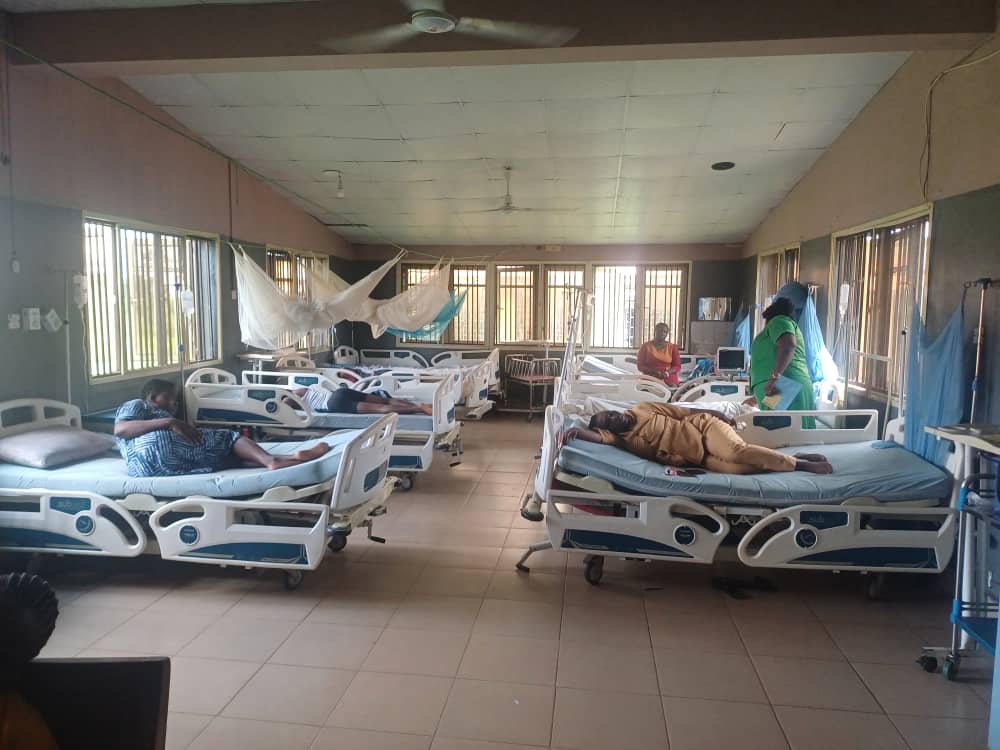
Ogun gas emissions have reportedly led to over 300 hospitalisations since April, raising concerns over school safety and the unresolved source
More than 300 students and teachers have reportedly received hospital treatment following recurring incidents involving an unusual gaseous odour in Ogun State between April and October 2026.
Also read: Regina Daniels’ Friend Ann Izuegbu Remanded in Prison
The incidents, concentrated around Ijebu-Ode and neighbouring communities, have repeatedly disrupted school activities, with students reportedly experiencing breathing difficulties, weakness, vomiting and fainting.
Although the Ogun State Government previously linked the incidents to underground geological activity and reported detecting methane in affected locations, the precise source of the recurring emissions remains unresolved.
The latest episode, reported on October 21, affected schools across Ijebu-Ode, Ijebu-Igbo and Ago-Iwoye, renewing concerns about the safety of pupils, teachers and residents.
Here is a timeline of the reported incidents and the response from authorities.
April 1: First Reported Incident
The first major incident occurred on April 1 at Our Lady of Apostles Secondary School in Epe Garage, Ijebu-Ode.
According to The PUNCH, at least 30 students and one teacher were taken to hospital after an unusual gaseous substance reportedly spread across the school shortly after morning assembly.
Some students reportedly collapsed, vomited or experienced difficulty breathing.
They were taken to the General Hospital in Ijebu-Ode for treatment.
At the time, the Commissioner for Environment, Ola Oresanya, said the substance responsible had not been conclusively identified.
Initial concerns included the possibility of fumes from a school laboratory or another nearby source.
On April 2, the state government ordered the school to close temporarily and directed security agencies to investigate.
Governor Dapo Abiodun also ordered the establishment of a situation room at the General Hospital, Ijebu-Ode, to coordinate the provision of free treatment for affected students and residents.
Reports indicated that those hospitalised were responding to treatment, with no deaths recorded during the incident.
May 15: Second Incident Affects More Than 100 People
A second major episode was reported on May 15, when more than 100 students and teachers across several schools in Ijebu-Ode were reportedly affected.
The schools included Anglican Girls Grammar School in Obalende and Our Lady of Apostles Secondary School in Epe Garage.
Witnesses described students complaining of stomach pain, weakness and breathing difficulties, with some collapsing and requiring assistance to reach medical facilities.
The growing number of affected people prompted renewed questions about the source of the emissions and whether the initial response had adequately addressed the danger.
The state government subsequently announced that air-quality monitoring equipment had detected elevated methane concentrations in parts of Ijebu-Ode.
Officials reported peak readings of approximately 13,500 parts per million in surrounding locations.
The government said the readings were below the lower explosive limit but still required environmental investigation.
However, a reading below that limit does not automatically establish that an atmosphere is safe to breathe, particularly where oxygen displacement or other hazards may be present.
Authorities also announced a multi-agency assessment involving environmental regulators, emergency responders and technical experts.
On May 17, the Commissioner for Health, Tomi Coker, said all patients admitted to the State Hospital in Ijebu-Ode following the incident had been discharged.
Coker explained that methane could displace oxygen and contribute to symptoms such as fatigue, a rapid heartbeat and breathing difficulties, depending on exposure conditions.
The government also outlined plans to strengthen emergency medical support in the area, including deploying ambulance teams and training teachers and interested parents to act as community first responders.
June 3: Third Incident Sends 69 Students to Hospital
Another episode occurred on June 3 at Our Lady of Apostles Secondary School, where students reportedly became unwell after noticing an unusual odour.
The PUNCH reported that 69 students were hospitalised following the incident.
Coker later confirmed that all 69 students had been discharged after receiving medical attention.
Most reportedly left hospital on June 3, while the remaining seven, who stayed overnight, were discharged the following day after their conditions improved.
The incident was reported as the third major occurrence in the area within approximately two months, intensifying anxiety among parents, teachers and residents.
Oresanya said government-installed gas analysers had detected methane in affected locations.
Reports identified several schools affected by or linked to the wider series of incidents, including Our Lady of the Apostles Secondary School, Anglican Girls Grammar School, Titilayo Agbaje Comprehensive High School in Imosan, Ifesowapo Comprehensive High School in Imosan and St Anthony Grammar School in the Ijebu-Imushin area.
The state government also announced plans for the temporary relocation of students from an affected school while investigations continued.
By June, officials had put forward a possible geological explanation, suggesting that underground gases could be escaping through fractures associated with geological and tectonic fault lines.
The government ruled out sabotage and gas pipeline leaks as explanations for the earlier incidents.
However, those assurances did not resolve concerns about why the emissions continued to recur.
October 21: Fresh Emissions Affect Three Communities
The latest reported episode occurred on October 21, with incidents recorded across parts of Ijebu-Ode, Ijebu-Igbo and Ago-Iwoye.
More than 100 students across several secondary schools were reportedly hospitalised after exposure to an offensive gaseous substance.
The affected schools included Anglican Girls Grammar School in Ijebu-Ode, Ijebu-Igbo Girls Grammar School and Itamerin Comprehensive High School in Ago-Iwoye, among others.
Students reportedly experienced shortness of breath, stomach discomfort and drowsiness.
Some fainted and were taken to hospitals, while others reportedly required oxygen to stabilise their condition.
Medical facilities receiving affected students included the State Hospital in Ijebu-Ode and the General Hospital in Ijebu-Igbo.
The incident also disrupted lessons, with some schools in Ago-Iwoye reportedly sending students home.
Concerns extended beyond school compounds when the chairman of Ijebu North Local Government Area reportedly detected the unusual odour at the council secretariat.
The development raised further questions about the geographical spread of the emissions and the potential risks to people outside the affected schools.
In response, the Ogun State Government said the situation was under control and that investigations were underway to determine the source and extent of the latest emissions.
Oresanya linked the episode to previous underground gas emissions reported in the Ijebu axis since April.
A team from the Nigerian Upstream Petroleum Regulatory Commission also joined the assessment.
However, reports published on October 21 did not establish a definitive cause for the latest incident.
The repeated episodes have raised questions about whether the incidents share a common source, why they continue to occur and what measures are needed to prevent further exposure.
In June, the state government attributed previous incidents to a possible natural geological process through which underground gases escape along fractures in the earth.
It also ruled out sabotage and pipeline leaks as explanations for those earlier episodes.
However, the underlying investigation had not produced a publicly confirmed, lasting explanation by the time of the latest reported incident.
TheCable reported on October 21 that the investigation initiated in June had remained incomplete as of September, citing information obtained after contacting the Commissioner for Environment.
The recurrence has therefore renewed calls for a conclusive scientific assessment, transparent communication of findings and effective protection for schools and nearby communities.
Key questions remain about whether the emissions originate from a shared underground source, what conditions trigger their appearance and how authorities can reliably detect and contain them before people are exposed.
Also read: Regina Daniels’ Friend Ann Izuegbu Remanded in Prison
Until the source and risks are established, the safety of students, teachers and residents remains a central concern.
-
Politics3 years ago
13 Ondo Assembly Members Disown Endorsement of Aiyedatiwa
-
Politics3 years ago
APC Group, Ondo Govt, Quarrel Over Money for Endorsement
-

 Trending News5 years ago
Stop unsavoury, inciting statements – DSS warns
-

 Others5 years ago
Adron Homes Celebrates 10 Years Of Housing Excellence
-

 Humanity5 years ago
President Buhari Commiserates With Ambassador Maureen Tamuno Over The Loss Of Her Father
-

 Others7 years ago
EX- CUSTOMS BOSS, IBRAHIM MERA’S DWINDLING FAME
-

 Business2 years ago
Bigi Carbonated Soft Drinks Treats 40 Consumers to an Epic Easter Movie Hangout
-

 Business2 years ago
Wema Bank Shines at Global SME Finance Forum Conference Awards 2024 …Awarded: • SME Financier of the Year (Africa) • Platinum Award for Best Financier for Women Entrepreneurs (Africa)