
Humanity
Climate Change: Delivering Objectives Of Act 2021 Without “Humongous Bureaucracy” – By Mardiyyah Omikunle


 |
ReplyForward
|


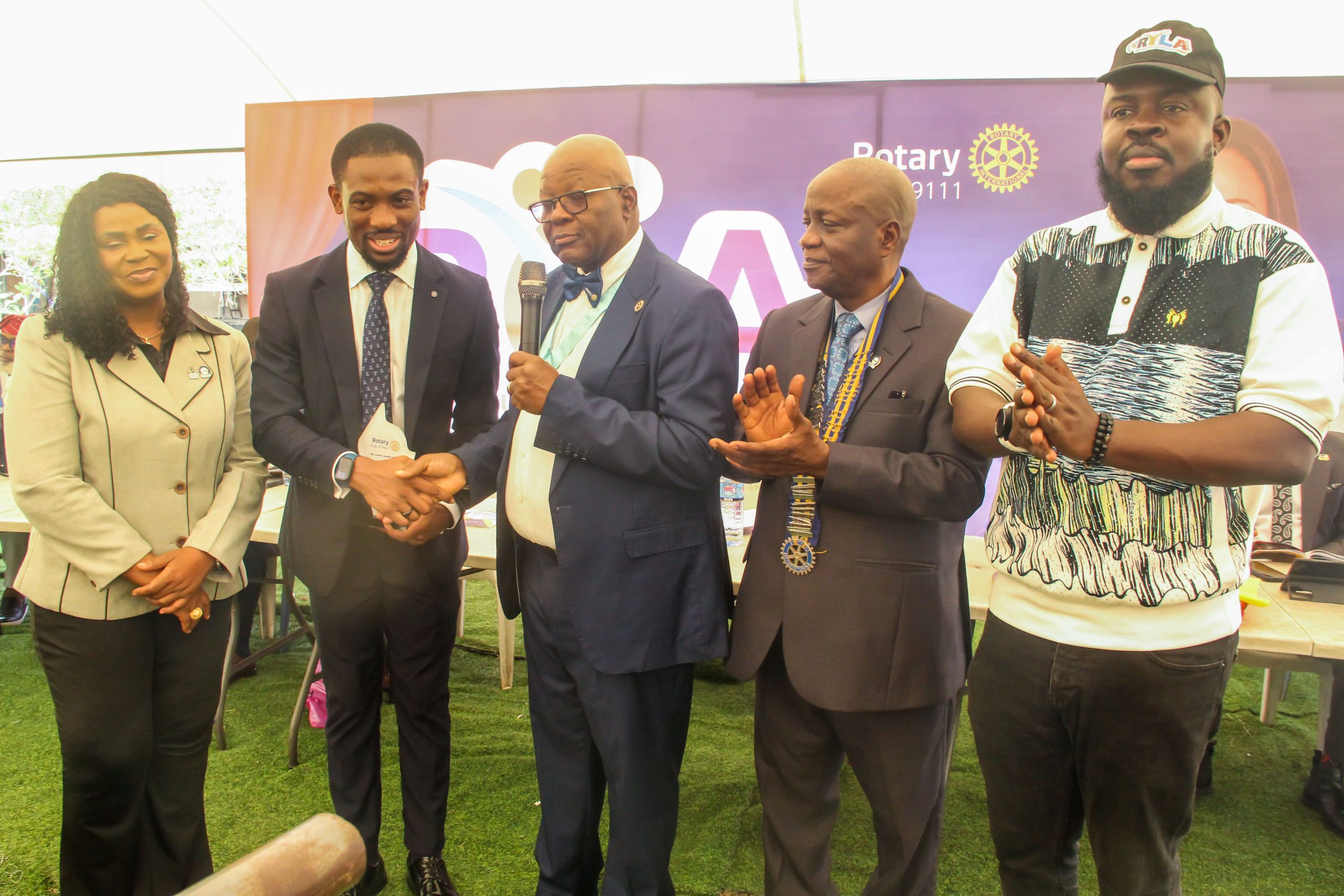
The leading club in Rotary International District 9111, Rotary Club of Ikeja, has donated N1 million to support this year’s Rotary Youth Leadership Academy, RYLA 2026.

The donation was made by the Impact President, Rotarian Kayode Osokomaiya on behalf of the club last Monday, August 3rd, 2026 during the club’s meeting at the Sea School , Apapa where the week long RYLA 2026 is taking place.
Speaking at the event as a Guest Speaker on the theme, ‘Creating Lasting Impact: Igniting Purpose Driven Leaders’, the Managing Director of Knewrow, Mr. Tomiwa Anjorin said that young people have the capacity to make as much impact as the adults.
Mr. Anjorin said: “If impact was only a conversation for adults, this event would never have been organised. The fact that we are here today is proof that you are not too young to make a difference.
“With over 50 million teenagers in Nigeria, your generation represents one of our nation’s greatest opportunities. The question is not whether you can change Nigeria, but whether you will choose to.
“Many of us have been taught to pursue success first and impact later. I believe we have the order reversed. Impact comes before success.The world’s most successful organisations, such as Google and Microsoft, became successful because they solved meaningful problems and created value for millions of people. Success is often the reward for sustained impact.
“I encourage you to shape your future through four choices: choose character over popularity, service over selfishness, growth over comfort, and responsibility over excuses. These decisions build trust, develop competence, and prepare you for lasting leadership.’’


Atan General Hospital solar grid project boosts healthcare services as Senator Gbenga Daniel delivers stable power to the Ogun facility
Humanity
Leo Stan Ekeh Foundation, Zinox, TD Africa, others donate Multi-Million Naira AI-Tech Centre to Holy Ghost College
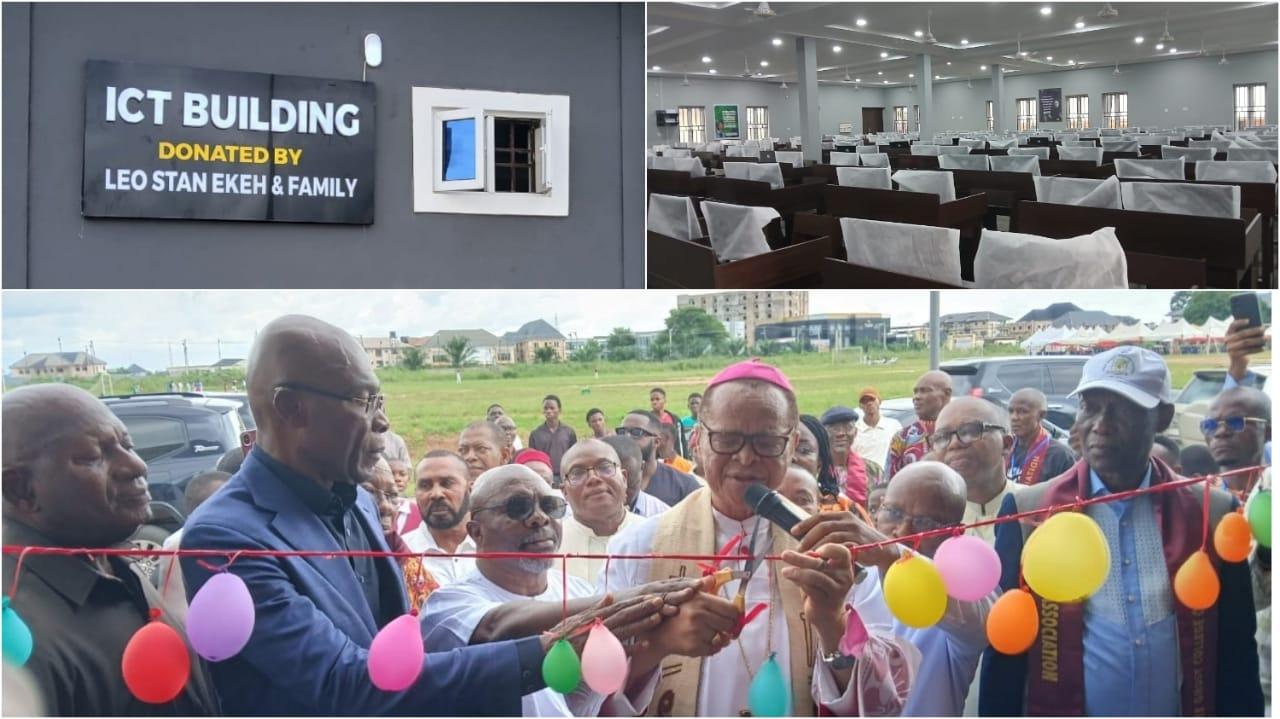
Africa’s foremost serial digital icon, Leo Stan Ekeh, last weekend donated a multi-million-Naira AI-Tech Centre to Holy Ghost College, Owerri, Imo State at a ceremony that added colour to the 77th years anniversary of the school.
The centre was built by the Leo Stan Ekeh Foundation in partnership with all the companies under the Zinox Group, namely TD Africa, Zinox Technologies, Task Systems, Konga Group, etc.
The AI -Tech centre construction supervised by Mr. Ekeh himself from block quality standard to final finishing is equipped with highly integrated All-In-One Zinox Computers, 24-hour solar-power and enabled with high speed Starlink corporate internet connectivity signed up for the college for five years. In addition to its Eco-friendly features, like the lifestyle integrated computer tables and chairs, it is fitted with two large AI-active screens for real- time online tutorials, turning the popular Catholic secondary school into one of the global smart tech colleges that will explore infinite possibilities in Africa.
Mr. Leo Stan Ekeh, an alumnus of the school, said he was inspired by the desire to turn graduates of the college into 21st Century globally-certified whizzes who can effectively compete with their mates from all over the world.
He said: “It is my prayer that this centre shall produce Nigeria’s tech driven billionaires who can defend their wealth and alter the destinies of millions of Nigerians. Few of us who are wealth creators in Nigeria are miracle kids because during our time we technically lacked everything, but God helped us to emerge as wealth creators. It is my wish that this centre shall create a tech culture for our kids and that the training on AI and certified contents which we have signed with different globally rated consultants shall make the centre a standout tech hub.
“This centre shall earn the status of Microsoft, Cisco, Oracle, Starlink certification centre very soon and a model to other colleges in the Southeastern part of Nigeria and by extension Nigeria. We are hiring a Director for the Tech Centre and few other staff to complement its leadership. We have structured trainings on finishing school, ethics, etc., including retraining the teachers on modern skills of teaching, transparent communication, and digital psychology in dealing with today’s smart kids.
R-L: Catholic Archbishop Rev. Lucius Ugorji, assisted by Mr. Cosmas Ibe, an old boy of the college to cut the tape, while Mr. Leo Stan Ekeh and Mr. Jerry Chukwueke watch in admiration. Top is the exterior and interior of the centre.
“My family and I through the Foundation and companies under the Zinox group have done similar projects including Entrepreneurial centres in over 123 Primary, Secondary, and tertiary institutions across Nigeria quietly since 1996 and when we are done with few committed projects in the next 12 months, we shall now concentrate on our 1000 tech university scholarships project. It is our way of giving back to the society and appreciating those who supported and are still supporting our companies while providing world-class tech human capital that shall drive their growth and defend the nation in future. I also hope other Nigerians can do same in educational institutions around them or their alma mater. We must consciously upgrade Nigeria by investing in tech and the youths.
“We have budgeted to do more. We shall refurbish and create an intelligent hostel with Al-amenities to celebrate wizkids in the college and encourage their mates on healthy living and competition. It will be a privilege to be accommodated in this intelligent hostel and each year, a student accommodated here shall earn a congratulatory letter from the foundation with a token gift. We need to reset the mind set of our kids to earn global citizenship if we must earn a decent future,” he told the audience which included Catholic Archbishop Lucius Ugorji, Bishop of Owerri Ecclesiastical Province, priests, principal of the college, Rev. Dr. Samuel Agu; the state commissioner for education (Primary and Secondary), Professor Bernard Ikegwuoha, old students, parents, and over 1,600 secondary school students drawn from different schools in the state.
Describing the AI-tech centre as the first in the south east, he urged the students to take full advantage of it to make a success in life, stressing that in the 21st century, ICT provides children of the poor the pathway to upset the rich. He urged the students to take advantage of the 1000 tech university scholarship instituted by his Foundation in partnership with Zinox Technologies, TD Africa, Task Systems and Konga Group for Nigerian indigent tech students in Nigerian universities and polytechnics.
The scholarship is now live on konga.com, just click the 1000 tech scholarship banner and get full information regarding the scholarship.
Ekeh promised to ensure that those manning the centre are properly skilled and remunerated. He listed no fewer than seven secondary schools across the country that will benefit from infrastructural development including building residential apartments for some teachers and knowledge workers, and mini-ICT centers to create tech culture in these institutions within the next one year.
Ekeh who shared with the audience his life’s experience, also narrated how ICT has lifted and raised global billionaires like Elon Musk, Bill Gates, among others. He told the students that they can be the next generation game-changers and billionaires if they get serious with ICT, adding that in life
“Many are called but few are chosen. You can become the chosen ones if you acquire the right ICT skills with structured mentality which is an opportunity that the tech-center offers.” He added.
-
Politics3 years ago
13 Ondo Assembly Members Disown Endorsement of Aiyedatiwa
-
Politics3 years ago
APC Group, Ondo Govt, Quarrel Over Money for Endorsement
-

 Trending News5 years ago
Stop unsavoury, inciting statements – DSS warns
-

 Others5 years ago
Adron Homes Celebrates 10 Years Of Housing Excellence
-

 Humanity5 years ago
President Buhari Commiserates With Ambassador Maureen Tamuno Over The Loss Of Her Father
-

 Others7 years ago
EX- CUSTOMS BOSS, IBRAHIM MERA’S DWINDLING FAME
-

 Business3 years ago
Bigi Carbonated Soft Drinks Treats 40 Consumers to an Epic Easter Movie Hangout
-

 Business2 years ago
Wema Bank Shines at Global SME Finance Forum Conference Awards 2024 …Awarded: • SME Financier of the Year (Africa) • Platinum Award for Best Financier for Women Entrepreneurs (Africa)