
News
Gbenga Daniel Urges Stronger Security at Freedom Online 7th Annual Lecture

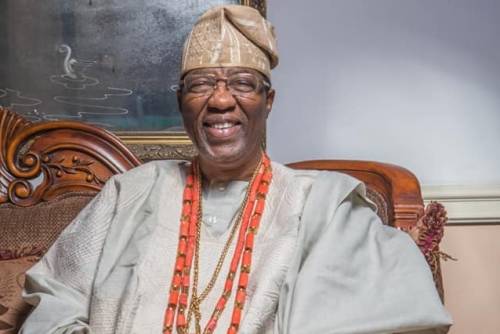
Gbenga Daniel says Nigeria’s economic future depends on security, jobs and infrastructure at Freedom Online’s 7th Annual Lecture in Lagos
Senator Otunba Engr Gbenga Daniel, former Ogun State governor and Senator representing Ogun East, has called for stronger security, infrastructure and economic opportunities as essential foundations for Nigeria’s long-term prosperity at Freedom Online’s 7th Annual Lecture in Lagos on Thursday, September 3, 2026.
Also read: Oando Boss Wale Tinubu Celebrates Shettima at 60, Commends His Service to the Nation

Daniel, who served as Special Guest of Honour at the event held at the Sheraton Lagos Hotel, Ikeja, said Nigeria could not build a strong economy without security, just as lasting security would remain difficult to achieve without a strong economy. The lecture was themed “2027 Elections: Economy, Security and Nigeria’s Future.”
His remarks came shortly before Lagos State Governor Babajide Sanwo-Olu was scheduled to deliver the main lecture at the event, which brought together political leaders, public officials, media professionals and other stakeholders to examine Nigeria’s economic and security challenges ahead of the 2027 elections.
Daniel acknowledged that Nigeria’s economy had shown encouraging signs, pointing to the 4.43 per cent real GDP growth recorded in the second quarter of 2026.
The National Bureau of Statistics data showed that the economy grew faster than the 3.89 per cent recorded in the first quarter, while the non-oil sector accounted for 95.84 per cent of real GDP.
Services remained the largest contributor, while agriculture also recorded stronger growth.
But Daniel cautioned against measuring economic progress solely through headline growth figures.
He said the more important test was whether ordinary Nigerians could feel the improvement in their daily lives.
“Can a young person find decent work? Can a farmer safely reach the farm? Can a manufacturer produce competitively? Can a small business survive the cost of power, transport and finance? Can investors commit their resources with confidence?” he asked.
For Daniel, those questions cannot be separated from the country’s security situation.
He argued that security should not be viewed solely as the responsibility of the military, police and other security agencies, but as part of the infrastructure required for economic activity to flourish.
“When farmers are afraid to cultivate their land, food production suffers. When roads are unsafe, the cost of transporting goods rises. When businesses spend excessively on protection, their competitiveness declines,” he said.
Daniel also cited the scale of Nigeria’s kidnapping crisis as an economic concern.
A recent SBM Intelligence report estimated that 7,825 people were abducted across Nigeria between July 2025 and June 2026, while at least 1,142 people were killed and N7.78 billion was paid in ransom.
The senator said such figures should be viewed not only as security statistics but also as warnings about the wider economic consequences of insecurity.
“If communities live in fear, investment is discouraged,” he said.
Despite the challenges, Daniel struck an optimistic tone about Nigeria’s prospects, pointing to the country’s young population, entrepreneurial culture, technology sector, financial institutions and creative economy.
He said the priority should be to create an environment in which Nigerian talent and enterprise could operate at scale.
According to him, security, infrastructure and opportunity must form part of that enabling environment.
Daniel also argued that Nigeria must continue reducing its dependence on crude oil by strengthening productive activity across the wider economy.
The latest GDP figures reinforce that point, with the non-oil economy accounting for more than 95 per cent of real GDP in the second quarter.
Agriculture, information and communication, real estate, trade, financial services, manufacturing and construction were among the sectors supporting growth.
He said the challenge was now to translate that diversification into productive employment, higher incomes and better living conditions.
Young Nigerians, in particular, would require more than political promises, Daniel said.
“They need skills, employment, access to capital, technology and a society in which enterprise and hard work can lead to a better life,” he said.
Daniel warned that failure to create such opportunities could deepen frustration among young people and eventually undermine social stability.
“If we give our young people an opportunity, they will build Nigeria. If we deny them opportunity, frustration will grow and social stability will suffer,” he said.
He pointed to Lagos and Ogun as examples of what could happen when population, enterprise, infrastructure and opportunity converge, while acknowledging that both states still face significant challenges.
His broader argument was that the conditions for economic opportunity should not be concentrated in a few parts of the country.
Daniel said a young entrepreneur in Aba, Kano, Ibadan, Jos, Port Harcourt or Maiduguri should be able to pursue a business with the same confidence as an entrepreneur in Lagos.
The former Ogun governor has previously linked Nigeria’s security challenges to economic conditions.
In 2021, Daniel argued that unemployment and the failure to engage Nigeria’s large working-age population were contributing to insecurity, saying that economic management could help address some of the country’s security problems.
His latest intervention therefore extends an argument he has made previously: that security and economic policy cannot be treated as separate areas of governance.
As he concluded his remarks, Daniel returned to the choices facing Nigeria ahead of the next phase of its political and economic development.
“The Nigeria we want tomorrow will be determined by the decisions we make today,” he said.
He argued that securing farms would strengthen food security, protecting roads would support commerce and securing communities would encourage investment.
For Daniel, investment in young Nigerians is equally central to national stability.
“If we create jobs and invest in our young people, we strengthen social stability and the future of the nation,” he said.
He ended on a note of confidence, acknowledging the scale of Nigeria’s problems while insisting that the country’s capacity was greater.
“I remain optimistic about Nigeria, not because our problems are small, but because our capacity is greater than our problems,” Daniel said.
He identified Nigeria’s people, resources, market and entrepreneurial spirit as major assets, but said those advantages would require security, leadership, infrastructure and discipline to translate potential into prosperity.
Daniel then handed the floor to Sanwo-Olu, who was scheduled to deliver the main lecture at the 7th Annual Lecture of Freedom Online.
Also read: Oando Boss Wale Tinubu Celebrates Shettima at 60, Commends His Service to the Nation
The event organisers had said the gathering was designed to examine the relationship between the 2027 elections, economic development, national security and Nigeria’s longer-term future

News
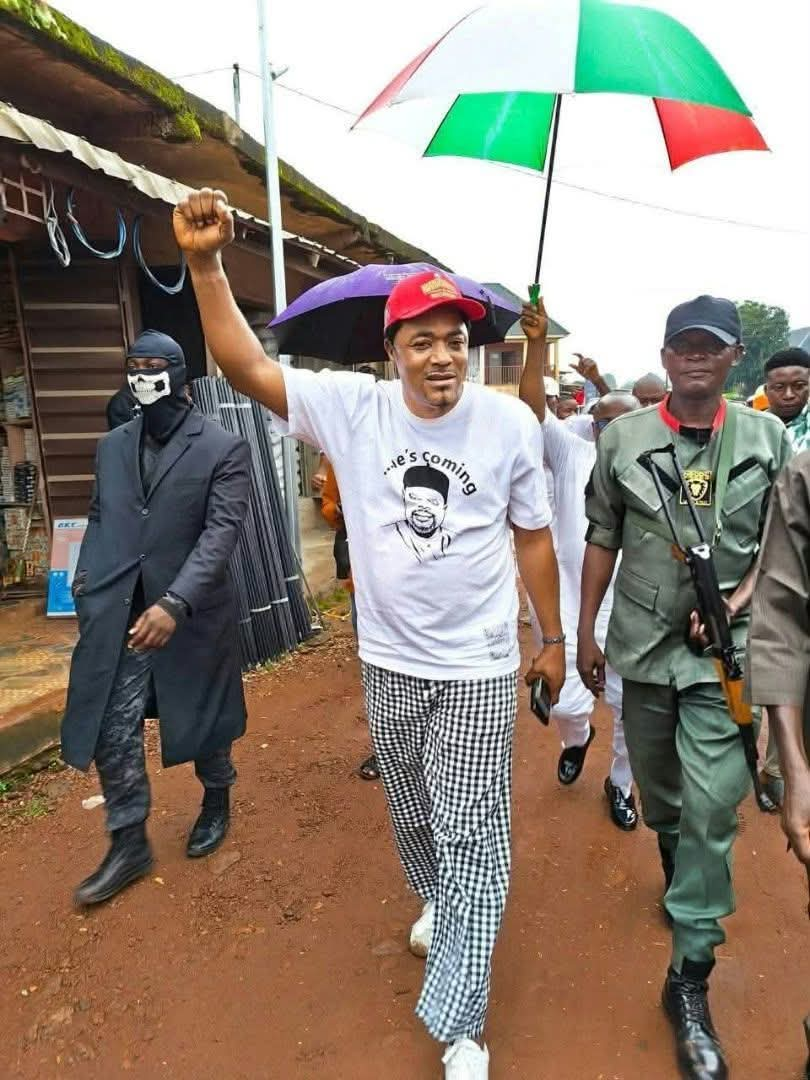
Panic-stricken Enugu APC begins flag-off of already flagged of roads in Nsukka after PDP’s Chijioke Ugwu’s homecoming


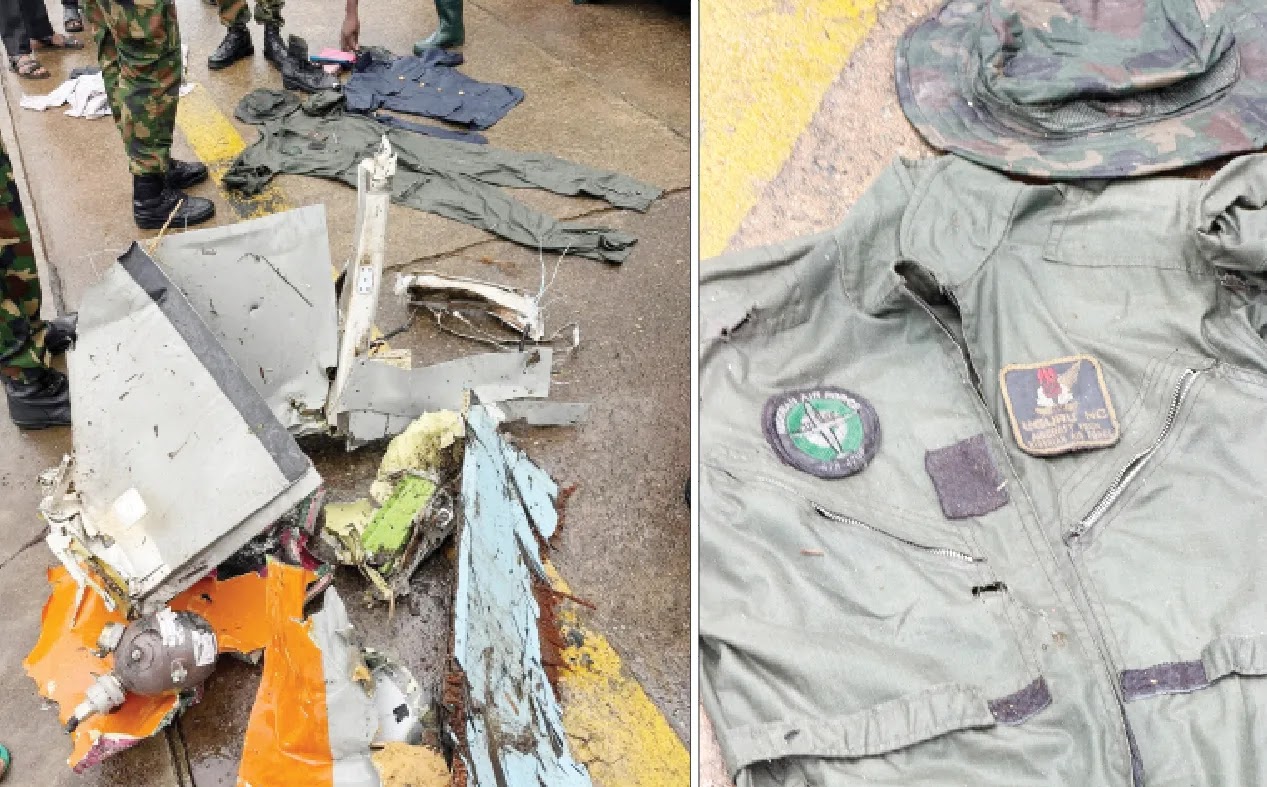
The Nigerian Air Force has confirmed that all 25 people aboard its ATR-42 aircraft, NAF 931, died after the aircraft crashed in the Igbokoda area of Ondo State.
The aircraft, which had five crew members and 20 passengers on board, was on a routine mission from Benin to Lagos when the NAF 931 aircraft crash occurred on Monday, October 5, 2026. Search-and-rescue operations were immediately activated following the accident.
The Chief of the Air Staff, Air Marshal Sunday Kelvin Aneke, described the incident as a deeply painful moment for the Nigerian Air Force and the country, while extending condolences to the families, colleagues and loved ones of those who died.
Aneke assured the bereaved families of the Nigerian Air Force’s full support as they come to terms with the loss.
The Air Force said no survivors had been found and released the names of the five crew members and 20 passengers on board the aircraft.
The crew members were identified as Squadron Leader M.I. Aburime, Flight Captain; Squadron Leader A.P. Man-Ugwueje, Co-pilot; Flight Lieutenant I.S. Bako, Co-pilot; Warrant Officer A. Abubakar, Aircraft Technician; and Corporal H.C. Uguru, Aircraft Technician.
The 20 passengers were Flight Lieutenant T.L. Lazarus; Flight Lieutenant M. Akinloye; Flying Officer I.M. Adeshina; Master Warrant Officer F. Onwuka; Master Warrant Officer B.A. Matini; Warrant Officer F.S. Nuhu; Flight Sergeant R.B. James; Flight Sergeant A.I. Mohammed; Sergeant A.E. Ani; Sergeant S.I. Izibenikien; Sergeant C. Alafuka; Sergeant A.N. Mbadugha; Lance Corporal F.C. Ugwuba; Lance Corporal G.E. Eledan; Mrs Ezeh Nneka; Godstmine Tarabina; Joy Micheal; Sunday Micheal; Ukeme David; and Gideon Omotola.
The latest figure released by the Air Force differs from the initial information provided after the crash. Aviation Minister Festus Keyamo had initially said 32 people, comprising 25 passengers and seven crew members, were aboard the aircraft. The Nigerian Air Force subsequently clarified that the manifest contained 25 people, made up of five crew members and 20 passengers.
The aircraft crashed in a swampy area around Igbokoda, close to a naval base, after air traffic controllers lost contact with it at about 9:13am while it was travelling from Benin to Lagos. The wreckage was later located and rescue teams were deployed to the area.
The cause of the crash has not been established. The Chief of the Air Staff has directed a comprehensive investigation to determine the circumstances surrounding the accident.
President Bola Tinubu had also directed the Nigerian Air Force to conduct a thorough investigation into the crash and declared three days of national mourning for the personnel who died. He ordered that national flags be flown at half-mast throughout the country in honour of the victims.
The Air Force said it would continue to provide timely and verified information as the investigation progresses. It also urged members of the public to avoid speculation and the circulation of unverified information, while respecting the privacy and dignity of the affected families.
A condolence register has been opened at the Headquarters of the Nigerian Air Force in Abuja for senior government officials, members of the diplomatic corps, heads of security agencies and other well-wishers who wish to pay their respects and convey messages of sympathy to the families of the deceased and the Nigerian Air Force.
-
Politics3 years ago
13 Ondo Assembly Members Disown Endorsement of Aiyedatiwa
-
Politics3 years ago
APC Group, Ondo Govt, Quarrel Over Money for Endorsement
-

 Trending News5 years ago
Stop unsavoury, inciting statements – DSS warns
-

 Others5 years ago
Adron Homes Celebrates 10 Years Of Housing Excellence
-

 Humanity5 years ago
President Buhari Commiserates With Ambassador Maureen Tamuno Over The Loss Of Her Father
-

 Others7 years ago
EX- CUSTOMS BOSS, IBRAHIM MERA’S DWINDLING FAME
-

 Business2 years ago
Bigi Carbonated Soft Drinks Treats 40 Consumers to an Epic Easter Movie Hangout
-

 Business2 years ago
Wema Bank Shines at Global SME Finance Forum Conference Awards 2024 …Awarded: • SME Financier of the Year (Africa) • Platinum Award for Best Financier for Women Entrepreneurs (Africa)