
Nation
“Government has No Obligation to Support Businesses.” – Sujimoto’s Open Letter to Mr. President


Dear Mr. President,

In 1978, Steve Jobs raised over a million dollars from the garage of his house through the use of his intellectual collateral, not a property, to develop the largest technology company and the biggest firm in the world today by market capitalization.
The multi-trillion-dollar vision with a backbone of public research funding from the U.S.
government was achieved based on the national importance of driving innovation and as a sign that government investment and its initial leg into great companies do not only present tax
benefits but also profit the entire ecosystem.
Government creates greatness. In fact, renowned industrialists like John D. Rockefeller,
Cornelius Vanderbilt, and Sakichi Toyoda, among a host of other business magnates who
received firm governmental support, have today created empires that provide jobs for millions of people globally.
Your excellency, there’s no greater and more fascinating story than a flourishing economy that thrives on innovative businesses. Thus, intentional support for subsidising businesses and dreams is a strategic and intelligent thing to do as a nation.
In Nigeria today, no start-up or entrepreneur can raise one naira in pre-seed funding without having to provide an arm and a leg. A demand for physical collateral that cripples’ revolutionary ideas and quenches the visionary flames of entrepreneurship.
With over 200 million citizens and a pregnant economy that must be delivered through the
surgical needle of proper restructuring, the Nigerian business landscape must recover from its 77 percent year-on-year funding decline, a sharp fall from the $2 billion that the startup
ecosystem attracted between July 2021 and June 2022 to $470 million in the last year (July
2022 to June 2023).
Asiwaju, as the economy continues to find its feet, the hikes in food prices and transportation are slowly eating deep into the moral fabric of society. Uncommon entrepreneurs are forced to explore new terrains with the Jakpa syndrome, where countless of Nigeria’s brightest minds seek opportunities elsewhere, away from their homeland.
Even companies with over 100 employees are being forced out of business or in debt due to a series of negative funding. An employee who earns N200,000 as a monthly salary today still struggles with the skyrocketing cost of living, which takes up more than 70 percent of theincome. This influences the decision of such staff to seek alternative ways of surviving while living in debt, even before salaries are paid (if paid on time or even ever paid after 3 months).
Father, Nigeria’s current economic situation is like a mosquito sitting on one’s scrotum; the
slightest amount of anger or irritation will lead to excruciating social and economic unrest.
Although all hopes are not dashed, in fact, new ones are being created as businesses gradually move from brick-and-mortar into the digital space. In today's fast-paced society, the criteria for support should shift from tangible to intellectual assets, where vision can be invested in with funding and monitoring timelines and milestones, creating an enabling environment where
competence and integrity prevail over connections and deceit.
As it stands today, no Nigerian bank is able to give any entrepreneur, visionary businessman, or woman one naira without a property asset or fixed asset to be held as collateral.
Amidst innovative thinking, financial engineering has crippled the growth of radical
entrepreneurs, who have no problem with the presence of vision but lack everything in the
acquisition of tangible collateral.
For Nigeria to reclaim its position as the Jewel of Africa and maintain her stance as the
economic heart of Africa, it is crucial to urgently take into consideration this:
7 Pillars to tackle economic deprivation in Nigeria:
Funding Opportunities: One of the biggest challenges facing entrepreneurs is access to capital.
Funding remains the engine that propels innovation, generates new businesses, and brings
fresh products and services to the market. As such, government has to encourage financial
institutions to create an intellectual and creative collateral system for businesses with no
alternative for physical collateral such as lands or properties.
Reducing the regulatory burden on entrepreneurs: To further promote the entrepreneurship culture, especially among youths, the current political dispensation has to reduce the bureaucratic red tape by simplifying and streamlining the process of starting and running a business. For example, the World Bank’s Ease of Doing Business Index ranks countries like Singapore and the United Arab Emirates at the top of the list due to their business-friendly policies, while Nigeria is not even among the first one hundred.
Agricultural Exploits for Food Security: If you travel through the Lagos to Ibadan expressway,
or the Kano-Zaria road, spans of land remain uncultivated, creating backlogs of agricultural
deficits that won’t only tackle food scarcity if properly utilised but also create jobs for potential farm entrepreneurs while drastically reducing crime rates.
Nigeria is blessed with over 34 million hectares of arable land, a farming sector that has the
potential to contribute above 23% to the nation’s GDP.
As a symbol of hope, Suji Farm Estate, a subsidiary of the esteemed Sujimoto Group, is taking on the mantle with a firm plan to allocate over 20,000–1,000,000 hectares before 2030, spreading across all geopolitical zones and all 36 states, for localised food production and mass employment opportunities designed to provide job security for over 10,000–200,000 citizens nationwide. With a clear plan for setting up a team of young, independent, and outstanding youth to supervise work, live, and play on the farm.
Suji Farm Estate will be built on an advanced farm estate system that incorporates housing,
farm hospitals, hotels, and markets within an ecosystem, creating opportunities for agro-
tourism and affordable housing.
In tackling food security, aside from creating thousands of farm entrepreneurs, the government must seek out innovative people—not only Sujimoto Farms but also numerous young agro- entrepreneurs across all 37 states—who have exceptional reputations, passion and technical know-how, encourage them, and fund them. It is in the government’s interest to intentionally fund businesses and projects with strong potential to impact our dare economy, which will eventually drive taxes and many other benefits for the nation.
An idle hand is the devil’s workshop: Nigeria currently sits on a keg of gun powder as the
unemployment rate remains on the rise. The youth of the nation is our biggest asset, and it is alarming that over 42% of her population is out of work, a silent time bomb and a destructive tool vulnerable to use by terrorists, banditry, and other related vices. It is urgent that the youth start putting their expertise into farming and other lucrative ventures.
Government supports innovative enterprise: Yes, not all governments have the obligation to
support businesses, but governments have a moral duty and obligation to partner with
businesses because a thriving business is a thriving nation.
Great nations like Egypt and Singapore are intentionally encouraging localised production and promoting local enterprises. It is high time for the Nigerian government to create stimulus packages for businesses and local entrepreneurs to help them achieve their goals, promote job opportunities, and drastically improve foreign exchange. This should not come in the form of grants but in affordable and accessible loan packages for specified durations.
Sectoral Research and Development: If Elon Musk was in Lagos, he probably would have ended up in computer village selling mobile devices, with his innovative ideas frustrated due to lack of funding. Steve Jobs also may have been a genius entrepreneur—he certainly had an eye for design—but his most successful product would not exist if it weren’t for the billions of dollars that the US government spends every year on research and development.
Just like SpaceX, although it is not yet in the full stage of generating revenue, the American
government has also maintained a great share in funding the technological corporation because of its economic relevance and research impact on global society.
Nigeria can’t afford to think small. As the giant of Africa and the biggest nation in Africa with
the biggest problem, the government needs to go out there and identify 10,000–50,000
outstanding entrepreneurs from all 36 states who have the capacity and reputation to do things differently, empower them beyond physical collateral, invest in their intellectual property, and create an enabling environment where competence and integrity prevail over connections and deceit.
Localised Production, Global Distribution: As of today, a 50-KG bag of rice costs N42,000 from the mills and about N52,000 from supermarkets, whereas the same bag of rice is worth N22,000 at Seme Border, Republic of Benin. The secret to reducing the price is by growing the paddy locally and setting up rice mills in individual states, drastically reducing the cost of rice and food.
This is what Suji Farms Estate aims to achieve in the next 24 months, where we will be able to grow our paddy, mill the paddy, and distribute them directly to supermarkets across the nation, drastically reducing the cost of a bag from N52,000 to N35,000. This will further improve our nation’s human capital development and deliberately improve the nation’s food security, but we are only one company, and we believe the government can partner with other innovative agro-entrepreneurs, providing them with accessible, affordable, and non-stressful capital.
With a clear blueprint to develop affordable housing, improve the agricultural sector, and foster job opportunities within the retail space, Sujimoto Group has over the years built a solid reputation in the luxury real estate sector and is positioning itself to drastically reduce the housing deficit and bridge the unemployment gap in the next 5 years with the 1,000,000-hectare Sujimoto Farm Estate nationwide project.
To achieve this feat in an environment where funding is almost impossible and access to land is difficult, the present-day government must stretch its hand of collaboration, fund astounding projects, and tie performance bonds to them while monitoring project milestones and timelines. On the other hand, the funding isn’t for free, as government will also generate income through payback, business taxes, and employer income taxes.
“My dear President, I know that you have created a solid road map and a fantastic blueprint for the next eight years, for I believe that the feat of achievement you attained in Lagos State and the successful entrepreneurs you’ve created between 1999 and 2007 can be replicated again on a national scale.”
Thank you, your distinguished excellency.
Dr. Sijibomi Ogundele is the Managing Director of Sujimoto Group, the Czar of Luxury Real
Estate Development, and the mastermind developer behind the renowned Giuliano. Our other audacious projects, such as the most sophisticated building in Banana Island,
LucreziaBySujimoto, the grandiose Sujimoto Twin Tower, the tallest twin towers in Africa; the regal Queen Amina by Sujimoto, a monument to royal affluence; the magnificent high-rise LeonardoBySujimoto; Nigeria’s No. 1 most affordable luxury housing, Ìlú Titun, and Africa’s most exclusive waterfront townhouses, GiovanniBySujimoto, some of which have etched an indelible imprint on Nigeria’s skylines, a testament to their unrivalled mastery of modern day engineering.





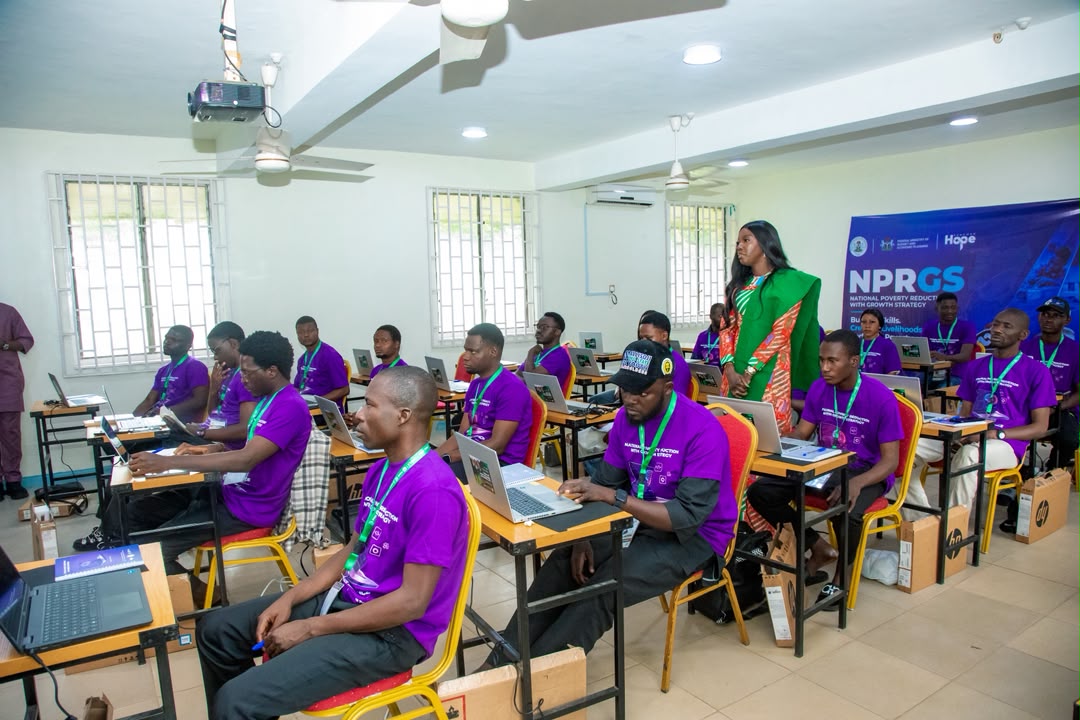
The Federal Government says it plans to lift
five million young Nigerians out of poverty through its skills acquisition and empowerment programmes aimed at promoting sustainable livelihoods.
The initiative, being implemented under the National Poverty Reduction with Growth Strategy (NPRGS), is designed to equip young Nigerians with practical, market-relevant skills to enhance their economic independence and employability.
Dr Abiola Arogundade, Senior Assistant to the President on Technical, Vocational and Entrepreneurship Education (OSSAP-TVEE), coordinator of the programme, disclosed this on Monday in Ibadan at the commencement of the programme’s Oyo State phase which will run from September 28 to October 9.
She said the training is part of President Bola Tinubu’s commitment to empowering Nigerians through technical, vocational and entrepreneurial education.
Arogundade said the programme, which commenced in the Federal Capital Territory (FCT), had moved to Oyo State and would be extended to other states and geopolitical zones across the country.
Under the Oyo State phase, 200 young Nigerians are being trained in Graphics and Artificial Intelligence (AI), makeup artistry and fashion designing.
Of the beneficiaries, 30 participants are undergoing training in Graphics/AI, while 85 each are receiving training in makeup artistry and fashion designing.
Arogundade said the initiative went beyond skills acquisition, adding that beneficiaries would be connected to organisations and business opportunities to support their transition into sustainable livelihoods.
“So with this programme, we are training 200 people. We will also be distributing 500 tablets during the grand finale of the programme as part of the Federal Government’s digital empowerment drive.
“We are directly empowering 700 people in this programme and there will be multiplier effect.
“We are not just training them for themselves but we are training them for their communities, for the population, and for all the states in Nigeria,” she said.
She urged participants to take the training seriously, maximise the opportunity and use their newly acquired skills to empower others within their communities.
“I want to just encourage them to do their best.
“I want to encourage them to know that President Bola Tinubu is thinking about all Nigerians, all young Nigerians in the country and ready to address their plights,” she said.
The presidential aide reiterated the Federal Government’s commitment to creating opportunities for young Nigerians to become economically self-reliant through practical training and entrepreneurship development.
Earlier, the keynote speaker for the Graphics/AI training, Mrs Oluronke Shonubi, said the growing adoption of artificial intelligence presented Nigeria with opportunities to accelerate development, improve employability and prepare young people for emerging jobs.
One of the beneficiaries, Idowu Olalere, a 400-level student of the Federal University Oye-Ekiti (FUOYE), expressed appreciation to the Federal Government for providing young Nigerians with opportunities to acquire emerging digital skills.
Olalere said the training would help bridge the gap between existing skills and evolving labour market requirements.
Two other beneficiaries, Mrs Iyabo Ajayi, a makeup trainee, and Fatunbi Joshua, a fashion designing trainee, also expressed gratitude to the Federal Government for the opportunity.
They expressed optimism that the initiative would contribute to reducing unemployment by equipping participants with practical skills and opportunities for self-employment.
At the conclusion of the training, participants will receive laptops, sewing machines and fully equipped makeup kits to support their entrepreneurial pursuits and facilitate the establishment of sustainable businesses.
The programme forms part of the Federal Government’s broader efforts to promote inclusive economic growth, reduce poverty and expand opportunities for young Nigerians through technical and vocational education.
-
Politics3 years ago
13 Ondo Assembly Members Disown Endorsement of Aiyedatiwa
-
Politics3 years ago
APC Group, Ondo Govt, Quarrel Over Money for Endorsement
-

 Trending News5 years ago
Stop unsavoury, inciting statements – DSS warns
-

 Others5 years ago
Adron Homes Celebrates 10 Years Of Housing Excellence
-

 Humanity5 years ago
President Buhari Commiserates With Ambassador Maureen Tamuno Over The Loss Of Her Father
-

 Others7 years ago
EX- CUSTOMS BOSS, IBRAHIM MERA’S DWINDLING FAME
-

 Business2 years ago
Bigi Carbonated Soft Drinks Treats 40 Consumers to an Epic Easter Movie Hangout
-

 Business2 years ago
Wema Bank Shines at Global SME Finance Forum Conference Awards 2024 …Awarded: • SME Financier of the Year (Africa) • Platinum Award for Best Financier for Women Entrepreneurs (Africa)