
News
Graduate Employment Strategies Every Student Must Know Today


Graduate employment strategies are essential today. Learn internships, skills acquisition, certifications, and entrepreneurship to thrive in a competitive job market

Graduate employment strategies are more important than ever as the global job market becomes increasingly competitive.
Also read: Nigeria’s Energy Transition Prioritises Job Creation, Says Minister
Each year, millions of fresh graduates from Nigeria, Canada, UK, India, Australia, and the USA hope for high-paying jobs after years of study. Yet, high grades alone no longer guarantee employment.
Economic disruptions post-Covid-19, global trade wars, and the rise of Artificial Intelligence (AI) have made job hunting tougher. In Nigeria, unemployment exceeds 30%, with 64.3% of the unemployed under 35.
Graduates must adapt to this reality by developing practical skills, gaining experience, and exploring entrepreneurial opportunities.
Key Strategies to Secure Employment:
1. Internships
Internships provide real-world experience and help graduates acquire practical skills. They can be paid or unpaid and are ideal for networking and career exploration.
Internships often serve as a pathway to paid employment after graduation.
2. Skills Acquisition and Vocational Training
Undergraduates should use holidays to learn in-demand skills like coding, digital marketing, graphic design, photography, video editing, or fashion design.
Vocational training can also open doors to entrepreneurship, allowing graduates to create their own businesses instead of waiting for traditional jobs.
3. Certifications, Seminars, and Workshops
Professional certifications and attending industry seminars enhance resumes and provide exposure to experts. Networking at workshops can lead to job opportunities and insights into emerging trends, making graduates more competitive in the job market.
4. Entrepreneurship
Graduates should consider starting their own businesses. University education is not only about employment but fostering creativity and innovation.
Passion-driven ventures help graduates remain resilient through challenges, and failure is a natural part of the journey to success.
Role of Artificial Intelligence
AI is reshaping global employment. Routine jobs are at risk, while new roles emerge for digitally skilled graduates.
Goldman Sachs reports AI could replace 300 million full-time jobs, while McKinsey predicts 375 million workers may need to transition to new careers by 2030. Graduates must prepare by acquiring relevant digital skills.
Conclusion
Graduate employment strategies require proactive planning. Parents and mentors must guide students to pursue courses with strong job prospects, encourage skills acquisition, and foster entrepreneurial mindsets.
Also read: Aregbesola: How Interior Ministry Managed 1.5m Applicants For 5,000 NSCDC Jobs; 500 Staff Parading Fake Certificates – Head Of Service
In a competitive and AI-driven world, waiting for traditional employment is no longer enough—graduates must create their own opportunities.


News
Panic-stricken Enugu APC begins flag-off of already flagged of roads in Nsukka after PDP’s Chijioke Ugwu’s homecoming



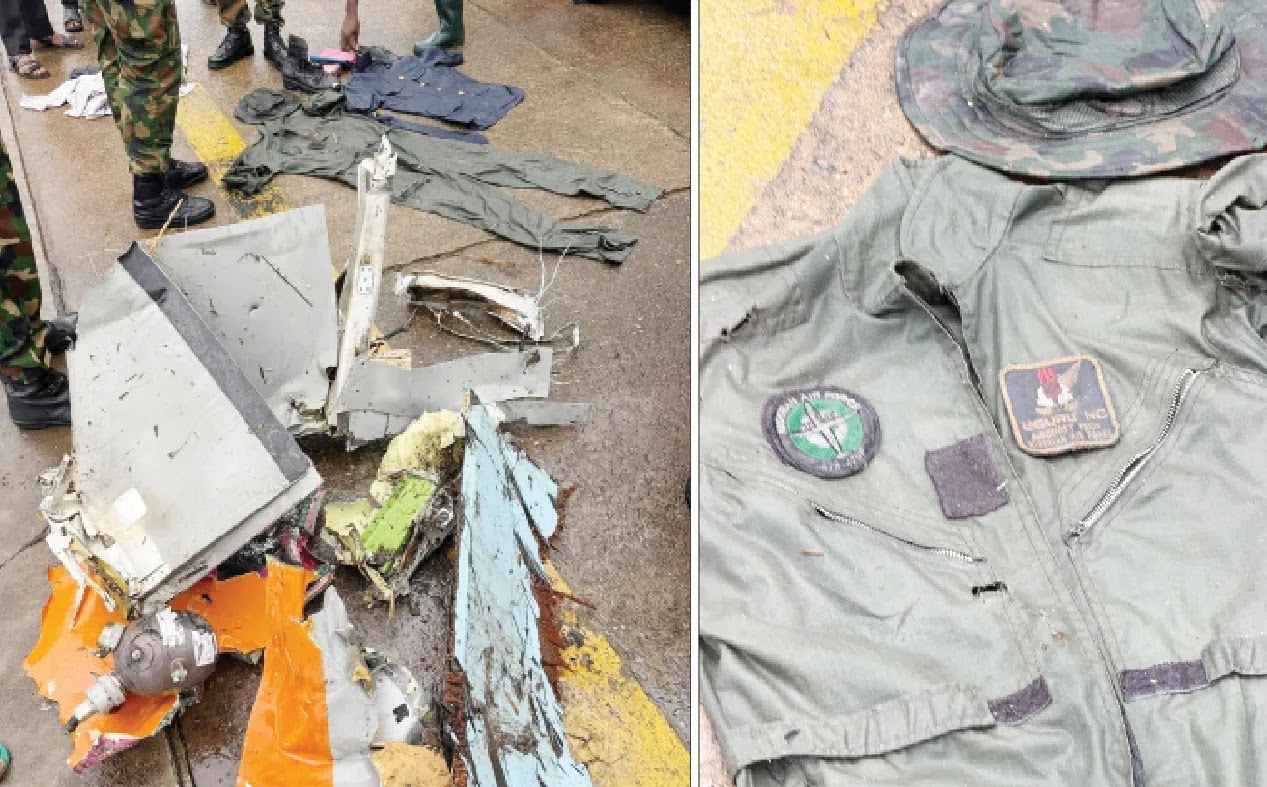
The Nigerian Air Force has confirmed that all 25 people aboard its ATR-42 aircraft, NAF 931, died after the aircraft crashed in the Igbokoda area of Ondo State.
The aircraft, which had five crew members and 20 passengers on board, was on a routine mission from Benin to Lagos when the NAF 931 aircraft crash occurred on Monday, October 5, 2026. Search-and-rescue operations were immediately activated following the accident.
The Chief of the Air Staff, Air Marshal Sunday Kelvin Aneke, described the incident as a deeply painful moment for the Nigerian Air Force and the country, while extending condolences to the families, colleagues and loved ones of those who died.
Aneke assured the bereaved families of the Nigerian Air Force’s full support as they come to terms with the loss.
The Air Force said no survivors had been found and released the names of the five crew members and 20 passengers on board the aircraft.
The crew members were identified as Squadron Leader M.I. Aburime, Flight Captain; Squadron Leader A.P. Man-Ugwueje, Co-pilot; Flight Lieutenant I.S. Bako, Co-pilot; Warrant Officer A. Abubakar, Aircraft Technician; and Corporal H.C. Uguru, Aircraft Technician.
The 20 passengers were Flight Lieutenant T.L. Lazarus; Flight Lieutenant M. Akinloye; Flying Officer I.M. Adeshina; Master Warrant Officer F. Onwuka; Master Warrant Officer B.A. Matini; Warrant Officer F.S. Nuhu; Flight Sergeant R.B. James; Flight Sergeant A.I. Mohammed; Sergeant A.E. Ani; Sergeant S.I. Izibenikien; Sergeant C. Alafuka; Sergeant A.N. Mbadugha; Lance Corporal F.C. Ugwuba; Lance Corporal G.E. Eledan; Mrs Ezeh Nneka; Godstmine Tarabina; Joy Micheal; Sunday Micheal; Ukeme David; and Gideon Omotola.
The latest figure released by the Air Force differs from the initial information provided after the crash. Aviation Minister Festus Keyamo had initially said 32 people, comprising 25 passengers and seven crew members, were aboard the aircraft. The Nigerian Air Force subsequently clarified that the manifest contained 25 people, made up of five crew members and 20 passengers.
The aircraft crashed in a swampy area around Igbokoda, close to a naval base, after air traffic controllers lost contact with it at about 9:13am while it was travelling from Benin to Lagos. The wreckage was later located and rescue teams were deployed to the area.
The cause of the crash has not been established. The Chief of the Air Staff has directed a comprehensive investigation to determine the circumstances surrounding the accident.
President Bola Tinubu had also directed the Nigerian Air Force to conduct a thorough investigation into the crash and declared three days of national mourning for the personnel who died. He ordered that national flags be flown at half-mast throughout the country in honour of the victims.
The Air Force said it would continue to provide timely and verified information as the investigation progresses. It also urged members of the public to avoid speculation and the circulation of unverified information, while respecting the privacy and dignity of the affected families.
A condolence register has been opened at the Headquarters of the Nigerian Air Force in Abuja for senior government officials, members of the diplomatic corps, heads of security agencies and other well-wishers who wish to pay their respects and convey messages of sympathy to the families of the deceased and the Nigerian Air Force.


-
Politics3 years ago
13 Ondo Assembly Members Disown Endorsement of Aiyedatiwa
-
Politics3 years ago
APC Group, Ondo Govt, Quarrel Over Money for Endorsement
-

 Trending News5 years ago
Stop unsavoury, inciting statements – DSS warns
-

 Others5 years ago
Adron Homes Celebrates 10 Years Of Housing Excellence
-

 Humanity5 years ago
President Buhari Commiserates With Ambassador Maureen Tamuno Over The Loss Of Her Father
-

 Others7 years ago
EX- CUSTOMS BOSS, IBRAHIM MERA’S DWINDLING FAME
-

 Business2 years ago
Bigi Carbonated Soft Drinks Treats 40 Consumers to an Epic Easter Movie Hangout
-

 Business2 years ago
Wema Bank Shines at Global SME Finance Forum Conference Awards 2024 …Awarded: • SME Financier of the Year (Africa) • Platinum Award for Best Financier for Women Entrepreneurs (Africa)