
Empowerment
Halfway Home Restorative Justice Shelter Opens in Nasarawa


Restorative Justice for Africa opens a halfway home restorative justice shelter in Nasarawa for formerly incarcerated people to rebuild their lives

Restorative Justice for Africa has opened a halfway home restorative justice shelter in Nasarawa State to support formerly incarcerated individuals in rebuilding their lives.
Also read: In Defence of Justice Forum, Tinubu’s Strongest Political Ally- Adeola Al-Amin
The newly launched facility, known as the Restored Voices Shelter, aims to address one of Nigeria’s most persistent criminal justice gaps: post-incarceration reintegration.
It was officially opened on 3 July 2025 in Ado, Karu Local Government Area, during a ceremony attended by key stakeholders across the justice sector.
According to REJA Executive Director Osariemen Omoruyi-Shobanke, the halfway home restorative justice initiative provides dignity and direction for ex-inmates, especially those unjustly detained or released with no place to return.
“Restorative Justice for Africa is excited to unveil the first-ever Halfway Home and transitional shelter for formerly incarcerated individuals in Nasarawa State,” she said.
“This groundbreaking initiative marks a major leap forward in reimagining justice in Nigeria, offering dignity, direction, and hope to formerly incarcerated persons who were unjustly detained or have no family or home to return to.”
The launch drew a significant turnout, including representatives of the Chief Judge of Nasarawa State, officials from the Non-Custodial Directorate of the Nigerian Correctional Service, and leaders of several civil society organisations such as ROLAC, Prison Fellowship International, and Building Blocks for Peace Foundation.
Omoruyi-Shobanke said the shelter is designed as a transitional hub that bridges the reintegration gap plaguing Nigeria’s justice system.
With temporary housing, psychosocial services, vocational training, and life skills programmes, the shelter will function as a self-sustaining centre run by formerly incarcerated persons.
Let’s restore voices and rewrite futures together.
“For years, REJA has provided legal aid and restorative justice interventions. But in the course of that work, it became painfully clear that post-release support was missing. The Restored Voices Shelter is our answer to this problem; it is a safe, supportive space for transformation,” she explained.
A highlight of the launch was the introduction of a new Model Practice Direction on Restorative Justice for Nigerian Courts.
The directive outlines a standardised approach to restorative justice implementation across judicial systems and promotes community-driven resolutions and reintegration-focused sentencing.
The shelter also seeks to work closely with educational institutions such as Taraba State University and local colleges to provide training to future professionals in law and social services.
Its location within reach of justice system actors is expected to boost collaboration and innovation in rehabilitation.
Omoruyi-Shobanke encouraged partnerships from government, non-profits, and private individuals to sustain the initiative.
She reiterated REJA’s belief in healing and inclusion through restorative systems.
“The initiative is part of REJA’s broader mission to close the justice and inequality gap and reform Nigeria’s criminal justice system by tackling the root causes of injustice and repeat offending, particularly among indigent and wrongfully detained persons.
“If you believe in second chances, true justice, and healing through community, we invite you to partner with us. Let’s restore voices and rewrite futures together,” Omoruyi-Shobanke concluded.
Also read: FIIAPP Appraises Nigerian Criminal Justice System
The Restored Voices Shelter is one of the first purpose-built halfway homes in Nigeria and is expected to become a model for other states working to transform justice through humane and inclusive reintegration efforts.





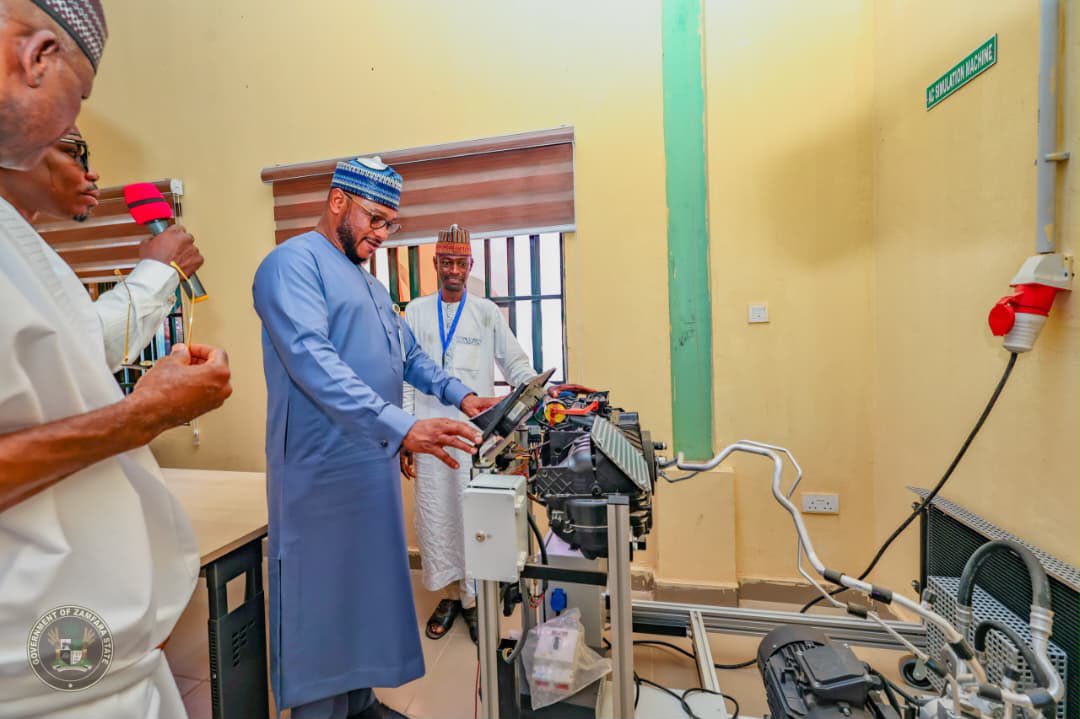
In a significant boost to youth empowerment and alternative energy transportation, the Federal Government has officially commissioned a new Automotive Training Centre in Gusau, Zamfara State. The facility has already commenced operations with an inaugural cohort of 100 youths trained in mechatronics a specialized field combining mechanical and electronic engineering specifically focused on the repair of both petrol and Compressed Natural Gas (CNG)-powered tricycles and motorcycles.

The project was executed through a strategic partnership between the National Automotive Design and Development Council (NADDC) and the Zamfara State office of the Made in Nigeria Special Project. The initiative is designed to address two critical national challenges: rising youth unemployment and the need for a skilled workforce capable of maintaining the growing fleet of CNG-powered vehicles, which are being promoted as a cheaper and cleaner alternative to petrol-only engines.
Speaking at the commissioning ceremony, Zamfara State Governor, Dr Dauda Lawal, hailed the centre as a transformative step forward. “This is not just about building a workshop; it is about building futures,” Governor Lawal stated. He emphasized that the centre aligns seamlessly with President Bola Tinubu’s Renewed Hope Agenda, which prioritizes job creation and economic diversification, while also reflecting his administration’s commitment to developing skilled manpower across the state. He noted that the focus on CNG technology is particularly timely, given the federal government’s push to lower transportation costs following the removal of fuel subsidies.
Reinforcing the federal perspective, the Minister of State for Industry, Senator John Owan Enoh, reaffirmed the government’s broader vision for the automotive sector. He highlighted that the Gusau centre is part of a nationwide strategy to expand Nigeria’s automotive industry through increased local production, the establishment of industrial hubs, and strategic partnerships with global investors. “We are moving from a culture of importing fully built vehicles to one where Nigerians design, assemble, and maintain our own transportation solutions,” Senator Enoh remarked. He added that mechatronics training is critical for the next generation of automotive engineers, who will be essential as the country transitions toward more sustainable fuel sources.
Local community leaders and representatives of the trained youths expressed optimism about the initiative. For many of the graduates, the certification offers a viable pathway out of economic hardship, enabling them to set up their own repair workshops or gain employment in the formal automotive sector. The NADDC has indicated that similar training centres are being planned for other states, with the aim of creating a national network of CNG-compatible repair and maintenance hubs.
-
Politics2 years ago
13 Ondo Assembly Members Disown Endorsement of Aiyedatiwa
-
Politics2 years ago
APC Group, Ondo Govt, Quarrel Over Money for Endorsement
-

 Trending News5 years ago
Stop unsavoury, inciting statements – DSS warns
-

 Others5 years ago
Adron Homes Celebrates 10 Years Of Housing Excellence
-

 Humanity5 years ago
President Buhari Commiserates With Ambassador Maureen Tamuno Over The Loss Of Her Father
-

 Others7 years ago
EX- CUSTOMS BOSS, IBRAHIM MERA’S DWINDLING FAME
-

 Business2 years ago
Bigi Carbonated Soft Drinks Treats 40 Consumers to an Epic Easter Movie Hangout
-

 Business2 years ago
Wema Bank Shines at Global SME Finance Forum Conference Awards 2024 …Awarded: • SME Financier of the Year (Africa) • Platinum Award for Best Financier for Women Entrepreneurs (Africa)