
Business
IMF Urges Cautious Rate Policy Amid Global Shock Risks

IMF cautious monetary policy guidance 2026 urges central banks to stay patient as Middle East tensions and inflation risks reshape global outlook

The International Monetary Fund (IMF) has called on central banks worldwide to adopt a cautious “wait and see” monetary stance ahead of the Central Bank of Nigeria’s Monetary Policy Committee meeting scheduled for May 2026, as escalating tensions in the Middle East continue to tighten global financial conditions and complicate inflation management.
Also read: Why World Bank, IMF Praise Tinubu’s Reforms – Economist Explains
The IMF cautious monetary policy guidance 2026 was delivered on Tuesday in Washington, D.C., during the launch of the April 2026 World Economic Outlook, where IMF Economic Counsellor and Director of the Research Department, Pierre-Olivier Gourinchas, warned that policymakers must remain vigilant despite recent signs of easing underlying demand pressures.
Gourinchas noted that while central banks successfully contained inflation during the 2022 global commodity shock without triggering widespread recession, the current environment presents a more complex and potentially costly challenge for monetary authorities.
He explained that although inflation is gradually easing in some economies, it remains above target in key markets, including the United States, adding that any renewed supply shock could quickly reverse recent progress and destabilise price expectations.
According to him, the global supply curve has become significantly flatter, meaning that any disinflation effort engineered by central banks may now come at a higher economic cost, particularly in terms of unemployment and output losses.
On policy direction, Gourinchas stressed that central banks should resist premature policy shifts, noting that while holding rates steady may be appropriate for now, authorities must be prepared to act decisively if inflation pressures intensify further.
“This is a negative supply shock, and no central bank can influence global energy prices on its own,” he said, adding that exchange rate flexibility should be preserved to allow monetary authorities to focus on core price stability mandates.
He further observed that markets are already pricing in higher policy rates, but argued that as long as inflation expectations remain anchored, policymakers can afford to remain patient while closely monitoring evolving risks.
However, he cautioned that communication remains critical, stressing that central banks must clearly signal readiness to intervene if necessary to safeguard price stability.
On fiscal policy, the IMF warned governments against broad-based interventions such as price caps and subsidies, describing them as costly, distortionary, and difficult to reverse once introduced.
Instead, Gourinchas recommended targeted and temporary support measures aimed at protecting the most vulnerable segments of society.
He also highlighted the importance of rebuilding fiscal buffers, warning that many economies now have limited room for expansive spending responses in the event of a severe downturn.
Looking ahead, the IMF emphasised the need for policy flexibility, noting that in the event of a sharp deterioration in global financial conditions, both monetary and fiscal authorities must be prepared to pivot quickly to stabilise economies and safeguard financial systems.
Also read: NACC Gathers Power Brokers for 2026 Economic Forecast, Honours Odugbemi
Beyond immediate risks, the Fund also pointed to longer-term structural shifts, urging accelerated investment in renewable energy to reduce exposure to global shocks, while also preparing for potential productivity disruptions linked to the rapid advancement of artificial intelligence.


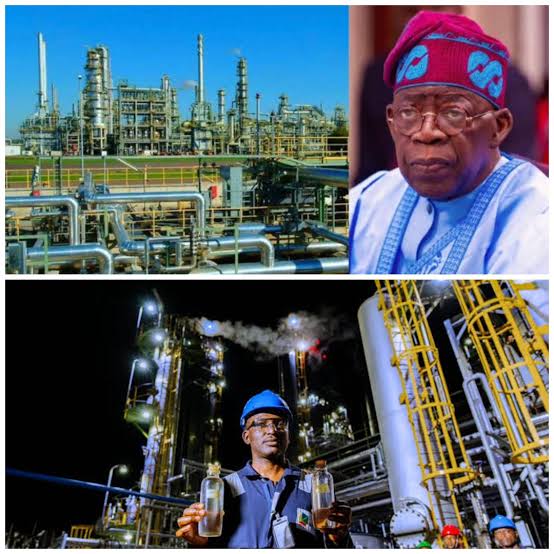
President Bola Tinubu has reaffirmed the Federal Government’s commitment to rehabilitating and repositioning Nigeria’s dormant national refineries, declaring that the facilities will not be allowed to become stranded assets.
Tinubu was represented by the Permanent Secretary of the Ministry of Petroleum Resources, Mrs Patience Oyekunle, at the 20th OTL Africa Downstream Energy Week in Lagos on Monday.
The President said the government is adopting a more rigorous and commercially sustainable approach to the rehabilitation of the Port Harcourt, Warri and Kaduna refineries.
“At the same time, the government remains committed to ensuring that existing national refining assets are not allowed to become stranded investments,” the statement said.
“We are pursuing a more rigorous, commercially sustainable approach to the rehabilitation and repositioning of our refineries, supported by technical assessment, stronger partnerships, and improved operational discipline.”
The objective, according to the administration, is for Nigeria to refine more of its crude oil, create greater domestic value and become a reliable supplier of energy to Africa.
The national refineries, managed by the Nigerian National Petroleum Company Limited (NNPC), have remained largely inactive for years despite significant spending on turnaround maintenance. The NNPC has signed a memorandum of understanding with Chinese firms as part of ongoing efforts to revive the facilities.
Tinubu also noted the contribution of private refining capacity, particularly the Dangote Refinery, which has reached its 650,000 barrels-per-day nameplate capacity, in strengthening Nigeria’s prospects of becoming a net exporter of refined petroleum products.

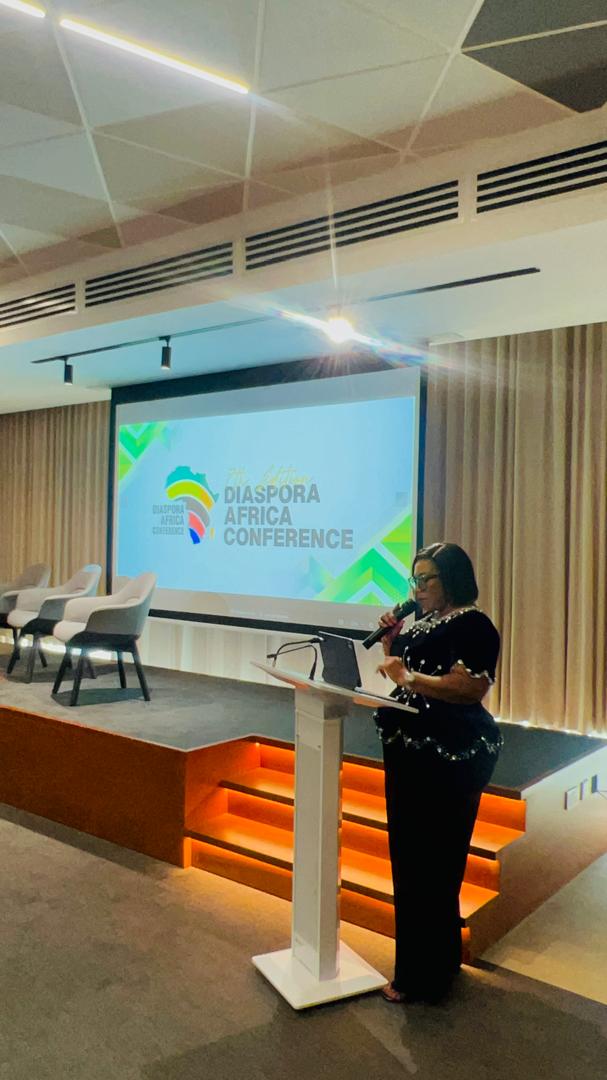
AICL GMD Maureen Tamuno calls for stronger diaspora investment in Africa through trust, transparency, skills transfer and sustainable partnerships
-
Politics3 years ago
13 Ondo Assembly Members Disown Endorsement of Aiyedatiwa
-
Politics3 years ago
APC Group, Ondo Govt, Quarrel Over Money for Endorsement
-

 Trending News5 years ago
Stop unsavoury, inciting statements – DSS warns
-

 Others5 years ago
Adron Homes Celebrates 10 Years Of Housing Excellence
-

 Humanity5 years ago
President Buhari Commiserates With Ambassador Maureen Tamuno Over The Loss Of Her Father
-

 Others7 years ago
EX- CUSTOMS BOSS, IBRAHIM MERA’S DWINDLING FAME
-

 Business3 years ago
Bigi Carbonated Soft Drinks Treats 40 Consumers to an Epic Easter Movie Hangout
-

 Business2 years ago
Wema Bank Shines at Global SME Finance Forum Conference Awards 2024 …Awarded: • SME Financier of the Year (Africa) • Platinum Award for Best Financier for Women Entrepreneurs (Africa)