
Education
JAMB Offers Free UTME Forms to Persons with Disabilities

JAMB offers free 2026/2027 UTME application documents to eligible persons with disabilities
The Joint Admissions and Matriculation Board (JAMB) has announced that persons with disabilities (PWDs) will receive free application documents for the 2026/2027 Unified Tertiary Matriculation Examination (UTME).
Also read: JAMB registrar Prof.Ishaq Oloyede rejects bias allegations amidst UTME controversy

The announcement, published in JAMB’s weekly bulletin on Monday, stated that the initiative will be processed through the JAMB Equal Opportunity Group for eligible candidates with disabilities.
JAMB Registrar, Prof. Is-haq Oloyede, emphasised the Board’s commitment to supporting PWDs.
“To support persons living with disabilities, JAMB will issue free application documents to all categories, including those with Down syndrome, autism, dyslexia, and ADHD,” he said.
Beneficiaries must possess five O’Level credits in no more than two sittings. Blind candidates will also receive audiobooks, which are digital adaptations of printed materials in formats such as MP3, WMV, and WMA, compatible with common audio devices.
The initiative aims to remove barriers to access and ensure that candidates with disabilities are given equal opportunities to pursue their academic aspirations.
Also read: JAMB announces mop-up UTME for over 5.6% absent candidates
Registration for the 2026/2027 UTME commenced on Monday, 26 January, and closes on Saturday, 28 February.


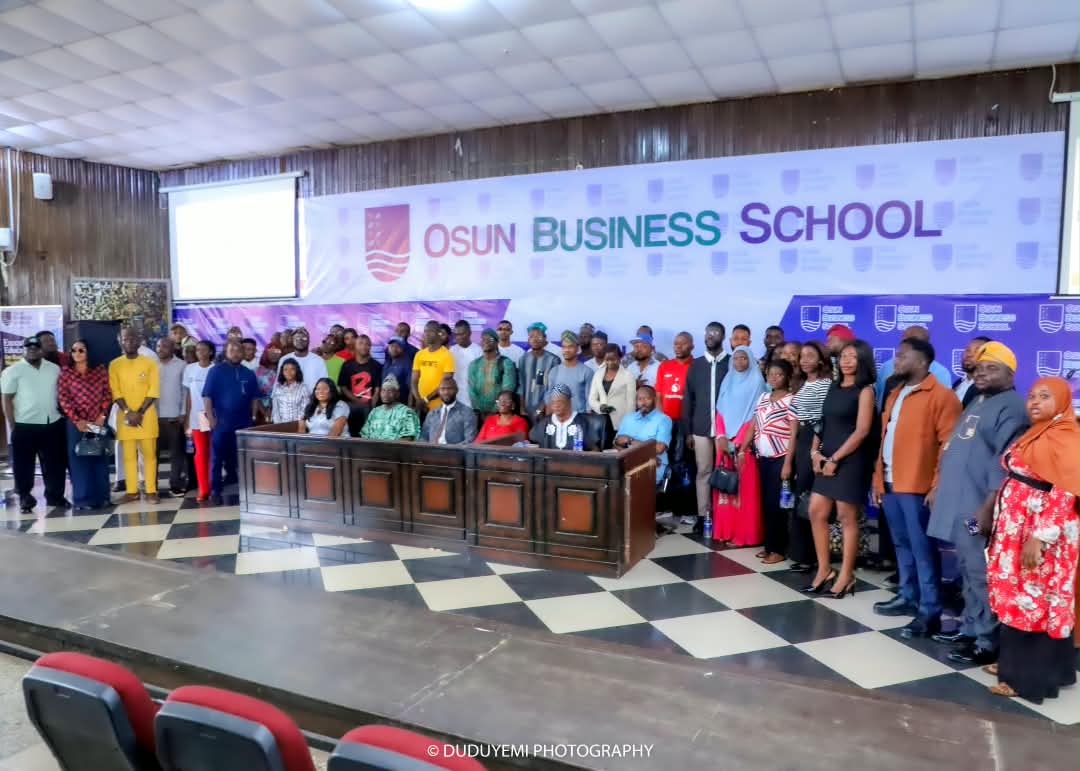


Five thousand Nigerian public-school teachers have completed the latest cycle of the MTN-SAIL Teachers Fellowship with new approaches to teaching, digital skills and, for the first time in the programme, formal training in artificial intelligence-assisted teaching.
But as the teachers return to their classrooms, the more significant question is what those new skills will mean for the pupils they teach.
The second cohort of the fellowship was trained in Inquiry-Based Learning, learner-centred teaching approaches, digital pedagogy and emerging technologies. From the 5,000 teachers who participated in the first phase, 500 were selected for a more intensive three-month training programme and graduated in September.
The programme is designed to move teaching beyond the conventional transmission of information, encouraging pupils to ask questions, investigate problems, think critically and use technology as part of the learning process.
For the organisers, however, the training is only the beginning.
Co-founder of SAIL Empowerment Foundation, Feyisola Abiru, said the fellowship was built around the belief that the teacher remains the critical link between education policy and the child in the classroom.
“When SAIL started this Fellowship in 2022, we began from a simple observation. Between every education policy and every Nigerian child stands one person: the teacher,” Abiru said at the graduation of the latest cohort.
She said the current cohort was deliberately made up entirely of public-school teachers because the public education system serves the majority of Nigerian children.
The latest programme also introduced artificial intelligence-assisted teaching to the curriculum, with Microsoft contributing the AI component through the MTN Foundation. The training focused on responsible use of AI rather than simply introducing teachers to the technology.
That development is significant as schools increasingly confront the opportunities and challenges created by digital technology.
Yet exposure to technology does not automatically translate into better learning.
A teacher may complete a digital-skills programme without subsequently integrating those tools into lessons. Equally, a pupil may have access to an online learning platform without having a teacher capable of using digital resources effectively in the classroom.
That makes the period after training particularly important.
The organisers have encouraged the graduating teachers to apply what they learned in their classrooms, share their knowledge with colleagues and remain connected through the SAIL alumni network.
SAIL has also indicated plans for a “Where Are You Now?” campaign to reconnect with former fellows. Such follow-up could provide a clearer picture of how many teachers continue to use digital and AI-assisted tools, how frequently those tools appear in lessons and whether the training is influencing classroom engagement.
The scale of the programme has expanded considerably since its earlier editions.
In 2024, THISDAY reported that 4,000 educators graduated from an earlier SAIL Teachers Fellowship programme after more than 6,000 teachers underwent virtual training and 400 selected participants received intensive mentorship.
SAIL now says the fellowship has trained more than 10,000 Nigerian public-school teachers across the 36 states and the Federal Capital Territory since 2022. The figure is broader than the MTN Foundation’s reported 8,704 teachers impacted by the MTN-backed programme from 2024 to date, reflecting different reporting periods and programme framing.
The latest intervention also comes as the country tackles another major barrier to digital education: the cost of connectivity.
The Nigerian Communications Commission recently launched its Zero-Rated Data Access to Educational Platforms and Content initiative, under which participating mobile operators provide eligible users with up to 100MB of free daily data for access to approved educational platforms.
The allowance amounts to about 3GB a month, or up to 36.5GB a year, for educational content. The NCC said the initiative is intended to widen access to digital learning and reduce the cost barrier facing learners.
The two interventions therefore address complementary parts of the digital-learning challenge.
One seeks to equip teachers with the skills to use technology more effectively. The other seeks to make it easier for learners to reach approved digital educational resources.
For Nigeria’s public schools, bringing those two elements together could help close a gap that training or connectivity alone cannot resolve.
But the evidence of impact will ultimately have to move beyond the number of teachers trained.
SAIL estimates that if each of the 5,000 teachers in the current cohort reaches an average of 80 pupils in a year, the potential indirect reach could be about 400,000 children.
That is a projection of possible reach, not a verified count of pupils whose learning outcomes have already improved.
The distinction matters.
The 5,000 teachers demonstrate the scale of participation. The 500 who completed the intensive second stage demonstrate progression within the programme. What remains to be established is how many of them translate the training into sustained changes in classroom practice.
That could mean more inquiry-based lessons, greater use of digital learning resources, responsible application of AI, stronger pupil participation or teachers sharing new methods with colleagues.
Three outstanding graduates were recognised for their commitment and classroom application of the training and received laptops and laptop bags from the SAIL Empowerment Foundation.
Those individual examples offer a glimpse of what the programme hopes to achieve. The larger test, however, will be whether such classroom changes continue beyond the graduation ceremony and spread across the schools where the teachers work.
For the teachers, the fellowship may end with a certificate.
For their pupils, that is where the real work begins


Governor Dauda Lawal has distributed official vehicles to higher institutions to strengthen the capacity, efficiency, and effectiveness of Zamfara State’s education system.
The distribution of the official vehicles was held on Friday at the Government House in Gusau, the state capital.
A statement by the Governor’s Spokesperson, Sulaiman Bala Idris, said the vehicles are institutional assets and operational tools to support administration, supervision, accreditation, official engagements, and other legitimate responsibilities of the benefiting institutions.
The statement noted that institutions and offices allocated brand-new vehicles are Federal University Gusau, Zamfara State University, Talata Mafara, and Abdu Gusau Polytechnic, Talata Mafara.
Other beneficiaries are the College of Nursing & Midwifery, Gusau; the Teachers Service Board; the Senior Secondary School Board; Quality Assurance; ZACAS; and other State Government Public Institutions.
In his remarks, Governor Lawal reiterated that the initiative will increase the productivity of Zamfara State public office holders by providing reliable transportation, enabling them to deliver services more effectively and quickly.
He said, “It is important to emphasise that these vehicles are not personal entitlements for any office holder. They remain the property of the Zamfara State Government and must be used responsibly and strictly for official purposes.
“I expect institutions to be responsible for custody, deployment, maintenance, and documentation. Heads will be accountable for misuse, unauthorised use, or unnecessary deterioration of assets.
“As the government invests in education, we must foster a culture of maintenance and accountability. Public assets should provide value throughout their life. We must commit to higher standards of service, emphasising transparency and accountability.
“Our administration will continue to provide the infrastructure, equipment, and institutional support needed to improve higher education in Zamfara State. In return, we expect responsible leadership, prudent management, and measurable improvements in academic and administrative performance.”
Governor Lawal further congratulated the benefiting institutions and urged them to ensure that the vehicles serve the institutions, students, and the people of Zamfara State rather than individual interests.
-
Politics3 years ago
13 Ondo Assembly Members Disown Endorsement of Aiyedatiwa
-
Politics3 years ago
APC Group, Ondo Govt, Quarrel Over Money for Endorsement
-

 Trending News5 years ago
Stop unsavoury, inciting statements – DSS warns
-

 Others5 years ago
Adron Homes Celebrates 10 Years Of Housing Excellence
-

 Humanity5 years ago
President Buhari Commiserates With Ambassador Maureen Tamuno Over The Loss Of Her Father
-

 Others7 years ago
EX- CUSTOMS BOSS, IBRAHIM MERA’S DWINDLING FAME
-

 Business2 years ago
Bigi Carbonated Soft Drinks Treats 40 Consumers to an Epic Easter Movie Hangout
-

 Business2 years ago
Wema Bank Shines at Global SME Finance Forum Conference Awards 2024 …Awarded: • SME Financier of the Year (Africa) • Platinum Award for Best Financier for Women Entrepreneurs (Africa)