
Opinion
Jos Killings: Between President Tinubu and Governor Mutfwang…


Jos killings Tinubu Mutfwang debate intensifies as Nigerians question leadership response to Plateau violence and national insecurity
Also read: Gunmen Abduct Ondo Council Boss Near Akure Airport

“Which senate are you talking about – our rubber-stamp senate or the senate of the Republic of somewhere else?”
“I mean our own senate and not another! For the very first time, I watched them speak like men with balls, as they say”
“And what of the women among them because they have women members? They, too, spoke like women with what?”
“I don’t know how to describe that one! But the senators who spoke were all men – and they made me really proud”
“I am sure you will be hard put to convince any Nigerian you are speaking of the very senate they are all too familiar with. Is it not the senate headed by one Godswill Akpabio?”
“Come on, how dare you refer to the country’s Number Three man as ‘one Godswill Akpabio’?”
“Respect is earned, not demanded…”
“That being the case, he has earned my respect…”
“Over what?”
“Over the way he analyzed the issue of incessant power outages that have taken over the entire country. I never knew those of them in the corridors of power also feel the pain until now”
“Where did he make this his analysis? At a campaign rally? Because that is where they are fond of promising heaven on earth, like candidate Tinubu did in 2022…”
“No! He spoke at a plenary of the senate, right on the floor of the hallowed chambers of the Red Chamber, as the senate is called; although, surprisingly, attendance was scanty and the senate looked deserted on that day”
“Red or green, blue or black, scanty or not scanty, ghost town or no ghost town, what did he say?”
“The senators who spoke left no one in doubt that they are aware of the deplorable situation of power supply in the country…”
“And so what?”
“And that they also know what is responsible!”
“After that nko?”
“And that they also know the solution to the problem!”
“Is that what thrilled you?”
“And that they, too, are not immune from the adverse effects of power outages. Have you read the book ‘The rich also cry?’”
“Can you compare the cry of the rich with that of the poor? The senators you are talking about can pay any amount for power – whether Band A or Band anything. They have all sorts of ways and means of making money. Many of them are former governors and Ministers drawing pensions, salaries and allowances from multiple sources. As senators, they fix their own salaries and emoluments and also exercise oversight functions over government agencies, ministries and parastatals. How dare you compare such fat cats with ordinary citizens who are being fleeced to their very bones?”
“Despite that, nothing stops us from appreciating a good move from them. The way they analyzed the problem gave me confidence that there is hope…”
“Like the Renewed Hope Agenda we were promised in 2022 by APC and its presidential candidate! Where is the hope?”
“It’s on the horizon! If the senate follows through with its expected intervention in the power sector, won’t that give hope?”
“I am surprised you are one of those Nigerians easily deceived by our leaders! Point to one promise they made that they have fulfilled! Is it on this same power supply, the economy or even insecurity? Just mention one!”
“Now that the senate has robustly identified the core problems of power supply, you are the same person pooh-pooing their efforts”
“Can I tell you something? That drama you said you witnessed on the floor of the senate; that charade, is their own coded language to the people in charge of power supply to come and settle! Once ‘Ghana-must-go’ bags stashed with cash flood the senate chambers, you will hear nothing again from the distinguished senators!”
“Oh my God! Why are Nigerians so cynical?”
“Why shouldn’t they? Experience is the best teacher! Experience teaches them to be wary of Greeks bearing gifts. Our politicians are Greeks bearing gifts”
“Even if, for once, they seek to do what is right, no one will believe them? ”
“Once bitten, forever shy! Nigerians have been bitten time and time again. Imagine the president going to Jos and failing to visit the site of the horrendous killings that took him to Jos in the first place! Or of the state governor going to the site and addressing the people firmly ensconced in an armoured car. It reminds me of…”
“What is wrong with that? Safety is the first law of human existence. President or governor must be alive first before they can serve or solve our problems. Is that not why the great Zik said it is better to live for Nigeria than die for her? Murtala Muhammed that died for Nigeria, how have you people remembered him? Adekunle Fajuyi that chose to die with Ironsi, how has the Igbo honoured his memory or treated his Yoruba kinsmen?”
“So, in your opinion that justifies the president stopping at the airport and using the excuse of the problem of power which he promised to solve, but which he has so far failed to solve, as justification to abandon the people in their hour of grief? In fact, he more or less heaped more misery on the people…”
“Imagine that! He went, trouble! If he did not go, wahala! He had pressing state matters and official engagements; yet, he squeezed time out to be there to soothe the pains of his people…”
“What is worth doing at all is worth doing well! Leaders all over the world prioritize the welfare and wellbeing of their own people over and above external issues. They suspend or cut short foreign trips to attend to pressing local issues. Afterall, as it is sad by the same politicians, all politics is local”
“The president not only visited, he also forward-marched the service chiefs to the location. What else do you expect him to do? To carry gun and begin to pursue the terrorists? Why do we have state governors if it is the president that must do everything?”
“Tell me something, between president and governor, who do you think deserves the topmost position in the hall of infamy over this matter?”
“You want my honest opinion?”
“Yes, your honest opinion!”
“It is difficult to blame any of them…”
“Wonders will never end!”
“Let me land now!”
“Don’t land; fly!”
“The governor who hid in armoured car knew why he did. What if the terrorists were still lurking around? A governor or president killed by terrorists will make more news than scores of ordinary citizens killed by the same terrorists. That is a fact, and you know it”
“Your logic galls me…”
“It is not my logic but a fact of life. Shakespeare says when beggars die, there are no comets seen but heavens themselves blaze forth the death of princes. Tell me, is Shakespeare a Nigerian? So it is a universal philosophy and it is not a new thing; it has been like that for ages. Pray to God that you are not counted among the poor…”
“But the same God is quoted as saying the poor we will always have in our midst?”
“Have I disputed that? I simply said you should pray not to be one of the poor!”
“So poverty is a sin! The poor are sinners! That reminds me of the song of Portable, one ragamuffin singer like that. He rapped one topflight Pentecostal pastor who said God’s miracle saved him from the bullets of assassins…”
“And are you disputing that? Are you one of those who say God no longer works miracles?”
“Don’t jump into my throat…”
“Sorry! Please make your point”
“The pastor and his entourage were travelling but only the pastor and his family were inside a bullet proof car. Assassins struck and many on Pastor’s entourage were felled by the assassins bullets but Pastor and his family escaped unhurt…”
“What a pity! May their souls…”
“Pastor now went to church and said miracle saved him but Portable countered that it was not miracle that saved Pastor. Bullet proof car saved Pastor, he crooned!”
“Will you still say the governor should not hide in armoured car or the president should not stay far away from trouble spots? If pastors who are guarded by angels hide in bullet proof cars, what should mere men do?”
“I know you are being sarcastic…”
“Beyond that, are you telling me you don’t know that our leaders know what to do to end the insecurity ravaging the land?”
“If they know, what is stopping them from doing the needful?”
“It is not in their best interest! Their selfish interest is why the insecurity dragnet is expanding instead of shrinking. A lot of people are making a lot of money from the insurgency. Ever heard of the military-industrial complex?”
“What does that mean?”
“They are the manufacturers and marketers of arms and ammunition who must sell their wares to remain in business. So, they must engineer disputes, create crises and foment wars so they can offload their stockpile of weapons of mass destruction and get fat contracts to replenish stock…”
“That must be why there are endless wars everywhere. At any point in time, we have multiple wars going on here and there”
“Exactly!”
“But why do leaders dance to the tune of these merchants of death?”
“Because the merchants put the leaders there in the first place. Therefore, the leaders work in cahoots with them…”
“I see! It is partnership of sorts! A joint venture more or less! Evil Incorporated!”
“Exactly! As it is on the international scene, so also it is at the local level.
Some people are benefitting from the insurgency walloping the country.
The government cannot claim not to know them.
Many people in top positions and many influential Nigerians are reaping stupendous benefits from the insurgency”
“I don’t understand! The terrorists are killing, maiming and destroying life and property everywhere and you said some people are benefitting from that?”
“Trillions of Naira have been sunk into fighting the insurgency. People, not spirits, budget this money and administer it. Manufacturers and marketers of the weapons being used to prosecute the war for or against, and the monumental corruption along the chain of budgeting, releasing of funds and expenditure – do you think they will want an end to the insurgency?”
“I see! People can be callous! Blood money is what we are talking about here. Shouldn’t the government be wise enough to stop the carnage?”
“Is it in their interest and in the interest of their financiers, sponsors, and influential backers? Another election is around the corner; everyone wants to make all the money they can to fund their election. They also want to pander to the wishes of everyone that can be instrumental to their electoral success…”
“Which is why they should do what the people want! The people are the electorate”
“Unfortunately, the electorate determines nothing any more. Democracy as was handed down by the Greek city-states has been hollowed out and what remains is the carcass; mere appearance, no substance…”
“Our leaders must do something. The situation cannot be as hopeless as you have painted it”
“Everywhere, leaders themselves are the problem.
The world will know no peace for as long as there are leaders who see evil, hear evil, know evil, engineer evil, benefit from evil, compromise with evil but pretend as saints… ”
“And can we have a world without leaders? It is interesting that it is you that has gone cynical now!”
Also read: Plateau Youths Protest Insecurity, Demand Urgent Action
“Let that be a topic for another day!”


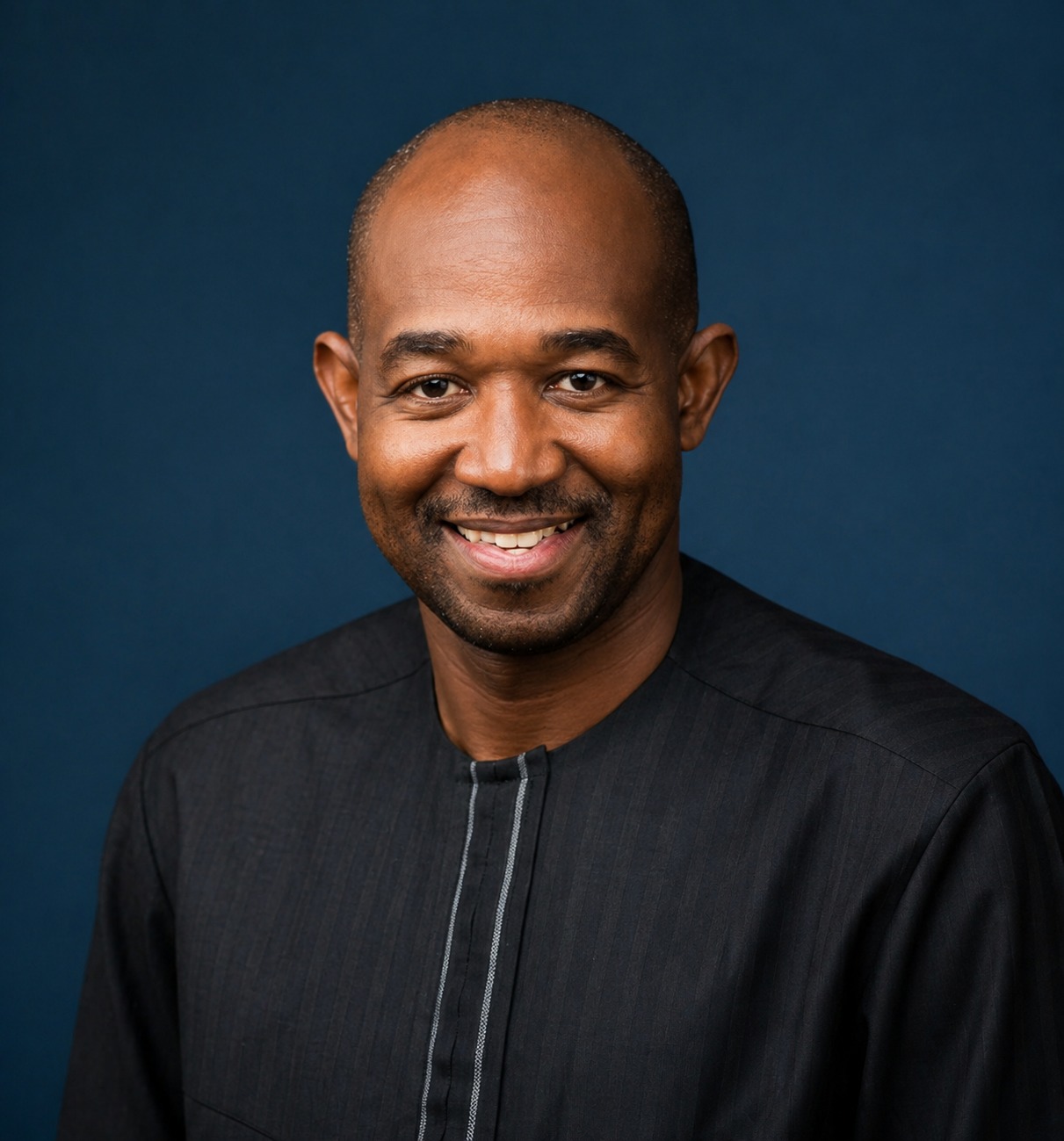
By Dr Toju Ogbe,
The resignation of British Prime Minister Keir Starmer, less than two years after leading the Labour Party to a landslide electoral victory, was dramatic, yet reflected a pattern we have become familiar with in recent British politics.
Also read: Church Leader Who Ushers: Low-Key Lifestyle of A Loud Prophet, Elijah Ayodele
Starmer now joins a procession of fallen prime ministers stretching back to 2016 – from David Cameron to Theresa May, Boris Johnson, Liz Truss, and Rishi Sunak.
None of these prime ministers was ousted through military intervention, popular insurrection, or a court order. Rather, each was ultimately brought down by the same political system that elevated them to electoral glory.
To the casual observer, the rapid turnover of British Prime Ministers in the last decade may appear chaotic, or even a symptom of political instability. Some argue that the British electorate has become ungovernable.
However, beneath the apparent chaos at Westminster lies an uncomfortable truth that African democracies would do well to examine, particularly Nigerians who wonder why our democracy has delivered so little despite almost three decades of uninterrupted civilian rule.
The turbulence of British politics over the last decade, presents an important lesson on democratic accountability beyond successful elections.
Once the prime minister is deemed a liability by their own political party, the mechanics of accountability are activated. The daggers are quietly drawn and the ruthless pressure to resign begins.
Every poll and survey on public opinion is closely monitored, local election results are taken as a referendum on leadership. Cabinet resignations begin to gain momentum and backbenchers get restless.
Once the news media smells an internal uprising, they amplify scrutiny of the prime minister, subjecting every move – speech, public appearance, political misstep etc to relentless examination.
Pressure gradually mounts until the prospect of bitter internal leadership challenge becomes impossible to resist. The Prime Minister falls.
For every British Prime Minister, winning an election is merely the beginning of examination, not the end. Political survival lasts only for as long as the prime minister maintains the confidence of his party and the parliament.
This is the muscle of British democratic accountability; a political culture that prioritises institutional survival over individual ambition. Starmer recognised this reality in his resignation speech:
“The question my party is asking now is whether I am best placed to lead us into the next general election. I have heard the answer of my parliamentary party to that question, and I accept that answer with good grace.”
That closing sentence alone is a masterclass in British institutional democracy. The party spoke. The leader listened. The correction comes from within.
Nigeria presents a strikingly different political logic.
Nigeria on the other hand, presents an interesting contrast with a different political logic and culture.
The notion that a governing party would overtly interrogate the performance of its own leader and engineer a transition to someone better equipped to maintain public confidence, is in most cases politically unthinkable in Nigeria.
Political parties in Nigeria do not coalesce around ideological principles; rather, they operate more as electoral instruments organised around powerful individuals.
Internal dissent is often dealt with as betrayals rather than as part of healthy democratic engagement. Godfatherism and transactional loyalties shape political succession and leadership retention.
Once elected in Nigeria, there is an inherent assumption that a governor or president has a fixed two-term lease on power.
While 10 Downing Street is preparing to welcome its seventh Prime Minister in a decade, Nigeria, in contrast, has had only two democratically elected presidents during the same period – one of whom is still serving.
Social and economic conditions may deteriorate. Insecurity may worsen. Campaign promises may be ignored.
Public frustrations may become unbearable. Yet, incumbent governors and presidents often remain insulated from meaningful internal scrutiny and are even routinely anointed as ‘consensus’ candidate for second terms provided loyalties to godfathers, rather than the electorates are maintained.
The consequence is that loyalty, instead of performance is often rewarded at the expense of accountability.
This is not an argument for a revolving door at Aso Rock, as frequent leadership changes, by themselves, do not guarantee good governance.
Rather it is a case for making accountability an integral aspect of party politics in Nigeria.
Although the Nigerian presidential system provides for a fixed four-year term regardless of party confidence, political parties should however, be more than instruments for election campaigns, activated to simply retain or take over power every four years.
Electoral victory, should not be the ultimate goal, but the starting point of public service where democratic legitimacy must be continuously earned.
Equally important, political parties must develop the institutional maturity to honestly evaluate their own leaders. They must prioritise public interest and institutional credibility over loyalty to ‘Godfathers’.
The ultimate lesson from Westminster’s revolving door is clear: the true strength of a democratic system, lies not in the ability to produce leaders, but the capacity to effectively replace them, when they no longer command confidence.
Protecting failing leaders from accountability weakens democracy and political parties must ensure that no leader is more powerful than the institution.
Also read: Zamfara Governor, Dauda Lawal Shakes Up Cabinet, Moves Budget Commissioner to Education
As political parties gear up for the 2027 general elections, the political class must decide what matters more: we can continue to reward blind loyalty and endure predictable decline, or discover the courage to demand accountability from those who seek to lead us.
By Sabella Ogbobode Abidde,
As a scholar, I have always wanted to edit or co-edit a book on the Big Ten of Nigerian nationalists, focusing on their lives, times, and generational impact from the nineteenth to the twenty-first century.
Also read: Abolish state of origin: A prerequisite for true national integration
An august list would include greats such as Aminu Kano, Herbert Macaulay, Nnamdi Azikiwe, Alvan Ikoku, Anthony Enahoro, Ahmadu Bello, Egbert Udo Udoma, Tafawa Balewa, Obafemi Awolowo, Eyo Ita, and Nnamdi Azikiwe. Two or more scholarly volumes would be ready before I bid farewell to my academic career.
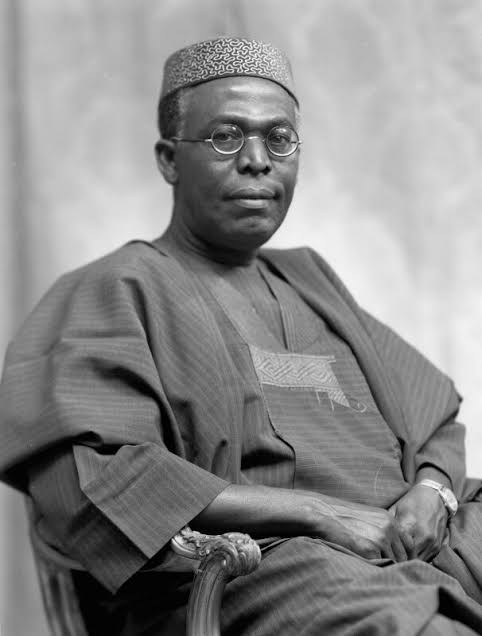
But for now, this column briefly sheds light on a philosopher and mystic, who was also a political and economic giant: Chief Obafemi Awolowo.
His impact is multigenerational and wondrously woven into the fabric of Nigeria’s history, culture, and society.
Publicly available records indicate that the Nigerian nationalist movement began in the 1920s (Awolowo was born in 1909), so he had forebearers in the movement.
He later became one of the movement’s central figures, and by independence in October 1960, he had perhaps become the dominant personality shaping Nigeria’s political development and economic growth.
Awolowo was also a federalist. The first Premier of the Western region of Nigeria. The founder of the Yoruba nationalist group Egbe Omo Oduduwa.
He was the leader of the Action Group (AG), a political party and an opposition leader in the federal parliament, from 1959 to 1963.
A noted lawyer, author, journalist, and the founder and publisher of the Nigerian Tribune newspaper.
And in later years, under the first military regime, he served as the federal commissioner for finance and as vice chairman of the Federal Executive Council during the Nigerian-Biafran Civil War, 1967-1970.
Much later, Awolowo founded the Unity Party of Nigeria (UPN) and became the party’s presidential candidate in 1979 and 1983.
The consensus was that, on both occasions – especially in 1979 – the electoral body, acting at the behest of the then military regime, put its foot and thumb on the ballot-counting machines to the detriment of Awolowo.
In other words, those who voted didn’t count; the military counted and secured the votes for their preferred candidate.
Those officially sanctioned electoral irregularities, many Nigerians have asserted, partially account for why Nigeria has remained politically and economically miserable and socially chaotic in the years since.
And in the years since his passing, many of the so-called Awoists — men and women who claimed to be adherents and practitioners of his precepts — have fallen by the wayside.
They failed! By 1997, one rarely finds a school of politicians parading themselves as students of or members of the Awolowo Cathedral.
In the second decade of the twenty-first century, many politicians lack the impudence to call themselves Awoists.
The irony is that in the northern part of Nigeria, one can rarely find a pool of politicians who, today, adhere to the teachings and practices of Mallam Aminu Kano. And in the east, there are no more followers of Dr. Nnamdi Azikiwe.
Many politicians, from the east to the west, from the north to the south, and from the middle belt to the south-south, have done away with ethics, morality, ideology, or remaining faithful to their political parties.
Most no longer care about party manifestos or going to the State House, National Assembly, or the Presidency with the people’s burden on their hearts or shoulders.
In public or in private, participants in the Nigerian political and economic space think nothing about integrity, posterity, nation-building, or national interest. It is mostly about self-interest now.
That is what Nigeria has become! Many of the good, effective, efficient, visionary, and purposeful Nigerians are in hiding, while the audaciously corrupt are masters of the game, leaders at various levels of governance.
And we expect to change for the better? Heck no! It is a painful three-ring circus at all three levels.
I do not for once contend that the Federal Republic of Nigeria is a lost cause, a lost experiment, a lost entity, or a forsaken project. No! It can be saved; it can be brought back from the edge of the cliff.
And I also do not for once think that Nigeria should be partitioned into three or four separate countries.
Oh, no! I believe that sustained, first-rate, courageous, and visionary leadership can turn the Nigerian ship around. It is doable. This is not a hopeless country. It is not!
Many of the institutions Awolowo built are still going strong. Many of his policies have been proven right and correct. Many of his teachings have been found to be the appropriate panaceas for Nigeria.
And many of the physical infrastructure projects he built lasted for more than four decades.
And so, imagine where Nigeria would be today on the development scale – on the same level as Taiwan, South Korea, New Zealand, China, and Australia? Or the oil-rich Middle East countries.
Not having Chief Obafemi Awolowo as the president of this federation set her back three to four decades.
Examined dispassionately, his economic and political achievements have yet to be rivaled for several decades after his premiership of the western region, and neither has his commissionership (now minister) of the finance portfolio.
He was good, he was great, and he was miles above his contemporaries in the development of their various regions and in their generational legacies.
Without Awolowo’s policies, much of southern Nigeria – especially the western region — would perhaps be one of the least developed in today’s Nigeria.
Directly and indirectly, Awolowo was the man who made it possible for millions of Nigerians and their offspring to dream of and have a better life.
He promised, he delivered; he built and encouraged others, such as Michael Adekunle Ajasin (Ondo State), Lateef Kayode Jakande (Lagos State), Bola Ige (Oyo State), and Olabisi Onabanjo (Ogun State), to be builders.
If General Yakubu Dan-Yumma Gowon was the most consequential military leader Nigeria has ever had, Chief Obafemi Jeremiah Oyeniyi Awolowo, was the single most consequential leader and public figure beginning with his premiership in 1954.
Above all else, he was a family man, a good man, a good Nigerian, and a Pan-Africanist. He was better than most and far better than we thought. That’s Awo for you, a man who’s woven into our consciousness.
Also read: Abolish state of origin: A prerequisite for true national integration
Chief Obafemi Awolowo would have been 117 this year, but he died at 78 in 1987 at his home in Ikenne, Ogun State. Chief Hannah Idowu Dideolu Awolowo, affectionally called HID, was Awolowo’s “jewel of inestimable value.” He had said of her: “I do not hesitate to confess that I owe my success in life to three factors: the Grace of God, a Spartan self-discipline, and a good wife. Our home is to all of us, a true haven; a place of happiness, and of imperturbable seclusion from the buffetings of life.” HID was born in Ikenne, in1915 and passed in 2015 in the same locality. She was 99. It was a union and a marriage that lasted for five glorious decades.

-by Folorunsho Hamsat
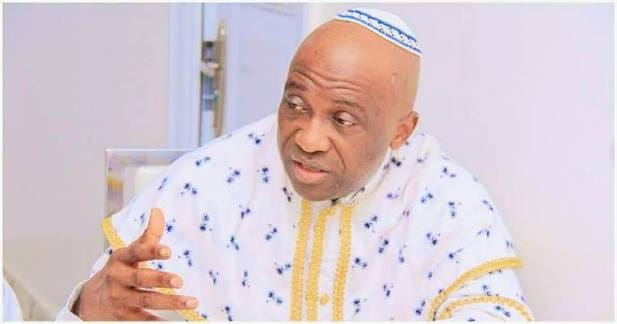
In today’s clout-chasing world, everyone wants to flaunt their connections, and demonstrate influence. But one famous spiritual leader is completely changing the game on what fame should look like. Meet the leader of INRI Evangelical Spiritual Church, Primate Elijah Ayodele, the Lagos based mega prophet who chooses to blend into the crowd.
Primate Ayodele is completely redefining spiritual leadership. While his prophetic voice thunders with undeniable authority on the global stage, his personal life is defined by deep, quiet humility. Those in his inner caucus say he does not chase trends or clout. He simply serves.
In a world where spiritual leaders are often expected to be showmen, Primate Ayodele presents a fascinating study in contrast. He is a man who is inherently reserved, yet his ministry commands global attention. He is a naturally quiet personality, but the sheer weight and precision of his prophecies make him appear like a remarkably loud person to the public.
Primate Ayodele’s prophetic ministry has expanded far beyond local borders, capturing the attention of nations across the globe. Renowned for his remarkably accurate insights into international politics, broad economic changes, and governance, Ayodele has quietly become a trusted confidant and friend to numerous men and women of timber and caliber.
Remarkably, Ayodele has direct access to top African presidents and world decision makers. The magic wand? His breathtaking accurate prophecies on global politics and economies that continue to win him honours across Africa, and beyond. However, he is hardly seen or heard bragging about it or dropping names to show off. He doesn’t chase clout, he delivers results, his people affirm. True power doesn’t need to make noise to be felt, Ayodele himself would say.
Church insiders squealed that if you walk into the Oke-Afa, Isolo headquarters of his ministry (where you almost always can find him) on a Sunday, good luck to you spotting him. This clearly shows how super shy and reserved Primate Ayodele really is. However, his voice only thunders when he stands on the altar to preach or drop his trademark prophetic warnings.
The true mark of Ayodele’s unique personality is, he can act as a president’s adviser on a Saturday, and happily serves as an ordinary usher in his own church on a Sunday!
Insiders confirm that once he steps off the altar, Primate Ayodele completely withdraws from the public eye. First-time visitors are said to be stunned because the world famous prophet blends right into the crowd. Within and outside his church, no massive security squad, no fancy exclusive prestige, and no ego.
During church services, we learned, Ayodele would roll up his sleeves and acts as a regular church usher. Sometimes, insiders revealed, he even stands right at the church’s entrance, mounting guard at the door to welcome guests and church members. Talk about ultimate servant leadership.
For Primate Ayodele, indeed, true spiritual power is beyond making a loud noise, but rather about making the biggest impact.
-Folorunsho Hamsat is a Lagos based journalist
-
Politics2 years ago
13 Ondo Assembly Members Disown Endorsement of Aiyedatiwa
-
Politics2 years ago
APC Group, Ondo Govt, Quarrel Over Money for Endorsement
-

 Trending News5 years ago
Stop unsavoury, inciting statements – DSS warns
-

 Others4 years ago
Adron Homes Celebrates 10 Years Of Housing Excellence
-

 Humanity4 years ago
President Buhari Commiserates With Ambassador Maureen Tamuno Over The Loss Of Her Father
-

 Others7 years ago
EX- CUSTOMS BOSS, IBRAHIM MERA’S DWINDLING FAME
-

 Business2 years ago
Bigi Carbonated Soft Drinks Treats 40 Consumers to an Epic Easter Movie Hangout
-

 Business2 years ago
Wema Bank Shines at Global SME Finance Forum Conference Awards 2024 …Awarded: • SME Financier of the Year (Africa) • Platinum Award for Best Financier for Women Entrepreneurs (Africa)