
Business
JUBRIL ADEWALE TINUBU: CHAMPION EXTRAORDINAIRE

OLA KING

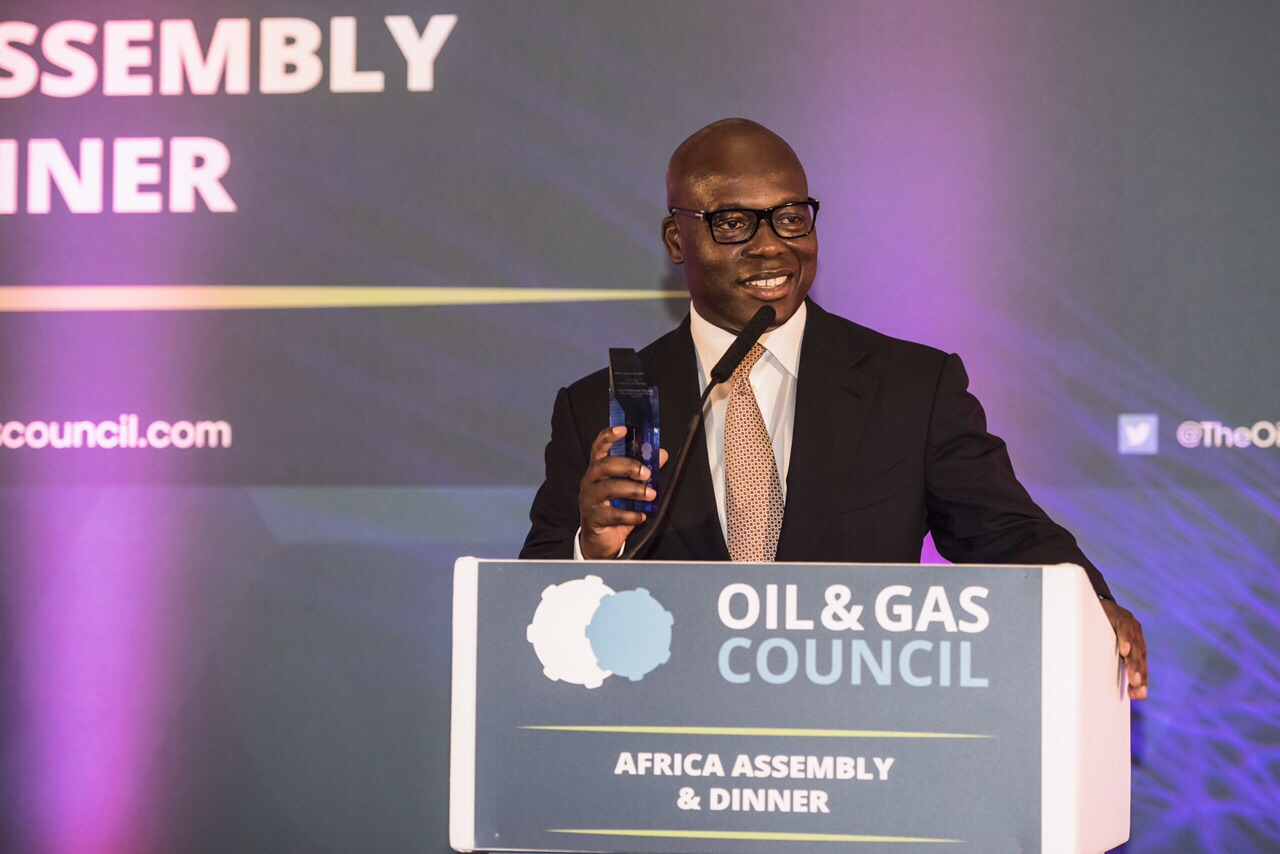
For Wale Tinubu, the head honcho of leading Oil and Gas company, Oando Plc, getting positive result that will position Oando as a world class brand to reckon with remains his top priority. Despite the recent face off with Security Exchange Commission, SEC, the oil magnate had remained unruffled and unperturbed. He is hellbent on proving naysayers wrong that; he knows the Oil and Gas business like the back of his hands.
The very brilliant businessman is proving to the world that he is definitely a master in the art of making money.
To say that the Lagos State born is a big player in the oil and gas industry is stating the obvious, in fact, he has emerged a glittering
star in the business firmament. The trained lawyer plies his trade in such a way that makes many of his competitors green with envy. Indeed, he enjoys uncommon grace so much that he now sits atop a multi-billion naira conglomerate with various subsidiaries in oil & gas, properties and so many other businesses scattered around the world.
It’s no longer a hidden fact that the Oando boss, had always displayed his unrivalled wizardry and Midas touch with his wealth of experience in business. This has helped him weathered all typhoon storm surfacing.
Wale Tinubu is still standing tall like the proverbial iroko tree.
Away from the recent faceoff between the Security Exchange Commission, SEC and Oando; the czar and his team had yet again proved their worth by keeping Oando afloat and also put smiles on the face of investors by
recording a revenue of N315.4 billion for the half year ended June 30, 2019, showing an increase of six per cent from N297.3 billion in the corresponding period of 2018. Oando ended the period with a profit-after-tax of N7.168 billion, down from N8.5 billion in 2018.
As gathered the trained lawyer’s watch, had also continued to reduce its total borrowings after its acquisition of ConocoPhillips Nigeria in 2014, following a proactive drive to significantly reduce its debt and liabilities.
According to information gathered, the total borrowings reduced drastically for the period by five per cent to N200.7 billion at the end
of June 30, 2019, from N210.9 billion at the end of 2018, indicating a 58 per cent reduction in debt since 2014 from N473.3 billion.
With this growth as revealed by a source, the man has been described as a champion extraordinaire whose magic wand is forever potent even when least expected.
Wale Tinubu’s success may not come as a surprise to those close to him
because he has over the years, shown evidence that he’s well versed in
oil and gas business; and like a business cognoscente, he knows when to
throw the dice and even reinvent in a shaky business environment. The
words of a former British Prime Minister, Winston Churchill; “The
empires of the future are empires of the mind” gives credence to Tinubu’s evident ability to successfully overcome challenges.
The story started 25 years ago, precisely December 1994, from a relatively small and unknown company, Ocean and Oil Services Limited with his friends, Omamofe Boyo and Onajite Okoloko to supply diesel and
Low Pour Fuel Oil (LPFO) to various industries, shipping firms and exploration.
Tinubu has grown into perhaps one of the biggest players in world oil business. To those with discerning minds, his success, whichranks him as not one of your run-off-the-mill businessmen, is rooted in his uncommon brilliance and business acumen.
Interestingly, more than two decades after they sowed in pains, the investment has grown, before their eyes, to become a multinational
conglomerate worth millions of dollars spread across five West Africancountries. At the outset, they bought their first vessel, MT Carolina, in the mid-90s to supply diesel to off-shore companies from the Port-Harcourt Refinery.
Within seven years, the fleet had grown to seven ships; and by 2000, when the government wanted to sell its controlling stake in the defunct Unipetrol Plc, a downstream oil marketing company, they bid for it. When
the former Managing Director of the old Unipetrol Plc at that time, Mallam Yusuf Ali was a seasoned technocrat who once served in the NNPC received word that Ocean and Oil Services had made a bid for his oil firm, he laughed them to scorn and waved it off as a bad joke, because Unipetrol at that time was already a top quoted company on the Lagos
Stock Exchange, while Ocean and Oil was just an upstart trying to find its feet in the downstream sector. His former aides recall that the bid reminded them of a tilapia fish trying to swallow up a whole whale! To
their surprise, Ocean and Oil Services successfully paid for the shares
and took over the company, with the help of its foreign technical partners, Compagnia Espanola De Petroleos (CEPSA), the second largestoil group in Spain.
Two years later Tinubu led the largest ever acquisition of a quoted Nigerian company, with the purchase of Agip by Unipetrol. The group was rebranded as Oando PLC and has grown to become the leading oil and gas retailer in Nigeria, ensuring one in five cars on Nigerian roads drive on its fuels.
By 2005, Oando Plc became the first African company to secure a cross-border listing on the Johannesburg stock of exchange (JSE) in
South Africa and in the same year Oando Energy Services wasincorporated.
In 2010, Oando through its subsidiary Oando Gas and Power built thefirst 12.5MW IPP Power plant for Lagos State government and in 2011,Tinubu concluded a $3billion gas facility contract with the Federal Government. Two years later, he led the listing of the company’s
upstream subsidiary, Oando Energy Resources on the Toronto StockExchange (TSX).
In 2014, we witnessed the close of his best transaction yet, the acquisition of ConocoPhillips Nigeria businesses for $1.5 billion fortifying Oando’s position as the largest indigenous independent oil
& gas producer in Nigeria with a current net production of 53,145 boepd
(Barrels of Oil Equivalent per Day) and 230.6 mmboe (Million Barrels of Oil Equivalent) of 2p reserves and 536.8 mmboe of 2C reserves.
Tinubu’s continued success is worthy of emulation by entrepreneurs and prospects especially in Nigeria’s inclement business environment.


TotalEnergies and Nigerian independent energy company AMNI International have taken the Final Investment Decision on the $800 million Ima Gas Project, more than five decades after the gas field was discovered.
The Ima Gas Project, located in shallow waters across Oil Mining Leases 112 and 117 near Bonny Island, Rivers State, is expected to begin production in 2028 and reach a plateau of 350 million cubic feet of gas per day.
The development is expected to play a major role in supplying feed gas to Nigeria LNG, with the Ima field projected to provide about one-third of the additional gas required for the ongoing Train 7 expansion.
Train 7 is expected to increase Nigeria LNG’s liquefaction capacity from 22 million tonnes per annum to 30 million tonnes per annum, strengthening Nigeria’s capacity to process and export liquefied natural gas.
The Ima field was discovered in 1973 but remained undeveloped for more than 50 years. The Final Investment Decision provides the commercial and financial basis for finally developing the long-dormant resource.
Under the development plan, TotalEnergies will operate the project with a 40 per cent interest, while AMNI will hold the remaining 60 per cent.
The field will be developed using a single offshore platform connected to Nigeria LNG’s facility on Bonny Island through a 22-kilometre pipeline.
TotalEnergies said its investment in the project is more than $600 million, while the Federal Government described the overall Final Investment Decision as an $800 million investment.
At the FID signing ceremony in Abuja, TotalEnergies Exploration and Production Nigeria Managing Director, Mathieu Bouyer, described the decision as the culmination of a development process that had stretched across several decades.
He said the project reflected increased confidence in Nigeria’s investment environment and highlighted reforms targeting the non-associated gas sector as part of the factors that helped make the development commercially viable.
President Bola Tinubu welcomed the investment, saying the project demonstrated the potential of reforms introduced to reduce the cost and time required to develop oil and gas projects.
The President said the government had introduced incentives aimed specifically at unlocking onshore and shallow-water gas projects that had remained undeveloped for years.
He said the Ima development would create opportunities for Nigerian businesses, engineers, technicians and contractors, while generating jobs, economic activity in host communities and additional export earnings.
The project is also expected to have a strong Nigerian content component. TotalEnergies said all key contractors for the development would be Nigerian companies, while about 60 per cent of the workforce during the development phase is expected to come from host communities.
The development will incorporate measures aimed at reducing emissions. TotalEnergies said the platform would receive electricity from shore, operate without routine flaring and use permanent methane detection and monitoring systems.
The Federal Government said the project is part of efforts to turn Nigeria’s large natural gas reserves into productive assets capable of supporting industrialisation, energy supply, jobs and export earnings.
Special Adviser to the President on Energy, Olu Verheijen, said the Ima development illustrated the importance of creating commercial and investment conditions that allow previously stranded resources to be developed.
The government also noted that Nigerian financial institutions arranged 77 per cent of the project’s financing, further highlighting the participation of domestic financial institutions in the development.
For Nigeria LNG, the project comes as the company continues work on the Train 7 expansion, which is designed to increase the Bonny Island plant’s liquefaction capacity and strengthen the country’s position in the global LNG market.


The Dangote Group is pursuing a $45bn investment programme across its businesses as it targets annual revenue of $100bn by 2030, with Dangote Cement expected to play a major role in funding the conglomerate’s next phase of expansion.
The group’s expansion strategy covers cement, refining, fertiliser, gas, infrastructure and other industrial businesses as it seeks to increase production capacity and strengthen its presence across African markets.
Dangote Cement, described as the group’s largest cash-generating business, is targeting an increase in annual production capacity from its current 55 million tonnes to more than 80 million tonnes as part of the growth programme.
The cement company said its expansion strategy would rely substantially on internally generated cash, reflecting the strength of its existing operations and cash-generating capacity.
In the 12 months to June 2026, Dangote Cement recorded revenue of $3.1bn, representing a 22 per cent year-on-year increase. Its cash conversion stood at 89 per cent, while return on capital employed reached 68 per cent during the period.
The company’s financial performance has also remained strong in naira terms. For the first half of 2026, Dangote Cement reported profit before tax of N981.39bn, up 34.43 per cent from N730.03bn recorded in the corresponding period of 2025. Profit after tax rose 22.69 per cent to N638.53bn.
The group’s wider investment plan is expected to include further expansion of the Dangote Refinery, with its capacity targeted to rise towards 1.4 million barrels per day. The company is also pursuing gas and LNG projects and additional industrial investments across Africa.
Dangote Cement’s expansion includes projects such as the proposed six-million-tonne-per-year plant at Itori in Ogun State, which is expected to strengthen the company’s production base as demand for cement and construction materials grows across the continent.
The group is also increasingly positioning its businesses around export earnings and geographically diversified operations. Management expects a larger share of revenue to be generated in foreign currency as its African expansion gathers pace.
The scale of the investment programme is underpinned by the group’s broader Vision 2030 strategy, which includes a target of more than $30bn in adjusted earnings before interest, taxes, depreciation and amortisation by 2030 alongside the $100bn revenue objective.
For Dangote Cement, the strategy represents a combination of capacity expansion and financial discipline, with strong operating cash flows expected to support investment while maintaining the company’s balance-sheet strength.
The wider Dangote Group is therefore positioning its 2030 strategy around expanding industrial capacity, increasing exports and using the cash generated by established businesses to finance further growth across Africa.
-
Politics3 years ago
13 Ondo Assembly Members Disown Endorsement of Aiyedatiwa
-
Politics3 years ago
APC Group, Ondo Govt, Quarrel Over Money for Endorsement
-

 Trending News5 years ago
Stop unsavoury, inciting statements – DSS warns
-

 Others5 years ago
Adron Homes Celebrates 10 Years Of Housing Excellence
-

 Humanity5 years ago
President Buhari Commiserates With Ambassador Maureen Tamuno Over The Loss Of Her Father
-

 Others7 years ago
EX- CUSTOMS BOSS, IBRAHIM MERA’S DWINDLING FAME
-

 Business2 years ago
Bigi Carbonated Soft Drinks Treats 40 Consumers to an Epic Easter Movie Hangout
-

 Business2 years ago
Wema Bank Shines at Global SME Finance Forum Conference Awards 2024 …Awarded: • SME Financier of the Year (Africa) • Platinum Award for Best Financier for Women Entrepreneurs (Africa)