Business
Leo Stan Ekeh: The Billionaire Who Builds Systems, Not Spectacle


To describe Leo Stan Ekeh as an underrated billionaire is to state the obvious. In a business climate where success is often amplified by spectacle, Ekeh has chosen a different route — one defined by discipline, depth, and deliberate quietness.

He is wealthy, unquestionably so. But unlike many in his league, he has never made flamboyance a strategy. There are no loud declarations, no performative displays of affluence. Instead, there is structure. There is scale. There is substance.
The true measure of an entrepreneur is not in expansion seasons, but in moments of contraction. During the global disruption triggered by COVID-19, Ekeh reportedly absorbed a staggering financial hit tied to a robotics venture — losses said to approach $28 million. For many, such a setback would trigger retreat. For Ekeh, it’s reinforced conviction.
Innovation demands risk. Systems demand resilience. And resilience, in Ekeh’s case, has never been negotiable.
Those close to him describe a man unperturbed by turbulence — a strategist who sees beyond quarterly shocks to generational positioning. In his world, setbacks are tuition, not tragedy.
His success has translated into a presence that spans key global cities — with premium real estate interests in Dubai, London, New York, and Lagos. Yet even here, symbolism quietly intersects with history. His Lagos residence, once home to the British High Commissioner to Nigeria, reflects not just acquisition power but an appreciation for legacy and institutional significance.
But what distinguishes Ekeh is not where he lives — it is how he thinks.
Through Zinox Technologies, he challenged Nigeria’s dependence on imported computing hardware and positioned indigenous manufacturing as a viable force. The company’s eventual listing on the Nigerian Stock Exchange was not just a corporate milestone — it was a declaration that Nigerian technology enterprises could play in formal capital markets.
With TD Africa, he constructed one of Sub-Saharan Africa’s largest technology distribution ecosystems, linking global OEMs to African resellers and enterprises. Quietly, efficiently, structurally — he built the backbone that many others now build upon.
And when he stepped into the retail technology space through Konga, it was not for noise. It was for reengineering — integrating distribution, logistics, and digital commerce into a more disciplined omnichannel model.
There is a pattern in Ekeh’s journey: build institutions, absorb shocks, stay grounded, expand strategically.
He represents a different archetype of billionaire — one who invests in architecture rather than applause. His philosophy aligns more with infrastructure than influence, more with policy depth than public theatrics.
In a society where visibility often substitutes for value, Ekeh’s approach is almost countercultural. He moves without frenzy. He scales without spectacle. He accumulates without announcing.
History often celebrates the loudest pioneers.
But it is the quiet architects who alter the trajectory of nations.
And in Nigeria’s digital evolution story, Leo Stan Ekeh remains one of its most consequential — and most understated — builders.


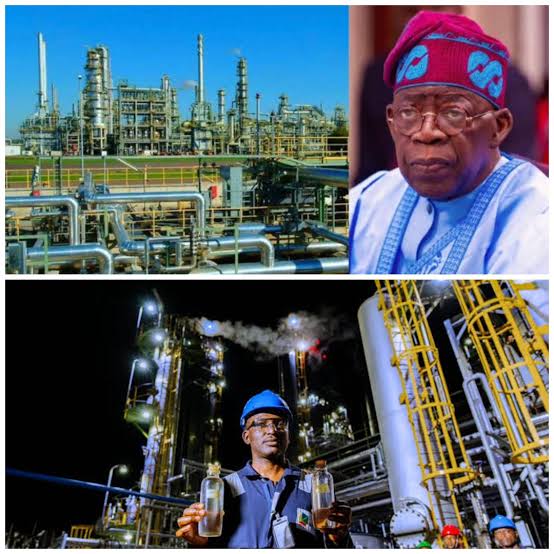
President Bola Tinubu has reaffirmed the Federal Government’s commitment to rehabilitating and repositioning Nigeria’s dormant national refineries, declaring that the facilities will not be allowed to become stranded assets.
Tinubu was represented by the Permanent Secretary of the Ministry of Petroleum Resources, Mrs Patience Oyekunle, at the 20th OTL Africa Downstream Energy Week in Lagos on Monday.
The President said the government is adopting a more rigorous and commercially sustainable approach to the rehabilitation of the Port Harcourt, Warri and Kaduna refineries.
“At the same time, the government remains committed to ensuring that existing national refining assets are not allowed to become stranded investments,” the statement said.
“We are pursuing a more rigorous, commercially sustainable approach to the rehabilitation and repositioning of our refineries, supported by technical assessment, stronger partnerships, and improved operational discipline.”
The objective, according to the administration, is for Nigeria to refine more of its crude oil, create greater domestic value and become a reliable supplier of energy to Africa.
The national refineries, managed by the Nigerian National Petroleum Company Limited (NNPC), have remained largely inactive for years despite significant spending on turnaround maintenance. The NNPC has signed a memorandum of understanding with Chinese firms as part of ongoing efforts to revive the facilities.
Tinubu also noted the contribution of private refining capacity, particularly the Dangote Refinery, which has reached its 650,000 barrels-per-day nameplate capacity, in strengthening Nigeria’s prospects of becoming a net exporter of refined petroleum products.


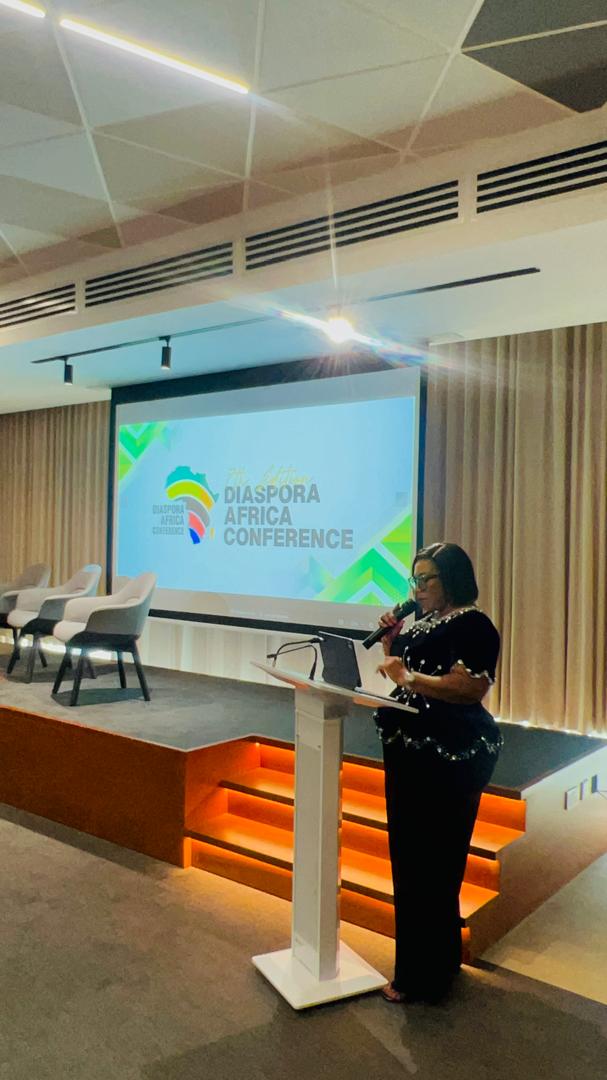
AICL GMD Maureen Tamuno calls for stronger diaspora investment in Africa through trust, transparency, skills transfer and sustainable partnerships
-
Politics3 years ago
13 Ondo Assembly Members Disown Endorsement of Aiyedatiwa
-
Politics3 years ago
APC Group, Ondo Govt, Quarrel Over Money for Endorsement
-

 Trending News5 years ago
Stop unsavoury, inciting statements – DSS warns
-

 Others5 years ago
Adron Homes Celebrates 10 Years Of Housing Excellence
-

 Humanity5 years ago
President Buhari Commiserates With Ambassador Maureen Tamuno Over The Loss Of Her Father
-

 Others7 years ago
EX- CUSTOMS BOSS, IBRAHIM MERA’S DWINDLING FAME
-

 Business3 years ago
Bigi Carbonated Soft Drinks Treats 40 Consumers to an Epic Easter Movie Hangout
-

 Business2 years ago
Wema Bank Shines at Global SME Finance Forum Conference Awards 2024 …Awarded: • SME Financier of the Year (Africa) • Platinum Award for Best Financier for Women Entrepreneurs (Africa)