Business
Much Ado about Meddlesome Minions, and Messengers of Misinformation By Tayo Williams


There is a growing phalanx of pseudo-intellectuals parading the social media space with faux and fictitious knowledge of the indigenous oil and gas industry, and it is scary because of the grave danger they portend and present for the average Nigerian.
From X (formerly known as Twitter) to Facebook and even the photos and videos-sharing site, Instagram, they abound, in their inglorious number, lending their platforms to deliberately distort facts and spread misinformation especially to favour the narratives propounded by popular Nigerian businessman Aliko Dangote, owner of the Dangote Petroleum Refinery.
Since the refinery began operations earlier in the year, it has been one week, one controversy allegedly orchestrated by Dangote in a brazen attempt to arm-twist the Nigerian National Petroleum Corporation Limited, NNPCL, into playing by his rules.
Those conversant with the modus operandi of Dangote and his refinery say the long-drawn warfare with every institution and individual in the oil and gas value chain is nothing but a self-seeking and mindless profit maximisation tactic.
Whilst nobody begrudges Dangote’s drive for profit as a businessman, perhaps he needs to be reminded that the NNPC has a mandate to ensure and provide energy security in a way that is affordable and sustainable for the generality of Nigerians. And, the NNPCL management has declared in very unambiguous terms that it would not pander to the din of the market whether orchestrated by Dangote, his rampaging minions or anyone else.
The truth, however, is that there is an increasing army of vacuous, vicious, and vile individuals strutting the social media space defending and propagating outright and outlandish falsehoods. Of particular concern is one Kelvin Emmanuel who has become the unofficial mouthpiece of the Dangote Refinery. Going from one media house to the other, he pulls figures out of the air and projects obnoxious untruths on hapless Nigerians. With the backing of his paymaster’s billions, it is no surprise that this otherwise irrelevant and fatuous character now commands appearances on major television stations.
But it is on X that he has made lying glibly and gratuitously the Holy Grail. He once premised Dangote’s inability to secure feedstock for his refinery on the government and the NNPCL. While peddling this untruth, he conveniently forgets that the refinery had a seven-year window, during its construction phase, to lock in feedstock supplies that could last a minimum of five years. Dangote did none of that. As it would later unfold, his game plan, which Emmanuel glossed over, was to monopolise equity oil and production quotas to serve his business interests.
Another deliberate misinformation from the Dangote camp was the allegation that International Oil Companies (IOCs) and other industry players were trying to sabotage his interests. Apart from being an investor in the Dangote Refinery, the NNPC still supplies gas to various Dangote companies across Nigeria. How can anyone or any institution jeopardise their investment? What further proof of faith does Dangote and his minions need to know that the NNPC is their cheerleader, and is here to make operating in the industry seamless and a win-win for all?
Echoing Dangote’s baseless stance, Emmanuel also called for the sack of Mr. Farouk Ahmed, Chief Executive Officer of the Nigerian Midstream and Downstream Petroleum Regulatory Authority (NMDPRA), regulators of Nigeria’s midstream and downstream value chain. By Emmanuel’s warped reckoning, Ahmed had no locus to speak against Dangote or his enterprise because the latter questioned the quality of the product from Dangote Refinery and other local refineries in comparison with imported ones. Of course, Emmanuel’s was a lone voice in the wilderness because those who understand the invaluable role that the NMDPRA plays in the industry did not as much as dignify his tirade with a glance.
In a robust response to Emmanuel’s groundswell of egregious lies, Ibrahim Y. Kabo, a petroleum engineer based in Abuja, described him as “Someone who has not seen the inside of a refinery before Dangote built one, let alone understood the mechanism of the energy industry, …(yet) assuming the role of an authority in oil and gas matters.”
He went further to lampoon Emmanuel for stating that only Dangote Refinery’s products meet specifications while others are all sub-standard. “The obvious question is: whose specifications? For a refinery that has barely made four of seven pre-inauguration certifications, it sounds somehow laughable to suddenly assume the role of regulator in an industry you’ve barely entered,” Kabo said.
In the article, entitled, “The Hand of Aliko, the Voice of Kelvin: Inside Dangote Refinery’s Media Stunt Lab”, Kabo declared that from all Emmanuel’s interviews and pretensions to be an industry expert, one thing is obvious: “He lacks an understanding of both the mandate and the reach of NNPC as a national oil company.”
Kabo adds that, “Downstream is the least of NNPC’s business interests. The mandate, as per PIA (Petroleum Industry Act), is to facilitate both the extraction and commercialization of Nigeria’s oil and gas resources. 20 billion dollars may be a lot, but NNPC and industry regulators routinely handle projects of that magnitude. At best, Dangote and (Emmanuel’s) ranting are an irritation. I believe that’s why NNPC openly declared it was not interested in being Dangote’s off-taker.”
Like the Yoruba saying goes, derision does not stop the sweetness of the honey. The meddlesome minions and messengers of misinformation can continue dancing naked in the marketplace, but what is most important is that the NNPCL has assured that it will not cease doing everything in its capacity “to harness the possibilities of oil and gas, address energy demand and drive the national economy, and become the number one oil producer and supplier in Africa.”

–Tayo Williams is a Lagos-based media executive


Adron Homes Zoho recognition puts the Nigerian property developer among eight regional businesses celebrated for innovation and digital transformation.
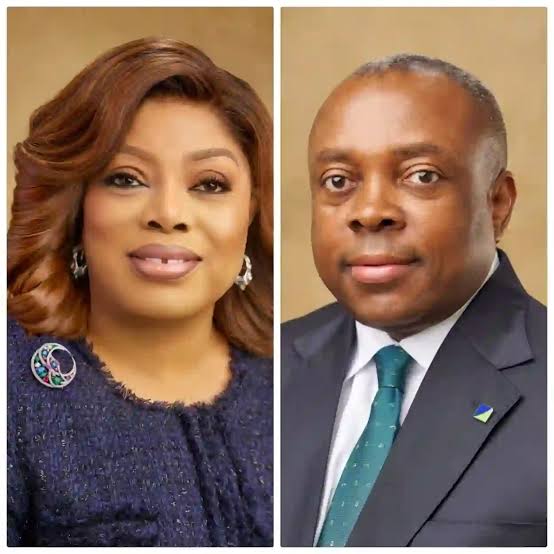
Fidelity Bank CEO Amuchie takes over in January 2027 as Nneka Onyeali-Ikpe exits after five years of strong earnings, expansion and transformation

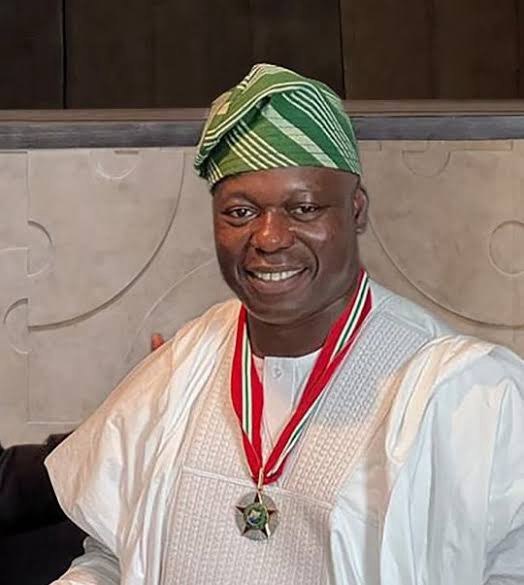
Oando Plc, under the leadership of its Group Chief Executive, Jubril Adewale Tinubu, has recorded a significant improvement in its operating performance, returning to profitability at the operating level as revenue rose to ₦2.78 trillion in the first nine months of 2026.
The indigenous energy company reported revenue of ₦2.776 trillion for the nine months ended September 30, 2026, representing a nine per cent increase from the ₦2.541 trillion recorded during the corresponding period of 2025.
The latest unaudited results, released on October 30, also showed a substantial recovery in gross profit, which increased to ₦174.5 billion from ₦29.8 billion in the previous year.
One of the most notable developments was the company’s return to operating profit. Oando recorded an operating profit of ₦159.7 billion, reversing the operating loss of ₦109.7 billion reported in the corresponding period of 2025.
The improvement reflects stronger performance across its operations, supported by higher production volumes, improved realised prices and the absence of a significant fair value loss recorded in the previous year.
The figures provide an indication of the progress made by the company as it continues to pursue its expansion and operational efficiency objectives under Tinubu’s leadership.
Oando’s production performance also improved during the reporting period. Average daily production increased by 14 per cent to 42,985 barrels of oil equivalent per day, compared with 37,614 barrels in the corresponding period of 2025.
The growth was supported by higher output from crude oil, natural gas and natural gas liquids operations.
The company also reported a 22 per cent reduction in production operating costs, which fell to $15.39 per barrel of oil equivalent from $19.67 recorded a year earlier.
Facility uptime improved to 96.1 per cent from 85 per cent, indicating greater reliability across its production infrastructure.
These improvements reflect the impact of drilling activities, workover programmes and efforts to restore previously constrained facilities. Oando said the measures helped increase production and improve operational efficiency across its enlarged asset base.
During the period, the company generated ₦285 billion in cash from operations and invested ₦110.7 billion in capital expenditure, with a significant portion directed towards drilling activities across its operated OML 60–63 assets.
Its seven-well drilling programme for 2026 also progressed, with two new wells completed and brought on stream, while workovers and additional drilling activities continued.
Oando further reported an improvement in its debt position, with total borrowings declining by 20 per cent from ₦2.70 trillion at the end of December 2025 to ₦2.16 trillion as of September 30, 2026.
Net debt also fell by ₦286 billion to ₦1.99 trillion during the nine-month period.
The reduction forms part of the company’s broader capital management strategy, which is aimed at lowering acquisition-related debt, reducing financing costs and strengthening its balance sheet.
Despite the stronger operating performance, however, Oando’s profit after tax declined by 47 per cent to ₦106.5 billion, compared with ₦201.3 billion recorded in the corresponding period of 2025.
The company attributed the decline largely to the swing from net finance income in the previous year to net finance costs in 2026, alongside the continuing burden of acquisition-related debt.
Its results showed finance costs of ₦244.2 billion during the period, while the company also recognised a tax credit of ₦181.1 billion arising from the reversal of previously recognised tax provisions.
The figures underline the distinction between Oando’s improved operating performance and the financial pressure it continues to face from its debt obligations.
Nevertheless, the return to operating profitability, higher production, lower unit operating costs and declining borrowings represent important developments in the company’s financial and operational position.
For Tinubu, who has remained central to Oando’s corporate transformation, the latest results provide further evidence of the company’s efforts to consolidate its position in Nigeria’s energy industry and expand its presence across Africa.
The company has also outlined plans to continue its seven-well development programme, sustain production reliability and strengthen its financial position through an equity-raising initiative.
With its operating performance improving and debt reduction remaining a priority, Oando’s next challenge will be to translate its production and revenue growth into stronger bottom-line earnings while managing the cost of financing its expansion.
-
Politics3 years ago
13 Ondo Assembly Members Disown Endorsement of Aiyedatiwa
-
Politics3 years ago
APC Group, Ondo Govt, Quarrel Over Money for Endorsement
-

 Trending News6 years ago
Stop unsavoury, inciting statements – DSS warns
-

 Others5 years ago
Adron Homes Celebrates 10 Years Of Housing Excellence
-

 Humanity5 years ago
President Buhari Commiserates With Ambassador Maureen Tamuno Over The Loss Of Her Father
-

 Others7 years ago
EX- CUSTOMS BOSS, IBRAHIM MERA’S DWINDLING FAME
-

 Business3 years ago
Bigi Carbonated Soft Drinks Treats 40 Consumers to an Epic Easter Movie Hangout
-

 Business2 years ago
Wema Bank Shines at Global SME Finance Forum Conference Awards 2024 …Awarded: • SME Financier of the Year (Africa) • Platinum Award for Best Financier for Women Entrepreneurs (Africa)