
News
NGE Sounds Fresh Warning on Press Freedom Before 2027

NGE press freedom warning highlights journalist harassment, fair elections, security and responsible reporting as Nigeria prepares for 2027

The Nigerian Guild of Editors (NGE), led by President Eze Anaba and General Secretary Onuoha Ukeh, has issued a wide-ranging warning on press freedom, political competition, national security and journalistic responsibility ahead of Nigeria’s 2027 general elections.
Also read: GFF Announces Free Medical Screening in Sagamu
The warning followed the Guild’s Standing Committee meeting in Kano on Friday, where editors examined the state of the media, political campaigns, national security and wider national affairs.
The resulting communiqué placed particular emphasis on what the Guild described as increasing harassment, intimidation and prosecution of journalists by security agencies.
The NGE expressed concern about the use of cybercrime legislation and other laws in circumstances that, in its view, could restrict legitimate journalistic work.
The Guild called on governments and members of the public to respect press freedom and engage media organisations through established channels rather than threats, intimidation or violence.
The concern comes with the 2027 elections drawing closer and the political environment becoming increasingly active. For the Guild, the protection of journalism is inseparable from the health of the wider democratic system.
Yet the communiqué also places responsibility firmly on journalists.
The NGE urged the media to maintain high professional and ethical standards, with fairness, objectivity, accuracy and factuality guiding reporting.
That emphasis is significant at a time when professional journalism increasingly competes for attention with social-media commentary, partisan messaging and rapidly circulating misinformation.
The Guild’s position creates an important balance. Press freedom protects journalists from unjustified interference, but it does not remove the obligation to report accurately or provide fair treatment to people and institutions covered by the media.
The communiqué therefore points towards a principle that will become increasingly important during the election period: criticism of government and political actors should be protected, while demonstrably false or unethical reporting should be addressed through transparent professional and legal mechanisms.
The Guild specifically recommended that people and institutions with grievances against journalists use the Media Ombudsman rather than resort to intimidation or violence.
The mechanism was established jointly by the Newspapers Proprietors’ Association of Nigeria, the NGE, the Nigerian Union of Journalists and the Guild of Corporate Online Publishers.
The NGE’s concerns extend beyond journalism to the political space itself.
The editors called on federal and state governments to provide conditions in which political parties and candidates can campaign freely and fairly.
The communiqué specifically referred to lawful displays of party symbols and campaign slogans.
The Guild also urged the Independent National Electoral Commission and other agencies involved in the 2027 elections to provide what it described as a level playing field for both ruling and opposition parties.
That demand raises practical questions about electoral fairness. A credible political contest involves more than the conduct of voting on election day.
It also encompasses the ability of parties to organise, communicate with voters, hold campaign events and present their programmes without discriminatory restrictions.
The NGE’s intervention comes against a political backdrop in which parties are already positioning themselves for the 2027 contest.
The Guild urged political actors to pursue issue-based campaigns and avoid inflammatory rhetoric.
That appeal is particularly relevant in Nigeria, where political disagreements can intersect with existing ethnic, religious and regional sensitivities.
Responsible political communication therefore becomes not merely a matter of campaign etiquette but part of the broader effort to prevent political competition from becoming socially destabilising.
The media has a corresponding responsibility.
Editors and reporters will have to scrutinise campaign promises, political records and public claims without becoming vehicles for inflammatory rhetoric.
The distinction between reporting what a politician says and amplifying a provocative claim without sufficient context will become increasingly important as the election approaches.
The Guild also addressed national security, acknowledging what it described as successes by security agencies against terrorism, banditry and other forms of criminality while calling for sustained and coordinated efforts towards lasting peace, security and national unity.
The position reflects a broader democratic tension. Security agencies require public support to confront serious threats, but journalists and citizens also require protection from arbitrary or excessive use of state power.
That balance is particularly important for reporters working in conflict-affected areas.
Journalists covering terrorism, banditry, kidnapping and communal violence often operate in difficult environments while providing information that communities and policymakers need.
The NGE also linked national welfare to economic reforms and infrastructure, urging continued attention to the effect of government policies on citizens and expressing concern about the condition of federal roads.
These issues broaden the communiqué beyond traditional media-sector concerns and place the Guild’s intervention within the wider conversation about governance.
Economic reforms, for example, cannot be assessed solely through official macroeconomic indicators.
Their effects on transport costs, food distribution, household purchasing power and business activity are also part of the public-interest story that journalists are expected to investigate.
The same applies to roads. Deteriorating transport infrastructure can affect the movement of agricultural produce, logistics costs, commuting and regional commerce.
The Guild’s communiqué is therefore both a warning and a challenge to several institutions.
Government must protect the space for legitimate journalism. Security agencies must distinguish lawful reporting from genuinely criminal conduct.
Political parties must allow democratic competition to function. Electoral authorities must apply their rules impartially. Politicians must resist inflammatory rhetoric.
And the media must demonstrate that the freedom it seeks to protect is being exercised with discipline.
That final point may prove particularly important as artificial intelligence adds another layer to Nigeria’s information environment.
The NGE’s 2026 All Nigeria Editors Conference, scheduled for 24 and 25 September at the International Conference Centre in Enugu, will focus on the theme “The Ballot, the Media and the Task of Keeping Democracy Alive.” Its sub-theme is “When Lies Look Real: Detecting and Debunking AI Disinformation Before, During and After Election.” More than 500 editors are expected to attend.
The timing gives the conference particular significance. The Kano communiqué has already identified the principal pressure points: press freedom, political competition, security, journalistic standards and public welfare.
The Enugu conference offers the Guild an opportunity to develop those concerns into practical strategies for the election period.
The central challenge is ultimately larger than protecting journalists.
A functioning democracy requires citizens to have access to credible information, political parties to have meaningful opportunities to compete, institutions to operate without partisan discrimination and public officials to remain open to scrutiny.
The NGE’s intervention suggests that Nigeria’s 2027 election will be contested not only at polling stations but also in the information space surrounding them.
For the media, that creates a demanding responsibility: defend the freedom to scrutinise power while maintaining the professional standards that make such scrutiny credible.
Also read: GFF Announces Free Medical Screening in Sagamu
As the election approaches, the strength of Nigeria’s democratic conversation may depend on whether those two responsibilities can be protected at the same time.


News
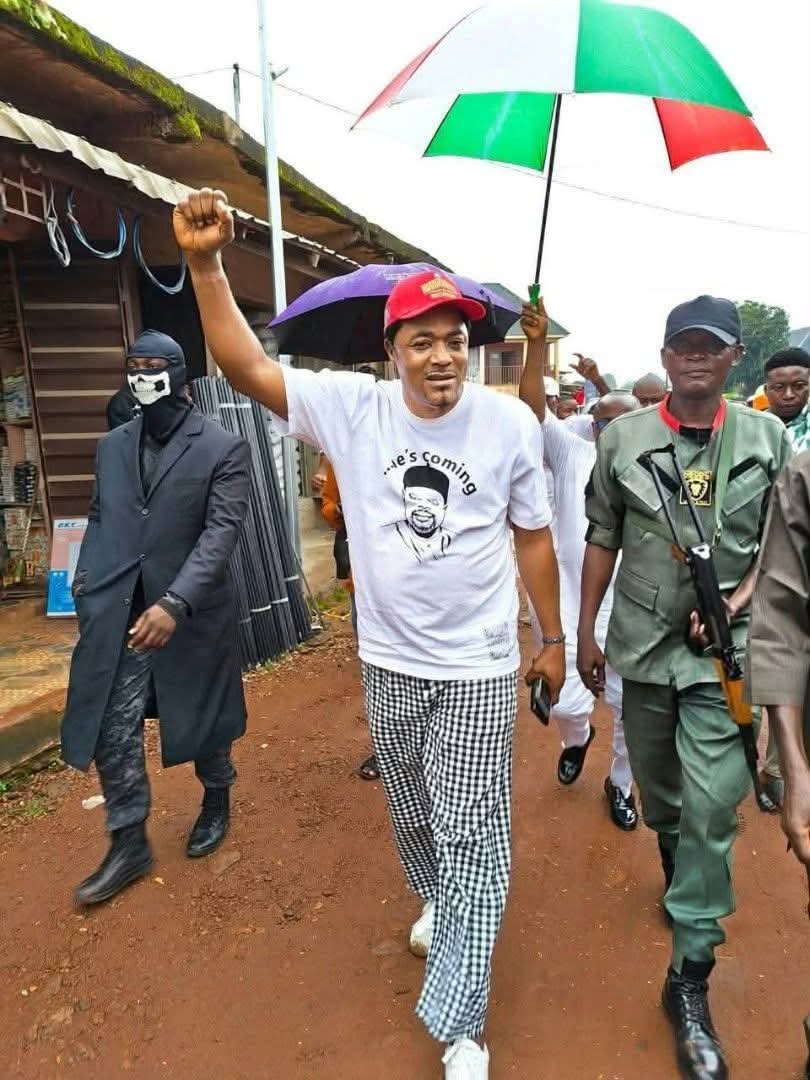
Panic-stricken Enugu APC begins flag-off of already flagged of roads in Nsukka after PDP’s Chijioke Ugwu’s homecoming

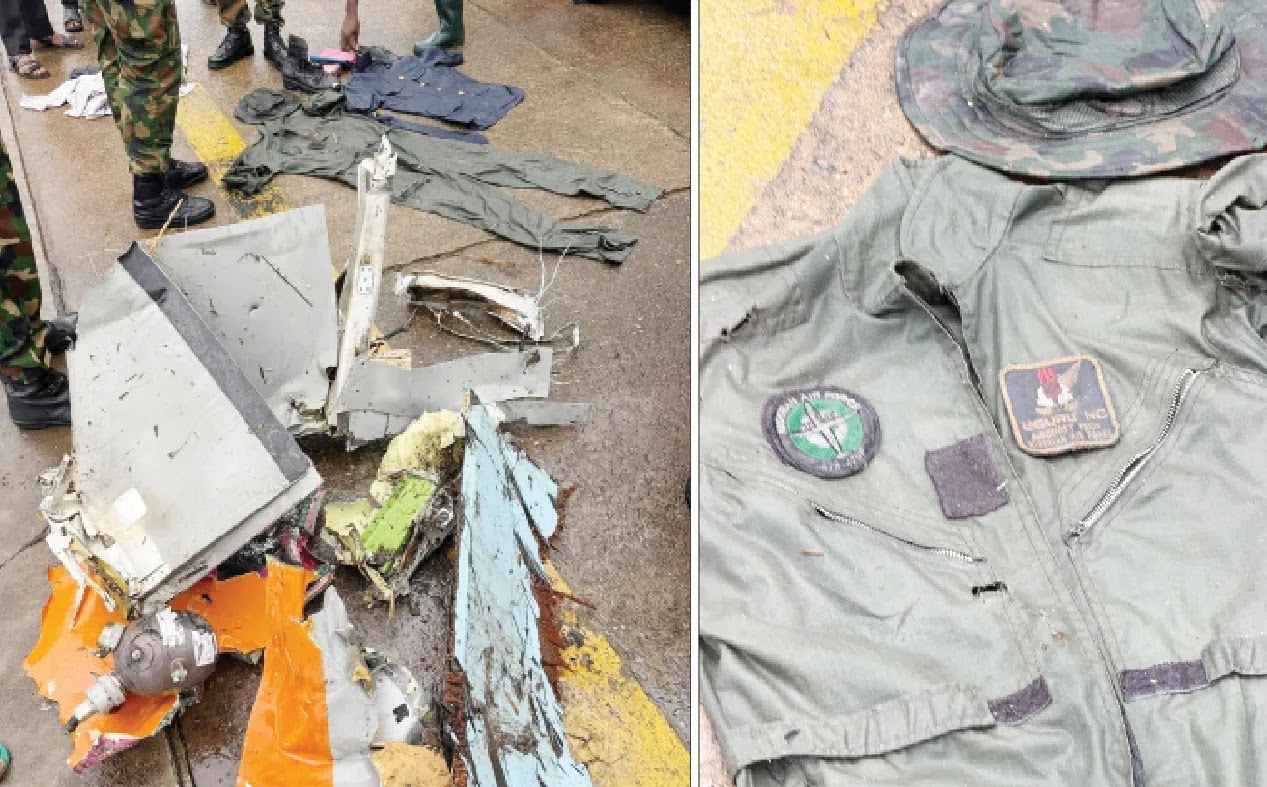
The Nigerian Air Force has confirmed that all 25 people aboard its ATR-42 aircraft, NAF 931, died after the aircraft crashed in the Igbokoda area of Ondo State.
The aircraft, which had five crew members and 20 passengers on board, was on a routine mission from Benin to Lagos when the NAF 931 aircraft crash occurred on Monday, October 5, 2026. Search-and-rescue operations were immediately activated following the accident.
The Chief of the Air Staff, Air Marshal Sunday Kelvin Aneke, described the incident as a deeply painful moment for the Nigerian Air Force and the country, while extending condolences to the families, colleagues and loved ones of those who died.
Aneke assured the bereaved families of the Nigerian Air Force’s full support as they come to terms with the loss.
The Air Force said no survivors had been found and released the names of the five crew members and 20 passengers on board the aircraft.
The crew members were identified as Squadron Leader M.I. Aburime, Flight Captain; Squadron Leader A.P. Man-Ugwueje, Co-pilot; Flight Lieutenant I.S. Bako, Co-pilot; Warrant Officer A. Abubakar, Aircraft Technician; and Corporal H.C. Uguru, Aircraft Technician.
The 20 passengers were Flight Lieutenant T.L. Lazarus; Flight Lieutenant M. Akinloye; Flying Officer I.M. Adeshina; Master Warrant Officer F. Onwuka; Master Warrant Officer B.A. Matini; Warrant Officer F.S. Nuhu; Flight Sergeant R.B. James; Flight Sergeant A.I. Mohammed; Sergeant A.E. Ani; Sergeant S.I. Izibenikien; Sergeant C. Alafuka; Sergeant A.N. Mbadugha; Lance Corporal F.C. Ugwuba; Lance Corporal G.E. Eledan; Mrs Ezeh Nneka; Godstmine Tarabina; Joy Micheal; Sunday Micheal; Ukeme David; and Gideon Omotola.
The latest figure released by the Air Force differs from the initial information provided after the crash. Aviation Minister Festus Keyamo had initially said 32 people, comprising 25 passengers and seven crew members, were aboard the aircraft. The Nigerian Air Force subsequently clarified that the manifest contained 25 people, made up of five crew members and 20 passengers.
The aircraft crashed in a swampy area around Igbokoda, close to a naval base, after air traffic controllers lost contact with it at about 9:13am while it was travelling from Benin to Lagos. The wreckage was later located and rescue teams were deployed to the area.
The cause of the crash has not been established. The Chief of the Air Staff has directed a comprehensive investigation to determine the circumstances surrounding the accident.
President Bola Tinubu had also directed the Nigerian Air Force to conduct a thorough investigation into the crash and declared three days of national mourning for the personnel who died. He ordered that national flags be flown at half-mast throughout the country in honour of the victims.
The Air Force said it would continue to provide timely and verified information as the investigation progresses. It also urged members of the public to avoid speculation and the circulation of unverified information, while respecting the privacy and dignity of the affected families.
A condolence register has been opened at the Headquarters of the Nigerian Air Force in Abuja for senior government officials, members of the diplomatic corps, heads of security agencies and other well-wishers who wish to pay their respects and convey messages of sympathy to the families of the deceased and the Nigerian Air Force.

-
Politics3 years ago
13 Ondo Assembly Members Disown Endorsement of Aiyedatiwa
-
Politics3 years ago
APC Group, Ondo Govt, Quarrel Over Money for Endorsement
-

 Trending News5 years ago
Stop unsavoury, inciting statements – DSS warns
-

 Others5 years ago
Adron Homes Celebrates 10 Years Of Housing Excellence
-

 Humanity5 years ago
President Buhari Commiserates With Ambassador Maureen Tamuno Over The Loss Of Her Father
-

 Others7 years ago
EX- CUSTOMS BOSS, IBRAHIM MERA’S DWINDLING FAME
-

 Business2 years ago
Bigi Carbonated Soft Drinks Treats 40 Consumers to an Epic Easter Movie Hangout
-

 Business2 years ago
Wema Bank Shines at Global SME Finance Forum Conference Awards 2024 …Awarded: • SME Financier of the Year (Africa) • Platinum Award for Best Financier for Women Entrepreneurs (Africa)