
health
Nigeria expands free health tests for people living with HIV/AIDS


Nigeria begins providing free annual liver and kidney function tests for people living with HIV/AIDS through expanded health insurance coverage.

The Federal Government has begun providing people living with HIV/AIDS (PLHIV) access to free annual liver and kidney function tests under expanded health insurance coverage.
Also read: Untreated Vaginal Infection Can Lead to Infertility, Experts Warn
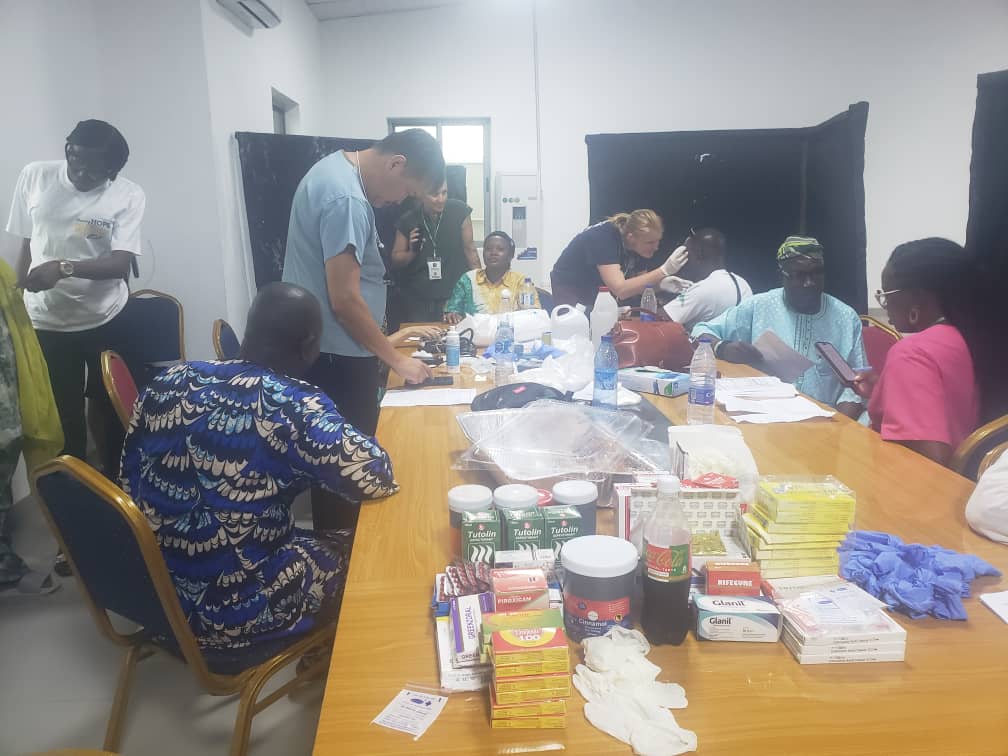
Minister of State for Health and Social Welfare, Dr. Iziaq Salako, announced the initiative during the 2025 World AIDS Day commemoration in Abuja, organised by the National Agency for the Control of AIDS (NACA) and partners.
The event carried the theme: “Overcoming disruption: Sustaining Nigeria’s HIV response.”
World AIDS Day, observed annually on December 1, raises awareness about HIV/AIDS, promotes global solidarity, and reviews progress in combating the epidemic.
Salako said the government is moving towards full integration of HIV, tuberculosis, malaria, nutrition, and the National AIDS, Viral Hepatitis and STIs Control Programme into a single, accessible service.
“This integrated approach will ensure that children and adolescents can access multiple essential services during a single visit, thereby improving health outcomes,” he explained.
He also highlighted a recent decision by the National Council on Health to lower the consent age for voluntary HIV counselling and testing from 18 to 14 years, boosting testing among adolescents and promoting early diagnosis and care.
The Minister further encouraged states to integrate the National Clinical Mentorship Programme into their annual operational plans to ensure patients remain on treatment and prevent loss to follow-up.
“I call on all stakeholders—states, partners, civil society, communities, and the private sector—to strengthen collaboration, scale innovation, and accelerate our march toward the 2030 goal of ending AIDS as a public health threat,” he said.
Dr. Temitope Ilori, NACA Director-General, reported that Nigeria is on track to meet the 2030 target of ending HIV, achieving an 87–98–95 performance towards global 95–95–95 targets.
“Eighty-seven per cent of people living with HIV in Nigeria know their status; 98 per cent of those are on life-saving treatment, and 95 per cent of those on treatment have achieved viral suppression,” she said.
Abdulkadiri Ibrahim, President of the Network of People Living with HIV and AIDS in Nigeria, stressed the need for domestic funding, improved community engagement, and greater access to viral load testing.
UN Resident Representative Elsie Attafuah highlighted the importance of domestic financing, human rights protection, community empowerment, and health system strengthening to sustain Nigeria’s HIV response.
Also read: Ogun East Residents Regain Sight through Gbenga Daniel Eye Care Outreach
“Together, we will sustain the response. Together, we will overcome distractions. Together, we will build a future where every person can live with health, dignity, and hope,” she said.


health
Governor Dauda Lawal Announces Nationwide Nutrition Emergency, National Intervention Fund at Addis Ababa Summit

The 36 state governors have declared a nationwide nutrition emergency and resolved to establish a National Nutrition Intervention Fund to drive the implementation of the Nutrition 774 Initiative across all local government areas in the country.
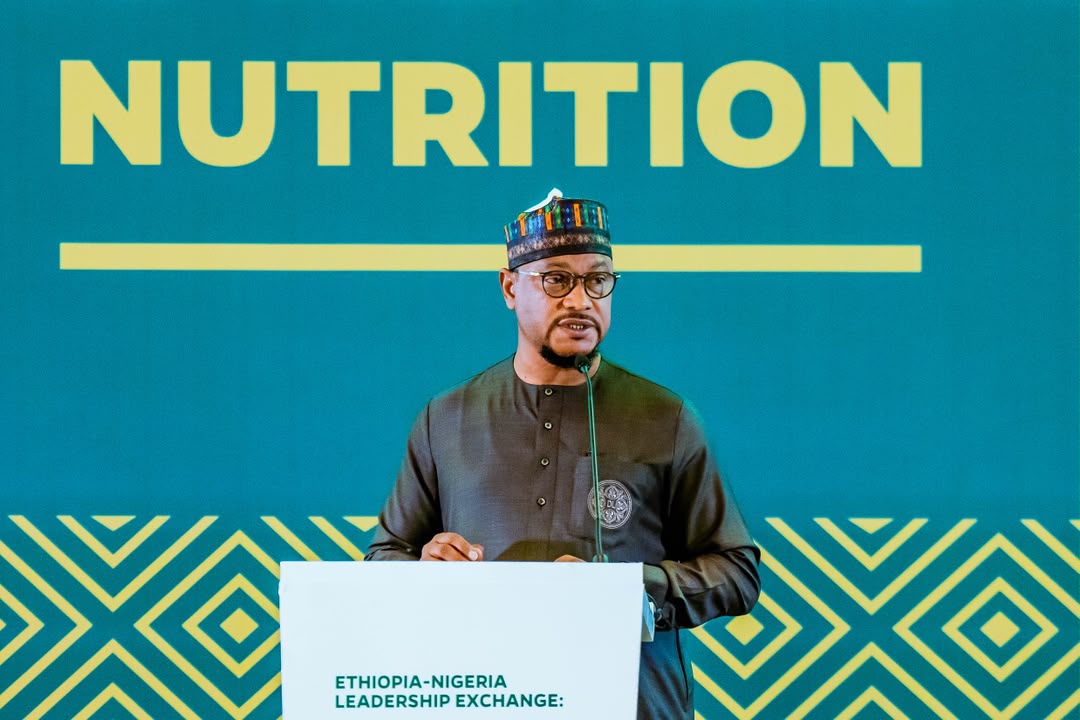
Zamfara State Governor, Dr Dauda Lawal, announced the commitment on Friday in Addis Ababa, Ethiopia, while reading the Nigeria Governors’ Forum (NGF) Addis Ababa Commitment on Nutrition at the Nigeria Country Session.
The commitment followed a three-day Nigeria-Ethiopia Nutrition Leadership Exchange, where the Nigerian delegation led by Vice President Senator Kashim Shettima studied Ethiopia’s experience in nutrition delivery, particularly through its Seqota Declaration.
While reading the NGF commitment at the session themed “From Lessons to Commitment: Accelerating Implementation of the Nutrition 774 Initiative,” the governors also pledged to strengthen domestic financing, deepen accountability at the grassroots and institutionalise a unified framework for nutrition planning and budgeting, drawing lessons from Ethiopia’s experience in tackling malnutrition.
Speaking on behalf of the NGF, Lawal said the exchange had reinforced the importance of sustained political leadership, effective multisectoral coordination, ownership at all levels of government, predictable financing and the systematic use of data to drive decisions and accountability.
He noted that Nigeria’s Nutrition 774 Initiative already embodied many of Ethiopia’s principles, adding that the exchange provided practical lessons to strengthen the programme and deliver measurable results.
According to him, the key lessons included the need for a unified approach to planning and budgeting, stronger coordination across sectors, bottom-up planning, predictable financing and the use of data and scorecards to measure performance.
“We are encouraged that Nigeria’s N774 Initiative already embodies many of the principles we have seen here in Ethiopia. This leadership exchange has, however, provided important practical lessons on how these principles can be further strengthened and translated into results,” he stated.
The NGF also identified matching financing between the Federal Government and states as an important mechanism for aligning priorities, encouraging subnational investment and reinforcing shared accountability for nutrition outcomes.
Lawal recalled that, in the presence of Vice President Shettima, the three tiers of government signed the Nutrition Compact on February 20, 2025, to establish a common commitment to tackling malnutrition.
He said the compact was signed by the Chairman of the NGF on behalf of the 36 states, the President of the Association of Local Governments of Nigeria (ALGON) on behalf of the 774 local governments, and the Minister of Budget and Economic Planning on behalf of the Federal Government.
He explained that the latest commitment would reinforce the existing compact by adapting lessons from Ethiopia to Nigeria’s circumstances and translating them into concrete actions across the three tiers of government.
Under the commitments, the governors resolved to declare nutrition a national emergency, establish a National Nutrition Intervention Fund to catalyse implementation of the compact and institutionalise “One Goal, One Plan and One Budget” for nutrition.
The proposed fund is expected to incentivise state-level leadership, encourage increased domestic investment, reward effective implementation and support measurable improvements in nutrition outcomes.
The governors also pledged to strengthen bottom-up planning by ensuring that nutrition priorities reflect needs at community and ward levels before being incorporated into local government, state and national plans.
They further committed to extending the National Nutrition Scorecard beyond the state level to include local government and ward-level performance indicators, strengthening accountability throughout the delivery chain.
The NGF also resolved to institutionalise the use of data for decision-making and performance management, including state-specific surveys and assessments to provide timely evidence for planning, resource allocation and corrective action.

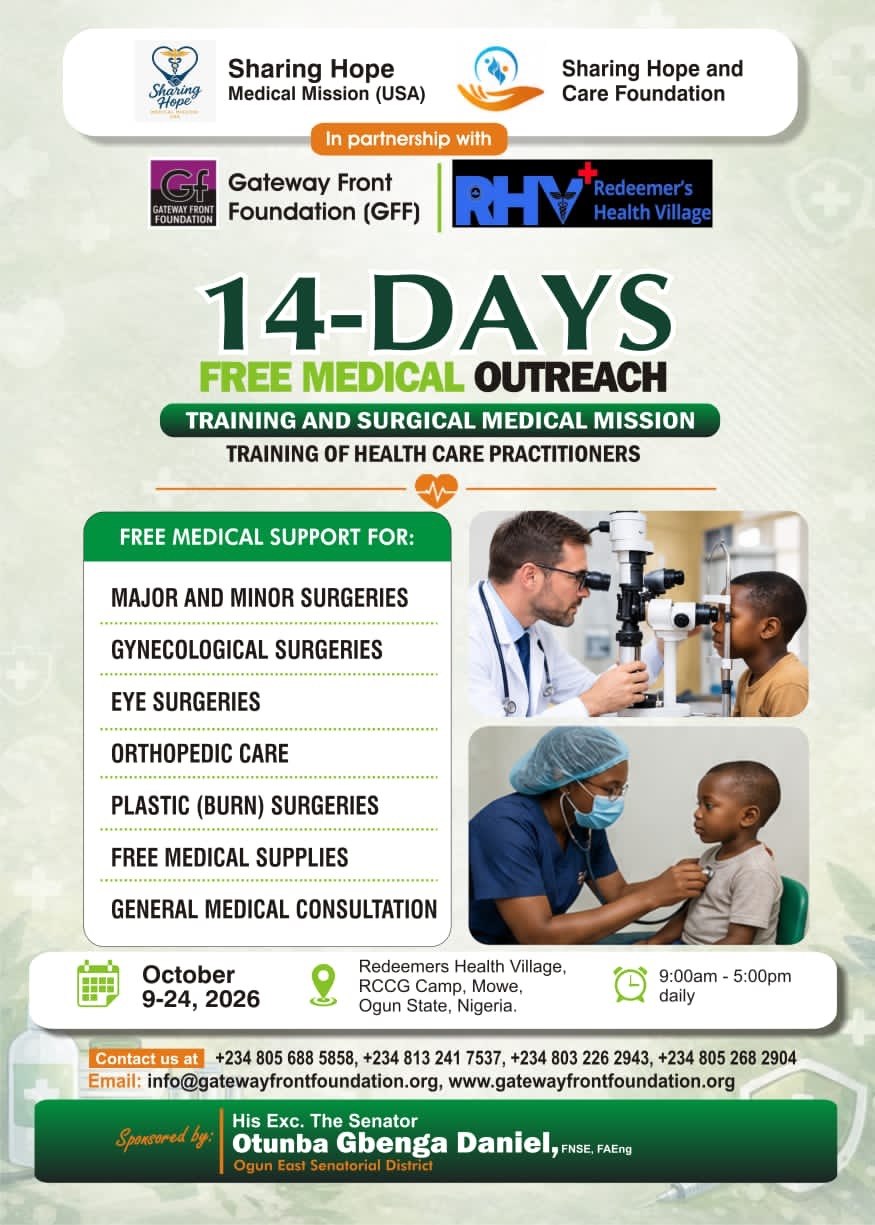
The Gateway Front Foundation’s GFF@25 Medical Mission will begin on October 9 and run through October 24, 2026, bringing free specialist medical services to residents across Ogun State as part of activities marking the foundation’s 25th anniversary.
The 14-day intervention is being organised by the Gateway Front Foundation in partnership with Sharing Hope Medical Mission from the United States, Sharing Hope and Care Foundation and Redeemer’s Health Village. The programme is sponsored by Senator Otunba Gbenga Daniel.
The mission is expected to provide free major and minor surgeries, eye care, gynaecological procedures, orthopaedic treatment, plastic and burn surgery, as well as other specialist medical services. Organisers say more than 15,000 patients are expected to benefit from the programme.
More than 50 doctors from the United States are expected to participate in the mission, while local healthcare practitioners are also expected to receive training as part of the broader programme.
Ahead of the main intervention, the foundation has already begun medical screening and clinical assessments in parts of Ogun. On September 21, residents in Sagamu were screened across four centres, while another exercise was held on September 30 at Redemption City and Simawa to identify cases requiring specialised and surgical treatment.
The screening exercises covered conditions including cataracts, pterygium, dental cases, tumours, lipomas, ganglions, hernias, fibroids, vesicovaginal fistula, prostate conditions, orthopaedic problems, fractures, dislocations, amputations, diabetes and gastroenterology-related ailments. Selected beneficiaries are expected to proceed to the surgical phase of the programme.
To widen access and reduce pressure on a single location, the foundation has scheduled screening and medical interventions across several Local Government Areas, according to the programme schedule released by the organisers.
The listed locations include Ijebu North, Ijebu North East, Sagamu, Ijebu Ode, Ogun Waterside, Ikenne, Odogbolu, Ijebu East, Remo North and the RCCG City area.
The schedule is as follows:
October 9: Ijebu North, Kabiesi Solaja Hall and Bojowa Street, Ago-Iwoye
October 10: Ijebu North East, GFF Care Centre, Erunwon
October 12: Sagamu, Asoludero Hall and Ogijo
October 13: Ijebu Ode, Obalofin Hall
October 14: Ogun Waterside, Abigi Community Town Hall
October 15: Ikenne
October 16: Odogbolu
October 17: Ijebu East, Hazelway Hotel, Ijebu Mushin
October 18: Remo North, Ode-Remo Main Market
October 9, 10 and 12–16: RCCG City/Health Village area
The Redeemers Health Village in Mowe, Redemption City, will serve as the main location for cases requiring surgery, according to the organisers. This arrangement is intended to provide sufficient space and facilities for surgical procedures.
Monitoring officers have also been assigned to the various locations to coordinate activities, manage the flow of beneficiaries and support the smooth delivery of the medical services.
The GFF@25 Medical Mission is one of the major programmes marking the foundation’s 25th anniversary. The Gateway Front Foundation, established by Daniel, has over the years undertaken healthcare and other community-focused interventions, including medical outreaches and eye-care initiatives.
Residents requiring medical attention have been encouraged by the organisers to visit the nearest designated venue on the appropriate date for screening and assessment.
The foundation said the anniversary programme is intended to extend its humanitarian activities to more communities, with healthcare forming a major part of the GFF@25 interventions.
-
Politics3 years ago
13 Ondo Assembly Members Disown Endorsement of Aiyedatiwa
-
Politics3 years ago
APC Group, Ondo Govt, Quarrel Over Money for Endorsement
-

 Trending News5 years ago
Stop unsavoury, inciting statements – DSS warns
-

 Others5 years ago
Adron Homes Celebrates 10 Years Of Housing Excellence
-

 Humanity5 years ago
President Buhari Commiserates With Ambassador Maureen Tamuno Over The Loss Of Her Father
-

 Others7 years ago
EX- CUSTOMS BOSS, IBRAHIM MERA’S DWINDLING FAME
-

 Business2 years ago
Bigi Carbonated Soft Drinks Treats 40 Consumers to an Epic Easter Movie Hangout
-

 Business2 years ago
Wema Bank Shines at Global SME Finance Forum Conference Awards 2024 …Awarded: • SME Financier of the Year (Africa) • Platinum Award for Best Financier for Women Entrepreneurs (Africa)