
Business
Nigeria’s Reforms Set to Deliver Economic Gains in 2026


Nigeria reform dividend 2026 expected to boost investment, credit access, and household welfare as macroeconomic stabilisation gives way to growth

Nigeria’s ongoing reform cycle is expected to yield tangible benefits for households and businesses in 2026, with the economy poised to shift from macroeconomic stabilisation to acceleration, according to analysts at Norrenberger.
Also read: NACC Gathers Power Brokers for 2026 Economic Forecast, Honours Odugbemi
In its report titled From Stabilisation to Acceleration: The Reform Dividend in 2026, the firm projected that structural adjustments implemented over the past year will allow policymakers to move from economic adjustment to optimisation, leveraging productivity gains, private capital mobilisation, and sectoral expansion to drive stronger and more sustainable growth.
“2026 presents a critical window to transition from macroeconomic stabilisation to economic acceleration. With many of the structural distortions addressed, the reform dividend is likely to materialise through improved investment confidence, deeper credit intermediation, increased domestic production, and enhanced competitiveness across key sectors of the economy,” the report stated.
Norrenberger emphasised that the benefits of reform would not be limited to financial markets. Households and small businesses are expected to experience micro-level improvements, including better access to credit, enhanced infrastructure delivery, job creation, and a more predictable policy environment, all of which are anticipated to support consumption, enterprise expansion, and overall welfare.
The report also offered an optimistic outlook for exchange rate stability, noting that the current macro-foreign exchange framework marks a departure from the volatility typical of Nigeria’s pre-election years.
“Historically, penultimate election years were characterised by heightened exchange rate pressures, speculative FX demand, and episodic hoarding. The current transition toward a more market-reflective exchange rate system, tighter monetary conditions, and improving external buffers provides a more credible foundation for exchange rate stability than in previous pre-election periods,” the analysts said.
They cautioned, however, that while the macroeconomic framework is stronger, episodic volatility remains a possibility.
Also read: Sanwo-Olu Reassures Investors as Lagos Drives Inclusive Economic Growth
Sustained reform momentum and fiscal discipline, they added, will be critical to ensuring that 2026 delivers meaningful and visible gains for Nigerian households and businesses.


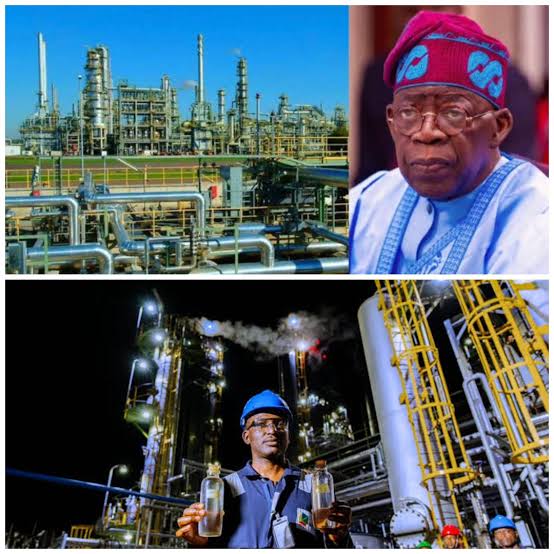
President Bola Tinubu has reaffirmed the Federal Government’s commitment to rehabilitating and repositioning Nigeria’s dormant national refineries, declaring that the facilities will not be allowed to become stranded assets.
Tinubu was represented by the Permanent Secretary of the Ministry of Petroleum Resources, Mrs Patience Oyekunle, at the 20th OTL Africa Downstream Energy Week in Lagos on Monday.
The President said the government is adopting a more rigorous and commercially sustainable approach to the rehabilitation of the Port Harcourt, Warri and Kaduna refineries.
“At the same time, the government remains committed to ensuring that existing national refining assets are not allowed to become stranded investments,” the statement said.
“We are pursuing a more rigorous, commercially sustainable approach to the rehabilitation and repositioning of our refineries, supported by technical assessment, stronger partnerships, and improved operational discipline.”
The objective, according to the administration, is for Nigeria to refine more of its crude oil, create greater domestic value and become a reliable supplier of energy to Africa.
The national refineries, managed by the Nigerian National Petroleum Company Limited (NNPC), have remained largely inactive for years despite significant spending on turnaround maintenance. The NNPC has signed a memorandum of understanding with Chinese firms as part of ongoing efforts to revive the facilities.
Tinubu also noted the contribution of private refining capacity, particularly the Dangote Refinery, which has reached its 650,000 barrels-per-day nameplate capacity, in strengthening Nigeria’s prospects of becoming a net exporter of refined petroleum products.


AICL GMD Maureen Tamuno calls for stronger diaspora investment in Africa through trust, transparency, skills transfer and sustainable partnerships
-
Politics3 years ago
13 Ondo Assembly Members Disown Endorsement of Aiyedatiwa
-
Politics3 years ago
APC Group, Ondo Govt, Quarrel Over Money for Endorsement
-

 Trending News5 years ago
Stop unsavoury, inciting statements – DSS warns
-

 Others5 years ago
Adron Homes Celebrates 10 Years Of Housing Excellence
-

 Humanity5 years ago
President Buhari Commiserates With Ambassador Maureen Tamuno Over The Loss Of Her Father
-

 Others7 years ago
EX- CUSTOMS BOSS, IBRAHIM MERA’S DWINDLING FAME
-

 Business3 years ago
Bigi Carbonated Soft Drinks Treats 40 Consumers to an Epic Easter Movie Hangout
-

 Business2 years ago
Wema Bank Shines at Global SME Finance Forum Conference Awards 2024 …Awarded: • SME Financier of the Year (Africa) • Platinum Award for Best Financier for Women Entrepreneurs (Africa)