Business
Nigerian Equities Market Posts Worst Return In Africa

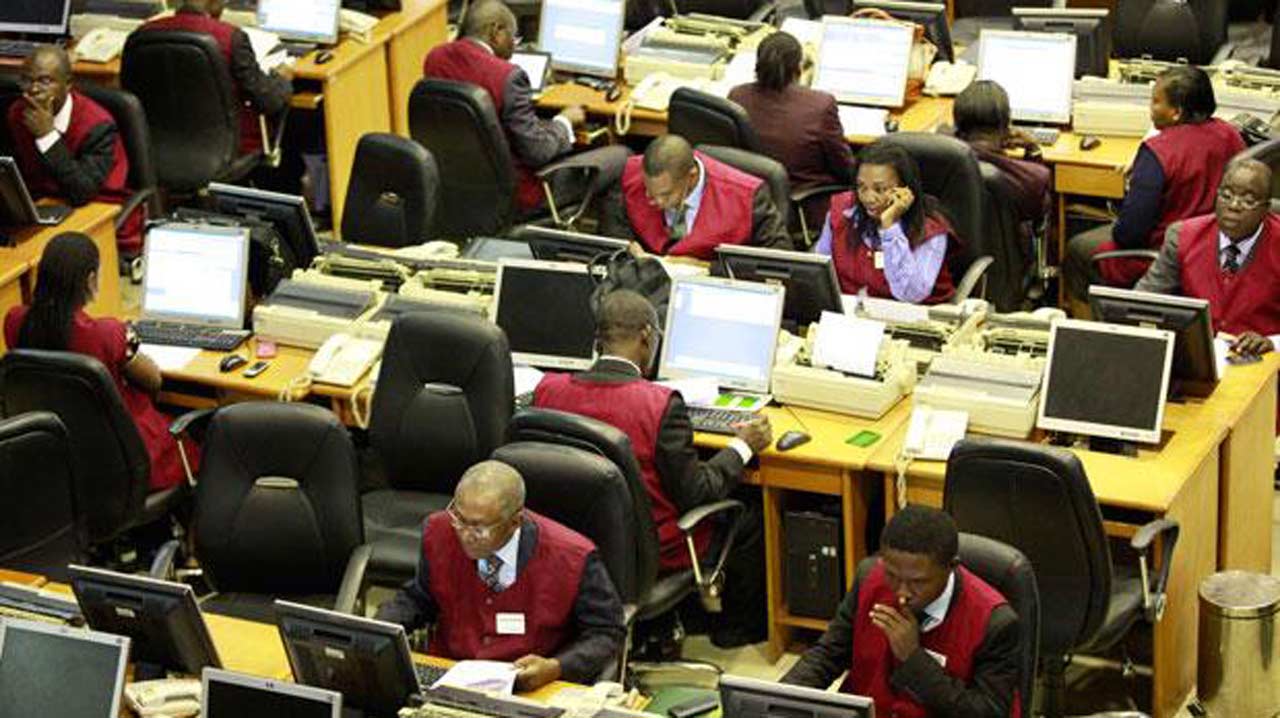
The Nigerian Exchange Limited All-Share Index posted the worst gains among African stock markets at -2.53 per cent year-to-date as of September 7, according to African Markets.

African Markets is a provider of financial market data, news, analysis, and research with a focus on Africa.
Data from the website showed that among 17 stock exchanges across Africa tracked by the index, the NGX posted the lowest returns YTD, followed by the Botswana Stock Exchange Domestic Companies Index at -1.93 per cent.
The Rwandan Stock Exchange ASI also saw negative returns as it depreciated by 0.82 per cent YTD.
On the positive side, the Zimbabwean ASI jumped by 150.38 per cent YTD, posting the highest gains on the continent while the Ghana SE Composite Index followed at 42.10 per cent.
The Lusaka Stock Exchange, Namibian Exchange Overall, and the Bourse Régionale des Valeurs Mobilières which is the regional stock exchange of francophone West Africa increased by 22.76 per cent, 22.09 per cent and 21.05 per cent respectively.
However, looking at the chart by year-on-year returns, the NGX ASI saw the second-highest appreciation as it rose by 53.30 per cent, coming second to the Zimbabwean SE ASI at 340.16 per cent.
The Ghana SE Composite was third highest with a 49.94 per cent gain while the Botswana SE Domestic Companies Index recorded the highest negative losses at -4.27 per cent.
Mr Olaide Baanu, a research analyst at Atlas Portfolios Limited, told our correspondent that Nigeria having experienced a recession last year was very lucky to exit the recession in the third quarter of 2020.
He explained that based on what other countries experienced around the world, Nigeria was able to cushion the effects of the pandemic with the financial sector contributing more to the Gross Domestic Product.
He said, “The financial sector on the NGX too performed quite well during the second half of the year. The financial services providers are some of the most capitalized stocks on the NGX; so they were partly responsible for the positive movement in the market.
“Companies like Total Nigeria Plc (now Total Energies Marketing Plc), Seplat Energies Plc and Nestle Nigeria Plc also saw good returns on equity.
“Industrial firms like Dangote Cement Plc and Lafarge Africa Plc saw gains too and posted positive financials. Telcos like MTN and Airtel Africa Plc benefited from the digital boom of last year as their data revenues rose which fueled investor confidence in their fundamentals.
“The depression this year is attributable to profit-taking from investors. They were withdrawing their gains to the fixed income markets. Because of the divergent nature of our fixed income and equities markets, when one benefits, the other loses.
“The derivatives market is still immature while the commodities market has yet to gain much ground. So the focus is mostly on equities, bonds and treasury bills. Around January till lately, the fixed income market has posted better returns than last year, while the equities market has corrected due to sell-offs.”
The PUNCH had earlier reported that net foreign portfolio investment this year stood at –N11.48bn as foreign investors withdrew more gains from the exchange than they invested as of June 30.
Foreign investor’s overall interest in the market also declined year on year, according to a report from the NGX.
Managing Director at Credent Investment Managers, Mr Ibrahim Shelleng, said, “The rebound in the equities market last year was as a result of low yields in the fixed income and money markets.
“At some point, treasury bills were in the negative territory and investors moved to the equities market to improve returns.”
He said foreign investors that were unable to exit due to forex illiquidity entered the equities space to improve their yields.
With the rebound in fixed income yields, he added, investors had shifted back to secure yields to reduce the volatility the stock market brought.



AICL GMD Maureen Tamuno calls for stronger diaspora investment in Africa through trust, transparency, skills transfer and sustainable partnerships

-
Politics3 years ago
13 Ondo Assembly Members Disown Endorsement of Aiyedatiwa
-
Politics3 years ago
APC Group, Ondo Govt, Quarrel Over Money for Endorsement
-

 Trending News5 years ago
Stop unsavoury, inciting statements – DSS warns
-

 Others5 years ago
Adron Homes Celebrates 10 Years Of Housing Excellence
-

 Humanity5 years ago
President Buhari Commiserates With Ambassador Maureen Tamuno Over The Loss Of Her Father
-

 Others7 years ago
EX- CUSTOMS BOSS, IBRAHIM MERA’S DWINDLING FAME
-

 Business2 years ago
Bigi Carbonated Soft Drinks Treats 40 Consumers to an Epic Easter Movie Hangout
-

 Business2 years ago
Wema Bank Shines at Global SME Finance Forum Conference Awards 2024 …Awarded: • SME Financier of the Year (Africa) • Platinum Award for Best Financier for Women Entrepreneurs (Africa)