
Business
Nigeria’s Credit Crisis: Why Firms Still Struggle for Loans

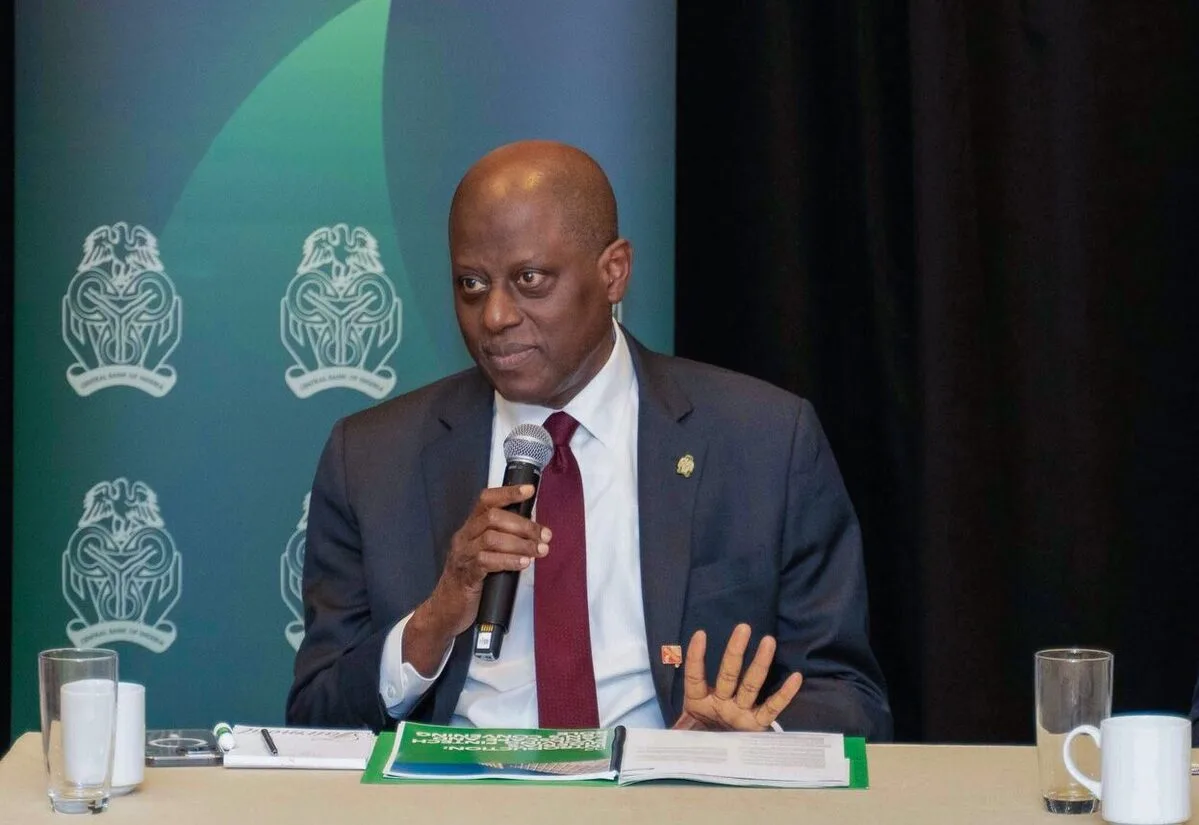
Nigeria’s Credit Crisis deepens as businesses struggle with high lending rates, weak bank credit access and government borrowing despite falling inflation
By Akinola Morakinyo (Ph. D),

Ikechukwu Eze runs a cold storage facility in Onitsha.
In November 2023, he borrowed N8 million from his bank at 32% per annum to buy fish arriving from trawlers at Apapa wharf.
Fourteen days later, the electricity went out and stayed out for four days.
The generator ran dry at 3am on day two. By day four, 40 percent of the stock was unsalvageable. He sold what remained below cost, and six months of repayments on a loan that a power cut had consumed broke him. His bank listed him as a defaulter.
Also read: EFCC’s 2026 Crackdown: 10 Major Companies Facing Prosecution
Two years later he walked into a different bank and applied to try again. The loan officer was sympathetic. The credit bureau was not. The Monetary Policy Committee had just voted, for the third consecutive meeting, to retain the MPR at 27.50%. It described the decision as appropriate given prevailing macroeconomic conditions.
By June 2026, even though food inflation remains elevated and sticky at 17.52%, largely benefitting from CPI rebasing in 2025, Nigeria’s headline inflation has fallen to 15.91%, per the National Bureau of Statistics, down from a peak of 34.80% in December 2024.
The CBN has begun cutting rates, with the MPR now at 26.50% after the first reduction in February 2026. This article asks whether Ikechukwu’s arithmetic has improved. The answer is “not enough”, and not for the reasons that the rate alone can fix.
The tightening cycle that began in 2022 reached its most aggressive phase in 2024. Under Governor Olayemi Cardoso, the Monetary Policy Committee raised the Monetary Policy Rate (MPR) by a cumulative increase of 875 basis points across six consecutive MPC meetings from 18.75% in January 2024 to 27.50% by November 2024.
The stated rationale was rational as Nigeria’s inflation had been driven upward by monetary financing of the fiscal deficit, the 2023 fuel subsidy removal, and the exchange rate depreciation that followed FX unification.
The primary targets were the FX round-trippers borrowing naira cheaply and converting to dollars at the parallel market premium. The people who bore the cost, though, were not those being targeted. The arbitrageur with correspondent bank relationships and a trading desk does not borrow at retail rates from a tier-two bank. The cold room operator in Onitsha does.
High interest rates pushed banks away from lending to businesses
The crowding-out mechanism is the quieter half of the damage.
When the CBN raises the policy rate and Treasury bill yields climb alongside it, commercial banks face a choice between two very different assets: the small and medium-sized enterprises (SMEs) loan, carrying credit risk, collateral verification cost, and default exposure, versus the 364-day Treasury bill, with stop rate at 26.10% during the peak tightening period, risk-free and sovereign-guaranteed.
Nigerian commercial banks responded exactly as the incentives instructed. They accumulated N5.05 trillion in government securities during the tightening cycle and reduced their appetite for productive lending to the residual it has long occupied in their credit books.
The masquerade that dances too long will eventually be unmasked but in Nigerian banking, the masquerade of preferring a risk-free sovereign to a productive SME has been dancing for decades and nobody has insisted it stop.
As of July 2026, with the true (effective) annual yield on the 364-day bill sitting between 20% and 21% and commercial bank SME lending rates still at 28% to 46% depending on the borrower’s credit profile, collateral, and relationship with the bank, the structural preference for government paper persists.
Nigeria’s domestic credit to the private sector as a share of GDP remains exceptionally low at about 13% of GDP, among the lowest for economies at its income level, compared with about 32% in Kenya and more than 70% in South Africa.
The hidden cost of monetary tightening
The second structural flaw is that a significant portion of Nigerian inflation was never demand-pull to begin with. Fuel prices rose because the subsidy was removed. Food prices rose because of flooding and insecurity in farming communities.
Transport costs rose because road conditions and fuel prices made them inevitable. Import prices rose because the Naira depreciated. No matter how hot your anger is, it cannot cook yam. Raising the interest rate does not plant more tomatoes, repair more roads, or refine more petroleum.
It compresses the demand of the businesses and households trying to manage those supply shocks, and precisely the firms that needed affordable credit most urgently to bridge input costs and maintain capacity through the shock.
The distributional consequences of the tightening are equally important and significantly underreported.
High interest rates reward savers: the wealthy depositor earning 20% on Treasury bills during the tightening peak, the pension fund with a long-duration bond portfolio, the bank whose pre-tax profits surged on government securities income while productive lending stagnated.
They penalise borrowers, specifically the SMEs that cannot access capital markets and must borrow from commercial banks at whatever the cycle has produced.
The regressive distributional effect of tight money is as real as the regressive distributional effect of inflation. The difference is that inflation generates public anger and tight money generates policy consensus.
Both transfer income from the productive economy to the holding economy. So, it seems the wrong medicine has been applied. Nigeria’s policy rate beat inflation, but it also beat the businesses that had nothing to do with it.
The informal economy has already registered its verdict. Nigeria’s approximately 40 million MSMEs account for above 50% of GDP and around 92.3% of employment, according to the Small and Medium Enterprises Development Agency of Nigeria (SMEDAN). Yet access to finance remains extremely limited.
Only about 4% of MSMEs have access to formal bank credit, according to PwC’s MSME Survey 2024. The Moniepoint Informal Economy Report 2025 found that 51% of informal businesses had never taken a formal loan and did not intend to do so, up from 30% in the previous year’s survey. The informal economy is not complaining about interest rates.
It has stopped asking. Estimates suggest that Nigeria faces an MSME financing gap more than $200 billion, reflecting the large unmet demand for credit among small businesses and the very limited penetration of formal lending.
At a base of 40 million enterprises, that is a market failure of a scale that no series of MPC decisions can address without complementary structural reform.
The CBN’s 26.50% MPR is a beginning, not a resolution. The structural problem maintaining the trap is not the level of the MPR alone. It is the combination of an elevated policy rate and a fiscal deficit that continuously regenerates government demand for borrowing, keeping the crowding-out permanent.
Nigeria’s 2026 budget carries an estimated deficit of approximately ₦20 trillion. At that scale of government borrowing, even a declining MPR does not liberate commercial banks from the pull of sovereign paper.
Until the fiscal deficit is materially reduced, the cost of money for the private sector will always include a crowding-out premium. Turning one dial while the others remain stuck shifts the tempo of the problem without ending it.
The ways forward
Three interventions are available now, each with demonstrated precedent. First, fiscal consolidation at a pace that meaningfully reduces the government’s annual borrowing requirement, through non-oil revenue mobilisation and reduction of non-productive recurrent expenditure, not through further price shocks to households still recovering from the last round.
Second, a Development Finance Institution capitalised at a scale proportionate to the $200 billion credit gap. The Bank of Industry, the Development Bank of Nigeria, and NIRSAL Microfinance Bank exist. None of them is funded at a scale sufficient to move the needle on 40 million enterprises.
A press-release institution and a properly capitalised SME credit facility are different instruments with different outcomes. Third, operationalisation of the movable collateral registry under the Secured Transactions Act.
The law exists but the registry remains underused. Allowing businesses to borrow against receivables, inventory, and equipment, rather than requiring real property that most small businesses do not formally own, would do more to expand productive credit access than any single MPR cut.
What the scenario projections show of what the reform path could deliver is encouraging. Continued MPR reduction toward 18% by 2028, meaningful fiscal consolidation, and a scaled SME credit facility could lift the share of Nigerian MSMEs with formal credit access from 4% today to approximately 20% by 2030.
The status quo trajectory delivers approximately 5% by the same date, a 1 percentage point improvement over four years while the absolute credit gap widens with each budget cycle. Ikechukwu Eze is not a metaphor.
He is a business owner in Onitsha whose fish, and the employment and tax revenue attached to it, did not survive the interaction of a power cut and a 32% interest rate.
The power cut was a Nigerian problem. The interest rate made it a terminal one. The interest rate trap did not build itself. It was constructed by the interaction of a totally unresolved fiscal deficit, a banking system that learned to prefer the sovereign to the entrepreneur, and a collateral framework designed for a property market most small businesses cannot access.
Also read: EFCC’s 2026 Crackdown: 10 Major Companies Facing Prosecution
The instruments to dismantle it are available, affordable, and sitting in plain sight. The willingness to deploy all three at once is what has been missing.




ANOH Gas inaugurates its HCDT Board, setting a new course for sustainable community development, transparency and accountability under the PIA
Banking
Theparkpay Technologies Limited Strengthens Global Payments Infrastructure with UK FCA Licence

-
Politics3 years ago
13 Ondo Assembly Members Disown Endorsement of Aiyedatiwa
-
Politics3 years ago
APC Group, Ondo Govt, Quarrel Over Money for Endorsement
-

 Trending News5 years ago
Stop unsavoury, inciting statements – DSS warns
-

 Others5 years ago
Adron Homes Celebrates 10 Years Of Housing Excellence
-

 Humanity5 years ago
President Buhari Commiserates With Ambassador Maureen Tamuno Over The Loss Of Her Father
-

 Others7 years ago
EX- CUSTOMS BOSS, IBRAHIM MERA’S DWINDLING FAME
-

 Business2 years ago
Bigi Carbonated Soft Drinks Treats 40 Consumers to an Epic Easter Movie Hangout
-

 Business2 years ago
Wema Bank Shines at Global SME Finance Forum Conference Awards 2024 …Awarded: • SME Financier of the Year (Africa) • Platinum Award for Best Financier for Women Entrepreneurs (Africa)