
Business
Nigeria’s money supply expands despite CBN’s tightening measures
Despite a record-high Cash Reserve Ratio, Nigeria’s broad money supply surged to N114.22tn in March 2025, driven by foreign asset growth, posing a dilemma for the upcoming MPC meeting.


Despite a record-high Cash Reserve Ratio, Nigeria’s broad money supply surged to N114.22tn in March 2025, driven by foreign asset growth, posing a dilemma for the upcoming MPC meeting

New data from the Central Bank of Nigeria (CBN) reveals that Nigeria’s broad money supply (M3) reached N114.22 trillion in March 2025, a significant 24 percent increase compared to the N92.19 trillion recorded in March 2024.
Also read: CBN reports $6.83bn balance of payments surplus for 2024
This expansion occurred despite the CBN’s aggressive monetary tightening, including raising the Cash Reserve Ratio (CRR) to an unprecedented 50 percent.
On a month-on-month basis, the broad money supply also saw a 3.2 percent rise from N110.71 trillion in February. The primary driver of this increase was a substantial 38.9 percent surge in net foreign assets, which climbed to N45.17 trillion, indicating stronger capital inflows and potential revaluation gains.
In contrast, net domestic assets experienced an 11.7 percent decline to N69.05 trillion, reflecting tighter liquidity within the domestic financial system.
The data highlights a persistent preference for cash within the Nigerian economy. Currency circulating outside banks rose to N4.6 trillion in March, representing 91.9 percent of the total currency in circulation of N5.00 trillion.
This signifies a 26.7 percent increase compared to the N3.63 trillion held outside banks in March 2024. This reliance on cash is attributed to factors such as rising inflation (24.23 percent in March), infrastructural challenges with digital banking platforms, and the prevalence of the informal sector.
The rise in broad money supply likely suggests that external factors—particularly growth in foreign asset holdings and government credit—have offset the CBN’s tightening measures,” the report states.
The sustained growth in money supply, despite the CBN’s efforts, presents a significant policy dilemma for the Monetary Policy Committee (MPC), scheduled to meet on May 19 and 20, 2025.
While the committee previously held the policy rate steady at 27.50 percent, the continued rise in inflation, the dominance of cash transactions, and increasing foreign inflows are likely to exert pressure for more decisive action, potentially including a rate hike.
Notably, Nigeria’s current Monetary Policy Rate of 27.50 percent is among the highest globally, only lower than Argentina, Zimbabwe, Turkey, and Venezuela, as disclosed by MPC member Mustapha Akinkunmi. This high rate underscores Nigeria’s ongoing struggle with inflation and economic instability.
The International Monetary Fund (IMF), following its recent Article IV consultation, advised the CBN to maintain a tight monetary policy stance to ensure a continued decline in inflation.
The IMF commended the MPC’s data-driven approach and suggested that announcing a formal disinflation path could help to stabilize inflation expectations.
The continued expansion of Nigeria’s money supply in the face of tight monetary policy underscores the complex interplay of domestic and external economic factors and sets the stage for a critical upcoming MPC meeting.



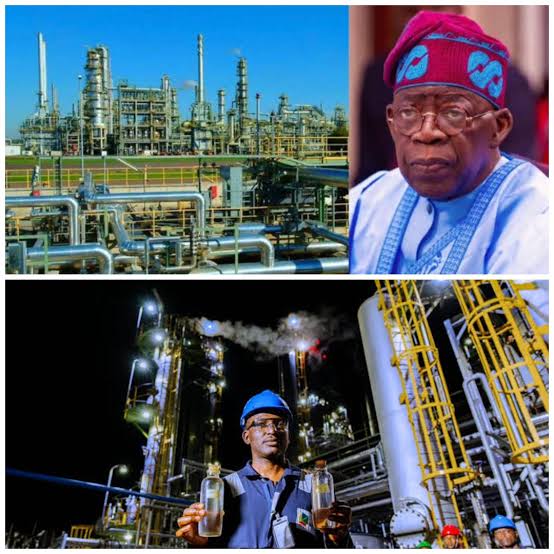
President Bola Tinubu has reaffirmed the Federal Government’s commitment to rehabilitating and repositioning Nigeria’s dormant national refineries, declaring that the facilities will not be allowed to become stranded assets.
Tinubu was represented by the Permanent Secretary of the Ministry of Petroleum Resources, Mrs Patience Oyekunle, at the 20th OTL Africa Downstream Energy Week in Lagos on Monday.
The President said the government is adopting a more rigorous and commercially sustainable approach to the rehabilitation of the Port Harcourt, Warri and Kaduna refineries.
“At the same time, the government remains committed to ensuring that existing national refining assets are not allowed to become stranded investments,” the statement said.
“We are pursuing a more rigorous, commercially sustainable approach to the rehabilitation and repositioning of our refineries, supported by technical assessment, stronger partnerships, and improved operational discipline.”
The objective, according to the administration, is for Nigeria to refine more of its crude oil, create greater domestic value and become a reliable supplier of energy to Africa.
The national refineries, managed by the Nigerian National Petroleum Company Limited (NNPC), have remained largely inactive for years despite significant spending on turnaround maintenance. The NNPC has signed a memorandum of understanding with Chinese firms as part of ongoing efforts to revive the facilities.
Tinubu also noted the contribution of private refining capacity, particularly the Dangote Refinery, which has reached its 650,000 barrels-per-day nameplate capacity, in strengthening Nigeria’s prospects of becoming a net exporter of refined petroleum products.

-
Politics3 years ago
13 Ondo Assembly Members Disown Endorsement of Aiyedatiwa
-
Politics3 years ago
APC Group, Ondo Govt, Quarrel Over Money for Endorsement
-

 Trending News5 years ago
Stop unsavoury, inciting statements – DSS warns
-

 Others5 years ago
Adron Homes Celebrates 10 Years Of Housing Excellence
-

 Humanity5 years ago
President Buhari Commiserates With Ambassador Maureen Tamuno Over The Loss Of Her Father
-

 Others7 years ago
EX- CUSTOMS BOSS, IBRAHIM MERA’S DWINDLING FAME
-

 Business3 years ago
Bigi Carbonated Soft Drinks Treats 40 Consumers to an Epic Easter Movie Hangout
-

 Business2 years ago
Wema Bank Shines at Global SME Finance Forum Conference Awards 2024 …Awarded: • SME Financier of the Year (Africa) • Platinum Award for Best Financier for Women Entrepreneurs (Africa)