
Politics
Of Political Judases and Hidden Hands: Exposing Kayode Akinmade’s Ghost War on Gbenga Daniel


By Ayo Mojoyin
Discover the truth behind Kayode Akinmade’s pseudonymous attack on Senator Gbenga Daniel. A scathing exposé on the ghostwriting politics in Ogun State and Governor Dapo Abiodun’s media war

In the unfolding political theatre of Ogun State, one thing has become abundantly clear; fear is the fuel driving the attacks from the Governor Dapo Abiodun’s camp.
And nowhere is this more glaring than in the now-infamous piece titled “The Onslaught on Dapo Abiodun by Political Judases”, credited to one Funmi Branco; a name that, as insiders have revealed, is nothing more than a pseudonym for Kayode Akinmade, Special Adviser on Media to the outgoing governor.
Let’s be clear. This is not just another political spat.
This is a desperate attempt by a drowning administration to rewrite history, deflect responsibility, and paint its critics as traitors; all while hiding behind false identities.
Cowardice of a Pseudonym
First, to the identity crisis.
The name “Funmi Branco” does not belong to any known journalist or analyst of note.
Multiple sources close to the governor’s communications team confirm that Akinmade has been operating a network of pseudonyms; including this latest one, to defend his principal while evading public accountability.
If the outgoing governor’s performance truly speaks for itself, why does his own media adviser lack the courage to stand by his words?
Why hide behind pen names and shadow identities to spew venom against Senator Gbenga Daniel and other perceived opponents?
The truth is simple; Akinmade doesn’t believe in the man he serves enough to put his own name. That is not loyalty but cowardice.
The Lies They Tell
The Branco/Akinmade essay drips with the bitterness of a crumbling political empire.
It accuses Otunba Daniel’s loyalists of orchestrating a smear campaign against the outgoing governor, calling them “political Judases.” Yet it is Akinmade and his ilk that are truly guilty of betrayal; betrayal of truth, betrayal of public trust, and betrayal of the most basic principles of transparency.
In a pathetic attempt at revisionist history, the piece claims that OGD, as he is fondly called, had no role in Abiodun’s 2019 victory.
It tries to rewrite the facts, conveniently ignoring OGD’s symbolic gesture of raising Abiodun’s hand just days before the election; a unifying act that helped calm tensions and consolidate votes in Ogun East.
They want us to forget that Dapo Abiodun was surrounded by internal enemies within his party and needed every ounce of political goodwill he could muster, including Otunba Daniel’s.
Real History, Not Propaganda
Let’s go back.
In 2002, Abiodun and Otunba Daniel were both vying for the Peoples Democratic Party’s gubernatorial ticket. When OGD emerged as the party’s choice, he settled Abiodun with chairman of Ogun State Oil & Gas Committee, where he derived tremendous advantage to develop his fuel station business.
So many things happened then; but that’s a story for another day.
Fast-forward to 2019.
Otunba Gbenga Daniel had just concluded his service as PDP’s presidential campaign coordinator. Yes, he joined the APC shortly before the elections; a most welcome tactical move as he returns to his political base as a progressive, but his influence in Ogun East played a quiet, stabilizing role.
For outgoing Abiodun to now sponsor attacks against Otunba Daniel is not just disingenuous; it is disgraceful.
And What of Daniel’s So-Called Entitlement?
Akinmade wants us to believe that Otunba Gbenga Daniel wants to rule from the shadows. But it was Abiodun who freely appointed OGD’s associates into key positions; Hon. Lai Taiwo, Otunba Fatai Sowemimo, Akeem Adesina, Princess Ogunde, and more.
If these men and women are now seen as threats, it says more about Abiodun’s insecurity than Daniel’s ambition.
Or those he appointed with subtle threats that they must distance themselves from OGD. How many of such are still with him. Is Otunba Fatai Sowemimo still with him?
Did they not part ways because the experienced politician choose to align with Otunba Gbenga Daniel? Time will tell.
The Real Political Judas
It is also laughable that Akinmade, under his ghost name, would accuse OGD of betrayal.
This from the same government that benefited from Otunba Daniel’s support, only to later refuse to support his senatorial ambition until pressured by traditional rulers.
Now, the outgoing governor’s team, afraid that Abiodun may want to vie for the senate seat in 2027, are confused on how to prepare the grounds for him.
The Branco piece betrays this fear openly, suggesting that the governor harbours “burning ambition” for the senate.
Beyond OGD: A Trail of Bitterness
But Otunba Daniel is not the only one in the governor’s crosshairs.
Why was Abiodun at war over the appointment of Minister Ishaq Salako? Simply because he was perceived to be OGD’s person.
All Hail the Spendthrift Outgoing Governor
The earlier Abiodun’s handlers accept that their boss is now the outgoing governor, the better for them. Because what Ogun State needs is not ghostwritten arrogance; it needs reflection, honesty, and humility.
Eleyi of Ogun State, no amount of pseudonyms or media ambushes will save you from the reckoning of 2027. You cannot deceive all the people all the time; and certainly not when your own team has already started the countdown to your exit.
You betrayed Otunba Daniel. You’ve abandoned Yayi. You’ve disrespected Amosun. And now, even your commissioners are watching the clock. The silent majority within your administration know the truth: the governor is dancing alone, and the music is almost over.
So go ahead, outgoing Governor Abiodun. Wear the finest agbada. Take a few more private jets. Spin a few more ghostwritten tales. But remember this:
History does not remember the loudest voices; it remembers the boldest truths.
And the truth is, you are now the spendthrift, isolated, and fast-fading outgoing governor of Ogun State.


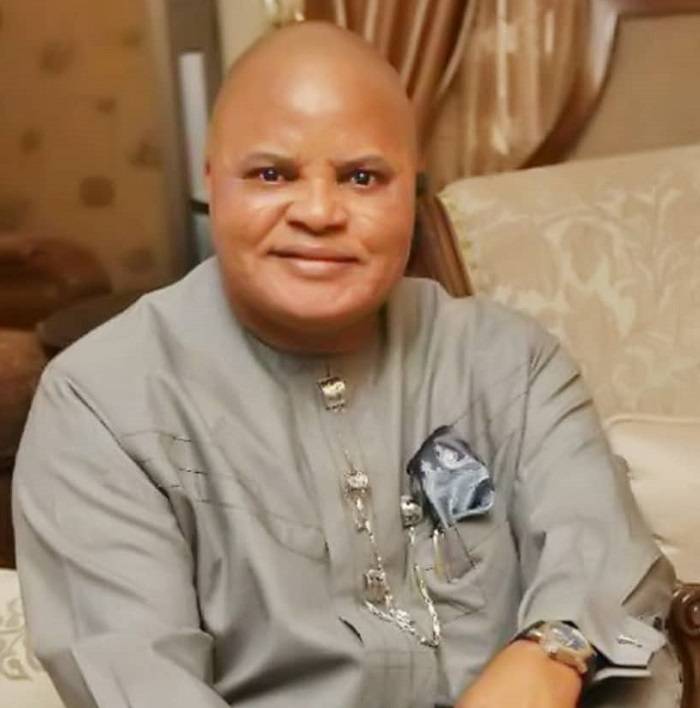
A group, the Imo First Group (IFG) has described the purported Magistrate court order to arrest Senator Ifeanyi Araraume and the former governor of Imo State, Rochas Okorocha, over alleged criminal conspiracy and forgery, as a ruse and fake news
The group stated this in a statement issued on Saturday in Abuja.
IFG challenged those peddling the fake news to make the court order public.
The statement reads ” The fabricated and concocted story was first posted on social media by Hon. Ambrose Nwaogwugwu, a media aide to Governor Hope Uzodimma, before it was picked up by other media outfits, including Arise TV.
According to the statement, those behind the report claimed that a Senior Magistrate Court sitting in Abuja issued a Bench Warrant dated September 9, 2026, following a petition written by the Resident Electoral Commissioner (REC) in Imo State, Barr. Chukwuemeka Ibejiako, to the Police and DSS on October 8, 2026, over alleged presentation of fake APC primary results.
The Group debunked the existence of any such order.
“We want to state categorically and unequivocally that no jSenior Magistrate ordered or issued any bench warrant for the arrest of Araraume”
IFG however challenged anyone in possession of the purported court order to publish it.
“If you claim to have a court order present same for the public to see,
“This fabricated bench warrant contain in the report is filled with inconsistencies, the bench warrant was dated September 9, 2026, while the REC’s petition that supposedly triggered it was dated October 8, 2026, with case number CR/M/084/2026.
The statement further stated that the purveyors and harbinger of the fake news tried to trick the magistrate via exparte order but was rebuked
“The magistrate bluntly refused to grant their exparte and threatened to arrest them, yet they carried their falsehood about. What’s the problem of occupants of office that never won free and fair elections and tried to destroy reputable Imo sons that have won elections. We challenge anyone in this macabre surugede dance to show the court order or warrant of arrest. It’s preposterous to blackmail decent Imo sons on the altar of dirty politics.”

-
Politics3 years ago
13 Ondo Assembly Members Disown Endorsement of Aiyedatiwa
-
Politics3 years ago
APC Group, Ondo Govt, Quarrel Over Money for Endorsement
-

 Trending News5 years ago
Stop unsavoury, inciting statements – DSS warns
-

 Others5 years ago
Adron Homes Celebrates 10 Years Of Housing Excellence
-

 Humanity5 years ago
President Buhari Commiserates With Ambassador Maureen Tamuno Over The Loss Of Her Father
-

 Others7 years ago
EX- CUSTOMS BOSS, IBRAHIM MERA’S DWINDLING FAME
-

 Business2 years ago
Bigi Carbonated Soft Drinks Treats 40 Consumers to an Epic Easter Movie Hangout
-

 Business2 years ago
Wema Bank Shines at Global SME Finance Forum Conference Awards 2024 …Awarded: • SME Financier of the Year (Africa) • Platinum Award for Best Financier for Women Entrepreneurs (Africa)