
Uncategorized
Outpouring of Honours for Hakeem Alobo-Bakare


Is anyone writing a book about the great personalities or big players in Nigeria’s construction sector ?
If yes, the book wouldn’t be complete without the name of Hakeem Alobo-Bakare, a socialite, businessman and a politician.
He is not your run-off the mill businessman; he is an inspiration to many, as he has his hands in many sectors of the economy, apart from construction that has given him name and fame.
The Lagos State-born construction giant is also one of the country’s nouveau riche, with big wallets and even enviable social reputation.
Though Alobo-Bakare has successfully etched his name in the minds of his compatriots, he does not make noise about his success.
His Ikoyi, Lagos homes are usually a Mecca of sorts, as many besiege the places seeking one favour or the other.
In retrospect, when he started many years ago, not many people gave him any chance of survival. But he confronted the challenge with a resolve to succeed. And he is successful by all standards today.
Interestingly, his profile will receive a boost come January 2023 when he will be conferred with two chieftaincy titles: Otunba Bobajiro of Jogaland by His Royal Highness Oba (Dr.) Adeyemi Adekeye, JP as well as Bashorun of Orile Igbon by Oba of Orile-Igbon Oba Francis Olushola Alao and another big one from Alara of Ilara Kingdom, Oba Olufolarin Ogunsanwo.
In a letter made available to us, the Office of Oba of Jogaland stated that Alobo-Bakare was considered for the honour in recognition of his uncommon feats in life.
The letter reads in part: “ In recognition of the outstanding success you have achieved in your vocation and in appreciation of your valuable contributions you have made and still making through selfless public service for the benefit and welfare of humanity and also your excellent performance and contribution to our Community.
“Furthermore, as a token of high esteem, I have selected you as my Otunba- Bobajiro of Jogaland with full power and authority to inform others of the
genuine hospitality and friendly atmosphere that prevail in Joga-Orile, Ogun State and of many advantages and unlimited opportunities that our great town has to offer.
“Your letter of acceptance of this well-deserved honour is awaited.”
Alobo-Bakare possesses a spirit that harbors deep disdain for doing things in half measures.
For him, whatever is worth doing at all is worth doing well. This probably explains why he is passionately committed to success and giving his all to whatever he sets out to do.
His spirit of total commitment and determination to strive for excellence had propelled him to the limelight in his early days in his chosen career.



Nigeria’s current account surplus rose sharply to $7.54 billion in the second quarter of 2026, representing a 67.9 per cent increase from the $4.49 billion recorded in the first quarter, as stronger export earnings and higher remittance inflows strengthened the country’s external position.
The latest figure was also 45.8 per cent higher than the $5.17 billion surplus recorded in the corresponding period of 2025, according to provisional Balance of Payments statistics released by the Central Bank of Nigeria.
The improvement was driven principally by a wider surplus in the goods account, which more than offset increased net outflows from the services and primary income accounts.
The goods account recorded a surplus of $10.12 billion in Q2, up from $5.96 billion in Q1 and $4.85 billion in the same quarter of 2025.
The stronger position reflected higher export receipts across several major categories. Total exports rose to $20.08 billion in Q2 from $15.56 billion in the preceding quarter.
Crude oil export receipts increased by 15.78 per cent to $9.39 billion, while natural gas exports climbed by 40.15 per cent to $3.63 billion.
Exports of refined petroleum products recorded an even stronger increase, rising by 66.24 per cent to $3.94 billion. Non-oil export receipts also increased by 25.30 per cent to $3.12 billion during the quarter.
The goods account also benefited from a significant reduction in crude oil imports. The value of crude oil imports fell to $580 million in Q2 from $1.39 billion in Q1, further improving the country’s trade position.
Remittances provided another source of support for the Nigeria current account surplus. The secondary income account increased to a surplus of $6.30 billion, compared with $5.47 billion in the first quarter.
Personal transfers, including remittances from Nigerians living abroad, rose by 9.81 per cent to $5.82 billion during the quarter.
However, the improvement in the current account came despite higher outflows from some other components of the external accounts.
Net services outflows increased to $4.67 billion from $3.71 billion in Q1, reflecting higher payments for transport, travel, insurance, business services and other government services.
The primary income account also recorded a larger deficit, with its debit balance rising to $4.20 billion from $3.23 billion. The increase was attributed largely to higher dividend and interest payments to non-resident investors.
The financial account also improved during the quarter, moving from a net borrowing position of $2.03 billion in Q1 to a net lending position of $1.74 billion in Q2.
Portfolio investment liabilities attracted inflows of $7.09 billion, compared with $6.03 billion in Q1, while foreign direct investment inflows increased to $1.15 billion from $1.03 billion.
Nigeria’s overall balance of payments also recorded a $3.51 billion surplus in Q2 2026, according to the CBN.
The country’s external reserves rose from $48.35 billion at the end of March to $51.39 billion at the end of June, providing a larger external buffer during the quarter.
The latest figures point to an improvement in Nigeria’s external position during the second quarter, with stronger export earnings, reduced crude oil imports and increased remittance inflows contributing to the expansion of the current account surplus.
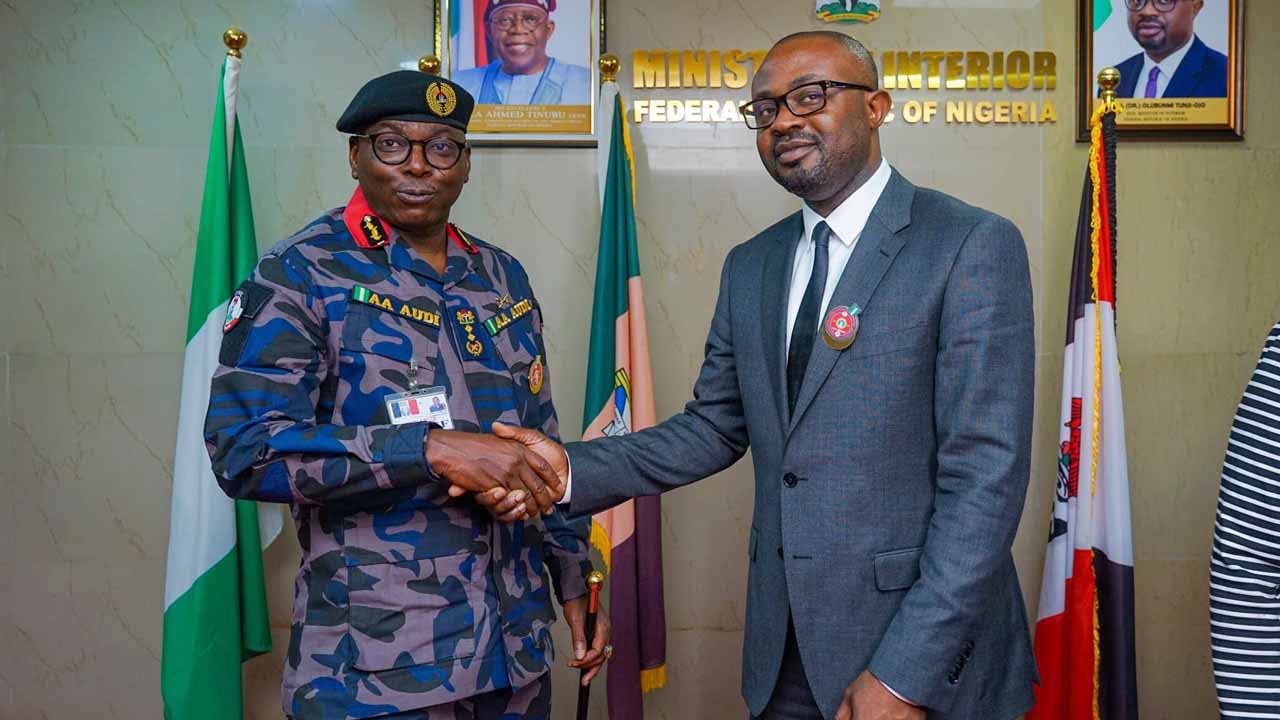
The Federal Government has ordered a full-scale investigation into the deaths of suspected illegal miners who died while in the custody of the Nigeria Security and Civil Defence Corps in Niger State.
The directive was issued by the Minister of Interior, Olubunmi Tunji-Ojo, on Friday, September 18, 2026, following the deaths reported after enforcement operations carried out by the Niger State NSCDC Command on September 15 and 16.
As part of the immediate response, the Niger State NSCDC Commandant, Suberu Siyaka Aniviye, has been suspended from office pending the outcome of the investigation.
Tunji-Ojo said the decision was necessary to allow a full and transparent investigation into the circumstances surrounding the incident. He described the deaths as unfortunate and reiterated that the government’s priority was the protection of lives.
“We run a government whose ultimate priority is security of lives and we have worked to stay true to this,” the minister said.
The suspected illegal miners were arrested during coordinated enforcement operations around the M.I. Wushishi and Lukoto axis of Niger State as part of efforts to curb illegal mining activities.
The deaths were discovered in the early hours of Thursday, September 17. Different reports have given varying figures for the number of people who died, while the NSCDC has not issued a definitive national figure. The Niger State Government and some reports have put the number at 37, while other reports have cited different figures.
Before the minister’s latest directive, NSCDC Commandant-General Ahmed Abubakar Audi had ordered the constitution of a high-powered investigative team led by the Deputy Commandant-General in charge of Intelligence and Investigation.
The panel is expected to examine the circumstances surrounding the deaths, including the condition of the suspects when they were arrested, the length of time they spent in custody, the conditions under which they were detained and the medical attention provided to them.
The remains of those who died were deposited at the General Hospital, Minna, for medical examination to establish the actual cause of death.
The NSCDC has specifically warned against attributing the deaths to any particular disease before medical and laboratory examinations are completed. The Corps said it would not speculate on the cause of the fatalities until the relevant findings are available.
The issue has also raised questions about the conditions in which the suspects were held. An account from a survivor cited by the Associated Press alleged that a large number of detainees were kept in a poorly ventilated cell and that some detainees struggled to breathe. Those claims remain part of the broader circumstances that investigators will need to establish.
Following the suspension of Aniviye, the NSCDC is expected to ensure continuity of command in Niger State while the investigation proceeds. The Federal Government has also urged members of the public to remain calm and allow the investigative and medical processes to run their course.
The NSCDC has pledged to cooperate with the investigation and reaffirmed its commitment to protecting the dignity, safety and fundamental rights of people in its custody.
Audi had earlier directed that the health and welfare of all persons currently detained by the Corps be given priority, while measures are taken to protect personnel who may have come into contact with the affected detainees.
The investigation is expected to determine whether any operational, administrative or medical failures contributed to the deaths and whether further action should be taken against any personnel found to have breached established procedures or the law.
The government has also expressed condolences to the families of the deceased and said the outcome of the investigation and medical examinations would guide further action.

Governor Bassey Otu of Cross River State has urged the Federal Airports Authority of Nigeria, FAAN, to upgrade facilities at the state’s airport ahead of the African Sub-Sovereign Governments Network, AfSNET, Investment Conference scheduled for November 2026.
The governor’s request is part of preparations for the international investment conference, which will bring government officials, investors and other stakeholders to Calabar.
Otu wants the airport facilities improved to ensure more efficient flight operations and a better experience for passengers arriving for the event.
Cross River has been announced as the host of the 2026 AfSNET conference, with Calabar expected to welcome delegates from Nigeria and other parts of Africa.
The governor’s call places emphasis on the airport as an important gateway for the state as it prepares to host the high-profile gathering.
Improved passenger handling and airport facilities are expected to support the smooth arrival and departure of delegates while strengthening Calabar’s readiness to host international visitors.
The AfSNET conference is expected to provide Cross River with an opportunity to showcase its investment potential and attract fresh business opportunities to the state.
Otu has previously highlighted the significance of the conference to the state’s ambition to position itself as a destination for investment and international engagement.
-
Politics3 years ago
13 Ondo Assembly Members Disown Endorsement of Aiyedatiwa
-
Politics3 years ago
APC Group, Ondo Govt, Quarrel Over Money for Endorsement
-

 Trending News5 years ago
Stop unsavoury, inciting statements – DSS warns
-

 Others5 years ago
Adron Homes Celebrates 10 Years Of Housing Excellence
-

 Humanity5 years ago
President Buhari Commiserates With Ambassador Maureen Tamuno Over The Loss Of Her Father
-

 Others7 years ago
EX- CUSTOMS BOSS, IBRAHIM MERA’S DWINDLING FAME
-

 Business2 years ago
Bigi Carbonated Soft Drinks Treats 40 Consumers to an Epic Easter Movie Hangout
-

 Business2 years ago
Wema Bank Shines at Global SME Finance Forum Conference Awards 2024 …Awarded: • SME Financier of the Year (Africa) • Platinum Award for Best Financier for Women Entrepreneurs (Africa)