Economy
Plateau State Begins Positive Security Training for Operation Rainbow


Plateau Operation Rainbow training begins as over 4,000 operatives receive specialised instruction to improve security response and accountability

Plateau State Government has commenced a large-scale training programme for more than 4,000 operatives of Operation Rainbow as part of efforts to strengthen internal security and improve response capacity across the state amid longstanding insecurity challenges.
Also read: Plateau Governor Mutfwang Urges Calm After Deadly Angwan-Rukuba Attack
The Plateau Operation Rainbow training initiative, confirmed in Jos by Mr. Saka Azimazi, Technical Adviser at the Kukah Centre, follows the completion of a week-long session by the first cohort of trainees.
The programme is designed to enhance operational standards, legal awareness and professional conduct among personnel of the state-backed community security outfit.
Operation Rainbow, established in 2010 under former Governor Jonah Jang, was created to support security agencies in addressing recurring violence that has affected Plateau State for years.
The new training marks a renewed push to improve its effectiveness in responding to security threats and supporting community safety.
Mr. Azimazi explained that the Plateau Operation Rainbow training is based on findings from a baseline assessment that identified capacity gaps within the organisation.
He noted that the programme’s curriculum was shaped to address these shortcomings and strengthen overall performance.
The training is being conducted in batches, with 100 operatives per cohort.
While only about 300 personnel are currently participating out of the total workforce, organisers say the phased approach is intentional and aimed at ensuring sustainable knowledge transfer across the organisation.
Selected participants are expected to act as trainers for their colleagues upon completion.
A key focus of the Plateau Operation Rainbow training is addressing legal and operational gaps within the system.
Azimazi highlighted ambiguities in the enabling law, particularly around procedures for arrest and detention, noting that clearer definitions are necessary to ensure compliance with human rights standards and operational discipline.
The reform effort also includes the development of a standard operating procedure and a review of the legal framework governing the outfit.
These measures are intended to establish clearer guidelines for engagement, accountability mechanisms and oversight structures within the organisation.
The training programme, themed “Improving Community Security Initiative for Accountable Service Delivery,” is supported by the Strengthening Peace and Resilience in Nigeria Programme, a partnership involving the United Kingdom Foreign, Commonwealth and Development Office and Tetra Tech International Development, implemented through the Kukah Centre.
Stakeholders have welcomed the initiative as a timely intervention. Legal and peacebuilding representatives emphasised the importance of professionalism, restraint and adherence to the rule of law as central outcomes of the training.
Brigadier General Gakji Shipi (retd.), State Coordinator of Operation Rainbow, also underscored the relevance of the training to field operations, urging participants to engage fully with lessons on rules of engagement and operational conduct.
Participants expressed optimism about the programme’s impact, noting that improved understanding of legal frameworks and community engagement will enhance their effectiveness in the field.
Also read: Plateau Fulani Accuse Military of Killing Nine Cows
As Plateau State continues to confront security challenges, the Plateau Operation Rainbow training represents a structured effort to build a more capable, accountable and community-oriented security framework capable of supporting lasting peace and stability in the region.


Economy
Governor Dauda Lawal woos investors, highlights Zamfara’s economic opportunities at CEO Forum

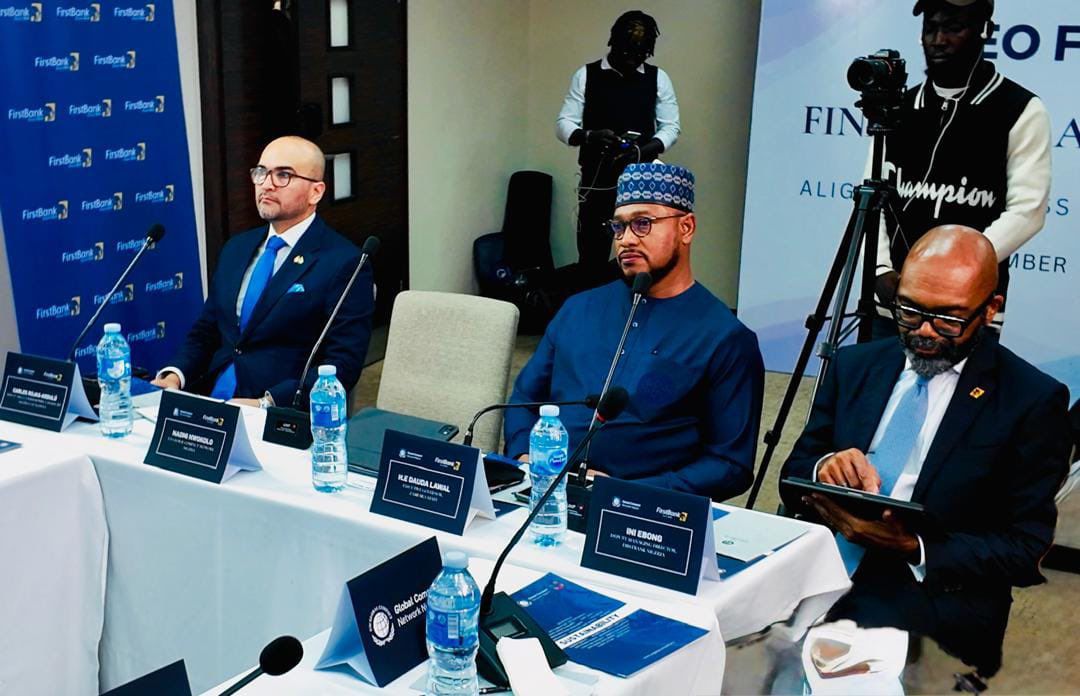
Zamfara State Governor, Dauda Lawal, has called for stronger collaboration between government, businesses and investors to unlock private capital and drive inclusive economic growth in the state.
Lawal made the call while delivering a Special Policy Address at the 2026 CEO Forum organised by the Global Compact Network Nigeria in Lagos.
The forum, held under the theme “Financing a Dignified Future: Aligning Business Action, Policy and Capital,” brought together chief executives, senior government officials, industry leaders, diplomats, trade commissioners and international development partners.
Participants were drawn from key sectors of the economy, including oil and gas, energy, manufacturing, construction and infrastructure.
The governor spoke on the growing competition among states for increasingly selective private capital and the factors that could transform an economic opportunity into an investable proposition.
He explained how his administration was working to bridge the gap between available economic opportunities and investment, with emphasis on building investor confidence while ensuring that investments deliver meaningful outcomes for the people of Zamfara.
According to him, attracting investment requires more than identifying economic opportunities, but also creating the conditions, policies and partnerships capable of giving investors confidence to commit capital.
The forum provided a platform for business leaders, government officials and investors to examine ways of aligning business strategies, public policies and capital deployment to unlock productive investment.
Discussions also focused on identifying businesses, sectors and projects with strong potential but facing difficulties in accessing financing, as well as measures to make such opportunities more attractive to investors.
The organisers also introduced the concept of the “Dignity Dividend,” examining how investment-led growth could translate into better jobs, stronger businesses, increased productivity, local value creation and broader economic participation.
Another key component of the forum was the identification of actionable commitments and partnerships that participating institutions could advance over the next six to 12 months.
Notable speakers at the event included chief executives of First Bank Group, Access Bank, Flour Mills of Nigeria Plc, Nigeria Economic Summit Group, Nigerian Exchange Group, Chellarams Plc, SecureID Group and Greenwich Merchant Bank Plc, among others.
The organisers said the session would culminate in a live showcase of the Business Value and Sustainability Platform (BVSP), described as a standing coalition of business, capital and policy actors designed to sustain the dialogue.
The platform is also expected to contribute to shaping Nigeria’s private-sector engagement during the United Nations General Assembly High-Level Week.
The governor’s participation in the forum comes as Zamfara seeks to strengthen its economic base, attract productive investment and create opportunities that can support sustainable livelihoods and wider participation in the state’s economy.
-
Politics3 years ago
13 Ondo Assembly Members Disown Endorsement of Aiyedatiwa
-
Politics3 years ago
APC Group, Ondo Govt, Quarrel Over Money for Endorsement
-

 Trending News5 years ago
Stop unsavoury, inciting statements – DSS warns
-

 Others5 years ago
Adron Homes Celebrates 10 Years Of Housing Excellence
-

 Humanity5 years ago
President Buhari Commiserates With Ambassador Maureen Tamuno Over The Loss Of Her Father
-

 Others7 years ago
EX- CUSTOMS BOSS, IBRAHIM MERA’S DWINDLING FAME
-

 Business2 years ago
Bigi Carbonated Soft Drinks Treats 40 Consumers to an Epic Easter Movie Hangout
-

 Business2 years ago
Wema Bank Shines at Global SME Finance Forum Conference Awards 2024 …Awarded: • SME Financier of the Year (Africa) • Platinum Award for Best Financier for Women Entrepreneurs (Africa)