
Economy
Rtn. Chukwu Charts New Course for RC Ikoyi Metro, Unveils $20,000 Foundation Drive


Rotary Club Ikoyi Metro installs Alexander Chukwu as 24th president, unveiling bold service plans in healthcare, education, and community empowerment

Rotary Club Ikoyi Metro has officially installed Rotarian Alexander Chukwu as its 24th president for the 2025/2026 Rotary year, ushering in a season of culture, purpose, and bold vision.
Also read: Alexander Chukwu Installs as 24th President of Rotary Club of Ikoyi Metro
The investiture, held on August 30 at the Nigerian Law School’s Sir Adetokunbo Ademola Hall, gathered Rotarians, friends, and dignitaries who witnessed a leadership transition anchored in service and unity.
In his acceptance speech, Rtn. Chukwu, an accomplished engineer with over two decades in Nigeria’s oil and gas sector, pledged to unite for good.
“We are called not just to do good, but to unite for good; to bring people together across lines of difference, across boundaries of geography, culture and status; to serve humanity with one heart and one purpose,” he said to warm applause.
His agenda for the Rotary year is ambitious yet practical. Key priorities include raising at least US\$20,000 for The Rotary Foundation, expanding club membership by 30 percent, and delivering transformative community projects.
Chief among them is the refurbishment of Wards C1 and C2 at the General Hospital, Odan, Lagos, which will add forty hospital beds and reduce preventable deaths caused by overcrowding.
Education and economic empowerment are also central.
Fifteen students are already on scholarships, interschool debates are energizing secondary schools, and vocational graduates will soon receive start-up tools to launch their trades.
“This is essential to breaking cycles of poverty in our community,” Chukwu explained.
The evening also showcased Rotary’s ongoing work: breast cancer screenings, palliative support, release of inmates at Ikoyi Correctional Centre, and donation of wheelchairs and crutches to patients in need.
Beyond service, Chukwu brings corporate leadership as a senior manager at NNPC’s Upstream Investment Management Services.
His career, he said, has sharpened his accountability and sense of responsibility—values he brings into Rotary leadership.
The colourful ceremony featured cultural displays, new member inductions, donations, and Chukwu’s recognition as a Major Donor to The Rotary Foundation, marking his personal contribution of at least US\$10,000.
Also read: Rotary Club of Ikoyi Metro Hosts District Governor, Rotarian Lanre Adedoyin, Awards Scholarship to 15 Students
As the curtains fell, one message was clear: Rotary Club Ikoyi Metro, under Chukwu’s leadership, is poised to touch more lives, strengthen communities, and redefine the power of service in Lagos and beyond.


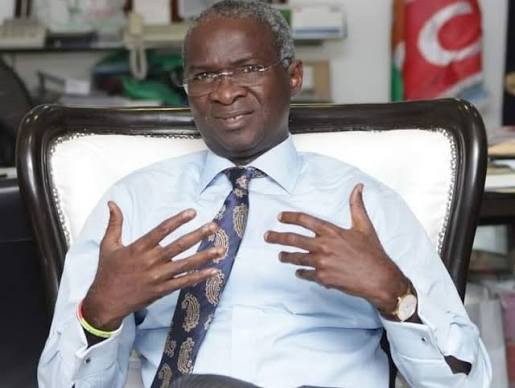
Fashola links Nigeria’s cost-of-living crisis to global conflicts, while defending Tinubu’s economic policies and acknowledging gaps in relief
FCCPC fuel price monitoring intensifies as Tunji Bello urges Nigerian refiners and marketers to reflect falling crude prices in petrol costs

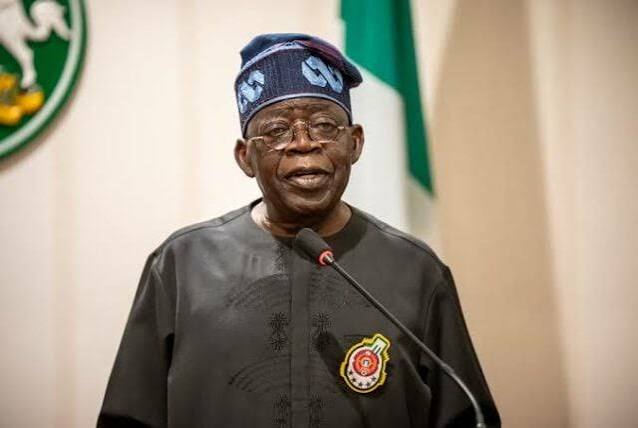
Nigeria investment in youth and local industries is vital to job creation, says FG, urging public-private partnerships and regional industrialisation
The Federal Government has called for increased investment in youth development, small and medium-sized enterprises, technology and local industries to create jobs and strengthen Nigeria’s economic competitiveness.
Also read: Osun amotekun dismisses officer over gross misconduct
The Minister of State for Foreign Affairs, Ambassador Sola Enikanolaiye, made the call during a panel discussion titled “From Trade to Value Chains: Building Regional Industries to Compete Globally” at the 32nd Nigerian Economic Summit, held under the sub-theme, “Invest Nigeria”.
In a statement issued on Tuesday and signed by his Special Assistant on Digital Media and Public Diplomacy, Raphael Oni, Enikanolaiye said Nigeria needed stronger partnerships between the public and private sectors to mobilise the capital required for sustainable economic growth.
He argued that the country must move beyond trading raw materials towards building industries that process local resources into finished products for domestic consumption and export.
According to the minister, investment from both domestic businesses and foreign sources would be necessary to expand industrial capacity, create employment opportunities and improve living standards.
“In advancing our country, we don’t talk enough to one another in terms of constructive conversation and dialogue. We believe that partnership which allows government to engage deeper and stronger with the private sector is critical. Government alone cannot alone raise the resources needed for shared prosperity,” he said.
Enikanolaiye added that domestic capital mobilisation was as important as attracting foreign investment.
He identified Nigeria’s youthful population as a major asset that could accelerate industrialisation if supported by investments in education, skills development, innovation and entrepreneurship.
“Our youth population is very critical – a vibrant population. We need to invest more in human capital, focusing on Small and Medium Scale Enterprises, technology, innovation and creativity. By so doing, we will be able to generate more employment for the youth and also raise more wealth and income,” he said.
On foreign policy, the minister said the administration had reordered its four-point 4D doctrine to place the welfare and prosperity of Nigerians at the centre of the country’s international engagements.
The framework focuses on Demography, Development, Democracy and Diaspora.
Enikanolaiye said democratic governance should produce tangible economic benefits for citizens rather than remain an end in itself.
“Democracy is good, but it is a means to an end, not an end in itself. Democracy must deliver on core priorities of economic development and economic prosperity to our people,” he said.
The minister also emphasised the importance of macroeconomic stability and reliable economic data in helping businesses assess investment opportunities and make long-term plans.
He said Nigeria had recorded improvements in macroeconomic stability and that inflation was coming down, although he did not provide supporting figures in the statement.
Enikanolaiye further called for reforms to make the Ministry of Foreign Affairs more responsive to Nigerians and strengthen its engagement with businesses.
He said cooperation between the government and private sector, alongside partnerships with neighbouring countries and other international markets, could help Nigeria expand its industrial base and improve its access to regional and global markets.
Also speaking at the summit, the President of the Economic Community of West African States Commission, General Birame Diop, called for greater emphasis on industrialisation to create jobs and strengthen regional trade.
His remarks were delivered by the ECOWAS Commissioner for Economic Affairs and Agriculture, Dehpue Yenpea Zuo.
Diop argued that trade agreements alone could not deliver widespread employment and economic growth without industries capable of processing raw materials and producing goods.
“Trade agreements do not create jobs; industries do,” he said.
He noted that intra-African trade accounted for about 15 per cent of the continent’s total trade, compared with more than 60 per cent in Europe and Asia.
He attributed the gap partly to the limited scale of regional industries.
According to Diop, the regional market, with more than 300 million consumers, provides an opportunity for West African manufacturers to expand production before competing across the continent under the African Continental Free Trade Area.
He outlined four priorities for advancing regional industrialisation: implementing existing trade agreements, including commitments on border management; developing value chains in sectors where West Africa has a competitive advantage; improving access to finance for businesses and producers; and measuring progress through jobs created and goods processed within the region.
Also read: Osun amotekun dismisses officer over gross misconduct
Diop said converting trade commitments into productive industries would be essential to expanding employment, increasing regional economic activity and strengthening West Africa’s competitiveness in global markets.
-
Politics3 years ago
13 Ondo Assembly Members Disown Endorsement of Aiyedatiwa
-
Politics3 years ago
APC Group, Ondo Govt, Quarrel Over Money for Endorsement
-

 Trending News6 years ago
Stop unsavoury, inciting statements – DSS warns
-

 Others5 years ago
Adron Homes Celebrates 10 Years Of Housing Excellence
-

 Humanity5 years ago
President Buhari Commiserates With Ambassador Maureen Tamuno Over The Loss Of Her Father
-

 Others7 years ago
EX- CUSTOMS BOSS, IBRAHIM MERA’S DWINDLING FAME
-

 Business3 years ago
Bigi Carbonated Soft Drinks Treats 40 Consumers to an Epic Easter Movie Hangout
-

 Business2 years ago
Wema Bank Shines at Global SME Finance Forum Conference Awards 2024 …Awarded: • SME Financier of the Year (Africa) • Platinum Award for Best Financier for Women Entrepreneurs (Africa)