
Economy
TAFTA Develops Business Capacity of Women in the Creative Industry


TAFTA trains women creatives through a three-day bootcamp with Mastercard Foundation to equip female artists with entrepreneurial skills

The Terra Academy for the Arts (TAFTA), in collaboration with the Mastercard Foundation, has successfully concluded its three-day Women Entrepreneurs Development Program (WEDP) Bootcamp an initiative aimed at empowering female creatives to transform their artistic talents into thriving enterprises.
Also read: TALP X Empowers Future Stars with Powerful Performances
Held from October 27 to 29, 2025, the hybrid program brought together women aged 18 to 35 for a robust learning experience that blended virtual masterclasses on entrepreneurship with a physical pitch event at Terra Kulture in Lagos.
The bootcamp focused on key areas such as business formalisation, financial literacy, digital strategy, market access, and investor readiness equipping participants with the skills to build sustainable businesses in Nigeria’s creative economy.
Founder of TAFTA, Bolanle Austen-Peters, reaffirmed the academy’s commitment to empowering women creatives:
“At TAFTA, we believe that talent without opportunity is potential unfulfilled. This bootcamp reflects our commitment to ensuring that women we train not only become skilled artists but confident entrepreneurs capable of building, growing, and scaling businesses that transform their communities.”
The first two days of the program featured virtual sessions led by industry experts including David Agboto, Chinedu Isagbah, Faith Desmond, Adefunke Smith, Favour Ofem, and Uloma Nkemakolam. Participants learned how to formalize their ventures, manage finances, and create compelling digital marketing strategies.
The final day’s in-person showcase at Terra Kulture featured live pitch presentations before a panel of mentors, investors, and industry stakeholders.
Facilitators such as Juliet Ibhadiyi and Bayo Babatunde led discussions on funding access, partnership development, and storytelling for investment.
Joseph Umoibom, Academy Lead at TAFTA, noted that WEDP was helping to break gender barriers in the creative economy:
“The creative economy is one of the fastest-growing sectors globally, yet women remain underrepresented in leadership and ownership roles.
Through WEDP, we are building an ecosystem where women can access funding, forge partnerships, and lead innovation in the industry.”
Participants left the bootcamp with actionable business plans, pitch decks, and ongoing mentorship support, along with connections to women-focused funding channels and creative industry investors.
The initiative underscores TAFTA’s mission to democratize access to creative education and promote gender equity in Nigeria’s arts and culture sector.
Also read: Wema Bank Expands SME Empowerment to Ghana with NBC Trade Fair
For more information about TAFTA’s Women Entrepreneurs Development Program and upcoming initiatives, visit www.terraacademyforarts.com or follow @tafta_academy on social media.


Economy
Governor Dauda Lawal Join VP Shettima’s Delegation to Benin Republic, Seeks Industrial Model to Boost Zamfara’s Agric Zones
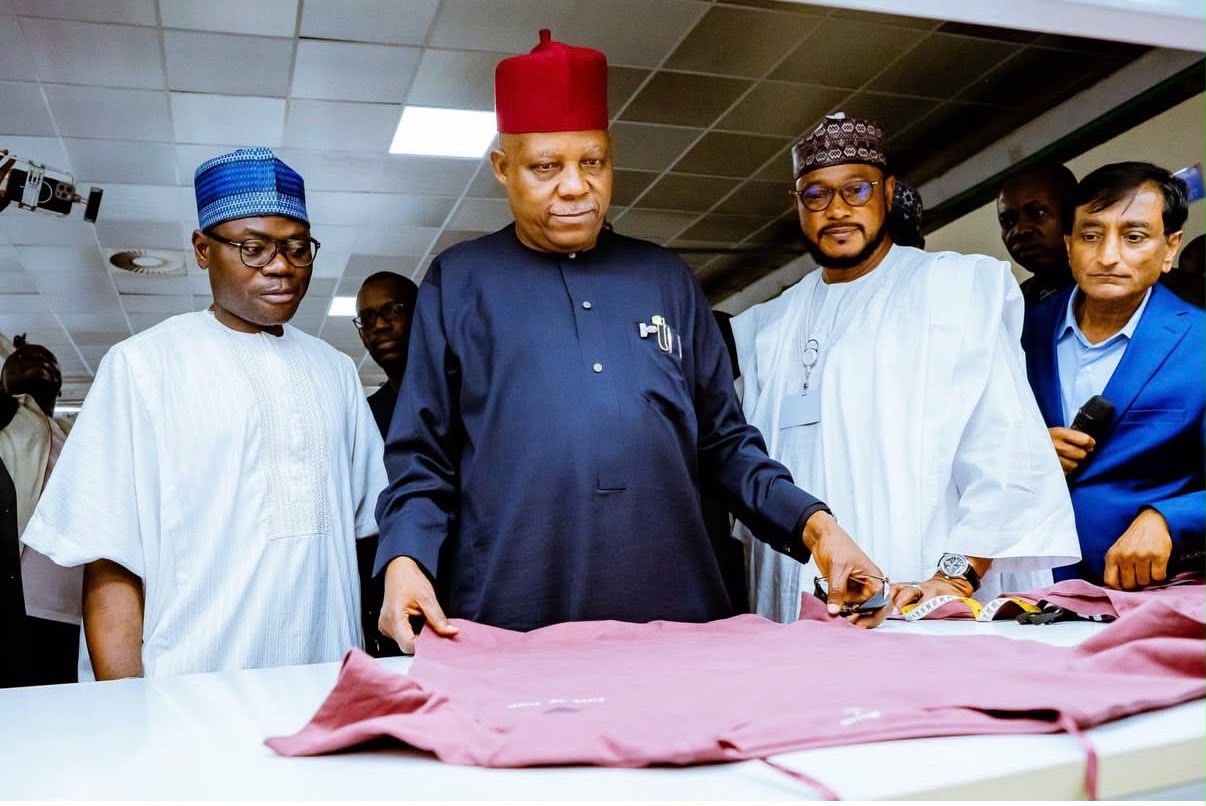
Zamfara State Governor Dauda Lawal has described the Glo-Djigbé Industrial Zone (GDIZ) as a practical blueprint for transforming Zamfara state’s agricultural sector, as he joined Vice President of Nigeria, Senator Kashim Shettima and five other governors on a working visit to the Benin Republic industrial hub on Friday.
The delegation toured the 1,640-hectare public-private industrial platform, inspecting integrated textile and agro-processing facilities where locally produced cotton is converted into yarn, fabric and finished garments while cashew and soybean are processed for domestic and export markets. GDIZ, developed by the Beninese government and ARISE Integrated Industrial Platforms, has created more than 25,000 jobs since production began in 2021.
For Governor Lawal, who presides over an agrarian state with vast arable land and a strong comparative advantage in crop production, the visit presented an opportunity to draw direct lessons for Zamfara’s agricultural transformation agenda.
“Zamfara holds a strong comparative advantage in agriculture. We grow all crops in the state, we are not limited to soybeans. We have the land and it is fertile,” Governor Lawal had told global investors at the Africa Investment Forum in Morocco last November, where he signed a strategic Memorandum of Understanding with the Ministry of Finance Incorporated (MOFI) to drive large-scale agricultural transformation under the INTEGRANIUM Initiative.
The GDIZ visit is aimed at strengthening the implementation of Nigeria’s Special Agro-Industrial Processing Zones Programme, drawing practical lessons from Benin’s approach to agricultural value addition, industrial infrastructure, investment mobilisation and export-oriented production. Particular attention was given to the textile park’s integrated production system covering cotton spinning, weaving, fabric processing and garment manufacturing. Governor Lawal believes that Zamfara State can benefit from the $370 billion worth of global cotton valuation by ensuring Zamfara grows more cotton and can also lead the charge by reviving moribund textile manufacturing hubs and value chain which could generate millions of jobs, expand non-oil exports and stimulate economic activities.
Governor Lawal’s participation in the delegation aligns with Zamfara’s recently launched 10-year Development Plan (2025–2034), which envisions the state becoming “a benchmark for transformative economic growth, not merely for Nigeria, but the continent of Africa”. The plan prioritises maximising Zamfara’s agricultural and natural resource strengths through partnerships, mechanised farming, agro-processing and value chains to create jobs, improve food security and reduce poverty-driven insecurity.
Governor Lawal was also in company of other state Governors like; Hope Uzodimma (Imo), Caleb Mutfwang (Plateau), AbdulRahman AbdulRazaq (Kwara), Dikko Radda (Katsina), and Umar Namadi (Jigawa). The visit is expected to inform the development of garment-training facilities and dedicated processing infrastructure near agricultural production communities across Nigeria.

Economy
Governor Dauda Lawal Commissions ZAM Lithium Processing Plant, Targets 2,000 Jobs, Local Value Addition
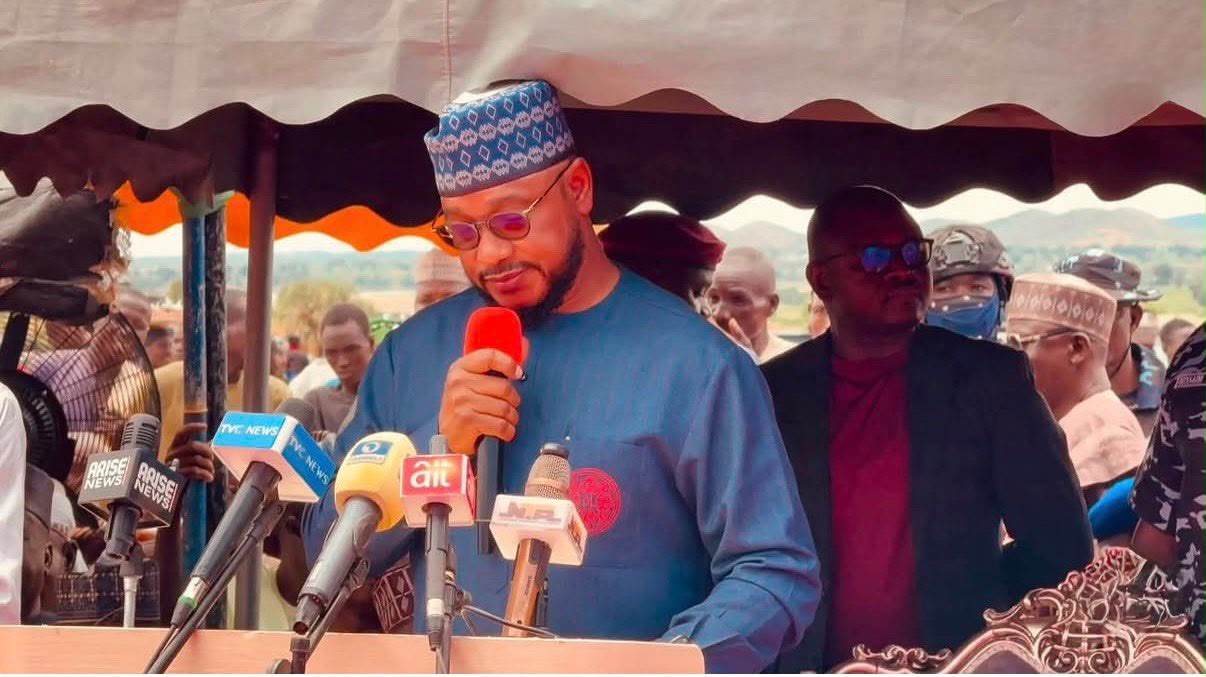
In a bold move to industrialise Zamfara State and unlock its vast mineral wealth, Governor Dr Dauda Lawal has officially commissioned a multi-billion-naira lithium mining and processing plant located in Boko village, within the Moriki Emirate of Kaura Namonda Local Government Area. The state-of-the-art facility, which represents an investment of over 200 million US dollars, marks a historic turning point in the state’s quest to move beyond raw mineral exportation and embrace full-scale local processing, value addition and industrial development.
The commissioning ceremony drew a large gathering of traditional rulers, government officials, investors, community leaders and mining industry stakeholders who came to witness what the governor described as the dawn of a new era for Zamfara’s solid minerals sector.
The lithium processing plant is a flagship initiative under Governor Lawal’s broader economic diversification agenda, designed to ensure that Zamfara’s abundant natural resources are not only extracted but also processed and utilised in a manner that generates substantial revenue for the state, creates employment opportunities and stimulates homegrown industrial growth. By establishing local processing capacity, the plant will significantly reduce the export of raw lithium and other minerals, thereby retaining more value within the state and the nation at large. This strategic shift is expected to improve local utilisation of lithium and its entire value chain, positioning Zamfara as a key player in the global renewable energy and technology-driven economy, where lithium is increasingly in high demand for electric vehicle batteries, modern electronics and industrial applications.
The ZAM Processing Plant is a joint venture involving Zam Mining Coal Limited in collaboration with the Zamfara State Government, Bima Mines and Jinlide Mining Co. Ltd. This partnership has further demonstrated Governor Lawal’s unwavering commitment to restoring investor confidence and signalling that Zamfara State is fully open for business and ready to collaborate with credible investors in developing critical aspects of its economic infrastructure.
The plant will explore, mine, process and utilise the state’s rich mineral endowments, which include not only lithium but also gold, copper, and iron ore, thereby creating a comprehensive mining value chain that spans extraction, processing and industrial application. The facility is equipped with the best advanced technological processing machines available globally, enabling it to scale up production to an impressive 6,000 tons of raw materials daily and over 2,000,000 tons annually. This massive output is expected to significantly boost Nigeria’s total mineral production and strengthen the country’s competitive position in the global mineral market.
Beyond its production capacity, the processing plant is designed to enhance mineral recovery rates, maximise value addition and promote technology transfer to local engineers, technicians and entrepreneurs. The facility is expected to stimulate the growth of industries, including machinery manufacturing, transportation, logistics and maintenance services, thereby creating a ripple effect that will benefit the broader economy.
In terms of employment, the project is set to generate approximately 2,000 direct and indirect jobs, with priority given to qualified workers and residents from the host communities in Zamfara State. The company has also committed to providing comprehensive vocational and technological training programmes to build local skills and expertise, enabling residents to build sustainable careers in the mining industry and contribute to long-term community development.
As part of its corporate social responsibility, the company will undertake a series of community development projects designed to improve the quality of life for host communities. These initiatives include the renovation, construction and upgrade of primary and secondary health centres to ensure access to quality healthcare; the drilling of boreholes to provide portable drinking water and the installation of solar-powered electricity systems to address energy needs in rural areas. The company has also pledged to uphold the highest standards of environmental protection, ensuring operational transparency, responsible mining practices and the mitigation of any adverse ecological impacts. These commitments reflect a deliberate effort to ensure that host communities are genuine partners in progress and direct beneficiaries of the resources found in their environment.
In his remarks at the commissioning ceremony, Governor Lawal delivered an impassioned address in which he described the event as a symbol of a new beginning and a testament to the potential of responsible investment in the solid minerals sector. He emphasised that Zamfara is a haven of vast mineral deposits and that the state government has a moral and economic obligation to harness these God-given resources in a manner that improves the lives of its people.
He recalled that since the commencement of his administration, his government had made a firm commitment to change the narrative of the solid minerals sector, transitioning from informal, unregulated mining to a structured, organised and law-abiding industry that operates within the framework of national and international best practices. He reiterated that his government will continue to provide an enabling environment for investors to operate responsibly, with continued support for reforms aimed at promoting lawful activities, attracting credible investors and strengthening partnerships with the Federal Government to contribute meaningfully to the economic growth and development of the state.
The Governor further noted that the global economy is changing rapidly, driven by the future of renewable energy, electric vehicles, modern technology and industrial transformation and that Zamfara must position itself to become an active participant in this global shift. With its vast deposits of raw materials and minerals, the state must not only extract but also explore the entire value chain, from mining to processing and manufacturing. He stressed that the establishment of the ZAM Processing Plant is entirely consistent with this vision of moving towards local processing, value addition, skill development and industrial growth. He also commended the company for its meaningful corporate social responsibility commitments, which ensure that host communities remain partners in progress and beneficiaries of the development of resources found in their environment.
Governor Lawal concluded by expressing his profound gratitude to the President of the Federal Republic of Nigeria, President Bola Ahmed Tinubu, for his renewed commitment to positioning the solid mineral sector as a driver of national economic growth, investment, industrialisation and economic transformation, which aligns strongly with Zamfara’s vision to better opportunities and expand its revenue base. The commissioning was widely hailed by community leaders, Emirat and stakeholders as a monumental achievement that will transform the economic landscape of Zamfara State for generations to come.
-
Politics2 years ago
13 Ondo Assembly Members Disown Endorsement of Aiyedatiwa
-
Politics2 years ago
APC Group, Ondo Govt, Quarrel Over Money for Endorsement
-

 Trending News5 years ago
Stop unsavoury, inciting statements – DSS warns
-

 Others5 years ago
Adron Homes Celebrates 10 Years Of Housing Excellence
-

 Humanity5 years ago
President Buhari Commiserates With Ambassador Maureen Tamuno Over The Loss Of Her Father
-

 Others7 years ago
EX- CUSTOMS BOSS, IBRAHIM MERA’S DWINDLING FAME
-

 Business2 years ago
Bigi Carbonated Soft Drinks Treats 40 Consumers to an Epic Easter Movie Hangout
-

 Business2 years ago
Wema Bank Shines at Global SME Finance Forum Conference Awards 2024 …Awarded: • SME Financier of the Year (Africa) • Platinum Award for Best Financier for Women Entrepreneurs (Africa)