Connect with us

Opinion

Tony Agenmonmen at 70: Marketing icon, mentor and gentleman

Published

on

Tony

By Ehi Braimah

adron lemon friday


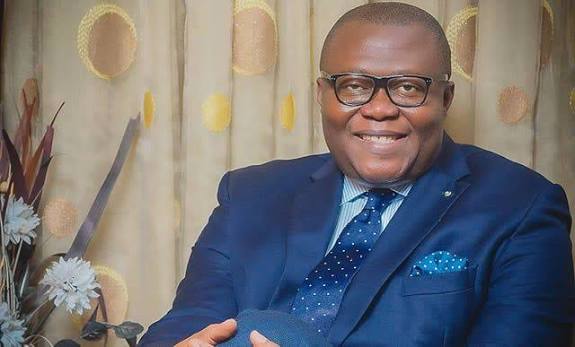
Some people pass through life leaving footprints. Others leave enduring legacies. As family, friends, associates, former colleagues of Nigerian Breweries Plc and distinguished members of Nigeria’s marketing community gather in Lagos on August 8 to celebrate Tony Agenmonmen on his 70th birthday, they are honouring a man whose life has been defined by excellence, integrity, friendship and a solid commitment to the advancement of the marketing profession.

Also read: Xenophobia and the abandonment of foreign policy…

Seventy is a significant milestone. It is an age that invites reflection on a journey of purpose, achievement and service. For Tony, it is also a celebration of a life devoted to building brands, nurturing people, promoting professional excellence and forging relationships that have stood the test of time.

Tony Agenmonmen belongs to that rare generation of marketing professionals who have experienced virtually every aspect of the profession.

His distinguished career at Nigerian Breweries Plc, spanning more than three decades, saw him grow through the ranks, acquiring a deep understanding of consumer behaviour, brand management, strategic marketing and corporate leadership.

His years at one of Nigeria’s foremost corporate institutions equipped him with an uncommon depth of knowledge and practical experience that continues to command respect across the business community.

Those who worked with him at Nigerian Breweries remember not only his competence but also his calm disposition, analytical mind and critical thinking ability to inspire confidence.

Marketing, for Tony, has never been merely about selling products. It has always been about understanding people, creating value, building trust and sustaining relationships.

These principles became the hallmark of his career and remain the foundation of his work today.

Retirement at the age of 60 did not mark the end of his professional journey. Rather, it ushered in another productive chapter.

Leveraging decades of practical experience, Tony reinvented himself as a respected marketing strategist and consultant whose counsel is sought by organisations and business leaders across different sectors.

His passion for the profession has remained undiminished, proving that true professionals never really retire; they simply find new ways to contribute.

Perhaps one of his most visible contributions to the marketing profession is the annual Nigeria Marketing Awards, a prestigious event that has become one of the industry’s most anticipated gatherings.

Through this initiative, Tony has created a platform that celebrates excellence, innovation and professionalism.

The awards have inspired healthy competition, recognised outstanding achievements and encouraged younger practitioners to aspire to higher standards.

Tony’s influence extended far beyond the corporate boardroom. As President of the National Institute of Marketing of Nigeria (NIMN), he brought vision, innovation and exceptional leadership to the Institute during his two-term tenure spanning four years.

At a critical period in the evolution of Nigeria’s marketing profession, he inspired members with fresh ideas, strengthened the Institute’s profile and championed initiatives that enhanced professionalism, ethical standards and continuing education.

Under his stewardship, the NIMN became more vibrant, more visible and more relevant to practitioners and stakeholders alike.

His inclusive leadership style and strategic thinking earned him the admiration of colleagues across the country.

His presidency remains one of distinguished service, leaving a lasting legacy that continues to shape the Institute and inspire future leaders of the marketing profession.

In celebrating others, Tony has strengthened the profession he loves. He understands that industries flourish when excellence is recognised and when outstanding performance becomes worthy of emulation.

His commitment to honouring excellence has enriched Nigeria’s marketing ecosystem and contributed significantly to its continued growth.

Yet, beyond the impressive credentials and professional accomplishments lies the man many of us know personally – a dependable friend, loving husband, caring father, trusted adviser, compassionate mentor and true gentleman.

For me, Tony is much more than an accomplished marketing professional. He is a close friend and associate, but even more importantly, he has always been like an elder brother.

Over the years, he has been one of the strongest supporters of my career and professional calling.

His encouragement, wise counsel and unshakeable confidence in my abilities have provided invaluable support during different phases of my professional journey.

We have collaborated on several projects, sharing ideas, challenging each other intellectually and working together in pursuit of excellence.

Every engagement has reinforced my admiration for his professionalism, discipline, work ethic, and remarkable ability to see opportunities where others often see limitations.

Working alongside Tony has always been an enriching experience because he brings not only knowledge but also wisdom, patience and perspective.

Our friendship extends beyond professional engagements. We share more than common interests; we share common roots.

Coming from the same linguistic background of Edo State has created an even stronger bond founded on shared values, mutual respect and cultural affinity.

That connection has blossomed into a friendship that has endured through the years and become part of our respective family histories.

Our families know one another well. My wife enjoys a warm relationship with Tony’s family, just as she does with his younger brother, Julius, whose own family has long-standing ties with ours.

These relationships illustrate something Tony has always cherished – that genuine friendships should transcend business and become enduring family connections built on trust, loyalty and mutual affection.

One of Tony’s greatest qualities is his humility. Despite his outstanding achievements and his respected position within Nigeria’s marketing profession, he remains remarkably approachable. He treats everyone with dignity and respect, regardless of status or position.

He is generous with his time, open in sharing his knowledge and always willing to encourage younger professionals finding their feet in a highly competitive industry.

His leadership has never been loud or flamboyant. Instead, it has been quiet, thoughtful and deeply effective.

He influences through character rather than position, through wisdom rather than authority and through example rather than mere words.

These are qualities that have earned him admiration across generations of marketing practitioners.

Integrity has also defined Tony’s life. In both business and personal relationships, he has consistently demonstrated honesty, fairness and dependability. His reputation has been built not simply on competence but on character.

In an age when reputations can easily be compromised, Tony remains a shining example of professionalism anchored in ethical values.

For younger professionals entering the marketing industry today, his life offers enduring lessons. It teaches that success requires hard work and continuous learning; that leadership demands humility and service; that relationships are invaluable assets; and that true greatness is measured not merely by personal accomplishments but by the number of lives positively influenced.

As we celebrate Tony Agenmonmen on his 70th birthday on August 8, we celebrate not only an accomplished marketing strategist but also an exceptional human being whose generosity and kindness have touched countless lives.

On behalf of my family and all whose lives you have enriched, I extend heartfelt congratulations on this remarkable milestone.

Thank you for your friendship and goodwill; your encouragement, your mentorship and your steadfast support over the years. Thank you for believing in people and for investing your time, wisdom and energy in helping others succeed.

Your legacy is firmly established – not only in the brands you helped build or the professionals you have mentored, but in the countless friendships you have nurtured and the values you continue to uphold.

May the years ahead bring you continued good health, divine favour, peace of mind and abundant joy. May you continue to enjoy the love of your family, the admiration of your friends and the respect of your professional colleagues.

Also read: Xenophobia and the abandonment of foreign policy…

May your wealth of experience continue to inspire future generations of marketers, business leaders and young professionals across Nigeria and beyond.

Happy 70th birthday, dear Oga Tony.

67 / 100 SEO Score
Continue Reading
Click to comment

Leave a Reply

Your email address will not be published. Required fields are marked *

Opinion

Nigeria’s Productive Chaos: How We Turn Enterprise into National Prosperity

Published

on

Nigeria

By Osoba Otaigbe,

adron lemon friday


Why Nigeria’s next economic breakthrough must turn human energy into organisational productivity

The Conversations That Started My Thinking

Recently, I had the opportunity to facilitate two training programmes in Nigeria that caused me to think more deeply about productivity. The first was Maximising Personal Productivity and Positive Thinking, delivered with NNPC Academy. The second was Customer Relationship Management, delivered for the Federal Mortgage Bank of Nigeria at its Kaduna Training Centre.


Also read: Free GCE Forms: Akindele, Falade Challenge Beneficiaries to Turn Opportunity into Success


The programmes were different in subject and purpose, but the conversations with participants kept bringing me back to the same question: Why do highly capable and hardworking people sometimes struggle to achieve their full potential within our organisations? I encountered some intelligent professionals, experienced managers and people genuinely committed to doing their jobs well. Yet our discussions also revealed something familiar about organisational life in Nigeria.

People often expend considerable energy navigating processes, overcoming institutional barriers and finding ways around systems before they can get the work done.

I left those engagements thinking beyond training. Nigeria does not lack capable people. We have ambitious leaders, intelligent professionals, innovative entrepreneurs and a remarkable capacity to improvise.

The deeper question is whether the organisations and systems within which our people work enable them to convert all that energy into its full productive value.

Understanding Nigeria’s Productive Chaos

This led me to a phrase that I believe describes an important part of the Nigerian economic experience: productive chaos. By productive chaos, I mean an environment in which enormous human energy, ingenuity and economic activity produce results despite, rather than because of, many of the systems surrounding them.

Nigeria is certainly productive. Travel through Lagos, Kano, Aba, Port Harcourt, Abuja, Kaduna or Onitsha and you encounter economic energy everywhere. People are trading, manufacturing, building, transporting, financing, designing and solving problems.

When electricity fails, businesses find alternative power. When conventional finance is difficult to access, entrepreneurs find other sources of capital. When distribution systems are inadequate, traders create their own networks.

When formal processes become slow, people develop workarounds. Nigerians have become remarkably good at making things happen.

There is much to admire in this resilience, but there is also a danger. We can become so accustomed to celebrating our ability to overcome difficult systems that we stop asking why the systems remain difficult in the first place.

The more important question is this: How much more could Nigeria achieve if our systems worked as hard as our people do?

Activity Is Not the Same as Productivity

Activity should not be confused with productivity. An organisation can have hundreds of hardworking employees and still be inefficient. A business can invest heavily in technology while maintaining poor processes. A government institution can employ highly qualified professionals while decisions continue to move slowly.

A company can send hundreds of employees on training programmes without knowing whether the learning subsequently improves performance. Everyone can be extremely busy while the organisation remains less productive than it should be.

Development economist Joe Studwell offers a useful perspective on this question. His work on economic development reminds us that economic activity by itself does not necessarily produce prosperity. Sustainable development requires economies to increase their productive capacity.

Agriculture, industry, finance, skills and institutions must increasingly work together to create greater value.

For Nigeria, this distinction is important. Our challenge is not simply to generate more economic activity.

We must become better at converting the enormous amount of activity already taking place into sustained productivity. That means moving from productive chaos to productive coordination.

From Productive Chaos to Productive Coordination

Consider an orchestra or afrobeat band containing fifteen outstanding musicians. Every musician may be exceptionally talented, but if each person plays a different composition at the same time without a common score, individual excellence produces noise. The problem is not talent. The problem is coordination. The musicians need a common score, clear direction, disciplined practice and the ability to listen to one another.

Organisations are not very different from that example. A company may have talented people, technology, financial resources and an ambitious strategy and still underperform because these elements are poorly connected. Strategy must connect with execution. Leadership must connect with accountability. Training must connect with performance.

Technology must connect with processes. Customer promises must connect with customer experience. Investment must connect with measurable outcomes.

This is why Nigeria does not simply need only more talented people. We need organisations capable of multiplying the talent we already have. Productive coordination is what turns individual effort into institutional capability.

From Coordination to Transformation

Productive coordination creates the conditions for productive transformation. Transformation is a word we use frequently in Nigeria, but perhaps we need to become more demanding about what it means.

Transformation is not simply introducing new technology, restructuring an organisation, engaging consultants or sending employees for training. The real test should be much simpler: What changed?

If an organisation introduces new technology, what improved? If 500 employees are trained, what changed six months later? If consultants redesign an organisation, what became more efficient? If a department is restructured, did decision making improve? If a customer service programme is introduced, did customers actually experience better service?

Transformation should ultimately be measurable. Decisions should become faster. Processes should become simpler.

Managers should lead better. Employees should understand priorities. Customers should receive better service.

Resources should generate greater value. Innovation should move from conversation to implementation. Accountability should become part of organisational culture.

Diagnose Before You Prescribe

My recent training experiences reinforced another lesson. Training matters, but not every organisational problem is a training problem.

Sometimes what appears to be an employee performance problem is actually a management problem. What appears to be a technology problem may be a process problem.

What looks like a customer service problem may originate much deeper within organisational culture.

What appears to be poor execution may result from employees not understanding the organisation’s strategy.

When we diagnose the problem incorrectly, we can spend considerable resources treating symptoms while leaving the underlying problem untouched.

Before asking, What training do our people need?”, perhaps Nigerian organisations should first ask a more fundamental question: “What is preventing this organisation from performing at its full potential?”

That question changes the conversation. It moves us from programmes to problems, from assumptions to evidence and from interventions to measurable outcomes.

It also encourages leadership to look at the organisation as an interconnected system rather than treating every challenge in isolation.

Productivity Is a National Question

There is a wider national reason why this matters. We usually discuss Nigeria’s economic future through the language of government policy.

We talk about GDP, inflation, exchange rates, interest rates, infrastructure, taxation, foreign investment and government expenditure.

These issues are important, but national productivity does not happen somewhere abstractly called “the economy”. It happens every day inside organisations.

A farmer becomes more productive. A factory becomes more productive. A bank becomes more productive. A government department becomes more productive. A hospital becomes more productive. A university becomes more productive.

A logistics company becomes more productive. A small business becomes more productive. Multiply these improvements across thousands of organisations and eventually we are no longer talking simply about organisational productivity. We are talking about national productivity.

Nigeria’s next productivity revolution may therefore be quieter than we imagine. It may not begin with one spectacular national project.

It could emerge through thousands of improvements taking place simultaneously across our institutions and businesses.

Imagine a government agency reducing a process that once took three weeks to three days. Imagine a bank removing unnecessary stages from a customer’s journey.

Imagine a manufacturer discovering the real reason production is below capacity and addressing it. Imagine a family business developing governance structures that allow it to flourish beyond its founder.

Imagine an organisation returning six months after a major training programme to measure what actually changed.

Each improvement may appear small when viewed independently. Across thousands of organisations, however, these improvements begin to change the productive capacity of a nation.

Introducing OARE360

It is from this conviction that I have been developing OARE360, Organisational Advancement, Readiness and Excellence 360. OARE360 begins with a simple principle: diagnose before you prescribe. Its purpose is to help organisations understand their organisational health and readiness, identify the factors constraining performance, determine the interventions genuinely required and measure whether improvement actually takes place.

The starting point should not always be the assumption that technology will solve the problem, that another restructuring exercise is required or that another training programme will automatically improve performance.

The starting point should be understanding the organisation itself. What is working? What is not working? Why? What needs to change? What should leadership prioritise? Most importantly, how will we know whether the intervention has worked?

OARE360 is therefore part of a wider proposition. If we want a more productive Nigeria, we must deliberately build more productive Nigerian organisations.

Stronger organisations create better jobs, use resources more efficiently, develop people more effectively, serve customers better and create greater economic value.

From Organisational Productivity to National Prosperity

Nigeria does not lack ambition. We do not lack entrepreneurs. We do not lack intelligence. We certainly do not lack hardworking people.

Our deeper challenge is to create organisations and institutions capable of converting these strengths into sustained productivity.

For too long, one measure of Nigerian ingenuity has been our ability to succeed despite difficult systems.

There is something admirable about that resilience, but resilience should not become an excuse for inefficient systems.

We should aspire to a Nigeria where systems release human potential rather than consume so much of it.

Imagine organisations where talented people do not spend much of their energy navigating avoidable obstacles.

Imagine decisions informed by evidence, investment in people producing measurable improvement, technology simplifying processes, institutions learning from experience and businesses scaling because their systems can scale with them.

This is the journey I believe Nigeria now needs to pursue:

Productive Chaos → Productive Coordination → Productive Transformation → National Prosperity.

Nigeria has already demonstrated that its people can produce extraordinary results in difficult circumstances. The next chapter of our development should be even more ambitious.

Also read: Free GCE Forms: Akindele, Falade Challenge Beneficiaries to Turn Opportunity into Success

We must build organisations and institutions capable of releasing the extraordinary potential already present in our people. That is the productivity conversation Nigeria now needs.


67 / 100 SEO Score
Continue Reading

Opinion

Beware of 2027 election false prophets and political delusion

Published

on

election

Why the Opposition May Lose Again – Not Because President Bola Ahmed Tinubu Is Unbeatable, but Because His Opponents Are Unprepared

adron lemon friday


By Nosa Osaikhuiwu,

There is a dangerous political delusion taking hold in Nigeria ahead of the 2027 presidential election: the belief that because millions of Nigerians are unhappy with the government, the opposition will automatically defeat President Bola Ahmed Tinubu.

Also read: Babafemi Ojudu: Rising Cost of Elections Shutting Capable Nigerians Out of Politics

That assumption could prove to be one of the opposition’s biggest mistakes. There is another narrative that has become almost unquestionable in some political circles: that the opposition actually won the 2023 presidential election and that its victory was stolen.

I do not subscribe to that narrative, because the conclusions are baseless without empirical data, unsubstantiated and unfounded.

Let me state my position clearly. I am not an APC supporter, nor am I a supporter of any political party in Nigeria. My position is based on political realities and my commitment to good governance, culture change, ethical transformation and a better Nigeria.

I believe Nigerians must learn to distinguish between what we wish had happened and what actually happened. Because as the saying goes “if wishes were horses baggers will ride all day”.

THE 2023 ELECTION: POLITICAL MATHEMATICS MATTERED

The 2023 presidential election was fundamentally different from the elections that preceded it because Nigeria’s traditional two-party political contest was disrupted by the emergence of Peter Obi and the Labor Party as a major electoral force.

Before Peter Obi left the PDP, the presidential contest was largely expected to be between the PDP and APC. Then the equation changed.

Peter Obi left the PDP and joined the Labor Party. His candidacy captured the imagination of millions of Nigerians, particularly young people and voters who wanted a fundamental change in the political system.

But there was an important consequence that many people appear unwilling to acknowledge: The opposition vote was divided. 

A substantial portion of the electorate that might otherwise have supported the PDP moved toward Labor. This move was a game changer for the political and electoral landscape.

It transformed what could have been essentially a two-way contest into a three-way presidential election. This was not a minor development. It changed the mathematical calculus of the election.

The APC entered the election as the incumbent governing party, with the enormous political advantages that come with incumbency and an established national political structure.

The PDP had its own extensive national structure, but it was weakened by internal divisions and the emergence of the Labor Party.

The Labor Party, meanwhile, generated enormous enthusiasm but did not possess the national political structure of either the APC or PDP.

The electoral outcome was predictable from a political-mathematical standpoint. The opposition was divided. The APC was sufficiently consolidated. Consequently, the APC won.

That conclusion does not require anyone to be an APC supporter. It requires only an honest examination of the political circumstances surrounding the election.

WAS THE 2023 ELECTION PERFECT?

An unbiased and responsible review of the 2023 presidential elections will acknowledge that it was not perfect. Frankly, there are no perfect elections anywhere in the world.

There were controversies, alleged irregularities and unverified claims of record manipulation during the election.

But we must distinguish between two different arguments. The first is that the election contained irregularities. The second is that those irregularities were sufficient to change the final outcome.

The first proposition is not particularly controversial. The second requires credible evidence to substantiate the claims made.

An election does not become automatically invalid simply because irregularities occurred. Elections around the world experience administrative failures, logistical problems, disputes, allegations of malpractice and other imperfections.

The relevant question is whether those problems were sufficient to change the outcome. That is where political argument must give way to evidence.

The more important lesson from 2023, therefore, is not that somebody “stole” an election that was already won.

The more important lesson is that a divided opposition made it easier for the incumbent party to win. And that lesson is extremely relevant to 2027.

TINUBU’S BIGGEST ADVANTAGE MAY BE THE OPPOSITION

Let us be brutally honest. President Tinubu’s administration has significant economic and political challenges. Inflation, rising cost of living, unemployment, insecurity, hardship and declining purchasing power have created genuine pain for millions of Nigerians.

The government’s economic reforms may have been motivated by legitimate concerns about the sustainability of Nigeria’s economy.

But good intentions do not exempt a government from performance evaluation. Government must ultimately be judged by results.

If Nigerians were voting exclusively on economic performance, the APC would have plenty to worry about.

But elections are not mathematics based solely on economic indicators. They are political contests. And politics is about organization, structure, messaging, coalition-building, voter mobilization and the ability to convert public sentiment into votes. This is where the opposition is making a potentially catastrophic mistake.

The opposition appears to believe that dissatisfaction with Tinubu is equivalent to support for the opposition.

It is not. Millions of Nigerians can be unhappy with the APC and still refuse to vote for an opposition party. Millions can complain about the economy and still have no confidence in the alternative. Millions can criticize Tinubu and still ask:

“Who exactly are you bringing to replace him?”

That is the question the opposition has yet to answer convincingly.

SOCIAL MEDIA IS NOT THE BALLOT BOX

One of the greatest political illusions of modern Nigeria is the belief that social-media popularity represents electoral strength. It does not. A politician can dominate Facebook, X, Tik-Tok or YouTube and still lose an election. Why? Because elections are not won by likes, reposts, hashtags, viral videos, but are won by voters going to the polls and making choices known.

They are won by organizing voters geographically from ward level, communities to their polling units by having a ground game that actively engages local leaders, traditional institutions, religious institutions, professional associations, youth organizations and community networks to ensure they deliver their votes. The party that understands this reality will have an enormous advantage.

The opposition cannot spend the next year fighting political battles on the internet while the APC builds and maintains political structures across the country.

The internet can amplify a political movement. It cannot substitute for a political organization.


THREE THINGS THE OPPOSITION MUST DO

If the opposition genuinely wants to defeat the APC in 2027, it must act now.

  1. CONSOLIDATE

The opposition parties need to stop pretending that each one can independently defeat the APC. PDP, Labor, ADC and other opposition forces must seriously consider forming a genuine political coalition or adopting a common platform.

The objective cannot simply be “anything but Tinubu.”

That is not enough. Nigeria needs an alternative government, not merely an anti-Tinubu movement.

The coalition must develop a credible economic, security, educational, industrial and governance agenda. It must tell Nigerians exactly what it intends to do differently.


  1. PRESENT ONE CANDIDATE

This may be the most important issue of all. The opposition cannot repeat 2023. If multiple opposition candidates enter the presidential race and divide the anti-APC vote again, they may once again hand the election to the incumbent.

One presidential candidate.

One national platform.

One coherent message.

One campaign structure.

One political strategy.

That is the only realistic pathway toward transforming widespread dissatisfaction into an electoral majority.

The process of choosing that candidate must not become another ethnic or regional contest. Nigeria needs a candidate who can build a national coalition.

A candidate who can win in the North.

A candidate who can win in the South.

A candidate who can appeal to Christians and Muslims.

A candidate who can appeal to young and old.

A candidate who can convince Nigerians that the alternative government will be competent, ethical and capable.


  1. TAKE THE CAMPAIGN TO THE STREETS

The opposition must get off the internet.

Go to the communities.

Go to the wards.

Go to the villages.

Go to the markets.

Go to the universities.

Go to the workplaces.

Talk to farmers.

Talk to traders.

Talk to artisans.

Talk to young people.

Talk to women.

Talk to professionals.

Talk to people who have never posted a political message on social media.

Most importantly, listen to them. A political party cannot build a national movement by speaking only to people who already agree with it. It must persuade people who are undecided. That is how elections are won.


STOP BLAMING THE REFEREE

There is a deeper cultural problem that Nigeria must confront.

We have developed an extraordinary culture of avoiding responsibility. A student fails an examination and blames the teacher.

A football team loses and blames the referee.

A driver causes an accident and blames the devil.

A politician loses an election and immediately claims that the election was stolen.

Sometimes those accusations are justified.

But not always.

Sometimes we simply failed.

Sometimes we were not prepared.

Sometimes our opponent was better organized.

Sometimes our strategy was poor.

Sometimes our candidate was not popular enough.

Sometimes we did not have enough votes.

There is nothing undignified about acknowledging defeat.


In fact, the ability to honestly analyze failure is one of the foundations of ethical leadership.


Nigeria cannot build a culture of accountability while politicians refuse to accept responsibility for their own strategic failures.

If the opposition loses in 2027, it should not automatically blame INEC, the APC, the judiciary, technology, vote buying or electoral manipulation.

It should first ask:

Did we do everything necessary to win?

Did we have the structure?

Did we mobilize the voters?

Did we have one candidate?

Did we have a credible message?

Did we build a national coalition?

Did we protect our votes?

Did we understand the political terrain?

Did we actually convince undecided voters?

If the answer to these questions is no, then perhaps the problem was not simply the election.

Perhaps the problem was the opposition.


2027 IS NOT YET A FOREGONE CONCLUSION

Let me be clear: I am not predicting that President Tinubu will certainly win the 2027 election.

No responsible political analyst should make that claim at this stage.

Elections can change dramatically.

Political alliances can collapse.

New movements can emerge.

Economic conditions can change.

A powerful opposition coalition can alter the entire political equation.

But based on the political structure that exists today, the APC has a significant advantage.

And if the opposition continues to operate as it did in 2023, fragmented, internally divided and without a single national candidate, it could lose again.

Not necessarily because Tinubu’s government has performed exceptionally well. Not necessarily because Nigerians are satisfied.

But because the alternative has failed to organize itself sufficiently to take power. That is the uncomfortable truth many opposition politicians and the supporters do not want to hear.


THE FALSE PROPHETS ARE COMING

As 2027 approaches, Nigerians should expect a flood of political predictions. Some will tell you that the opposition has already won. Some will tell you that a particular candidate is “unstoppable.”

Those in the faith arena proclaim from the roof top that God has revealed the winner to them and that a candidate in the opposition rank or the incumbent president is the one chosen by God.

Others will interpret social-media trends as evidence of an inevitable electoral victory.

Some will publish elaborate electoral maps based on nothing more than wishful thinking. Many will blame every political setback on conspiracy.

Nigerians must be careful.

Political prophecy is not political strategy.

A viral video is not an election.

A poll is not an election.

A political rally is not an election.

A crowd is not an election.

An angry population is not automatically an opposition electorate.

The only thing that ultimately matters is whether a political organization can convert public sentiment into votes.

NIGERIA NEEDS A COMPETENT OPPOSITION

I want the opposition to compete, not because I support any particular political party, but because democracy requires a credible alternative.

A healthy democracy needs a government that knows it can be challenged.

It needs an opposition that can scrutinize government policies.

It needs political parties that can present alternative economic policies.

It needs leaders who can accept responsibility.

It needs citizens who can distinguish facts from political propaganda.

Most importantly, Nigeria needs a political culture in which elections are contests of ideas, competence and character rather than ethnic calculations, religious mobilization and personality cults.

The opposition still has time.

But it must wake up.

Stop fighting one another.

Stop living on social media.

Stop waiting for the APC to collapse.

Stop assuming economic hardship automatically translates into opposition votes.

Stop telling Nigerians that you already won an election you did not win.

Stop blaming everyone else.

Organize. Consolidate. Choose one candidate. Build a national coalition. Develop a credible alternative agenda. Go to the grassroots. Mobilize voters. Protect the votes.

Then compete.

If the opposition does that and still loses, it will at least have earned the right to demand a serious examination of the electoral process.

But if it refuses to do the work and loses again, Nigerians should not be surprised.

Also read: Babafemi Ojudu: Rising Cost of Elections Shutting Capable Nigerians Out of Politics

The APC may win, not because it is unbeatable, but because its opponents were unwilling or unable to become a credible alternative. That would be the greatest tragedy of all. Because Nigeria does not merely need a new government.

Nigeria needs a better political culture.

And that culture change must begin with accepting one simple principle:

If you want to win, prepare to win.

Anything less is political delusion.

75 / 100 SEO Score
Continue Reading

Opinion

Babafemi Ojudu: Rising Cost of Elections Shutting Capable Nigerians Out of Politics

Published

on

Babafemi Ojudu


adron lemon friday

Former Senator Babafemi Ojudu has raised concerns about the rising cost of running for political office in Nigeria, saying the financial demands of elections are increasingly shutting out capable candidates who lack access to wealthy political patrons.

Also read: Sijibomi Ogundele: From Luxury Real Estate Disruption to a Hard-Won Road to Redemption

Ojudu made the remarks in Seun Oloketuyi’s forthcoming book, How to Win an Election in Nigeria, which is set to be released on September 6.

Ojudu said the situation has created a system where money and connections can matter more than a candidate’s popularity, competence or record.

He noted that campaign spending was once largely associated with the practical business of running an election, including mobilising supporters, printing campaign materials, placing adverts and deploying polling agents. But according to him, that has changed considerably.

“Today, capital is heavily absorbed by elite-level transactional politics,” Ojudu said.

He argued that candidates without access to powerful political networks or godfathers can find themselves pushed aside, even when they have the support of the people.

“Without access to elite financing networks or powerful patrons, even the most capable, ethical, and publicly embraced aspirants find themselves locked out of the race,” he said.

Ojudu’s concern is that the situation is beginning to affect the quality of candidates available to voters.

When the ability to raise huge sums becomes a major requirement for securing a ticket and mounting a competitive campaign, many people with the capacity to serve may never get the opportunity to contest.

“When money and institutional backing outweigh appeal, public-interest candidates without godfather leverage are sadly reduced to spectators,” he said.

He believes the problem cannot be solved simply by asking politicians to spend less. For him, stronger enforcement of campaign finance rules and wider electoral reforms are needed to address the growing financial pressure around elections.

“Until comprehensive campaign finance enforcement and structural electoral reforms are instituted, the cost of mounting a credible election will continue to not favour popular candidates,” Ojudu said.

His comments raise a difficult question about Nigeria’s democracy: how many potentially good candidates are being kept out of politics simply because they cannot afford the price of entry?

Also read: Sijibomi Ogundele: From Luxury Real Estate Disruption to a Hard-Won Road to Redemption

That is one of the issues Ojudu examines in his reflections on Nigeria’s changing political landscape.

57 / 100 SEO Score
Continue Reading

Trending News