
Education
Alausa’s controversial JAMB admission policy for Colleges of Education


UTME waiver for Colleges of Education sparks criticism as concerns grow over Nigeria’s declining education standards

If the Minister of Education, Dr. Maruf Olatunji Alausa, thought he would be applauded for the Federal Government policy excusing applicants seeking admission into the country’s Colleges of Education from writing the Unified Tertiary Matriculation Examination (UTME) conducted by the Joint Admissions and Matriculation Board (JAMB), he goofed! He got flaks instead!
Also read: JAMB begins 2026 UTME as 2.2m candidates sit exam
A problem with policy-makers is that they often do not take enough time to explain what informed policy decisions.
They just shorn them out and expect the public to simply gobble them! I am certain there must be good reasons for this policy – but what are they? Is it that the Colleges of Education are no longer regarded as “Tertiary” institutions?
Have they been degraded in the pecking order of importance or relevance? “Tertiary” is defined as “third in order, rank or stage of development, following primary and secondary” education.”
If Colleges of Education are no longer to participate in the same rituals as their more illustrious university and polytechnic colleagues, where do they now belong?
I can bet that the new policy never meant to demote, degrade or downgrade Colleges of Education, but in the absence of a clear and unambiguous explanation of the motive behind the policy and the goals it seeks to achieve, that unintended purpose is the meaning that has now widely been ascribed to it. Quite unfortunate!
The policy, I suspect, seeks to make access to Colleges of Education less cumbersome and less costly so as to attract more students and reverse the current ugly trend of students ignoring to go to Colleges of Education.
Encouraging students to fancy Education as a course of study makes sense to me, but whether the policy announced by the Minister will achieve this end remains to be seen.
In fact, critics have argued that the policy will be counter-productive in the end; as it will be seen as delisting the colleges of education from the elite class of institutions of higher learning that write JAMB.
And this will further add to the misery of the Education sector, not only at the College of Education level but also at the university level.
Ask JAMB! Education as a course of study is derided by applicants into institutions of higher learning. Courses that are much sought after are Medicine (Surgery especially, and where that is not available, Dentistry, Physiotherapy, etc), Law, Pharmacy, Engineering, Architecture, Accountancy, etc. Education- and Agriculture-based courses are glossed over by applicants.
While thousands of applicants run after few available vacancies in the “elite” courses listed above, the quota for Education- and Agriculture-based courses go unfilled.
It is when applicants fail to clinch the hot-cake courses that they reluctantly consider admission into other courses.
And you can bet that they will write JAMB again or seek to cross over from the course they are tying down in the university into their preferred course.
Colleges of Education generally are not attractive to students because they are not as glamorous as the universities.
So, many of such colleges owned by both Federal and State governments have converted to universities; for instance Adeyemi College of Education, Ondo; Alvan Ikoku, Emmanuel Alayande, Michael Otedola, Osun State College of Education, Adeniran Ogunsanya College of Education, among others.
Polytechnics and Colleges of Technology do not fare better. The dichotomy between degree- and HND-holders continue to discourage many students from choosing the polytechnics.
A friend with HND in Statistics was denied the opportunity of heading his home-state’s Office of Statistics simply on that account, not because he was not competent or capable. Will such a fellow encourage anyone to go to a polytechnic or college of education?
Like the colleges of education, the polytechnics are also converting – or is it upgrading? – into universities because of the dichotomy mentioned above and the disparity in conditions of service that does not favour polytechnic graduates.
I did not get to know of the gravity of the situation until recently when I joined a group of professionals drawn from home and abroad with the self-proclaimed mission of promoting the well-being of my hometown, Owo in Ondo state.
One of the group’s goals is to have the polytechnic in the town converted or upgraded into a university. Why, I asked.
Those knowledgeable about the matter explained that polytechnics no longer attract or retain clientele like the universities.
When an argument ensued about the name of the new university, someone advised “Just any name, once it is called a university!”
Education is in tatters in this country. It is a process that started a long time ago. Witness decades of military rule with their jackboot policies.
How many times and how shamelessly did fawning semi-illiterate military leaders strip the academia naked in public glare? Quota system! Federal Character! Private schools! Proliferation of universities! Deliberate underfunding of education! Strikes without end!
Is it that Nigeria’s rulers do not understand the central place of education in any development model? Whoever you are and whatever you are, a teacher taught you and whatever you may wish to become in life, a teacher must teach you.
If we keep regressing in every aspect of life, look in the direction of the education we got and what we ourselves are ditching out to coming generations.
While our worst students are those we push into education, and while the education sector attracts the least attention from us, the developed countries act differently. Listen to my findings from Google:
“Several countries with top-performing education systems, particularly in Asia and Scandinavia, have built cultures where the most talented students are recruited, are highly trained, and are respected as top professionals in the teaching field.” Examples given include:
“Finland: Widely regarded as having one of the world’s best education systems, Finland accepts only about 10% of applicants into teacher training programs. Teaching is seen as a high-status career, and teachers are required to hold a Master’s degree.
“Singapore: The Ministry of Education recruits from the top one-third of university graduates. These recruits are selected for their aptitude and passion before commencing specialized training at the National Institute of Education (NIE).
“South Korea: Teaching is a dream career rather than a backup plan, with candidates coming from the best graduates, often passing highly competitive exams to enter the profession, earning high salaries and respect as ‘nation builders’.
“China (especially Shanghai): High-performing, with a culture of respect that ranks in the highest tier globally, frequently attracting top-tier talent into the classroom.
“Japan: Requires a highly competitive examination for entry into the teaching profession.
“Germany: The country recruits highly qualified individuals, specifically encouraging talented individuals to enter teaching in sectors like engineering and technical education.”
I asked how these developed countries achieve this; the answer:
“High Status: Teaching is socially and professionally respected. Rigorous Selection: Only top graduates pass the entry requirements.
Strong Compensation: Competitive salaries, often comparable to other high-status professions. Extensive Training: Teachers are highly educated and often receive ongoing professional development.
”In Finland, Hong-Kong (China), Macao (China) and Chinese Taipei, students who wish to enter teacher-training programmes must pass a competitive entry examination.
Again, I asked how these countries attract their best students into the Education sector. The answer:
“High-performing countries use various mechanisms to select the best candidates for the teaching profession.
In Finland, Hong-Kong (China), Macao (China) and Chinese Taipei, students who wish to enter teacher-training programmes must pass a competitive entry examination.
“In Japan, teaching graduates must pass a competitive examination to start teaching and in Singapore, they must complete a probation period…”
Then I asked for the factors that encourage high quality students to go for education courses in those countries. The answer:
“High-quality students… are encouraged to enter education courses through a combination of competitive financial incentives, high social status of the profession, and strong intrinsic motivations like the desire to contribute to society.
Top-performing systems often combine competitive entry requirements with attractive working conditions to attract and retain talented individuals.
“Key factors encouraging high-quality students include competitive salary and benefits: Higher teachers’ salaries, particularly relative to GDP, are strongly associated with higher-performing students entering the profession.
This includes compensation that matches or competes with other graduate professions, along with financial incentives for performance.
“High social status of the profession: In countries where teaching is respected and seen as a prestigious career, top students are more likely to pursue it…”
You can see where those developed countries differ from us. Knowing the value of education and its centrality in any development model; the willingness to harness it, and putting your money where your mouth is – all these form the gulf that separates them from us.
I teach part-time. In a class of 30 if I mark their scripts the way mine were marked in my own days as a student, maybe five or six will pass! My wife teaches full-time.
Every now and then she complains about the quality of teachers that are recruited these days – teachers whose tenses are corrected by their own students!
We need far more than Dr. Maruf Alausa’s knee-jerk policy on Colleges of Education to extricate the education sector from the abyss into which it has fallen.
Also read: JAMB Releases UTME 2026 Mock Exam Slips
Education is the foundation of each and every success story. And if that foundation be destroyed…


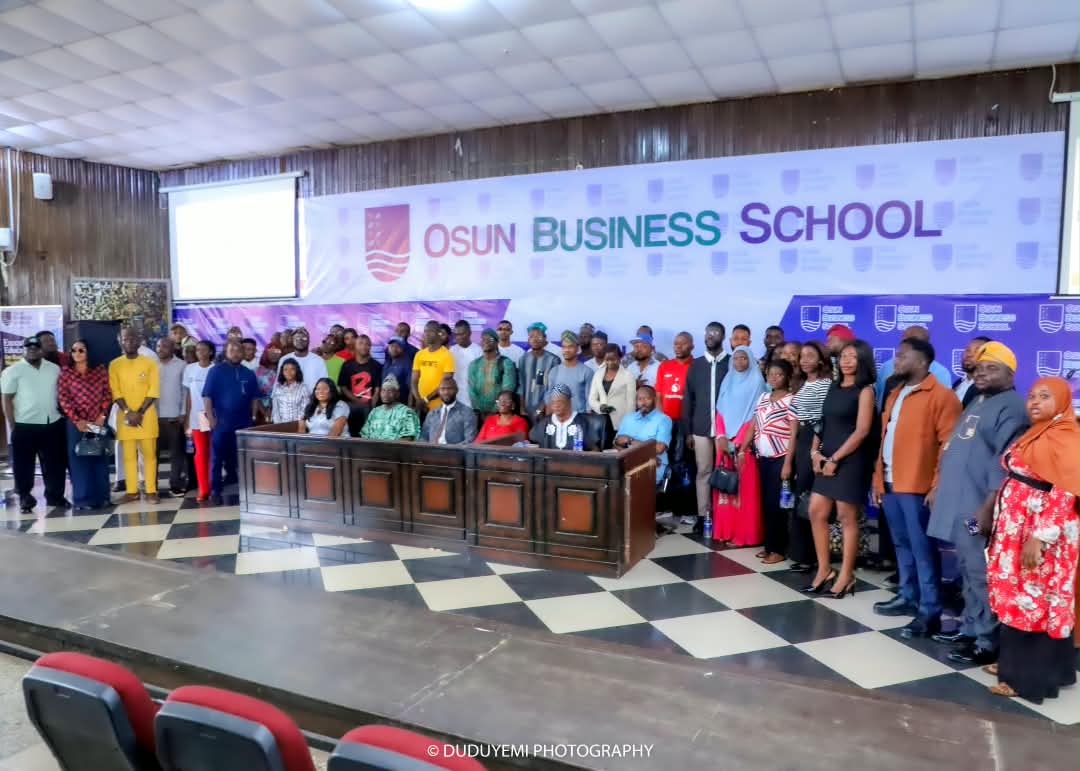


Five thousand Nigerian public-school teachers have completed the latest cycle of the MTN-SAIL Teachers Fellowship with new approaches to teaching, digital skills and, for the first time in the programme, formal training in artificial intelligence-assisted teaching.
But as the teachers return to their classrooms, the more significant question is what those new skills will mean for the pupils they teach.
The second cohort of the fellowship was trained in Inquiry-Based Learning, learner-centred teaching approaches, digital pedagogy and emerging technologies. From the 5,000 teachers who participated in the first phase, 500 were selected for a more intensive three-month training programme and graduated in September.
The programme is designed to move teaching beyond the conventional transmission of information, encouraging pupils to ask questions, investigate problems, think critically and use technology as part of the learning process.
For the organisers, however, the training is only the beginning.
Co-founder of SAIL Empowerment Foundation, Feyisola Abiru, said the fellowship was built around the belief that the teacher remains the critical link between education policy and the child in the classroom.
“When SAIL started this Fellowship in 2022, we began from a simple observation. Between every education policy and every Nigerian child stands one person: the teacher,” Abiru said at the graduation of the latest cohort.
She said the current cohort was deliberately made up entirely of public-school teachers because the public education system serves the majority of Nigerian children.
The latest programme also introduced artificial intelligence-assisted teaching to the curriculum, with Microsoft contributing the AI component through the MTN Foundation. The training focused on responsible use of AI rather than simply introducing teachers to the technology.
That development is significant as schools increasingly confront the opportunities and challenges created by digital technology.
Yet exposure to technology does not automatically translate into better learning.
A teacher may complete a digital-skills programme without subsequently integrating those tools into lessons. Equally, a pupil may have access to an online learning platform without having a teacher capable of using digital resources effectively in the classroom.
That makes the period after training particularly important.
The organisers have encouraged the graduating teachers to apply what they learned in their classrooms, share their knowledge with colleagues and remain connected through the SAIL alumni network.
SAIL has also indicated plans for a “Where Are You Now?” campaign to reconnect with former fellows. Such follow-up could provide a clearer picture of how many teachers continue to use digital and AI-assisted tools, how frequently those tools appear in lessons and whether the training is influencing classroom engagement.
The scale of the programme has expanded considerably since its earlier editions.
In 2024, THISDAY reported that 4,000 educators graduated from an earlier SAIL Teachers Fellowship programme after more than 6,000 teachers underwent virtual training and 400 selected participants received intensive mentorship.
SAIL now says the fellowship has trained more than 10,000 Nigerian public-school teachers across the 36 states and the Federal Capital Territory since 2022. The figure is broader than the MTN Foundation’s reported 8,704 teachers impacted by the MTN-backed programme from 2024 to date, reflecting different reporting periods and programme framing.
The latest intervention also comes as the country tackles another major barrier to digital education: the cost of connectivity.
The Nigerian Communications Commission recently launched its Zero-Rated Data Access to Educational Platforms and Content initiative, under which participating mobile operators provide eligible users with up to 100MB of free daily data for access to approved educational platforms.
The allowance amounts to about 3GB a month, or up to 36.5GB a year, for educational content. The NCC said the initiative is intended to widen access to digital learning and reduce the cost barrier facing learners.
The two interventions therefore address complementary parts of the digital-learning challenge.
One seeks to equip teachers with the skills to use technology more effectively. The other seeks to make it easier for learners to reach approved digital educational resources.
For Nigeria’s public schools, bringing those two elements together could help close a gap that training or connectivity alone cannot resolve.
But the evidence of impact will ultimately have to move beyond the number of teachers trained.
SAIL estimates that if each of the 5,000 teachers in the current cohort reaches an average of 80 pupils in a year, the potential indirect reach could be about 400,000 children.
That is a projection of possible reach, not a verified count of pupils whose learning outcomes have already improved.
The distinction matters.
The 5,000 teachers demonstrate the scale of participation. The 500 who completed the intensive second stage demonstrate progression within the programme. What remains to be established is how many of them translate the training into sustained changes in classroom practice.
That could mean more inquiry-based lessons, greater use of digital learning resources, responsible application of AI, stronger pupil participation or teachers sharing new methods with colleagues.
Three outstanding graduates were recognised for their commitment and classroom application of the training and received laptops and laptop bags from the SAIL Empowerment Foundation.
Those individual examples offer a glimpse of what the programme hopes to achieve. The larger test, however, will be whether such classroom changes continue beyond the graduation ceremony and spread across the schools where the teachers work.
For the teachers, the fellowship may end with a certificate.
For their pupils, that is where the real work begins


Governor Dauda Lawal has distributed official vehicles to higher institutions to strengthen the capacity, efficiency, and effectiveness of Zamfara State’s education system.
The distribution of the official vehicles was held on Friday at the Government House in Gusau, the state capital.
A statement by the Governor’s Spokesperson, Sulaiman Bala Idris, said the vehicles are institutional assets and operational tools to support administration, supervision, accreditation, official engagements, and other legitimate responsibilities of the benefiting institutions.
The statement noted that institutions and offices allocated brand-new vehicles are Federal University Gusau, Zamfara State University, Talata Mafara, and Abdu Gusau Polytechnic, Talata Mafara.
Other beneficiaries are the College of Nursing & Midwifery, Gusau; the Teachers Service Board; the Senior Secondary School Board; Quality Assurance; ZACAS; and other State Government Public Institutions.
In his remarks, Governor Lawal reiterated that the initiative will increase the productivity of Zamfara State public office holders by providing reliable transportation, enabling them to deliver services more effectively and quickly.
He said, “It is important to emphasise that these vehicles are not personal entitlements for any office holder. They remain the property of the Zamfara State Government and must be used responsibly and strictly for official purposes.
“I expect institutions to be responsible for custody, deployment, maintenance, and documentation. Heads will be accountable for misuse, unauthorised use, or unnecessary deterioration of assets.
“As the government invests in education, we must foster a culture of maintenance and accountability. Public assets should provide value throughout their life. We must commit to higher standards of service, emphasising transparency and accountability.
“Our administration will continue to provide the infrastructure, equipment, and institutional support needed to improve higher education in Zamfara State. In return, we expect responsible leadership, prudent management, and measurable improvements in academic and administrative performance.”
Governor Lawal further congratulated the benefiting institutions and urged them to ensure that the vehicles serve the institutions, students, and the people of Zamfara State rather than individual interests.
-
Politics3 years ago
13 Ondo Assembly Members Disown Endorsement of Aiyedatiwa
-
Politics3 years ago
APC Group, Ondo Govt, Quarrel Over Money for Endorsement
-

 Trending News5 years ago
Stop unsavoury, inciting statements – DSS warns
-

 Others5 years ago
Adron Homes Celebrates 10 Years Of Housing Excellence
-

 Humanity5 years ago
President Buhari Commiserates With Ambassador Maureen Tamuno Over The Loss Of Her Father
-

 Others7 years ago
EX- CUSTOMS BOSS, IBRAHIM MERA’S DWINDLING FAME
-

 Business2 years ago
Bigi Carbonated Soft Drinks Treats 40 Consumers to an Epic Easter Movie Hangout
-

 Business2 years ago
Wema Bank Shines at Global SME Finance Forum Conference Awards 2024 …Awarded: • SME Financier of the Year (Africa) • Platinum Award for Best Financier for Women Entrepreneurs (Africa)