
Opinion
Yayi Wants the Crown, But OGD Already Built the Kingdom


Yayi wants the crown in 2027, but can he match OGD’s legacy? From education to infrastructure, Daniel’s impact on Ogun remains bold and far-reaching

Is it fair to compare a man preparing for a governorship race with another who already walked that path and left behind footprints?
Also read: Otunba Gbenga Daniel redefines representation in Ogun East Senate
Lately, people have been drawing comparisons between Senator Gbenga Daniel and Senator Solomon Olamilekan Adeola, popularly called Yayi.
On the surface, it might look like harmless political talk, but let’s not lie to ourselves; it smells more like calculated strategy than honest analysis.
Let’s call things what they are.
Senator Yayi is not new in politics.
He currently represents Ogun West in the National Assembly, and he has made it clear that he wants to run for governor in 2027.
Of course, once someone declares that kind of ambition, they start showing face more often; commissioning boreholes here, doing empowerment there, offering grants, and making promises.
It’s all part of the game, and we get it. But let’s not act like it’s coming from pure generosity. There’s a clear motive; the governor’s seat.
And this is where the comparison begins to wobble.
Trying to place OGD and Yayi on the same level as if they’re playing the same match or chasing the same legacy? That’s not just off; it’s totally unfair.
When Otunba Gbenga Daniel became governor, Ogun State was struggling, more civil service than development. But by the time he left, the story had changed.
He didn’t just talk change; he made it happen.
He didn’t wait for applause or headlines; he just kept working, brick by brick, road by road.
He gave Ogunstate TASUED; the first University of Education in Nigeria.
He moved Olabisi Onabanjo University (OOU) to its permanent site.
He built ICT polytechnics where no one was looking and set up vocational centers that gave young people real-life skills, not just certificates.
Education under OGD wasn’t noise; it was action.
Then there’s infrastructure.
He constructed over 2,000km of roads, built stadiums in places like Sagamu, Ijebu-Ode, Abeokuta, and Ilaro.
He brought rural electrification, hosted the National Sports Festival, and even attracted the FIFA U-17 World Cup to Ogun.
While others were still trying to find their feet, he was already planting the future.
He didn’t stop there. He started the Olokola Deep Seaport project, established Free Trade Zones, and positioned Ogun as an industrial base.
Many of the factories and companies that came later? They didn’t just fall from the sky. They came because of the groundwork OGD laid years ago.
And after leaving office, did he disappear? No.
Through his foundation, he kept helping people quietly; no cameras, no press release, just genuine support where it was needed. Real empowerment, not campaign stunts.
As a senator today, he’s still not slowing down.
He brought a Federal College of Aviation to Ilara-Remo, helped bring a naval base to Ogun Waterside, sank boreholes, renovated schools, gave out interest-free loans, provided medical outreach, and supported farmers.
All of this, not for clout, but because service is in his DNA.
OGD is not fighting for relevance.
He’s not looking for likes or retweets. He’s just continuing what he started, with focus, with results, and with proof.
So, before anyone starts pairing him with people whose political energy only kicked in when 2027 came into view, let’s ask ourselves a few honest questions:
Where were they when Ogun was being rebuilt?
Where were they when schools had no roofs, when roads were nightmares, and when Ogun was just a name on the map?
Gbenga Daniel is not in the race to prove anything. His work already speaks for him.
Also read: Otunba Gbenga Daniel named protocol officer for Pa Ayo Adebanjo’s funeral committee
He’s not just a former governor or a sitting senator; he is a builder of futures, a man whose legacy continues to shine.
By Victor Ojelabi
Ojelabi is a political analyst


By Ehi Braimah and Victor Ojelabi,
At 16, Arnold Faranpojo had already completed his secondary education, earned impressive examination results and begun charting a path towards an international future.
Also read: Victor Ojelabi’s Watch Impresses at Rotary RYLA 2026
But his participation in the Rotary Youth Exchange Programme, facilitated by Rotary International District 9111 during the tenure of then District Governor Henry Akinyele, would take his education beyond the classroom, giving him an experience that would reshape his outlook on life, culture, independence and the world.
Born in Lagos on 28 July 2009, Arnold is the second of three boys in the Faranpojo family. Although his roots are in Ile-Ife, Osun State, he grew up in Lagos, where he completed his secondary education at Nigerian Navy Secondary School, Abeokuta.
He graduated in 2025 with his WAEC and NECO certificates and recorded an impressive 319 in the Joint Admissions and Matriculation Board examination the same year.
Rather than immediately proceeding into university, however, Arnold embarked on an 11-month Rotary Youth Exchange experience in Germany, an opportunity he describes as one of the most memorable chapters of his young life.
A Family’s Leap of Faith
News of Arnold’s selection was met with excitement in the Faranpojo household, although it also came with understandable concerns.
For his parents, sending their son away for almost a year was a major decision. For his two brothers, the prospect of having the middle child away from home was initially unsettling.
“Knowing that the middle man of the three boys was going to be away for a year was at first unsettling with uncertainties,” the family recalled. “But with some clarification and explanation, the news was later greeted with faith and hopes for better things.”
For Arnold himself, the selection brought a mixture of gratitude, excitement and pride.
“It was a very exciting and memorable moment for me,” he said. “I felt extremely grateful, excited and proud because it was an opportunity to experience a completely different country and culture.”
His parents shared his excitement and were proud of the opportunity, even as they recognised that their son was about to take a significant step towards independence.
Arnold is the son of Rev. Alexander Faranpojo mni, a business consultant, clergyman and member of the National Institute.

He is the founding pastor of Virtues Christian Centre in Lagos and London and president of Virtues Life Foundation, an organisation focused on humanities, societies and governance.
His mother, Pastor Mrs Funmilola Faranpojo, is also a business consultant with interests in educational advancement and international agency services.
She serves alongside her husband in ministry and has close to two decades of experience spanning banking and human capital development. She holds a postgraduate qualification in Human Resources from the University of Winnipeg.
Together, they have supported Arnold and his brothers while encouraging their educational and personal development.
Eleven Months That Changed Everything
Arnold spent approximately 11 months in Germany, living and studying in Wuppertal and attending Wilhelm Dörpfeld Gymnasium.
The experience exposed him to an education system different from the one he had known in Nigeria, while also placing him in an environment where communication, adaptation and independence became part of everyday life.
“Everything was different — the language, culture, school system, food and daily lifestyle,” Arnold recalled of his initial experience.
The early days were challenging. Adjusting to a new country, learning to communicate in another language and understanding unfamiliar social and educational systems required patience.
But gradually, the unfamiliar became familiar.
Arnold improved his German language skills, became more comfortable communicating with people and learnt to navigate daily life with increasing independence.
Beyond Wuppertal, the exchange opened the door to travel and cultural discovery. He visited Düsseldorf, Cologne, Dortmund, Hamburg, Berlin and Munich, as well as Paris in France.
Each journey offered a different perspective, allowing him to experience new cities, cultures and ways of life.
Yet, for Arnold, the exchange was about much more than travelling.
He spent considerable time at school, participated in Rotary activities, built friendships with Germans and young people from other countries and learned how to interact with individuals from different backgrounds.
“Overall, the exchange helped me become more independent, adaptable, confident and open-minded,” he said.
More Than a Language
One of the most significant outcomes of Arnold’s exchange year was the development of his confidence.
Living away from his family required him to take greater responsibility for himself. Communicating in a foreign language pushed him outside his comfort zone, while interacting with people from different cultures broadened his understanding of the world.
By the end of the programme, Germany no longer felt like the completely unfamiliar environment he encountered when he first arrived.
“I had developed a strong appreciation for the country and its culture,” he said.
The experience also gave him something that cannot easily be measured by academic certificates: an international perspective.
For Arnold, learning German became part of a much larger lesson about communication, tolerance and adaptability.
“My exchange year taught me much more than just a new language,” he said. “It taught me how to adapt, communicate with different people, become independent, and appreciate different cultures.”
The strongest placement is immediately after the “More Than a Language” section and before “Building Towards the Future”. It creates a natural bridge from Arnold’s return to Nigeria into what comes next.
A Special Homecoming
Arnold’s return from Germany brought another memorable Rotary moment.
On 18 August 2026, he had the rare privilege of joining Rotary International President Olayinka Hakeem Babalola and other Rotary leaders at a special reception in Lagos held in Babalola’s honour.
The reception, jointly organised by Rotary International Districts 9111 and 9112 under District Governors Bukola Bakare and Layi Abidoye respectively, brought together Rotarians and other guests to celebrate Babalola’s historic leadership of the global service organisation.
Arnold did not attend the reception alone. His parents, Rev. Alexander Faranpojo mni and Pastor Mrs Funmilola Faranpojo, accompanied him, giving the family an opportunity to share another significant Rotary experience together following his return from Germany.
Babalola was full of praise for Arnold and the journey he had undertaken through the Rotary Youth Exchange Programme.
He noted that about 7,000 young people around the world are offered the opportunity to participate in Rotary Youth Exchange each year, placing Arnold’s experience within a global programme that enables young people to live in another country, experience different cultures and develop a broader understanding of the world.
For Arnold, meeting the Rotary International President so soon after returning from an 11-month exchange provided a fitting connection between the opportunity Rotary had given him abroad and the organisation’s leadership at home.
Babalola’s emergence as the second Nigerian and second African to serve as President of Rotary International also carried particular significance.
For a young Nigerian whose worldview had been broadened through a Rotary programme, his leadership offered another powerful example of how service, opportunity and exposure can transcend geographical boundaries.
Building Towards the Future
With his exchange year behind him, Arnold is now focused on the next stage of his journey.
He is continuing to improve his German language skills as he prepares for university, with plans to study Business Informatics (Wirtschaftsinformatik) in Germany.
The field sits at the intersection of business and technology, an area that aligns with Arnold’s growing interests and his ambitions for the future.
But his aspirations extend beyond technology and business.
He hopes to combine his interests in business, technology and fashion to create something that contributes positively to humanity.
His Rotary experience, he believes, will remain an important foundation as he pursues these ambitions.
Looking back on the opportunity, Arnold is clear about what the experience has given him: greater confidence, independence, adaptability and a broader understanding of the world.
It has also taught him not to be afraid of unfamiliar territory.
“I am very grateful for the opportunity and believe the experience will continue to influence my education, career, and personal development,” he said.
Also read: Victor Ojelabi’s Watch Impresses at Rotary RYLA 2026
And when asked what he would ultimately attribute the journey to, Arnold offered a simple but deeply personal conclusion:
“Everything was by the grace of God! I also thank Rotary for the life-changing opportunity.”

By Ehi Braimah
The dramatic encounter between Lere Olayinka, senior special assistant on public communication and social media to the Minister of the Federal Capital Territory, Nyesom Wike, and Arise News anchor Rufai Oseni on The Morning Show last Friday has generated considerable debate about journalism, the conduct of public officials and their spokespersons, and the boundaries of adversarial journalism. It was an unnecessary spectacle.
Also read: 2027 Election: Amaechi Warns Nigerians Against Voting for Tinubu
Lere Olayinka was invited to appear on the programme anchored by Dr Reuben Abati, Ayo Mairo-Ese and Rufai Oseni. Lere knew, or ought to have known, that all three anchors were part of the programme.
He accepted the invitation and entered the Arise News Abuja studio. He answered questions from Abati and Ayo. But when it became Rufai’s turn, Lere declared that he would not answer his questions because he regarded Rufai as an “enemy” and wanted to engage only with “reasonable human beings.” That was provocative and unacceptable.
A spokesperson for a public official does not have the luxury of selecting which journalist is sufficiently “reasonable” to ask questions.
Once a government spokesperson voluntarily accepts an invitation to a major television programme, he should expect difficult questions, including questions he may consider uncomfortable, hostile or unfair.
The proper response is to answer, challenge the premise of the question, correct the interviewer, or decline to answer a particular question for a legitimate reason.
What he should not do is attempt to determine which of the programme’s anchors is entitled to interview him.
Ayo Mairo-Ese was therefore right to intervene and terminate the interview. Her point was simple: Since you are aware there are three anchors on the programme and accept the invitation, you cannot subsequently decide that one of them is an “enemy” and therefore unworthy of your answers.
That episode should not, however, be used as an excuse to ignore the bigger issue raised by Rufai Oseni’s interviewing style.
What exactly is adversarial journalism?
Journalism is not public relations. A journalist is not expected to make a government official, politician or corporate executive comfortable.
Journalism’s fundamental responsibility is to seek the truth; interrogate power and provide citizens with information they need to make informed decisions. This is where adversarial journalism has an important role.
Adversarial journalism is essentially a style of reporting and interviewing that subjects people in positions of power to rigorous scrutiny.
It challenges claims, tests evidence, exposes contradictions and refuses to accept official explanations at face value. In a democracy, that is necessary.
Indeed, some of the most memorable television interviews around the world have been produced by journalists who refused to allow powerful guests to evade difficult questions.
They include Christianne Amanpour, Pierce Morgan, Jerry Paxman, James O’Brien, Andrew Neil, Kay Burnley, Megyn Kelly, Mehdi Hassan, Chris Wallace and Billy O’Reilly. Rufai Oseni belongs to that tradition. He is fearless and asks questions many journalists would hesitate to ask.
Rufai frequently challenges government officials and politicians on their claims, policies and records.
His preparation is obvious; his knowledge is substantial and his ability to connect seemingly unrelated issues can make for compelling viewing, thereby giving The Morning Show significant ranking. That explains his enormous fans and admirers.
.
But it also explains why he has become controversial. There is a thin but important line between aggressive journalism and combative journalism; between robust questioning and confrontation, and between holding power to account and becoming part of the story. That line must not be crossed.
Rufai’s greatest strength can also become his weakness
Rufai has developed a distinctive television personality. He is passionate, energetic, intellectually confident and unwilling to be intimidated.
Those qualities are assets, but television magnifies personality, and what works brilliantly on one occasion can become irritating when repeated too frequently.
The journalist must remain in control of the interview without appearing to be in a contest with the guest. This is particularly important when interviewing government officials. A tough interviewer should not necessarily be an angry interviewer.
In addition, a difficult question does not have to be delivered aggressively and using the cross-examination technique can be devastatingly effective when conducted calmly.
Sometimes, the most powerful television question is asked quietly. The objective is not to defeat the guest, but to extract information, expose contradictions and enable viewers to make their own judgments.
When the interviewer becomes visibly embroiled in an argument with the guest, the focus can shift from the substance of the interview to the personalities involved. That is dangerous. When the journalist becomes the news, there is a problem.
Lere was wrong — but Rufai should listen
It is important to separate the two issues. Lere Olayinka’s behaviour should be condemned.
His refusal to answer Rufai because he considers him an “enemy” was unprofessional. His subsequent decision to continue the confrontation on social media after leaving the studio only prolonged an unnecessary controversy. It was clearly an act of bad faith.
There is also no justification for repeatedly questioning Rufai’s professional competence because he studied Animal Science.
What is wrong with studying Animal Science, or History, Mathematics, Biochemistry, Psychology, Architecture, or Law? These are examples of courses offered in Nigerian universities and other places.
Journalism is a profession in which people acquire expertise through formal education, professional training and experience. A person’s first degree does not, by itself, determine whether he can become a competent journalist.
Rufai has clearly acquired considerable experience in broadcasting and journalism. But Lere’s provocation does not mean Rufai should ignore legitimate criticism of his style.
In fact, because Rufai has become such an influential media personality, he should welcome constructive criticism.
He has built something remarkable on The Morning Show. Alongside Reuben Abati, Ayo Mairo-Ese, Adefemi Akinsanya, Vimbai Muthihirin-Ekpenyong and Ojy Okpe, he has helped create a programme with a substantial audience and a loyal following.
The anchors bring different personalities, rich perspectives, nuamces and strengths to the programme. That diversity is part of its attraction to the station’s global audience, but influence comes with responsibility.
The danger of overreach
Rufai’s admirers appreciate his fearlessness, but his critics accuse him of overreach, excessive aggression and combativeness.
In truth, both perceptions can coexist. The fact that millions enjoy his style does not automatically make every aspect of it desirable. Equally, the fact that some viewers find him abrasive does not mean he should abandon his robust approach. The answer is moderation.
Rufai does not need to become a different journalist; he simply needs to refine the journalist he already is.
He should retain the probing questions, painstaking research, exceptional courage and intellectual rigour. But he can reduce the volume, the interruptions and the personal confrontations.
He can challenge without appearing hostile; disagree without appearing offended, and cross-examine his guests without turning the interview into a courtroom battle.
And he can allow a guest to finish speaking even when he knows the answer is evasive. That may actually make his questions more powerful.
There is a lesson here for public officials, too
Government spokespersons and politicians must also understand that the media environment has changed and should stop feeling entitled.
They cannot expect sympathetic interviews simply because they are government representatives.
A journalist’s job is not to protect a government official from difficult and probing questions. Public office is held in trust for the people, and those who communicate on behalf of public officials should expect scrutiny.
If a spokesperson believes an interviewer is biased, the appropriate response is to make that case publicly and professionally.
If a question is inaccurate, correct it, and if it is malicious, say so. But refusing to answer because the journalist is considered an “enemy” creates precisely the impression that the spokesperson has something to hide. It also denies viewers the opportunity to hear the government’s side of the argument.
The media must remain bigger than the personalities
The Lere-Rufai confrontation provides an important lesson for Nigerian journalism. Television news is not theatre, even though television is undoubtedly a performance medium. The personalities of anchors matter, but journalism matters more.
The Morning Show has become influential because it combines news, analysis, debate, interviews and entertainment.
Its anchors have built a community of viewers and, in some respects, a movement. That influence should be protected.
Rufai should therefore not interpret calls for moderation as an attempt to silence him.
On the contrary, the most influential journalists constantly evolve and adapt to the ever-changing media landscape. There is nothing wrong with being adversarial.
Democracy needs journalists who will challenge power, but adversarial journalism should be evidence-driven, persistent and fearless – not needlessly antagonistic.
The best interviewer is not necessarily the one who talks the loudest or wins the argument – it is the one who asks the question that the guest cannot escape. That is the Rufai Oseni I would like to see more often. Keep the courage, ask the difficult questions, blend facts and commentary, and continue to press for specifics.
Rufai should keep holding power to account, but at the same time moderate his style. That is precisely what your friends – not your enemies – should constantly tell you.
As for Lere Olayinka, he should remember an equally important principle: if you accept the microphone, you must also accept the questions. Public communication is not a menu from which you select only the questions you like.
Also read: 2027 Election: Amaechi Warns Nigerians Against Voting for Tinubu
Both journalism and public service demand accountability, and the media must hold power accountable. Journalists must also be accountable for how they exercise their power.
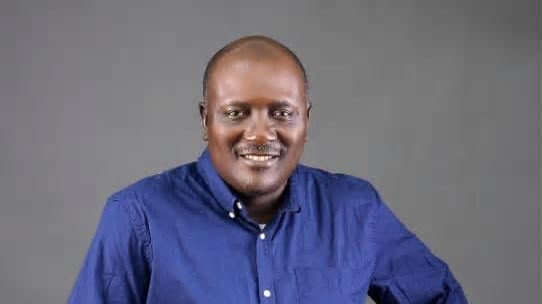
By Max Amuchie | The Sunday Stew
At just 56, Dotun Oladipo has left us far too soon.
John Donne, the 17th-century English poet and cleric, wrote words more than four centuries ago that seem almost written for a moment such as this:
Also read: Gbenga Daniel Mourns Late Publisher Dotun Oladipo
“No man is an island, entire of itself; every man is a piece of the continent, a part of the main; and if a clod be washed away by the sea, Europe is the less, as well as if a promontory were, as well as if a manor of thy friends or of thine own were; any man’s death diminishes me, because I am involved in mankind; and therefore never send to know for whom the bell tolls; it tolls for thee.”
Those words have stayed with me since I first encountered them. I have returned to them at moments of profound loss, including the tragedy of the Bellview Airlines crash in October 2005. But I never imagined that I would one day find myself returning to them to make sense of the death of Dotun Oladipo.
For whom, indeed, does the bell toll?
It tolls for Dotun. But it also tolls for all of us.
It tolls for the journalists who worked with him, for the publishers he mentored, for the members of the Guild of Corporate Online Publishers (GOCOP) whom he served and strengthened, for the readers who encountered his journalism, and for the many people whose lives he touched in ways that perhaps became fully apparent only after his death.
It tolls for me too.
The first time I invoked the title of Donne’s famous meditation, ‘Death Be Not Proud’, was in October 2005, in a reflective article on the October 22, 2005, Bellview Airlines Boeing 737-200 crash.
On Sunday, October 23, my family was about driving out to go to church when a call came from Eniola Bello, then Editor of ThisDay. Bellview Airlines had crashed the previous day, Saturday, and I was needed immediately in the office to lead the reportorial team to the crash site in a remote village in Ogun State.
I was Features Editor at the time and, as is typical of journalism, like military service, one must obey the editor’s order.
I got to the ThisDay office in Apapa, Lagos that morning and the Chairman, Nduka Obaigbena, had made his personal car available for the trip. We drove to the forest in Lisa village in Ifo Local Government Area of Ogun State, where the crashed aircraft had been buried deep in the earth.
There was hardly any visible trace of the aircraft. No recognisable piece of it could be seen, except for the little smoke rising from the earth and the tree branches that had been cut or shattered by the impact.
All 111 passengers and six crew members perished.
There were many responders — the Red Cross and the Ogun State Government team led by the then Commissioner for Health, Dr Iyabo Obasanjo-Bello, among them. The atmosphere was sombre. Everyone could feel the enormity of the calamity, the scale of the human tragedy.
Journalists are trained to be emotionally detached from the stories they cover.
I managed to apply that principle, but I also had to write a reflective piece on a tragedy whose scale was almost unimaginable.
In writing that article, I reached for John Donne’s ‘Meditation XVII’, from his 1624 Devotions upon Emergent Occasions, the meditation that inspired the title of Ernest Hemingway’s 1940 novel, For Whom the Bell Tolls.
I had first written about Donne’s famous meditation some five years earlier, following the Kenya Airways Flight 431 crash of January 30, 2000, which I was assigned to cover at the Murtala Muhammed Airport, Lagos, where relations of the crash victims had besieged the airline, desperately seeking information about their loved ones.
The plane, carrying almost exclusively Nigerian passengers, had crashed into the Atlantic Ocean shortly after take-off from the Félix Houphouët-Boigny International Airport, Abidjan, Côte d’Ivoire.
Dr Francis Enemuo, a highly respected political scientist and senior lecturer at the University of Lagos, and Rev. Fr. (Prof.) Edmund Ikenga-Metuh, an eminent Catholic priest and renowned professor of African Traditional Religion, were among the casualties of the Kenya Airways crash.
And now, more than two decades later, I am confronting that same bell again.
Penultimate Tuesday, I found myself in a reverie, ruminating about the immortal words of that 17th-century writer.
It was evening, and I had casually picked up my phone, which was being charged, to check if there were fresh messages. Suddenly, I saw a pop-up on the GOCOP WhatsApp platform. It was from Danlami Nmodu, mni, our president.
I saw the name Dotun Oladipo on the pop-up and decided to open the message.
What I saw did not make sense to me.
I had actually just woken up from sleep, so I cleared my eyes to be sure that I had read the message correctly.
Our own Dotun Oladipo had died?
I checked my WhatsApp messages.
Dotun had sent his news bulletin to me at 2:50 p.m. that same day.
Is this a joke?
It was incomprehensible.
I called Danlami. When I could not reach him immediately, I called Olumide Iyanda, our vice president. He confirmed it.
Then Danlami returned my call and confirmed it.
By then, Gabriel Akinadewo was already at Dotun’s house that night. I called him. He said he was spending the night there.
Very understandable.
Tragedy had just befallen GOCOP.
The Weight of His Example
I began to play in my mind my personal journey with Dotun.
But everyone who had the privilege of encountering Dotun had a personal journey with him. He left something of himself in the lives of the people he met.
As I read the testimonies of our members on the GOCOP platform, I started crying.
Journalists are trained to manage emotion. For an editor, the more tragic, bizarre or extraordinary a story is, the more compelling it becomes as news. We learn to stand at a certain distance from the events we cover, however devastating they may be.
But this was different.
Reading the comments, tributes and testimonies on our platform melted that professional distance. I became misty-eyed and could not help myself.
How can anyone who knew Dotun closely not testify to the rarity of his candour, the strength of his character and the depth of his selflessness?
There was something unusual about him. His frankness was not the convenient sort that says only what is safe to say.
His selflessness was not performed for applause. It was simply the way he lived.
And perhaps that is why the grief has been so profound.
We mourn people when they die. But sometimes, the death of a person forces us to confront the value of a life we had perhaps taken for granted while that person was still with us.
Dotun was one of those people.
I recall that around 2019, when Dotun was President of GOCOP, I had decided to help raise funds for one of our members, the late Ben Bright-Mkpuma, who was suffering from kidney failure.
Dotun saw how intentional I was about the effort. He could have simply commended it, as many people would. Instead, he decided that whatever I raised, GOCOP would match it, so that we could make it ₦1 million donation to the Bright-Mkpuma family.
At the time, there was no constitutional provision that obliged GOCOP to do this. Dotun was under no obligation to deploy the weight of the organisation behind my personal initiative. Yet he did.
From my own effort, I raised about ₦600,000. True to his word, GOCOP matched it. ₦1 million was eventually sent to the Bright-Mkpuma family.
And when Bright-Mkpuma eventually passed on, Dotun ensured that GOCOP was officially represented at his burial.
That was Dotun.
He did not merely speak about solidarity; he practised it. He understood that an organisation is not just a structure of offices, titles and meetings. It is, above all, a community of people who must stand by one another when life becomes difficult.
I experienced that same generosity personally in 2025, when my parents died and were to be buried.
Dotun rose to the occasion.
He did not wait for me to ask. He galvanised our friends to contribute and kick-started the process himself by making a personal donation.
That gesture has remained with me.
There are people who offer sympathy when tragedy comes. There are others who show up.
Dotun showed up.
And sometimes, that is the most profound definition of friendship.
The Eagle Online
Dotun was among the professional journalists who saw the potential of online publishing after a glorious career in the traditional media.
The Eagle Online, which he set up, became one of the most successful online news platforms in Nigeria, making Dotun a role model and mentor to not a few online publishers.
But what distinguished him was that he did not see his success as something to be guarded jealously. He was always willing to share what he knew.
As President of GOCOP, he mobilised members and worked to ensure that they benefited from programmes and opportunities that could make their businesses more sustainable.
At GOCOP conferences, he regularly shared ideas about what The Eagle Online had done to make a difference in Nigeria’s online media space.
More importantly, he encouraged other publishers to come forward and share their own ideas for the collective benefit of members.
I remember that as we were preparing for the annual conference in Lokoja, Kogi State, in 2024, I had casually spoken about exploring opportunities for the low-hanging fruits in sustaining online news businesses.
Dotun immediately suggested that I prepare a paper on the subject for presentation and discussion at the conference.
That was another side of Dotun: he recognised possibilities in other people and gave them room to develop those possibilities.
When ‘The Sunday Stew’ column was launched and I announced that it would be syndicated, Dotun was among the first to indicate his interest in joining the syndication loop.
Up until the time of his death, The Eagle Online never missed an edition of the column.
I think about that now.
Every Sunday, my words travelled to the readers of The Eagle Online. And behind that simple act of syndication was a man who had, once again, opened a door for another journalist.
That was Dotun.
He built his own platform, but he also helped others build theirs. He understood that the success of one publisher did not diminish the prospects of another. If anything, he believed that the online media ecosystem became stronger when publishers shared knowledge, opportunities and audiences.
In an industry where competition can sometimes make people protective of information and opportunities, Dotun chose generosity.
And that, too, was his legacy.
A Different Kind of The Sunday Stew
This is the most difficult edition of ‘The Sunday Stew’ I have had to write since the column debuted in March.
I have struggled with the inconceivability of writing about Dotun Oladipo in the past tense. Even now, the words do not sit comfortably with me. My mind keeps returning to the Dotun who was still here — sending his bulletin, sharing ideas, encouraging colleagues and going about the business of journalism.
Even the story of his passing and the reactions from individuals and organisations was difficult for the Sundiata Post to publish. There are stories journalists report because they must, even when every instinct in them wishes the story were not true.
This has been one of those stories.
So this is a different kind of ‘The Sunday Stew’.
There is no cleverness here, no attempt to manufacture a profound ending. There is only the painful duty of remembering a man who mattered.
I began this piece with John Donne because his words have accompanied me through other moments of loss:
“Any man’s death diminishes me, because I am involved in mankind; and therefore never send to know for whom the bell tolls; it tolls for thee.”
The bell has tolled for Dotun.
And yet, as I write this, I still cannot quite bring myself to say goodbye.
Perhaps because Dotun’s final bulletin arrived on my phone at 2:50 p.m. that day, Tuesday, 25 August 2026 before the news came that he was gone.
Perhaps because, in journalism, we are accustomed to deadlines, editions and bulletins — but there is no edition that prepares you for the final bulletin.
And perhaps because some people do not leave us entirely when they die. They remain in the things they built, the people they helped, the doors they opened, the ideas they shared and the memories they left behind.
Dotun left much behind.
His burial begins with a service of songs on Thursday, 10 September 2026 at Daystar Christian Centre Headquarters, Oregun, Ikeja, Lagos. And he will be laid to rest on Friday, 11 September 2026, from 10:00 am to 11:00 am at the same venue.
But I will not say goodbye.
I will simply say: thank you, Dotun for giving us the shelter of your example to dwell in.
You thought of no other name for your news platform but The Eagle Online. Perhaps that was because you appreciated the strength of the eagle and the power of its wings. With those wings, you have left us an imperishable legacy and flown to a higher, more glorious realm.
Also read: Gbenga Daniel Mourns Late Publisher Dotun Oladipo
May the angels of heaven grant you Godspeed in that realm, as you rest in His bosom.
Fare thee well, Dotun Samson Oladipo.
Trust is sacred. Stay seasoned.
-
Politics2 years ago
13 Ondo Assembly Members Disown Endorsement of Aiyedatiwa
-
Politics2 years ago
APC Group, Ondo Govt, Quarrel Over Money for Endorsement
-

 Trending News5 years ago
Stop unsavoury, inciting statements – DSS warns
-

 Others5 years ago
Adron Homes Celebrates 10 Years Of Housing Excellence
-

 Humanity5 years ago
President Buhari Commiserates With Ambassador Maureen Tamuno Over The Loss Of Her Father
-

 Others7 years ago
EX- CUSTOMS BOSS, IBRAHIM MERA’S DWINDLING FAME
-

 Business2 years ago
Bigi Carbonated Soft Drinks Treats 40 Consumers to an Epic Easter Movie Hangout
-

 Business2 years ago
Wema Bank Shines at Global SME Finance Forum Conference Awards 2024 …Awarded: • SME Financier of the Year (Africa) • Platinum Award for Best Financier for Women Entrepreneurs (Africa)