
Opinion
Zacch Adedeji’s New Political Role: What Is the Real Issue?

By Seun Oloketuyi,

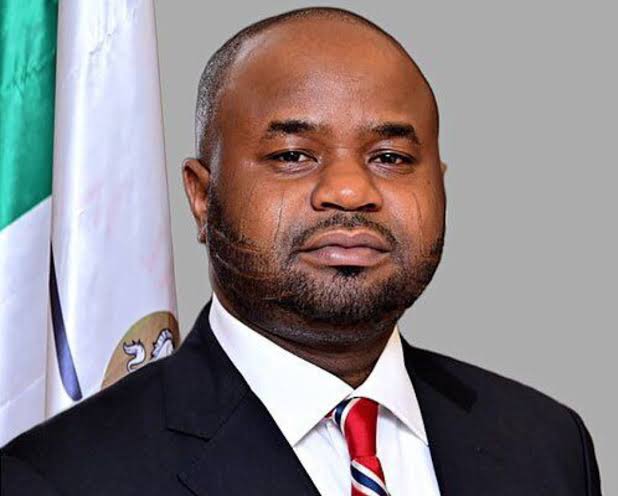
The appointment of Zacch Adedeji as Deputy Director of Fundraising in the All Progressives Congress’ 2027 Presidential Campaign Council has raised eyebrows, particularly because he currently heads the Nigeria Revenue Service.
Also read: MOWCA Champions Sustainable Blue Economy Growth in Niger Delta
Former Senator Dino Melaye has already announced plans to challenge the appointment in court, arguing that Adedeji’s role as head of the country’s revenue agency could create a conflict of interest.
It is a question worth asking.
But there is another question that seems to be missing from the conversation:
Why can’t Zacch Adedeji do it?
Why should his appointment automatically be viewed through the lens of suspicion simply because he heads the country’s revenue service?
The concern about the separation between public office and partisan politics is understandable. But so is the need to look at the individual involved, his professional background and the record he has built over the years.
This is not a new political relationship
Adedeji did not suddenly become associated with the Tinubu administration because his name appeared on the campaign council list.
Before becoming Chairman of the Nigeria Revenue Service, he served as President Bola Ahmed Tinubu’s Special Adviser on Revenue.
Before his move to Abuja, he was Commissioner for Finance in Oyo State under the administration of the late Governor Abiola Ajimobi. He also served as Executive Secretary and Chief Executive Officer of the National Sugar Development Council.
His career has largely revolved around finance, revenue and public administration.
So, when the APC needed people for different parts of its campaign structure, including fundraising, choosing someone with a long background in finance and revenue administration was hardly an unusual decision.
The political affiliation is not a secret either.
Adedeji has worked closely with the current administration for years. His appointment to the campaign council is therefore not a sudden transformation from technocrat to politician. It is another political role for someone who has already been closely associated with the administration.
But what about his record?
This is where the conversation should go beyond the title he currently holds.
Adedeji is a first-class graduate of Management and Accounting from Obafemi Awolowo University. He went on to obtain further qualifications, including a master’s degree and a doctorate, and also had a career in the private sector before moving into public service.
His record includes work at Procter & Gamble, where he rose to a senior finance position, his time as Oyo State Commissioner for Finance, his leadership of the National Sugar Development Council and, later, his appointment as Special Adviser on Revenue to the President.
When he was appointed to head the Federal Inland Revenue Service in 2023, the Presidency described him as having had “meritorious service” as Oyo State Commissioner for Finance and as head of the National Sugar Development Council.
President Tinubu also publicly praised his leadership of the revenue agency in January 2026, citing reforms, automation, staff development and his role in meeting revenue targets.
These things do not make anyone beyond scrutiny.
But they are part of the picture.
And if the conversation is going to be about whether Zacch Adedeji should be trusted with responsibility, then his record should count too.
Integrity cannot be replaced with assumption
The easiest thing in politics is to assume the worst.
A public official joins a campaign structure and immediately the question becomes: What is he going to do with his office?
That question is fair.
But there is a difference between asking whether there could be a conflict of interest and concluding that a person will abuse his office.
Those are not the same thing.
So far, the controversy surrounding Adedeji’s appointment has centred on the possibility of a conflict between his public position and his campaign responsibility. Melaye has said he wants the courts to test that question.
That is his right.
But the existence of a question does not automatically amount to evidence of wrongdoing.
Adedeji should be held accountable if he crosses the line. If public resources are used for partisan purposes, if his official position is abused or if the law is breached, those actions should be dealt with.
But until then, there is also room to judge him on what he has actually done.
Why fundraising?
There is another part of the argument that deserves attention.
Fundraising requires financial knowledge, relationships, organisation and an understanding of how money is mobilised and accounted for.
Adedeji’s entire professional background is built around those areas.
He has worked in corporate finance. He has managed public finances. He has been involved in revenue administration at both state and federal levels.
That experience may be precisely why he was considered suitable for the position.
The fact that the role is political does not erase the skills he has acquired throughout his career.
Public office and political participation
Of course, the bigger question remains whether a serving head of a federal revenue agency should participate formally in a presidential campaign.
That is a legitimate debate.
But it should be a debate about rules and principles, not an assumption that Adedeji himself lacks integrity.
If existing public service rules prohibit the role, then those rules should be applied.
If they do not, then the argument should not be built around the assumption that a public officer will inevitably misuse his position.
There is also a difference between being politically involved and using government resources for political purposes.
The latter would be a serious breach.
The former, depending on the applicable rules, is a question of political participation.
Those distinctions matter.
So, what is the real issue?
Perhaps the real issue is not Zacch Adedeji’s competence.
It is not his experience either.
And it certainly should not be an assumption about his character.
The real issue is whether the law and public service rules permit someone in his current position to take up the role he has been given.
That is a question that can be answered with facts, regulations and, if necessary, a court ruling.
But while that question is being debated, it is worth remembering who Zacch Adedeji is.
He is an accountant who has spent much of his career dealing with finance and revenue. He has worked in the private sector, served as a state commissioner, headed a federal government agency and advised the President on revenue before becoming head of the country’s tax administration.
His supporters see a professional with the experience and discipline required for the job.
His critics see a public official whose political role needs closer scrutiny.
Both views can exist at the same time.
But criticism should not become condemnation before there is evidence of wrongdoing.
If Zacch Adedeji has the experience, the professional record and the confidence of his party to take on a fundraising role, then perhaps the better question is not “Why Zacch Adedeji?”
Perhaps it is simply:
Why can’t he do it?
Who Is Zacch Adedeji?
Dr. Zacch Adelabu Adedeji is a Nigerian accountant, tax administrator and public officer who currently serves as Executive Chairman of the Nigeria Revenue Service.
Born on January 8, 1978, in Oyo State, Adedeji began his academic journey with a National Diploma in Accountancy from the Federal Polytechnic, Ede.
He proceeded to Obafemi Awolowo University, where he earned a first-class degree in Management and Accounting. He later obtained a master’s degree and a PhD in Accounting from the same university. He also attended the Harvard Kennedy School of Government for an executive course in economic development.
His professional career began in the private sector with Procter & Gamble, where he held senior finance positions, including Corporate Finance Manager for West Africa.
At 33, he was appointed Commissioner for Finance in Oyo State by the late Governor Abiola Ajimobi, a position he held from 2011 to 2015. He later became Executive Secretary and Chief Executive Officer of the National Sugar Development Council.
Adedeji subsequently served as Special Adviser to President Bola Ahmed Tinubu on Revenue before his appointment in September 2023 as Chairman of the Federal Inland Revenue Service.
With the transition from FIRS to the Nigeria Revenue Service, he now heads the country’s central tax administration agency.
His career has largely been built around accounting, corporate finance, taxation, public revenue and fiscal policy — experience that is central to the argument over why he was selected for a fundraising role in the APC campaign council.
APC 2027 Presidential Campaign Council
The APC’s 2027 Presidential Campaign Council brings together senior party figures, serving governors, lawmakers, ministers, technocrats and other political stakeholders.
At the top of the structure is President Bola Ahmed Tinubu, who serves as Chairman.
Vice President Kashim Shettima and APC National Chairman Nentawe Yilwatda serve as Vice Chairmen.
Senator Abdulaziz Yari is the Director-General, while Governor Hope Uzodimma is Secretary. Senator Surajudeen Ajibola Basiru serves as Deputy Secretary, with Hadiza Bala Usman as Assistant Secretary.
The campaign structure also includes the following:
Finance and Fundraising
– Governor Dapo Abiodun — Director, Fundraising
– Zacch Adedeji — Deputy Director, Fundraising
– Farouk Gumel — Deputy Director II, Fundraising
– Dr Jamila Bio Ibrahim — Secretary, Fundraising
– APC National Treasurer — Secretary II, Fundraising
– Governor Sheriff Oborevwori — Director, Finance/Treasurer
– Ahmed Usman Ododo — Deputy Director, Finance/Treasurer
– Abubakar Kabir Bichi — Deputy Director II, Finance/Treasurer
– Tanimu Yakubu — Secretary, Finance/Treasurer
Zonal Campaign Coordinators
– Senator Bassey Otu — South-South
– Ndubuisi Mbah — South-East
– Governor Babajide Sanwo-Olu — South-West
– Governor Umar Bago — North-Central
– Senator Modu Sheriff — North-East
– Governor Uba Sani — North-West
The wider campaign structure also features prominent figures across election planning, mobilisation, legal affairs, media, strategic communication, creative-sector mobilisation, youth and women mobilisation, health, sports, diaspora affairs and other areas.
Among the notable names are Senate President Godswill Akpabio, Speaker Tajudeen Abbas, Governor Mai Mala Buni, Senator Adams Oshiomhole, James Abiodun Faleke, Shehu Dikko, Joseph Yobo, Ali Nuhu, Zack Orji, Betta Edu, Ayodele Olawande, Abike Dabiri-Erewa, Ali Pate and Hannatu Musawa, among others.
The campaign’s legal team includes Muiz Banire, SAN, as Director, with Lateef Fagbemi, SAN, Ibrahim Shema, Worgu Boms and Kingsley Tochukwu Udeh, SAN, among others, also listed within the legal structure.
The size and range of the campaign council underline the scale of the APC’s 2027 political operation.
And within that structure, Zacch Adedeji has been given a role that sits directly within one of the campaign’s most financially sensitive directorates.
That is why his appointment has attracted attention.
But it is also why his professional background matters.
The debate may continue over whether a serving revenue chief should participate in a political campaign. That question deserves an answer.
Also read: MOWCA Champions Sustainable Blue Economy Growth in Niger Delta
But so does the other question that has received far less attention:
If Zacch Adedeji’s experience is in finance, revenue and public administration, and there is no established evidence that he has abused his office, why should his participation automatically be treated as suspicious?
That, perhaps, is the real issue


By Sufuyan Ojeifo,
There is a point at which a country’s electricity problem ceases to be merely an electricity problem. It becomes a problem of economic geography.
Also read: What Emmanuel Emefienim’s story teaches us about Nigeria’s possibilities
Where can factories operate with confidence? Where can businesses plan beyond the next appearance of a generator? Where can hospitals, schools, technology companies, markets and households begin to organise their lives around the reasonable expectation that electricity will be there?
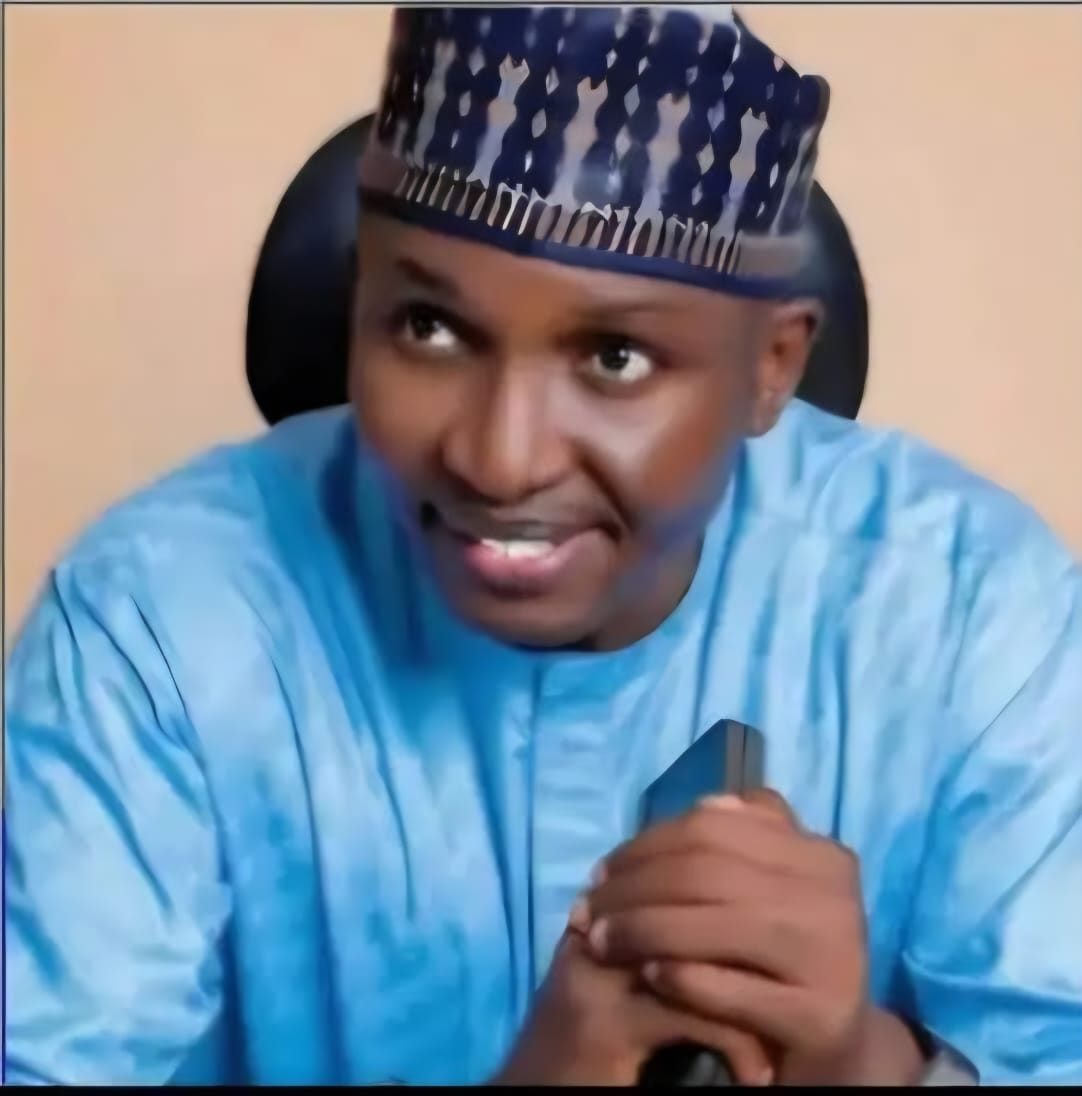
This is the thinking behind the latest initiative from the Minister of Power, Joseph Tegbe, to develop what the Federal Government calls Energy Zones – defined corridors where homes, businesses and industries could receive stable, 24-hour electricity.
The proposed zones cover the Lagos axis, the Abuja-Kaduna-Kano corridor and the Enugu-Port Harcourt corridor. Tegbe’s latest move is a meeting with selected electricity distribution companies to begin working through what it would take to make the idea real.
At first glance, it sounds like another promise of uninterrupted electricity in a country that has heard too many such promises. However, there is something more consequential in the architecture of the proposal.
Tegbe is asking Nigerians to look at the power problem differently.
For years, the national conversation has been dominated by generation. How many megawatts are being produced? How much can the transmission grid carry? How many generating plants are working? These are important questions. But electricity does not become useful simply because it has been generated.
It must travel. It must be received. It must be distributed. And ultimately, somebody must be able to use it. That last part has often been treated as the end of the conversation when, in reality, it is where the economic value of electricity begins.
Tegbe has put the point plainly. The constraint is not limited to generation and transmission; it also includes how much electricity can be taken up and delivered at the distribution end.
The proposed Energy Zones are intended to address precisely that gap while improving commercial demand and the revenue performance of the distribution companies.
There is an important idea here.
Nigeria does not necessarily have to wait for every weakness in the electricity value chain to be solved simultaneously before beginning to create pockets of reliability.
A country of more than 200 million people, with enormous differences in industrial activity, population density and commercial demand, may have to proceed through carefully selected economic corridors while the wider system is repaired.
This is not an argument for abandoning the national grid. It is an argument for making the grid more economically purposeful.
The three corridors selected by the Ministry are revealing. Lagos and its adjoining industrial axis represent perhaps the country’s most concentrated commercial and industrial demand.
The Abuja-Kaduna-Kano corridor connects the political capital with major commercial and industrial centres in the North. Enugu-Port Harcourt links important commercial, manufacturing and energy-producing communities in the South-East and South-South.
These are not simply lines on a power map. They are lines on Nigeria’s economic map. That distinction matters.
For too long, Nigerians have experienced electricity largely as a household inconvenience. The light goes off. The generator comes on. A business buys diesel. A manufacturer factors self-generation into production costs. A hospital makes contingency arrangements.
A young entrepreneur learns, often painfully, that the real price of electricity is not what appears on the bill but what it costs to keep the business alive when the supply fails.
A reliable electricity corridor changes that equation.
If a factory knows that a particular industrial cluster has dependable power, investment decisions begin to change.
If a commercial district can plan around predictable electricity, operating costs become easier to manage.
If businesses can depend on supply for most of the day, generators can move from being the first line of defence to being what they were always supposed to be: backup.
This is where Tegbe’s technocratic instincts may prove significant.
His background is not that of a career power-sector operator. His professional experience has largely been in consulting, fiscal and economic reform, institutional transformation and advisory work. That background has been visible in his early approach to the ministry – diagnosis, audits, financial questions, infrastructure bottlenecks, and attempts to identify where one part of the system is preventing another from functioning properly.
His Energy Zones proposal fits that pattern. It treats the electricity market less as a single machine waiting for one dramatic repair and more as a system of interconnected constraints that can be isolated, diagnosed and addressed.
Tegbe had already identified the three corridors as priorities for grid stabilisation, with technical audits intended to establish the condition of critical infrastructure. The latest engagement with DisCos suggests that the idea is now moving beyond technical diagnosis towards the more difficult question of how distribution will work within those corridors.
That is where the hard work begins.
A 24-hour power zone cannot be created by a press statement. It requires generation that is available when needed, transmission capacity that can carry it, distribution infrastructure capable of receiving it, transformers and feeders that can withstand the load, metering that properly captures consumption, customers willing and able to pay, and a commercial structure in which the various participants have an incentive to keep the system working.
It also requires protection. Vandalism and energy theft do not respect administrative boundaries. Neither do faulty equipment, unpaid bills or poor collection practices. Tegbe himself has acknowledged that the sector’s problems reinforce one another. Weak collections affect the market. Market weakness affects maintenance and gas payments. Unreliable supply in turn depresses collections.
This is why the Energy Zone experiment, if it is to succeed, must be judged by more than the number of hours electricity is available.
The real test will be whether reliability begins to produce economic consequences. Does industrial output increase? Do businesses spend less on self-generation? Does investment respond? Do DisCos collect more because customers are receiving a service they can trust? Does the government recover enough value from improved commercial activity to justify further infrastructure investment?
Those are the questions that should eventually accompany the glossy language of 24-hour power.
And there is another question that Tegbe and the Federal Government will have to confront: what happens outside the zones?
Nigeria cannot become a collection of electrically privileged corridors surrounded by communities waiting indefinitely for their turn.
The logic of concentrating investment in high-demand areas can be defended economically, especially if the resulting commercial activity strengthens the wider electricity market.
But the strategy will ultimately have to demonstrate how successful zones become stepping stones towards broader reliability.
That is the difference between an experiment and a system.
There is also a danger in admiring the architecture of reform from the comfort of an office.
It has to be said here that the statement issued by the minister’s media aide was long on ambition and conspicuously short on the details that matter. No timeline. No capacity targets. No specific investment figures. It is the kind of announcement that has, historically, been the precursor to nothing at all.
So Nigerians should watch the idea with interest, but also with the healthy scepticism that comes from decades of promises about electricity.
The minister deserves a measure of credit for at least diagnosing an important part of the illness.
For once, the conversation has shifted from the head to the feet – from generation to distribution, from megawatts to money.
At the same time, the Nigerian people have been given blueprints before. They have learned to admire the drawings while the building crumbles.
The Energy Zones remain a proposal. The government has not yet announced the detailed capacity requirements, implementation timetable or precise infrastructure investments that would make 24-hour supply possible.
That is not necessarily a fatal flaw. It may simply mean the idea is still being worked out.
But it does mean that the language of 24-hour power should be treated as an aspiration until it is matched by the machinery of implementation.
Yet the proposal deserves attention because it reflects a potentially important shift in the way the power problem is being conceived.
Nigeria may not fix its electricity crisis in one heroic sweep. It may have to build reliability corridor by corridor, demand centre by demand centre, and economic cluster by economic cluster.
There is nothing inherently glamorous about such work. It is engineering, finance, regulation, distribution and relentless attention to the weak link in the chain. But perhaps that is precisely the point.
The country has spent decades waiting for the great national electricity breakthrough.
Tegbe’s emerging approach suggests something less dramatic and potentially more practical: make a few economically critical parts of the system work properly, learn from them, strengthen the model, and expand it.
The success of that approach will ultimately be measured not in speeches or megawatts, but in what Nigerians can do with the electricity when it arrives.
Does the factory run a second shift? Does the business hire more workers? Does the hospital keep its equipment running through the night? Does the young entrepreneur stop budgeting for diesel and start budgeting for growth?
Also read: What Emmanuel Emefienim’s story teaches us about Nigeria’s possibilities
That is where the real power story begins. And that is the standard against which Tegbe’s Energy Zones should ultimately be judged: not by whether 24-hour power sounds impressive in a press release, but by whether the lights stay on long enough for Nigerians to build something with them.
By Ehi Braimah,
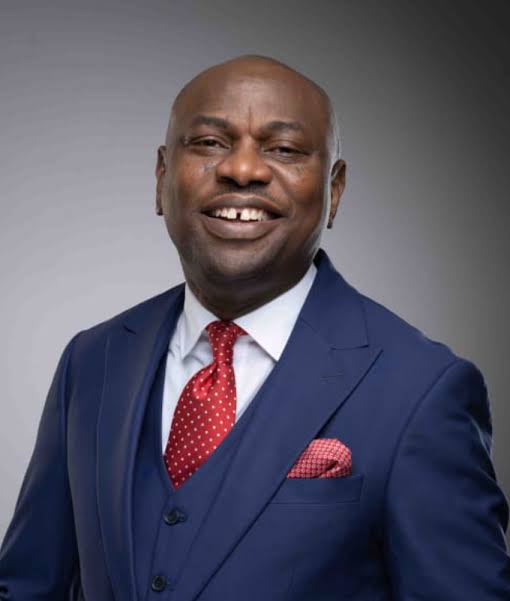
I joined The Platform live on Channels Television on Thursday October 1 to listen to inspiring conversations about Nigeria. What I heard from Dr. Emmanuel Emefienim, Founder and Managing Director/CEO of Premium Trust Bank, was much more than a motivational speech.
Also read: Nigeria @66: Obasa Says Tinubu’s 2027 Re-election Will Secure Reform Gains
It was a masterclass in resilience, ambition, leadership, relationships, knowledge, faith and the power of refusing to give up.
The Platform, organised by The Covenant Place under the leadership of Senior Paster Poju Oyemade, has become an important public conversation that brings Nigerians together around ideas, experiences and possibilities.
Held on May 1 and October 1 in a town-hall setting and televised live, it has consistently provided a platform for Nigerians to share stories that can inspire particularly the younger generation to believe in themselves and in their country.
Dr. Emefienim’s story deserves to be told beyond the walls of The Platform because it is not simply the story of one successful banker; it is a Nigerian story about what can happen when adversity meets determination. After completing his NYSC, Emefienim applied for 70 jobs.
Only four organisations, according to him, responded. He eventually joined Oceanic Bank at the age of 22.
At some point, he was transferred from Lagos to Asaba. His career subsequently took him to Savannah Bank in Port Harcourt, where he became a regional manager.
Then came the shock that could have destroyed everything. I mean, everything: his plans, big dreams and bright future.
One weekend, Emefienim travelled to Warri to spend time with his family. When he returned to work on Monday, he discovered that Savannah Bank had been liquidated. There were no members of staff waiting for him.
Instead, officials of the Central Bank of Nigeria and the Nigeria Deposit Insurance Corporation were there. There had been no warning.
Suddenly, the man who had an official car and driver was without a job. He was married, in his 30s, and his wife was a civil servant. His professional world had collapsed almost overnight. What did he do? He did not give up.
His driver took him to Benin City. From there, he travelled to Lagos, using a public transport service, to see a manager at FSB, a bank that had previously offered him a job while he was still at Savannah Bank. He had declined the offer then.
Now, Emefienim needed the job, but the manager, obviously angry and wanted to have his pound of flesh back, ignored him and kept him waiting for three days.
It would have been easy to interpret the experience as humiliation and walk away. But Emefienim remained focused. Eventually, the manager saw him and offered him a job – but at a lower level.
He moved from senior manager to deputy manager and was posted to Yenagoa in Bayelsa State which he accepted as he had no choice at the time.
That decision contains a profound lesson: sometimes, starting again is not failure; it is strategy. There are moments in life when circumstances force us to take a step backwards so that we can eventually move forward.
The important thing is not the temporary position we occupy, or feelings of rejection experienced or disappointments that we face, but whether we can continue moving towards the destination.
Emefienim had a big dream. He recalled telling the Managing Director of Oceanic Bank and some colleagues that one day he would become the managing director of a bank himself. While the MD encouraged him to pursue his goal, his colleagues laughed at him.
His response is one of the most memorable lines from his presentation: when people don’t laugh at your dream, perhaps the dream is not big enough. That is a message Nigeria’s young people need to hear.
Too many young people allow their current circumstances to define their future, but the future does not necessarily resemble the present.
A young person who is struggling today may become an employer tomorrow, and someone rejected for a job may eventually build an institution that employs hundreds or thousands of people.
Emefienim’s own journey demonstrates this. He continued to rise through Equatorial Trust Bank and later Sterling Bank, following mergers and acquisitions in the Nigerian banking industry.
He rose through the ranks – AGM, DGM, GM and Executive Director – while continuing to acquire knowledge.
He attended Harvard Business School several times. But perhaps more importantly, he did not keep the knowledge to himself – he invested in people.
He personally sponsored some of his managers to also attend Harvard. When the time came for him to leave Sterling Bank and establish Premium Trust Bank, six of the seven managers he had trained agreed to join him.
That is a powerful definition of leadership. A leader is someone who reaches the top and helps others rise.
This is particularly important in Nigeria, where the quality of human capital will ultimately determine how competitive our economy becomes. Buildings, technology, capital and infrastructure matter, but people make institutions work.
Emefienim also spoke about relationships and networks as critical elements of success.
This is another lesson worth emphasising. Knowledge is important, but relationships create opportunities for knowledge to be applied.
Networks create access, partnerships and possibilities because nobody succeeds entirely alone.
His story also contains an important lesson about family resilience. After experiencing the trauma of losing his job without warning, he empowered his wife to start a business.
He wanted to ensure that his family would never again be placed in such a vulnerable position because one person’s employment had suddenly disappeared resulting in loss of income.
That was more than a financial decision – it was an act of foresight. Today, the story has come full circle. The young man who once submitted 70 applications looking for employment is now the founder and owner of a bank.
Premium Trust Bank, which commenced commercial banking operations as a regional bank in April 2022, has grown into a national banking institution with 35 branches.
Emefienim spoke proudly about its growth and profitability and its successful participation in the banking industry’s recapitalisation programme, raising N200 billion, the threshold for national banks, and achieving a historic milestone as one of Nigeria’s 10 most profitable banks.
There is something profoundly Nigerian about this story. Nigeria is often described in terms of its problems – unemployment, infrastructure deficits, insecurity, poverty, weak institutions and other challenges. These problems are real and should not be minimised.
But Nigeria is also a country of extraordinary human possibilities. Our greatest resource is not oil neither is it our large population; it is the capacity of Nigerians to create, innovate, adapt, build businesses, solve problems and compete. This is one of the central ideas behind my forthcoming book, How Naija can conquer the world.
The book is about Nigeria’s economic potential, global ambition and the strategies required to achieve greater prosperity. I argue that Nigeria’s success should not be measured simply by the size of its economy.
Instead, we should be concerned about rising incomes, productivity, exports, globally competitive companies, human capital and the ability to create value for the world.
Emefienim’s story illustrates several of these principles. He acquired knowledge, built relationships, invested in people, remained focused, executed consistently, understood his environment, adapted when circumstances changed, dreamed beyond his immediate reality, and remained anchored in faith.
His reference to what he calls “revelational knowledge” – spiritual insight and instruction he believes come from God – adds another dimension to his philosophy.
For him, formal education and professional experience are important, but they exist alongside faith and spiritual guidance.
There is another lesson here for Nigeria: we need more people who are prepared to build institutions rather than merely look for opportunities. When Nigerians build strong companies, they create jobs, and when they invest in people, they create human capital.
We have the capacity to develop globally competitive products and services for exports. Clearly, the moral of Emefienim’s story is that we should build institutions that survive beyond their founders and contribute to national prosperity.
This is how a nation moves from potential to prosperity.
Listening to Dr. Emefienim, I was reminded that Nigeria does not lack stories of courage, enterprise and achievement.
Perhaps what we lack is a sufficiently organised effort to tell these stories and convert them into a powerful national narrative.
We need to tell young Nigerians that setbacks are not destinies. An entrepreneur’s small business today can become tomorrow’s major institution.
We need to tell professionals that continuous learning matters; tell leaders that investing in people is one of the highest forms of leadership, and also tell the world that Nigeria is much more than the challenges that frequently dominate international headlines. Dr. Emmanuel Emefienim has done well.
From a young graduate searching for his first job, to a banker who survived the collapse of a major institution, got another job within four days, to a senior executive, and an entrepreneur who built his own bank, his journey is a powerful reminder of what determination can accomplish.
His story is not an invitation to ignore Nigeria’s problems, but he is simply saying we should confront them with courage.
Nigeria needs more dreamers – but also more doers. We need people who can dream big, acquire knowledge, build relationships, invest in others and execute with consistency.
That is how nations are built.
Also read: Nigeria @66: Obasa Says Tinubu’s 2027 Re-election Will Secure Reform Gains
Perhaps that is the deeper message of The Platform: Nigeria’s future will be created by Nigerians who believe that something better is possible – and then roll up their sleeves and build it.
Opinion
RE: State Creation Or Political Theatre? – Correcting the Misunderstanding of Otunba Gbenga Daniel’s Role


By Zubair, M.O,
The article by Kunle Adesanya is eloquently written but fundamentally misrepresents how state creation works in Nigeria and what H.E Senator Otunba Gbenga Daniel is actually doing.
Also read: GFF Holds Free Medical Screening Ahead of October Surgeries
It accuses H.E Senator Otunba Gbenga Justus Daniel of deception for doing exactly what the Constitution expects a sponsor of a state creation bill to do.
- The Senator Never Claimed He Can Create a State Alone
No serious person, and certainly not a two-term Governor and current Senator who is a trained Engineer, believes he can create a state by fiat.
Section 8 of the 1999 Constitution places the responsibility for state creation on multiple institutions, but someone must initiate and drive the process. That is the role of the sponsor.
H.E Senator Otunba Gbenga Justus Daniel sponsored Senate Bill 564 on 27th November 2024 for Ijebu State. He has never said the bill alone equals a state. What he has done is the legitimate legislative work:
- Building national consensus across party lines, culminating in the publicized backing of 75 Senators as of July 2026, which surpasses the two-thirds of the Senate required to advance a constitutional alteration proposal.
- Securing buy-in from the affected population through consultations with the late Awujale, the Akarigbo, and all Ijebu and Remo traditional councils.
- Harmonizing the name to Ijebu-Remo State to preserve Remo identity after the Remo Traditional Council meeting of July 3, 2025.
To call these steps “political theatre” is to misunderstand legislative advocacy. How else is a referendum supposed to succeed without prior traditional and political consensus?
- A Palace Endorsement Is Not Meant To Replace a Referendum – It Is Meant To Prepare For It
The article mocks palace meetings as if our H.E Senator Otunba Gbenga Daniel is presenting them as a substitute for a referendum. He is not!, kindly be informed, sir!.
In Nigerian state creation history, no referendum has ever been conducted without first demonstrating that the people of the affected area want the state. The way you demonstrate that desire before INEC conducts a referendum is through resolutions of traditional councils, local government councils, professional bodies, and community leaders.
The meeting at the Palace of the Awujale on September 28, 2026, where Ijebu-Ode was endorsed as proposed capital, was not presented as a constitutional finality. It was presented as what it was – stakeholder alignment. That alignment is a prerequisite for the next stages, not a replacement for them.
- The Constitutional Roadmap Has Been Made Public
Contrary to the claim that there is “political fog,” H.E Senator Otunba Gbenga Daniel has been transparent about the architecture:
- Stage 1 – Legislative Sponsorship: Done. Bill sponsored.
- Stage 2 – National Assembly Support: Substantially advanced. 75 Senators, exceeding the 73 required.
- Stage 3 – State and Local Support: Ongoing. Consultations with Ogun State House of Assembly members and Local Government Chairmen from Ogun East.
- Stage 4 – Referendum: Will be conducted by INEC when the National Assembly passes the bill to that stage.
- Stage 5 – Approval by 24 State Houses of Assembly and final passage by National Assembly and Presidential Assent.
This is the same roadmap every other state creation request is following. None of the 30+ state creation requests before the 10th National Assembly has reached referendum stage. To single out Ijebu-Remo and demand referendum documents today is to feign ignorance of where the entire national process is.
- On Capital and Name Evolution – That Is Consensus Building, Not Confusion
The article points to the evolution from Ijebu State to Ijebu-Remo State as evidence of inconsistency. It is actually evidence of leadership and listening.
Remo people, through the Remo Committee on State Creation, had valid concerns about identity and capital. Instead of imposing Ijebu State, our dear leader, H.E Senator Otunba Gbenga Daniel facilitated a compromise that produced Ijebu-Remo State with clear recognition of both identities. That is how you build the unity needed to win a two-thirds referendum.
Conclusion
The people of Ijebuland are not being deceived. They know state creation is difficult – it has not happened since 1996. What our Senator has done is what no elected representative from Ogun East has done in the last 30 years: move the demand from street agitation to the floor of the Senate, secure national legislative numbers, and force it into serious constitutional consideration.
To call that “straws dressed up as milestones” is unfair. The 75 Senators are not straws. The public hearing of July 4, 2025 is not a straw. The unified position of Ijebu and Remo Obas is not a straw.
These are constitutional footprints. The documents do speak – for anyone willing to read them beyond political cynicism.
*ZMO writes from Ijebu Ode
-
Politics3 years ago
13 Ondo Assembly Members Disown Endorsement of Aiyedatiwa
-
Politics3 years ago
APC Group, Ondo Govt, Quarrel Over Money for Endorsement
-

 Trending News5 years ago
Stop unsavoury, inciting statements – DSS warns
-

 Others5 years ago
Adron Homes Celebrates 10 Years Of Housing Excellence
-

 Humanity5 years ago
President Buhari Commiserates With Ambassador Maureen Tamuno Over The Loss Of Her Father
-

 Others7 years ago
EX- CUSTOMS BOSS, IBRAHIM MERA’S DWINDLING FAME
-

 Business2 years ago
Bigi Carbonated Soft Drinks Treats 40 Consumers to an Epic Easter Movie Hangout
-

 Business2 years ago
Wema Bank Shines at Global SME Finance Forum Conference Awards 2024 …Awarded: • SME Financier of the Year (Africa) • Platinum Award for Best Financier for Women Entrepreneurs (Africa)