
Opinion
Yusuf Maitama Tuggar: A Diplomat’s Journey from Bauchi Roots to the Global Stage


By Adebayo Adeoye
Yusuf Maitama Tuggar steers Nigeria’s foreign policy while supporting Bauchi communities through philanthropy and strategic diplomacy

Within the quiet but consequential halls of Nigeria’s Ministry of Foreign Affairs, Ambassador Yusuf Maitama Tuggar has carved out a reputation for calm authority in an era defined by global uncertainty.
Also read:Oxlade Urges Artists to Invest in Vocal Coaching
Since his appointment in August 2023 by President Bola Ahmed Tinubu, he has steered Nigeria’s diplomacy with measured confidence, balancing international expectations with national interests.
Yet, beneath the suit and diplomatic protocol lies a story deeply anchored in Bauchi soil, community service, and a lifelong commitment to people before politics.
Tuggar’s stewardship of Nigeria’s foreign policy reflects the spirit of President Tinubu’s Renewed Hope Agenda, which seeks national renewal through democracy, development, demography, and diaspora engagement.
His work speaks to a larger narrative: that diplomacy is not only about global negotiations but also about how international engagement translates into dignity and opportunity at home.
Long before he became Nigeria’s chief diplomat, Tuggar was already known in Bauchi for something more enduring than public office, a quiet but consistent record of philanthropy.
Born on March 12, 1967, in Udubo, Gamawa Local Government Area of Bauchi State, Yusuf Maitama Tuggar comes from a lineage familiar with public service.
He is the son of the late Senator Abubakar Tuggar, a respected political figure in his time.
Educated both in Nigeria and abroad, Tuggar built a varied career that cut across business, philanthropy, and politics.
Even before national attention found him, his name was associated with community upliftment through the Ambassador Yusuf Tuggar Foundation.
The foundation’s interventions, ranging from food distribution to families across nine local government areas to the provision of grains and motorcycles to struggling households, earned him a reputation as a man driven by empathy rather than ambition.
In Bauchi, he is often described as a native son and a statesman who places humanity above partisan lines.
His formal political journey began in 2007, when he was elected to the House of Representatives to represent Gamawa Federal Constituency, a position he held until 2011.
During his time in the National Assembly, Tuggar served on committees covering Foreign Affairs, Public Procurement, and Petroleum, roles that quietly prepared him for the international responsibilities that lay ahead.
His diplomatic profile rose significantly between 2017 and 2023, when he served as Nigeria’s Ambassador to Germany.
In Berlin, he focused on economic diplomacy, strengthening trade relations, encouraging investment, and promoting Nigeria’s cultural and economic potential.
That experience would prove invaluable when he was appointed the 29th Minister of Foreign Affairs in 2023.
As minister, Tuggar has approached the role with strategic clarity.
Central to his tenure is the articulation and implementation of Nigeria’s “4D Doctrine”, Democracy, Development, Demography, and Diaspora.
This framework has redefined Nigeria’s engagement with the world, placing emphasis on economic growth, youth potential, and the strategic value of Nigerians in the diaspora.
Under his leadership, Nigeria has intensified efforts to attract foreign investment into key sectors such as energy, infrastructure, and agriculture, aligning diplomatic outreach with domestic reform priorities.
His role in strengthening bilateral relations has been notable, including a high level engagement with Niger in December 2025 aimed at renewing cooperation in security and trade.
Perhaps more striking has been Tuggar’s handling of sensitive geopolitical matters.
In moments of heightened international tension, he has projected composure and clarity, using media diplomacy to counter misinformation while firmly asserting Nigeria’s sovereignty.
His public positions on global issues, including the Palestinian question, have consistently emphasised dialogue, trust building, and peaceful cooperation.
Even during periods traditionally marked by reduced official activity, such as Christmas and Boxing Day, Tuggar ensured Nigeria’s voice remained present in international discourse, reinforcing the country’s role as a reliable partner in the global fight against terrorism without surrendering its independence of thought or action.
In doing so, he has supported the Renewed Hope Agenda’s broader goals of economic stability, security, and diaspora inclusion.
Back home in Bauchi, these achievements have only deepened the respect many already held for him.
His earlier philanthropic efforts continue to resonate, now amplified by his national and international profile.
A notable example was his visit in June 2025 to Azare, where traders had lost their shops following a demolition exercise ordered by the state government.
Tuggar openly sympathised with the affected traders, criticised the action, and pledged support towards rebuilding their livelihoods.
The gesture was widely praised and reinforced the perception of a leader who remains connected to ordinary people despite operating on the global stage.
Unsurprisingly, conversations about Tuggar’s future have grown louder.
Political watchers and social media commentators frequently speculate about a possible return to Bauchi politics ahead of the 2027 elections.
Rumours of a gubernatorial ambition continue to circulate. Supporters argue that Tuggar’s blend of international exposure, political experience, and grassroots compassion positions him as a unifying figure capable of restoring calm and delivering tangible development to Bauchi State.
Despite existing political tensions within the state, many believe he could bridge divides and translate federal goodwill into local progress. As one recurring sentiment puts it, Bauchi is proud of him.
From the rural landscapes of Bauchi to diplomatic postings in Berlin and the nerve centre of Nigeria’s foreign policy in Abuja, Yusuf Maitama Tuggar’s journey is one defined by service, resilience, and quiet impact.
In an age where leadership is often loud but shallow, his path offers a reminder that enduring influence is built on substance and sincerity.
Also read: Oxlade Urges Artists to Invest in Vocal Coaching
Whether his future remains in international diplomacy or leads him back home, his record suggests a consistent thread: a global outlook anchored by a deep sense of local responsibility.


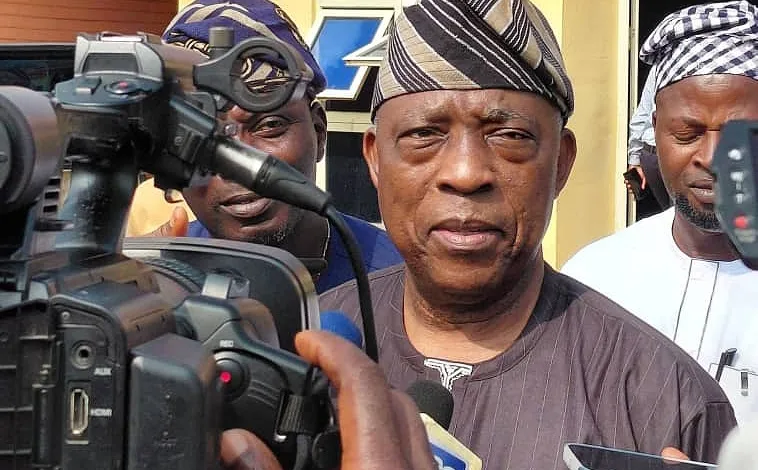
Veteran journalist and Chairman of Gaskia Media Limited, Dare Babarinsa, has called on Nigeria to sustain its informal power-rotation arrangement between the North and South, arguing that the system remains important for political stability and national unity.
Babarinsa said the presidency should return to the North in 2031 and move back to the South in 2039, maintaining that the arrangement should remain in place until Nigerians develop a more suitable alternative.
He made the position known on Monday, November 2, while delivering a public lecture at the Press Centre, Iyaganku, Ibadan, as part of activities marking the 60th anniversary of the Oyo State Council of the Nigerian Union of Journalists (NUJ).
Speaking on the theme of Nigeria’s political arrangement and the future of the media, Babarinsa acknowledged criticisms of the rotational presidency, particularly from those who believe that every qualified Nigerian should be allowed to contest for the highest political office regardless of region.
However, he argued that Nigeria’s political circumstances make power rotation a practical arrangement for maintaining stability, even if it may not always produce the most suitable candidate.
According to him, the arrangement emerged from political negotiations ahead of the return to civilian rule in 1999, following the deaths of former military Head of State, General Sani Abacha, and the presumed winner of the June 12, 1993 presidential election, Chief Moshood Abiola.
Babarinsa recalled that after Abacha’s death in 1998, General Abdulsalami Abubakar assumed leadership and introduced a transition programme aimed at ending military rule by May 29, 1999.
He said the death of Abiola, who was detained by the military government, created concerns about the political future of the Yoruba people and influenced discussions over the region that should produce Nigeria’s first civilian president after military rule.
The journalist disclosed that he was among members of the Idile Oodua resistance movement who supported the position that the South-West should produce the first president under the new democratic arrangement.
He said he was subsequently mandated by members of the group to consult the late Ooni of Ife, Oba Okunade Sijuwade, who told him that traditional rulers across the country were also holding consultations on the matter.
According to Babarinsa, the discussions contributed to the emergence of two Yoruba presidential candidates in the 1999 election: former President Olusegun Obasanjo of the Peoples Democratic Party (PDP) and Chief Olu Falae, who contested under the Alliance for Democracy and All Peoples Party coalition.
He also recalled that former Vice-President Alex Ekwueme disagreed with the arrangement, arguing that the South-East could not be bound by an agreement reached principally between political interests in the North and South-West.
Babarinsa said he agreed with Ekwueme’s interpretation that power should rotate between the North and South rather than among the six geopolitical zones.
He explained that the arrangement had continued through successive administrations, including the emergence of former President Goodluck Jonathan following the death of President Umaru Yar’Adua and the subsequent election of former President Muhammadu Buhari.
With President Bola Tinubu currently in office, Babarinsa argued that the existing arrangement should be sustained, with power returning to the North after the current administration and subsequently moving back to the South.
To support his argument, he compared Nigeria’s power-sharing arrangement with the confessional system adopted in Lebanon in 1943, under which key political offices were allocated to different religious communities to promote political balance.
He said Nigeria could learn from such arrangements, insisting that political compromises sometimes become necessary in countries with diverse ethnic, religious and regional interests.
“If we intend to keep Nigeria, then we need to make this special arrangement work until future generations are able to make a better arrangement,” he said.
Babarinsa reflects on Ibadan’s journalism legacy
Beyond the political question, Babarinsa used the lecture to examine the history of journalism in Ibadan and the contribution of the city to the development of Nigeria’s media industry.
He described Ibadan as a major centre of political and media influence, noting that its newspapers had produced some of the country’s most prominent journalists, editors and public commentators.
He recalled the establishment of the Nigerian Tribune in 1949 by Chief Obafemi Awolowo and the creation of the Sketch newspaper group in 1964 by the then Premier of the Western Region, Chief Ladoke Akintola.
He also highlighted the contributions of prominent journalists, including Felix Adenaike, Segun Osoba and Peter Ajayi, whom he described as the Three Musketeers of the Nigerian media during the Second Republic.
According to him, the trio wielded considerable influence in the industry through their leadership positions at the Tribune and Sketch newspaper groups.
Babarinsa also acknowledged the contributions of former journalists and columnists, including Alhaji Lateef Jakande, Chief Bola Ige, Chief Olabisi Onabanjo, Aare Afe Babalola and Dr Tai Solarin.
He said the history of journalism in Ibadan was closely connected to the political development of the country, recalling the debates on issues such as the International Monetary Fund loan, diarchy and rotational presidency.
The journalist urged members of the profession to preserve that tradition by ensuring that the media remained a platform for informed public debate and the promotion of ideas capable of strengthening Nigeria.
Media organisations urged to embrace digital transformation
Addressing the challenges facing the industry, Babarinsa warned that traditional media organisations must urgently adapt to the changing media environment or risk losing relevance.
He said the internet had disrupted conventional news production and distribution, creating new opportunities while also allowing unregulated online platforms to compete with established media organisations.
According to him, several traditional newspapers have established online platforms, but their digital presence has not translated into the level of revenue needed to sustain their operations.
He cited the decline of once-dominant media organisations such as the Daily Times and Sketch as examples of the changes that have reshaped the industry.
Babarinsa recalled that Sketch newspaper had a daily circulation of about 60,000 copies during the 1970s and 1980s but had since ceased publication, with its former premises converted into a shopping mall.
He also expressed concern over declining newspaper readership among young Nigerians, warning that a society with an increasingly uninformed population could struggle to appreciate and defend democracy.
The Gaskia Media chairman said media organisations must follow their audiences into the digital space and develop business models that can sustain quality journalism.
He disclosed that his organisation had also decided to strengthen its online presence through the publication of a digital magazine, beginning with an online news blog.
Journalists urged to defend democracy and uphold professional standards
Babarinsa further reminded journalists of their role in Nigeria’s democratic development, particularly during the struggle against military rule.
He said members of the Nigerian press had suffered imprisonment, exile and other forms of persecution in the fight for the restoration of democracy, with some journalists paying the ultimate price.
He maintained that journalists therefore had a responsibility to protect the democratic system and ensure that the country’s electoral processes remained credible.
With the 2027 general election approaching, he urged media professionals to play their part by providing accurate information and encouraging informed public participation.
The Independent National Electoral Commission has scheduled the presidential and National Assembly elections for January 16, 2027, while governorship and State Houses of Assembly elections are fixed for February 6, 2027.
Babarinsa said journalists must remain committed to the fundamental principles of the profession, stressing that factual accuracy should remain central to news reporting while allowing room for responsible advocacy.
He urged journalists to advocate for the national interest, rather than restrict their work to positions that may be politically convenient.
Calls for greater inclusion of young journalists and women
Looking towards the future, Babarinsa called for greater opportunities for young journalists and women in the profession, saying the industry must deliberately prepare a new generation of media leaders.
He cited the careers of prominent journalists who assumed major editorial and management positions at relatively young ages, including Peter Enahoro, Olusegun Osoba, Yemi Ogunbiyi, Yakubu Mohammed, Ray Ekpu and Adamu Ciroma.
According to him, the history of Nigerian journalism demonstrates that young professionals have consistently played important roles in driving the industry forward.
He urged established media practitioners to listen to younger colleagues, particularly members of Generation Z, and create opportunities for them to contribute to the future of the profession.
Babarinsa also called for more deliberate efforts to bring women into leadership positions, noting that the industry could no longer remain dominated by men.
He expressed optimism about the future of journalism, despite concerns over poor remuneration, declining newspaper circulation and competition from digital platforms.
The veteran journalist concluded by urging the profession to embrace change, drawing attention to the need for innovation in newspaper production, technology and audience engagement.
Quoting a principle he attributed to Professor Ladipo Adamolekun, Babarinsa said the media industry must adapt to changing realities to remain relevant.
“Adapt or Die!” he declared.
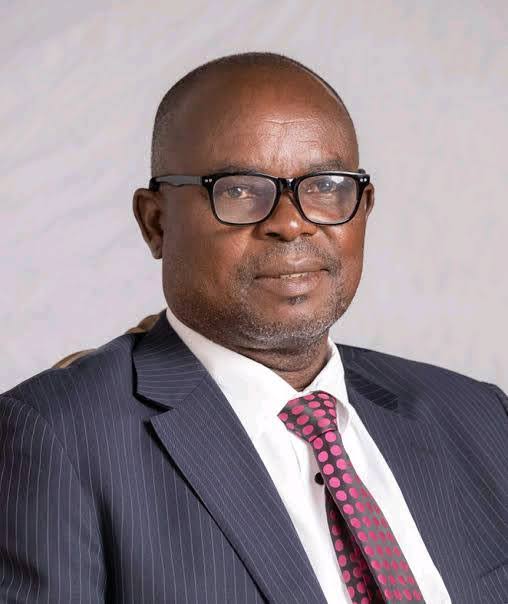
Bola Bolawole questions Nigeria’s democratic future, citing poverty, illiteracy, corruption and political rivalry as obstacles to credible elections

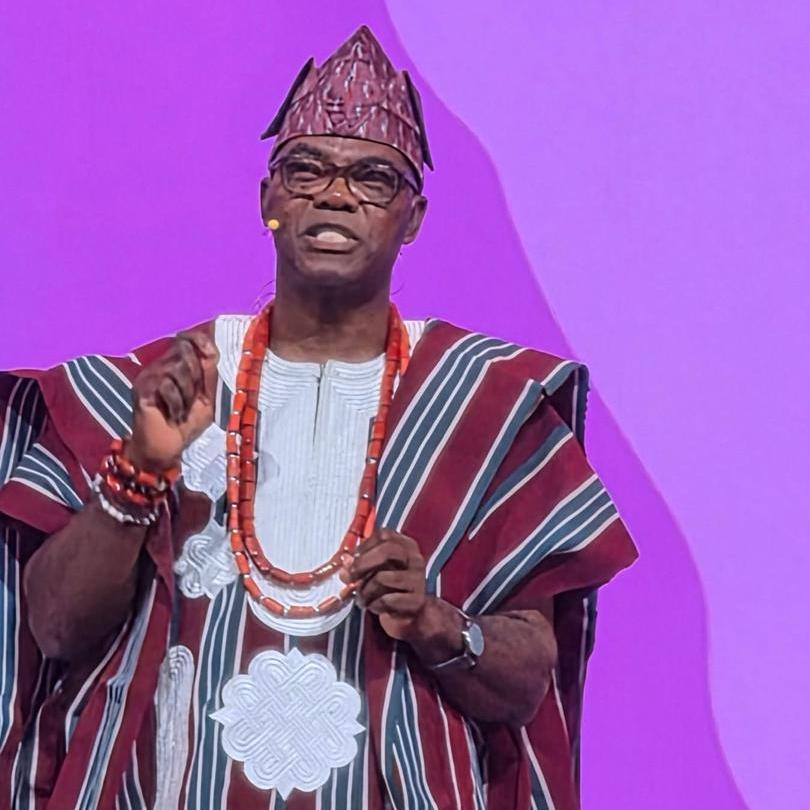
The All-Nigeria Rotary Peace Summit will examine how good governance, justice and equity can help Nigeria build lasting peace
-
Politics3 years ago
13 Ondo Assembly Members Disown Endorsement of Aiyedatiwa
-
Politics3 years ago
APC Group, Ondo Govt, Quarrel Over Money for Endorsement
-

 Trending News6 years ago
Stop unsavoury, inciting statements – DSS warns
-

 Others5 years ago
Adron Homes Celebrates 10 Years Of Housing Excellence
-

 Humanity5 years ago
President Buhari Commiserates With Ambassador Maureen Tamuno Over The Loss Of Her Father
-

 Others7 years ago
EX- CUSTOMS BOSS, IBRAHIM MERA’S DWINDLING FAME
-

 Business3 years ago
Bigi Carbonated Soft Drinks Treats 40 Consumers to an Epic Easter Movie Hangout
-

 Business2 years ago
Wema Bank Shines at Global SME Finance Forum Conference Awards 2024 …Awarded: • SME Financier of the Year (Africa) • Platinum Award for Best Financier for Women Entrepreneurs (Africa)