
Business
NBS to Normalise December 2025 Inflation Data


The NBS will normalise December 2025 inflation data, correcting base effects from CPI rebasing for accurate economic reporting

The National Bureau of Statistics (NBS) has announced plans to normalise Nigeria’s inflation data for December 2025 following a projected spike in the Consumer Price Index (CPI), which the Bureau attributed to statistical base effects rather than underlying economic conditions.
Also read: Headline Inflation Reduces To 15.99% In October — NBS
The clarification came during a virtual engagement on Monday convened by the NBS and the Nigerian Economic Summit Group (NESG).
Statistician General of the Federation and NBS CEO, Adeyemi Adeniran, explained that the spike stems from the rebasing of the CPI to 2024 as the new base year, marking the first rebasing since 2009.

“Base effects are common in statistical practice, particularly when comparing data across periods with unusually high or low prices. The expected spike in December 2025 arises from this arithmetic effect and is not reflective of structural economic changes,” Adeniran said.
The NBS will apply a normalisation process, using the average CPI from January to December 2024 as the reference period, instead of equating December 2024 to 100.
This adjustment, in line with the CPI Manual 2020, aims to remove artificial distortions and provide a clearer picture of inflation trends.
Dr Ayo Anthony, Director of Price Statistics at NBS, outlined methodological changes resulting from the rebasing, which introduced over 400 new products into the CPI basket and removed more than 200 items, reflecting evolving consumption patterns.
Anthony noted that without adjustment, December 2025 inflation could appear artificially high.
NESG CEO Dr Tayo Aduloju emphasised the importance of credible CPI data for policy formulation, stating that misleading inflation signals could undermine macroeconomic stability as Nigeria transitions from stabilisation to consolidation reforms.
While the normalisation affects published figures from January to December 2025, the NBS assured stakeholders that the impact is minor and will be clearly communicated.
From January 2026 onwards, the base effect will no longer influence CPI calculations, as comparisons will rely solely on actual rebased index values.
However, some economists expressed concerns over credibility.
Former Zenith Bank chief economist Marcel Okeke warned that adjusting figures could undermine confidence and comparability with other economies.
Investment banker Adetilewa Adebajo
echoed these concerns, questioning how inflation could appear to double from November to December without reflecting real price changes.
The NBS affirmed that the normalisation follows global best practices, with consultations from the IMF, World Bank, and Central Bank of Nigeria.
Also read: Access Bank and the Rebirth of the National Theatre: Revitalising Nigeria’s Cultural Future
Adeniran stressed the importance of regular rebasing to avoid distortions and improve the accuracy of economic indicators.



Fidelity Bank CEO Amuchie takes over in January 2027 as Nneka Onyeali-Ikpe exits after five years of strong earnings, expansion and transformation


Oando Plc, under the leadership of its Group Chief Executive, Jubril Adewale Tinubu, has recorded a significant improvement in its operating performance, returning to profitability at the operating level as revenue rose to ₦2.78 trillion in the first nine months of 2026.
The indigenous energy company reported revenue of ₦2.776 trillion for the nine months ended September 30, 2026, representing a nine per cent increase from the ₦2.541 trillion recorded during the corresponding period of 2025.
The latest unaudited results, released on October 30, also showed a substantial recovery in gross profit, which increased to ₦174.5 billion from ₦29.8 billion in the previous year.
One of the most notable developments was the company’s return to operating profit. Oando recorded an operating profit of ₦159.7 billion, reversing the operating loss of ₦109.7 billion reported in the corresponding period of 2025.
The improvement reflects stronger performance across its operations, supported by higher production volumes, improved realised prices and the absence of a significant fair value loss recorded in the previous year.
The figures provide an indication of the progress made by the company as it continues to pursue its expansion and operational efficiency objectives under Tinubu’s leadership.
Oando’s production performance also improved during the reporting period. Average daily production increased by 14 per cent to 42,985 barrels of oil equivalent per day, compared with 37,614 barrels in the corresponding period of 2025.
The growth was supported by higher output from crude oil, natural gas and natural gas liquids operations.
The company also reported a 22 per cent reduction in production operating costs, which fell to $15.39 per barrel of oil equivalent from $19.67 recorded a year earlier.
Facility uptime improved to 96.1 per cent from 85 per cent, indicating greater reliability across its production infrastructure.
These improvements reflect the impact of drilling activities, workover programmes and efforts to restore previously constrained facilities. Oando said the measures helped increase production and improve operational efficiency across its enlarged asset base.
During the period, the company generated ₦285 billion in cash from operations and invested ₦110.7 billion in capital expenditure, with a significant portion directed towards drilling activities across its operated OML 60–63 assets.
Its seven-well drilling programme for 2026 also progressed, with two new wells completed and brought on stream, while workovers and additional drilling activities continued.
Oando further reported an improvement in its debt position, with total borrowings declining by 20 per cent from ₦2.70 trillion at the end of December 2025 to ₦2.16 trillion as of September 30, 2026.
Net debt also fell by ₦286 billion to ₦1.99 trillion during the nine-month period.
The reduction forms part of the company’s broader capital management strategy, which is aimed at lowering acquisition-related debt, reducing financing costs and strengthening its balance sheet.
Despite the stronger operating performance, however, Oando’s profit after tax declined by 47 per cent to ₦106.5 billion, compared with ₦201.3 billion recorded in the corresponding period of 2025.
The company attributed the decline largely to the swing from net finance income in the previous year to net finance costs in 2026, alongside the continuing burden of acquisition-related debt.
Its results showed finance costs of ₦244.2 billion during the period, while the company also recognised a tax credit of ₦181.1 billion arising from the reversal of previously recognised tax provisions.
The figures underline the distinction between Oando’s improved operating performance and the financial pressure it continues to face from its debt obligations.
Nevertheless, the return to operating profitability, higher production, lower unit operating costs and declining borrowings represent important developments in the company’s financial and operational position.
For Tinubu, who has remained central to Oando’s corporate transformation, the latest results provide further evidence of the company’s efforts to consolidate its position in Nigeria’s energy industry and expand its presence across Africa.
The company has also outlined plans to continue its seven-well development programme, sustain production reliability and strengthen its financial position through an equity-raising initiative.
With its operating performance improving and debt reduction remaining a priority, Oando’s next challenge will be to translate its production and revenue growth into stronger bottom-line earnings while managing the cost of financing its expansion.
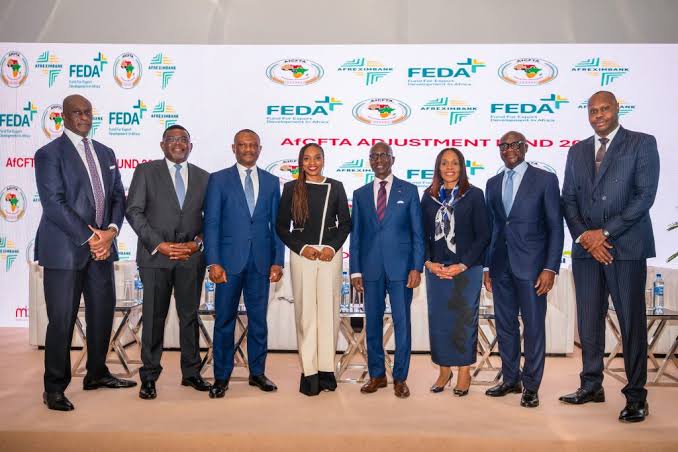
Ehi Braimah urges Afreximbank and AfDB to strengthen Africa’s economic integration through trade finance, infrastructure and industrial investment
-
Politics3 years ago
13 Ondo Assembly Members Disown Endorsement of Aiyedatiwa
-
Politics3 years ago
APC Group, Ondo Govt, Quarrel Over Money for Endorsement
-

 Trending News6 years ago
Stop unsavoury, inciting statements – DSS warns
-

 Others5 years ago
Adron Homes Celebrates 10 Years Of Housing Excellence
-

 Humanity5 years ago
President Buhari Commiserates With Ambassador Maureen Tamuno Over The Loss Of Her Father
-

 Others7 years ago
EX- CUSTOMS BOSS, IBRAHIM MERA’S DWINDLING FAME
-

 Business3 years ago
Bigi Carbonated Soft Drinks Treats 40 Consumers to an Epic Easter Movie Hangout
-

 Business2 years ago
Wema Bank Shines at Global SME Finance Forum Conference Awards 2024 …Awarded: • SME Financier of the Year (Africa) • Platinum Award for Best Financier for Women Entrepreneurs (Africa)